Ghent — Patershol Quarter, the Vrijdagmarkt, SMAK Contemporary Art, the Gentse Feesten & Ghent Architecture
The Patershol medieval lanes are Ghent's most Michelin-starred neighbourhood; the Vrijdagmarkt is where Flemish political history was made; the SMAK is Belgium's most internationally recognised contemporary art museum; and the Gentse Feesten is the most attended free music festival in Belgium.
- 1
The Patershol — Ghent's Medieval Restaurant Quarter
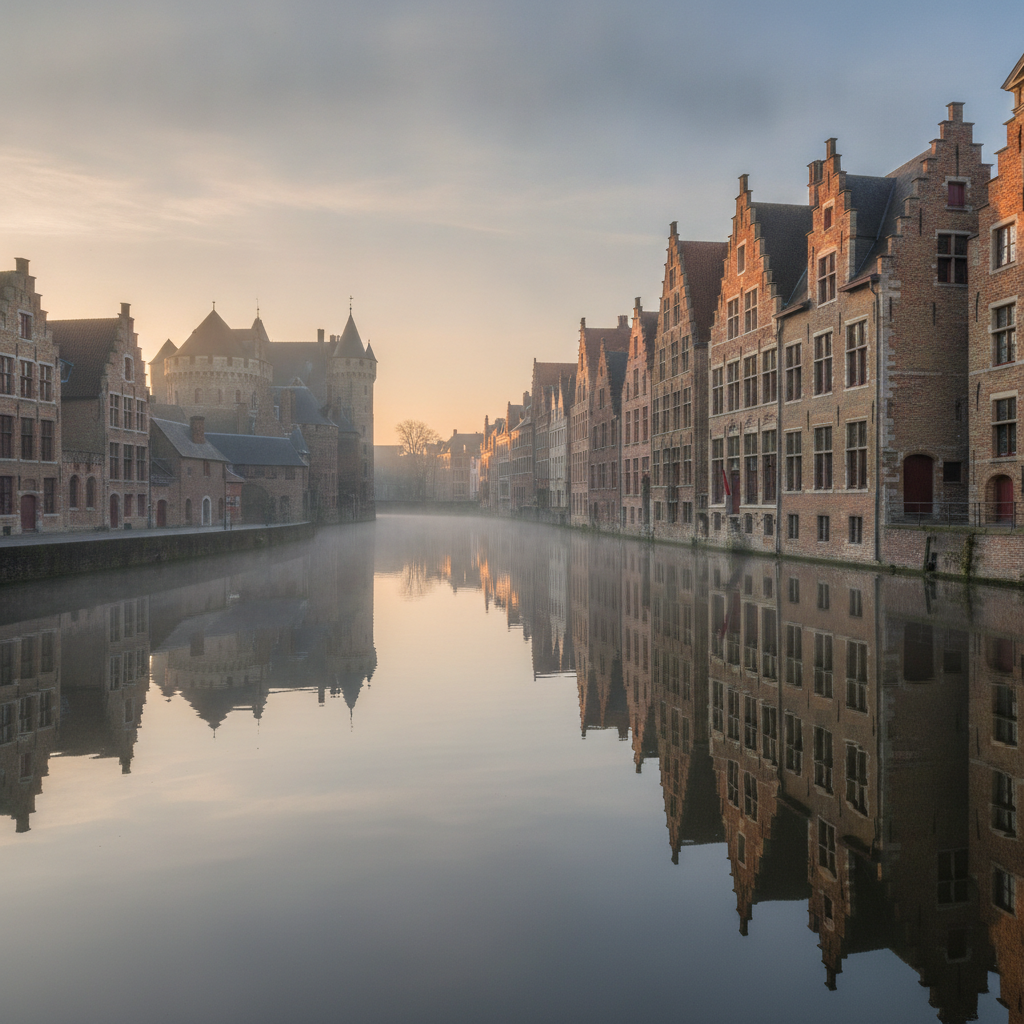
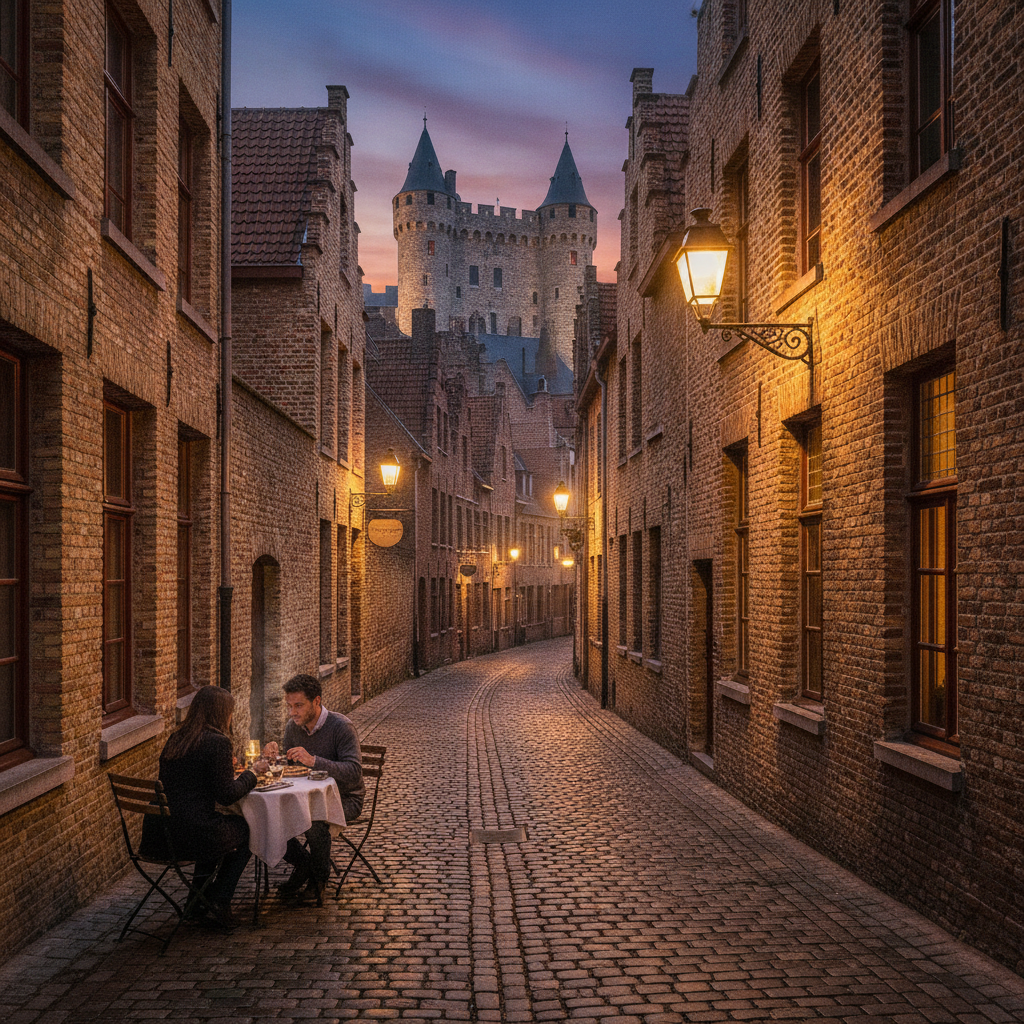
Patershol (the Patershol neighbourhood west of the Gravensteen — the most completely medieval-street-plan-preserved single residential neighbourhood in Ghent, the most Michelin-starred single historic neighbourhood restaurant district in any Flemish city): the neighbourhood (the Patershol — the medieval neighbourhood of the tanners (leerlooiers), the most completely cobbled-lane-medieval-character single residential quarter in Ghent, the quarter saved from demolition in the 1980s by citizen activists, the most successful single Belgian urban preservation campaign of the late 20th century, the quarter now the most restaurant-concentrated single neighbourhood in Ghent with 30+ restaurants in the medieval lanes), the Carmelite monastery (the Karmelietenklooster (Carmelite Monastery) in the Patershol — the 13th-century monastery the most historically ancient single building in the neighbourhood, the monastery the namesake institution of the Patershol (Patershol = 'priests' hollow'), the monastery courtyard the most atmospherically enclosed single medieval monastic space in the Ghent residential districts), the restaurants (the Patershol restaurant scene — the most Michelin-starred single neighbourhood in any Belgian city under 300,000 population: the Cantine de la Grande Mère at Kraanlei 28 the most atmospherically canal-positioned single Patershol restaurant, the Brasserie Pakhuis at Schuurkenstraat 4 the most comprehensively Belgian-cuisine-serving single Ghent brasserie, the Mosquito Coast at Hoogpoort 28 the most internationally travel-themed single Ghent bar-restaurant, the Rechthuis van Moorsel at Kraanlei 65 the most historically castle-adjacent single Patershol restaurant), the Kraanlei (the Kraanlei canal street bordering the Patershol — the most atmospherically medieval single canal street in Ghent, the Baroque guild houses on the Kraanlei the most ornately decorated single canal facade sequence in the Ghent canal network, the Kraanlei the most photogenically canal-house-reflected single Ghent canal away from the Graslei and Korenlei), the Dulle Griet (the Dulle Griet ('Mad Meg') cannon at the Vrijdagmarkt — the 5-metre 16th-century siege cannon the most dramatically large single medieval weapon in any Belgian public square, the cannon the most specifically named single medieval artillery piece in Belgium (Dulle Griet named for the Flemish saying 'Angry Greta'), the most characteristically Ghent single civic object) and the Oudheidkundig Museum (the Museum voor Schone Kunsten (MSK) at the Citadelpark — the most comprehensively Flemish painting collection at the Ghent city art museum, the Hieronymus Bosch, Rubens, and James Ensor works the most instructive single survey of Flemish painting from the 15th to the 20th century in the Ghent civic museum, €12 adults).
- 2
The Vrijdagmarkt and Ghent's Political History
Vrijdagmarkt (the Vrijdagmarkt (Friday Market) square — the most politically historically significant single square in Ghent, the site of the most consequential single political declarations in Flemish history from the medieval period to the modern era): the Jacob van Artevelde statue (the Jacob van Artevelde statue at the Vrijdagmarkt centre — the most politically historically significant single public statue in Ghent, van Artevelde (1290-1345) the 14th-century Ghent merchant politician who allied Ghent with England against France and the Count of Flanders, the most specifically Ghent-rebel-political-heritage-commemorating single monument, the most directly medieval-Flemish-democracy-associated single public figure in any Belgian civic square), the Pacification of Ghent (the Pacification of Ghent (Pacificatie van Gent) signed 1576 in the Stadhuis — the most historically constitutionally significant single document produced in Ghent, the political agreement between the Catholic south and the Protestant north Netherlands provinces against Spanish rule, the most consequential single step toward Dutch independence negotiated in any Belgian city), the Gentenaar rebellion (the Ghent rebellions — the most frequently politically rebellious single Belgian city in medieval and early modern history, the 1302 revolt against France, the 1379 White Cap revolt, the 1540 revolt against Charles V the 3 most historically consequential single Ghent political uprisings, the most specifically politically assertive single Flemish city community in the medieval Low Countries), the Dulle Griet (the Dulle Griet siege cannon — the 15th-century bombard now displayed at the Vrijdagmarkt, the most dramatically large single medieval cannon in any Belgian public square, the cannon used in Flemish sieges before being captured and used as a civic trophy, the most specifically characterful single Ghent civic object), the Vrijdagmarkt market (the Vrijdagmarkt outdoor market on Fridays and Sundays — the most eclectic single outdoor market in Ghent combining antiques, vegetables, and street food, the most historically market-tradition-rooted single Ghent public square, the most diverse single outdoor retail experience in the Ghent centre) and the Ons Huis (the Ons Huis (Our House) at Vrijdagmarkt 9 — the 1900 Art Nouveau workers' cooperative headquarters, the most architecturally ambitious single labour movement building in Ghent, the building the most politically symbolically charged single Art Nouveau structure in Belgium, the interior the most comprehensively working-class-history-documenting single building in the Ghent centre).
- 3
The SMAK and Design Museum — Ghent's Contemporary Culture
Ghent contemporary culture (the Ghent contemporary arts and design scene — the most comprehensively contemporary-culture-collecting single Belgian city after Brussels, the SMAK the most internationally recognised single contemporary art museum in Flanders): the SMAK (the Stedelijk Museum voor Actuele Kunst (SMAK) at Jan Hoetplein 1 — the most internationally recognised single contemporary art museum in Belgium after the BOZAR in Brussels, the permanent collection the most comprehensively 20th-century-and-contemporary-art-spanning single Flemish civic museum, the Joseph Beuys, Panamarenko (the most specifically Belgian single artist in the SMAK collection), and Luc Tuymans works the most internationally critically recognised single artworks in the SMAK permanent holdings, the 'Problematic Collection' display strategy (the most critically self-reflexive single museum display methodology in Belgium — the museum explicitly labelling contested or historically problematic artworks in the collection), €14 adults, closed Mondays), the Design Museum (the Design Museum Gent at Jan Breydelstraat 5 — the most comprehensively Belgian design history collecting single museum, the Art Nouveau and Art Deco applied arts the most significant single period collection, the Henry van de Velde furniture (Henry van de Velde the most internationally recognised single Belgian designer, the most comprehensively van-de-Velde-furniture-collecting single Belgian museum), the museum the most directly applied-arts-focused single Ghent cultural institution, €12 adults), the Museum voor Schone Kunsten (the MSK (Museum voor Schone Kunsten, Fine Arts Museum) at the Citadelpark — the most comprehensively Flemish painting history surveying single civic museum in Ghent, the James Ensor collection the most important single collection outside the Mu.ZEE Ostend, the Flemish Expressionist room the most comprehensively Ghent-school-paintings-collecting single room in any Belgian fine arts museum, €12 adults), the STAM (the STAM — Stadsmuseum Gent (Ghent City Museum) at Bijlokekaai 2 — the most completely Ghent-civic-history-narrating single urban museum in Belgium, the converted 14th-century Bijloke Abbey the most atmospherically medieval single museum building in Ghent, the city map installations and the city history chronology the most visually engaging single local history museum in any Flemish city, €8 adults), the Kunst in Huis (the Kunst in Huis (Art in the House) gallery network in Ghent — the most comprehensively rental-art-accessible single Flemish art distribution system, the most democratically art-acquisition-facilitating single programme in any Belgian city) and the Lam Gods experience (the online Van Eyck 2020 project (Closer to Van Eyck) — the most technologically advanced single digital art access programme for a Flemish painting: the Ghent Altarpiece reproduced at 100 billion pixels resolution, the most comprehensively zoomable single medieval painting in any digital museum project, available free at closertovaneyck.kikirpa.be, the most direct digital complement to the physical Ghent Altarpiece viewing experience).
- 4
The Ghent Festivities — the Most Attended Urban Folk Festival in Belgium
Ghent Festivities (the Gentse Feesten — the annual 10-day folk festival in Ghent in the third week of July — the most attended single urban folk festival in Belgium with 1 million visitors, the most comprehensively free-admission single Belgian music festival): the Gentse Feesten (the Gentse Feesten (Ghent Festivities) — the 10-day festival in July covering the entire Ghent historic centre in free outdoor concerts, street theatre, and traditional folk events, the most historically rooted single annual Belgian urban festival (origins in the 19th-century celebration of Belgian independence), the most democratically admission-free single music festival in Belgium at 10 main stages all free, the most internationally diverse single music programme of any Belgian outdoor festival, the Overpoort student bar street the most continuously animated single festival zone in Ghent), the Vlaamse feestdag (the Flemish Community Day on July 11 — the most specifically Flemish-political-identity-celebrating single public holiday in Belgium, the commemoration of the 1302 Battle of the Golden Spurs, the Ghent Festivities spanning the July 11 Flemish holiday the most historically politically rooted single Belgian city festival period), the Lichtfestival (the Ghent Light Festival (Lichtfestival Gent) every 3 years in January — the most internationally attended single light-art event in Belgium, the canal reflections and the building-mapped projections on the Graslei, the Gravensteen, and the Sint-Niklaaskerk the most photogenically dramatic single light festival compositions in any Belgian canal city, the next edition 2027 the most anticipated single Ghent cultural triennial event), the Gentse Feesten street food (the Gentse Feesten street food — the most comprehensively Belgian festival food concentrated single event: the waterzooi, the cuberdons, and the Ghent mustard sandwich the 3 most specifically Ghent festival foods, the outdoor bar terraces along the Graslei and Korenlei the most atmospherically canal-view drinking positions during the festival week), the student festivals (the Ghent student festivals throughout the academic year — the Overpoort (Overpoortstraat) bar street the most continuously bar-animated single street in any Belgian university city, the Ghent University student festivals in November the most comprehensively university-community-attended single Ghent student festival period) and the Ghent Christmas Market (the Ghent Christmas Market (Kerstmarkt) at the Korenmarkt and the Sint-Baafsplein from late November to January 7 — the most canal-atmosphere-informed single Belgian Christmas market, the Sint-Niklaaskerk and the Belfort illuminated above the market stalls the most architecturally dramatic single Belgian Christmas market backdrop, the Ghent ice rink at the Sint-Baafsplein the most historically cathedral-adjacent single outdoor ice rink in Belgium).
- 5
The Bijloke and Ghent's Medieval Hospitals
Ghent medieval heritage (the Ghent medieval heritage beyond the main tourist circuit — the most completely medieval-fabric-preserving single Belgian city neighbourhood away from the Graslei tourist core): the Bijloke (the Bijlokesite at Bijlokekaai 2 — the 13th-century Cistercian hospital complex the most completely medieval-hospital-architecture-preserving single complex in Ghent, the STAM (Ghent City Museum) in the converted 14th-century refectory the most atmospherically medieval single civic museum in Belgium, the refectory ceiling paintings (the most extensive single medieval painted ceiling accessible in a Belgian non-ecclesiastical building), the Bijloke Abbey church (the most completely Cistercian-style church interior in the Ghent museum complex, free entry to the grounds), the Bijloke concert hall (the most architecturally atmospheric single ancient-music and early-music concert venue in Ghent)), the Sint-Veerleplein (the Sint-Veerleplein square at the Gravensteen — the former fish market and the former public execution site, the most historically sinisterly-function-stacked single public square in Ghent, the 18th-century Baroque fish market (Vismarkt) facade on the square the most ornately decorated single market building in the Ghent historic centre), the Prinsenhof (the Prinsenhof — the former ducal palace of the Counts of Flanders, the birthplace of Holy Roman Emperor Charles V in 1500, the most historically significant single residential address in Ghent (the birthplace of the Holy Roman Emperor who made the most consequential single single threat to the Ghent privileges in 1540), only the gateway (Donkere Poort) surviving the most archaeologically significant single surviving element of the most historically important lost building in Ghent), the Gravensteen gardens (the Gravensteen garden between the castle moat and the Kraanlei — the most castle-adjacent single public garden in Ghent, the castle walls directly above the most vertically dominated single public garden in any Belgian city centre, the most dramatically castle-wall-enclosed single outdoor relaxation space in Ghent), the Klein Begijnhof (the Klein Begijnhof (Small Beguinage) at Lange Violettestraat — the most atmospherically enclosed single beguinage in Ghent, the whitewashed court houses and the Baroque chapel the most completely Flemish-beguinage-character single enclosed court in Ghent, UNESCO World Heritage together with 3 other Ghent beguinages, free access) and the Groot Begijnhof Sint-Amandsberg (the Groot Begijnhof Sint-Amandsberg — the most completely 19th-century neo-Gothic beguinage in the Ghent area, the largest single beguinage by number of houses in Belgium, the most comprehensively neo-Gothic architectural beguinage ensemble in any Belgian city, accessible by tram from the Ghent centre in 15 minutes).
- 6
Ghent Architecture — Art Nouveau and the Citadelpark
Ghent architecture (the Ghent architectural heritage — the most comprehensively Gothic-to-Art-Nouveau single Belgian city architectural sequence outside Brussels, the Ghent Scheldt Gothic the most locally distinctive single Gothic style in any Belgian city): the Scheldt Gothic (the Ghent Scheldt Gothic (Scheldesgotiek) — the most specifically local single Gothic architectural style in Belgium, the blue-grey Tournai limestone the most materialistically distinctive single building stone in any Belgian Gothic city, the Sint-Niklaaskerk and the Sint-Baafskathedraal the most instructively comparative single pair of Scheldt Gothic churches in Ghent, the most architecturally distinct single national Gothic sub-style in Belgium), the Stadhuis (the Ghent Stadhuis (Town Hall) at Botermarkt 1 — the most architecturally fascinatingly split single civic building in Belgium: the Gothic north facade (begun 1518) abruptly transitioning to the Renaissance south facade (begun 1535) — the most directly architectural-style-transition-illustrating single building in any Belgian city, the interior the most completely Gothic-to-Renaissance transitional civic interior in Flanders, €5 adults for the guided tour), the Art Nouveau (the Ghent Art Nouveau heritage — the most comprehensively Art Nouveau district of any Belgian city outside Brussels: the Ferdinand Lousbergskaai and the Wasstraat the most completely Art Nouveau-townhouse-lined single streets in Ghent, the Henry van de Velde contribution to Ghent architecture the most internationally recognised single Ghent architectural influence, the Van de Velde buildings at the Kunsteneiland the most comprehensively van-de-Velde-designed single complex in the Ghent centre), the Citadelpark (the Citadelpark at the Ghent south — the most comprehensively 19th-century English-landscape-garden-designed single public park in Ghent, the former fortification site (citadel demolished 1870) the most historically layered single Ghent park, the MSK and SMAK museums on the park edge the most museum-adjacently-positioned single Belgian park, the Citadelpark the most used single daily exercise green space in the Ghent residential south), the Vlaamse Opera (the Vlaamse Opera (Flemish Opera) at Schouwburgstraat 3 — the most architecturally neo-Baroque single performing arts building in Ghent, the opera house shared between Ghent and Antwerp the most comprehensively Flemish opera programme of any Belgian regional opera house, the neo-Baroque auditorium interior the most ornately gilded single theatre interior in any Flemish city outside Brussels) and the University Library (the Ghent University Library (Boekentoren) at Rozier 9 — the most architecturally significant single Modernist university library building in Belgium, the 'Book Tower' (Boekentoren) designed by Henry van de Velde (1936) the most comprehensively van-de-Velde single architectural legacy building in Ghent, the 64m tower the most dramatically vertically assertive single Modernist building in the Ghent university district, accessible for the guided tours of the tower the most architecturally instructive single Modernist building visit in Ghent).
Walk this route with audio
Stories play automatically as you reach each stop — no tapping needed.
More in ghent
Ghent — the Altarpiece Restoration, Gruut Medieval Beer, Gothic Masterworks, Belgium's Vegan Capital & Charles V
Ghent — Open Monuments Day, the Lys Valley Painters, Art Nouveau Heritage, Cuberdons, Family Visits & Seasonal Festivals
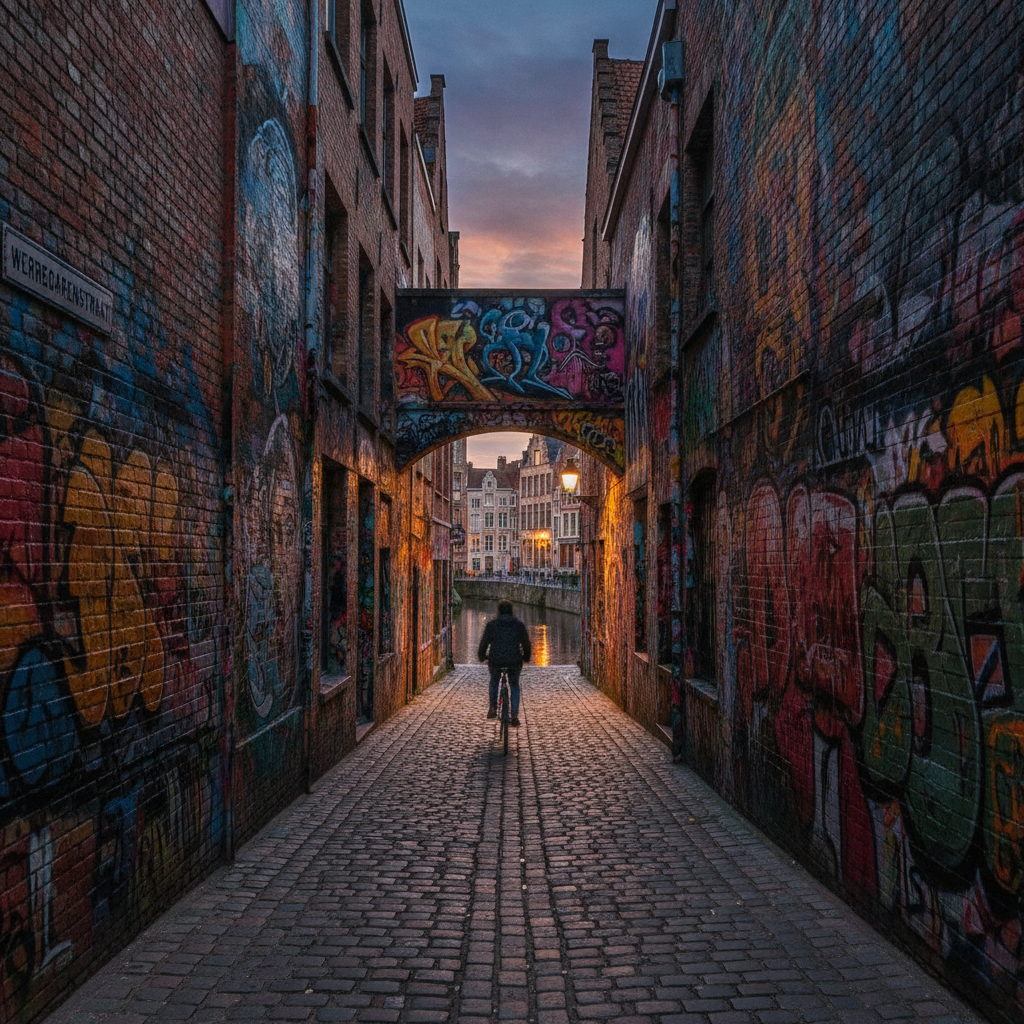
Ghent — Street Art, the Citadelpark & SMAK, Sint-Pietersabdij, Cycling Culture, dEUS Music & the Flemish Ardennes
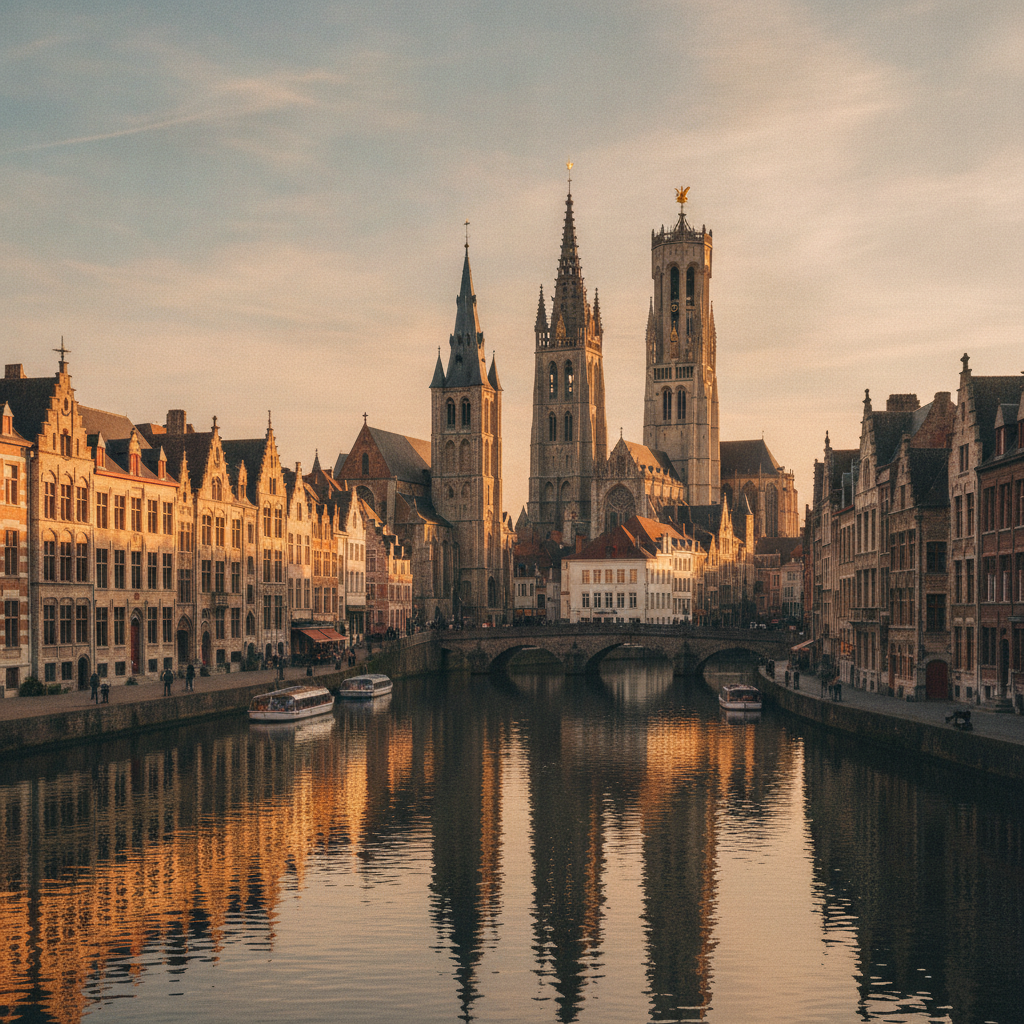
Ghent — the World's Most Important Painting, the Gravensteen Castle, the Graslei, Three Towers & Flemish Food