Don Det Island Sunrise & Cycling Walk
Explore Don Det — the most accessible of the Four Thousand Islands (Si Phan Don) in the southernmost Laos, Don Det is a flat, bicycle-friendly island in the Mekong River with sunrise views over the water and the most relaxed traveller atmosphere in Southeast Asia.
- 1
Don Det Sunrise Pier
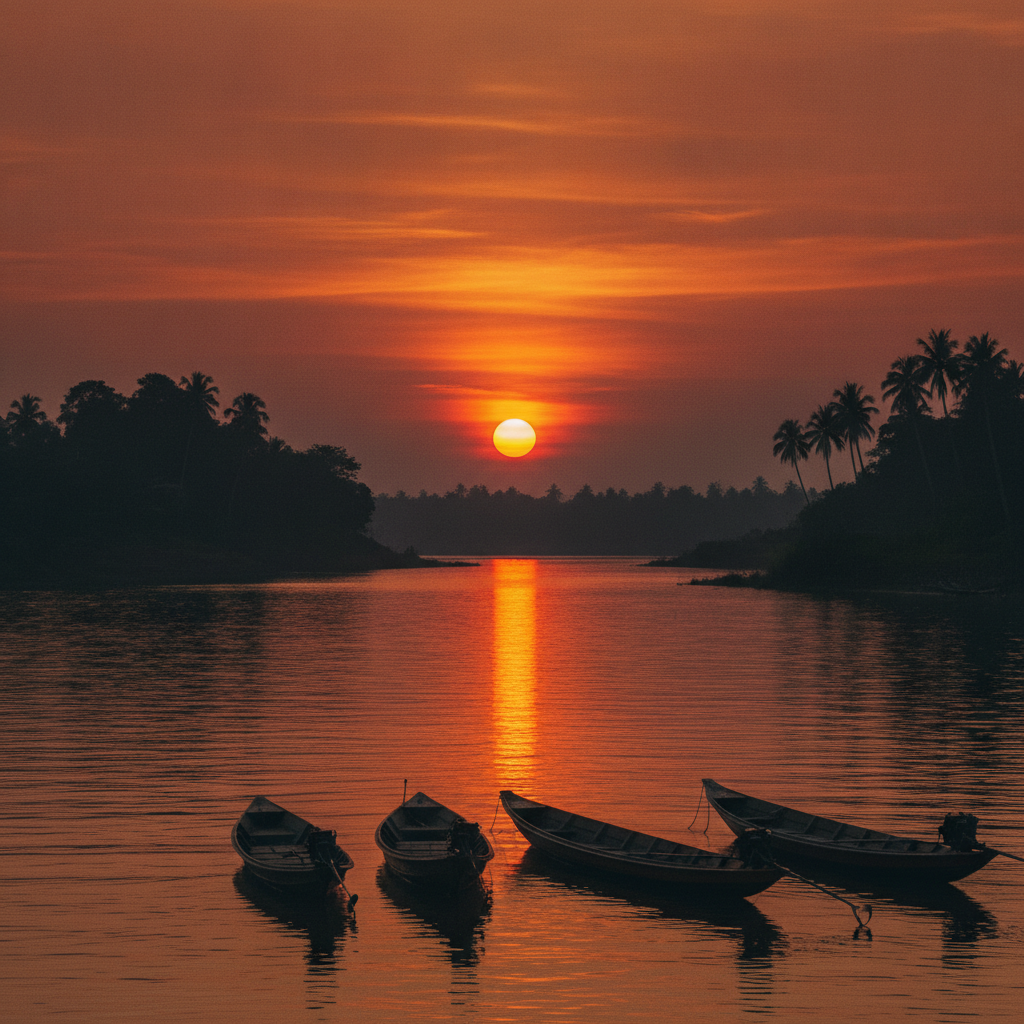
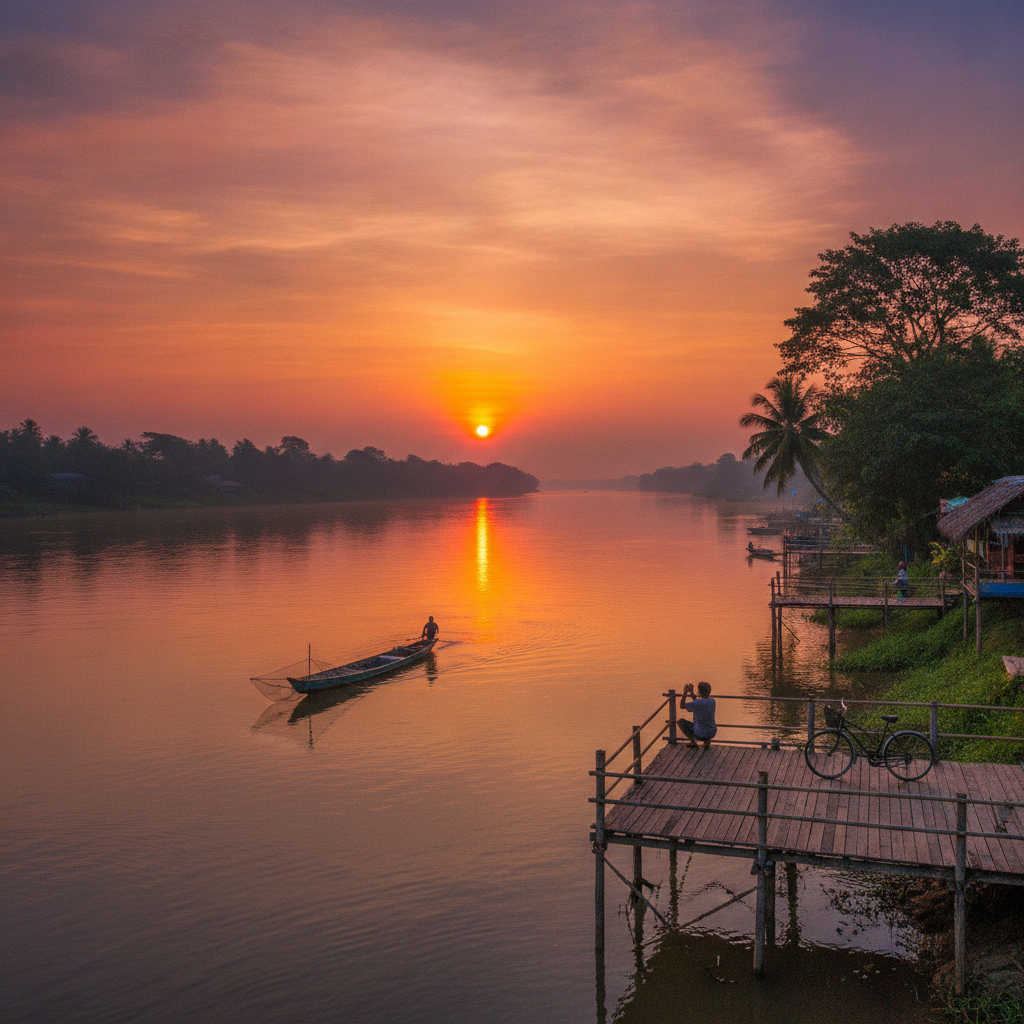
The sunrise pier on the eastern bank of Don Det island is the most atmospheric dawn viewpoint in the Four Thousand Islands (Si Phan Don) archipelago — the Mekong River at sunrise (the water turning from black to silver to gold as the sun rises above the Cambodian hills visible across the river) is the most compelling natural spectacle accessible from the bungalow-lined eastern shore of Don Det. The pier (the wooden dock from which the sunrise boat tours depart and to which the fishing boats return from their overnight operations on the river) provides the most direct encounter with the Mekong at its widest point — the river at Si Phan Don spreads to 14km across at the widest point, making it the broadest stretch of the Mekong in its entire 4,909km course from the Tibetan plateau to the South China Sea.
- 2
Don Det Bungalow Strip
The bungalow and guesthouse strip along the eastern shore of Don Det is the social centre of the Four Thousand Islands tourist community — the succession of bamboo and wooden bungalow operations (each with its riverside terrace, its hammock-hung common area, and its restaurant serving the Lao and international traveller food that constitutes the local tourist economy) creates the most archetypically Southeast Asian 'traveller beach' atmosphere accessible in Laos, despite being 1,000km from the sea. The bungalow strip's character (the hammock culture, the afternoon reading and card-playing, and the evening film screenings visible through the open walls of the common room operations) is the most concentrated expression of the 'banana pancake trail' backpacker culture accessible anywhere in the Lao tourist circuit.
- 3
Don Det Cycling Circuit
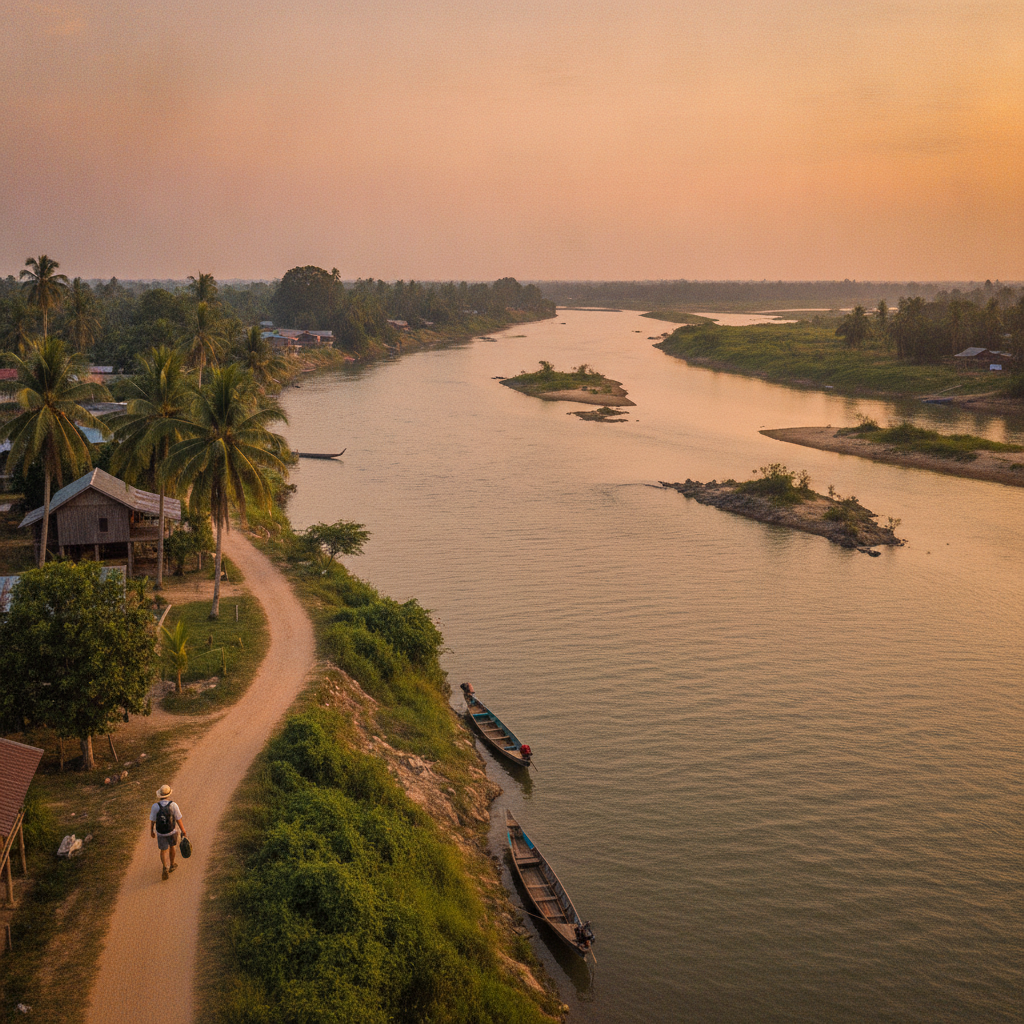
The cycling circuit of Don Det (the flat dirt path that circles the entire island in approximately 45 minutes, passing through the rice paddy interior and the village communities on the western bank before returning to the tourist strip on the eastern shore) is the most enjoyable single cycling activity accessible in the Four Thousand Islands — the island's completely flat terrain (the Mekong's floodplain islands have no hills) makes cycling accessible to all fitness levels, and the circuit's variety (the tourist bungalow environment of the eastern shore, the agricultural community of the island interior, and the quieter village life of the western bank) provides the most complete survey of Don Det's character in a single 2-hour itinerary.
- 4
French Colonial Railway Ruins
The French colonial railway ruins on Don Det (the remnants of the narrow-gauge railway built by the French colonial administration in 1897 to transport goods around the Khon Falls — the only railway ever built in Laos, constructed entirely to bypass the falls that made the Mekong impassable for the steamboats carrying colonial commerce) are the most historically significant infrastructure remains accessible on the islands — the railway pier, the track bed (now a walking path along the river bank), and the rusted locomotive (a surviving engine of the original railway, displayed near the pier as the most tangible artifact of the colonial engineering project) document the French effort to make the Mekong navigable as a trade route from Saigon to Yunnan. The railway's tiny scale (the 600mm gauge track, the miniature locomotive) compared to the vast commercial ambition it represented makes it the most poignant infrastructure ruin accessible in Laos.
- 5
Don Det Village Life
The traditional Lao fishing villages on the western shore of Don Det (the communities that predate the tourist economy by generations, maintaining the river fishing, the rice cultivation on the island's agricultural land, and the temple-centred social structure of the traditional Mekong fishing community) provide the most authentic encounter with the island's original character — the wooden stilt houses (their ground floors open for boat storage and the fish drying racks visible in the space between the house pillars), the dugout canoes moored at the village bank (the traditional Mekong fishing vessel, propelled by the long-handled paddle), and the temple compound (the active Buddhist pagoda that serves as the spiritual and social centre of the village community before and alongside the tourist economy) create the most complete picture of the pre-tourism island life accessible on Don Det.
- 6
Bridge Between Islands
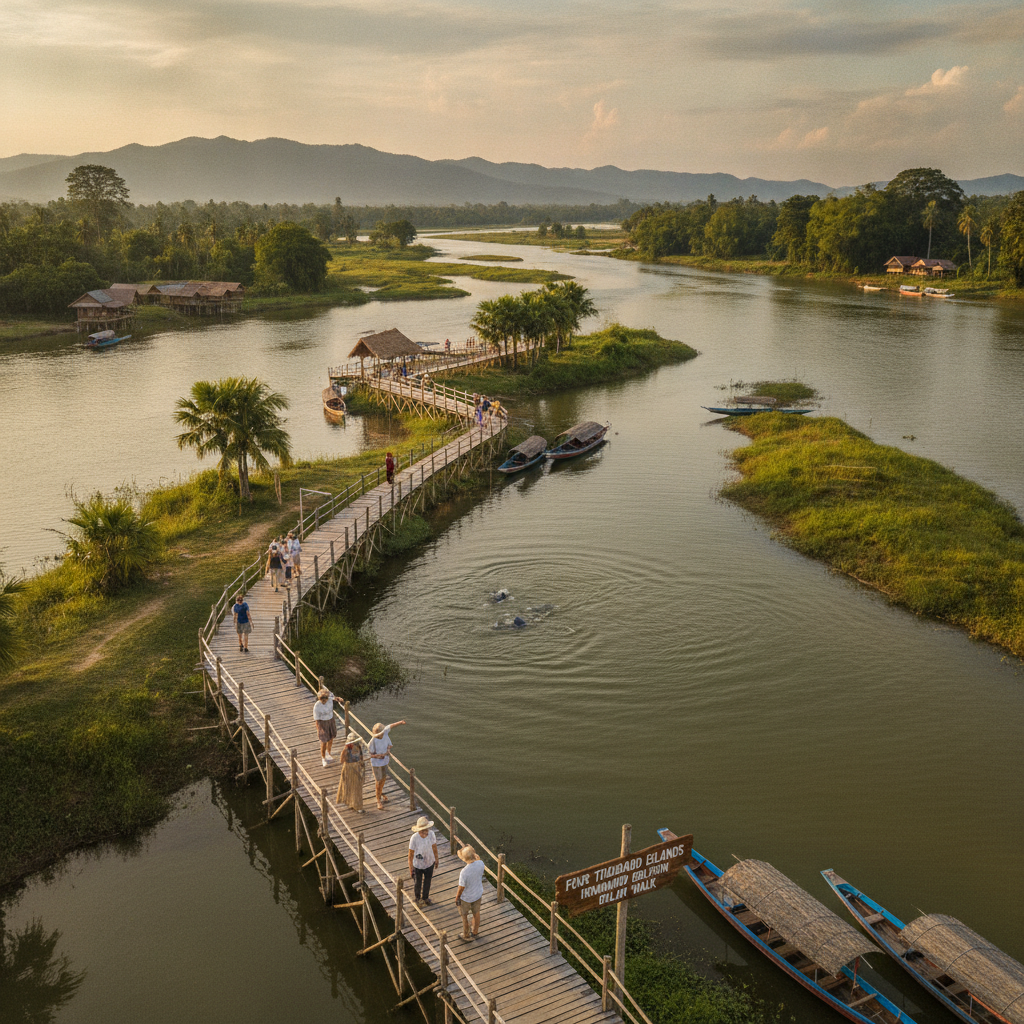
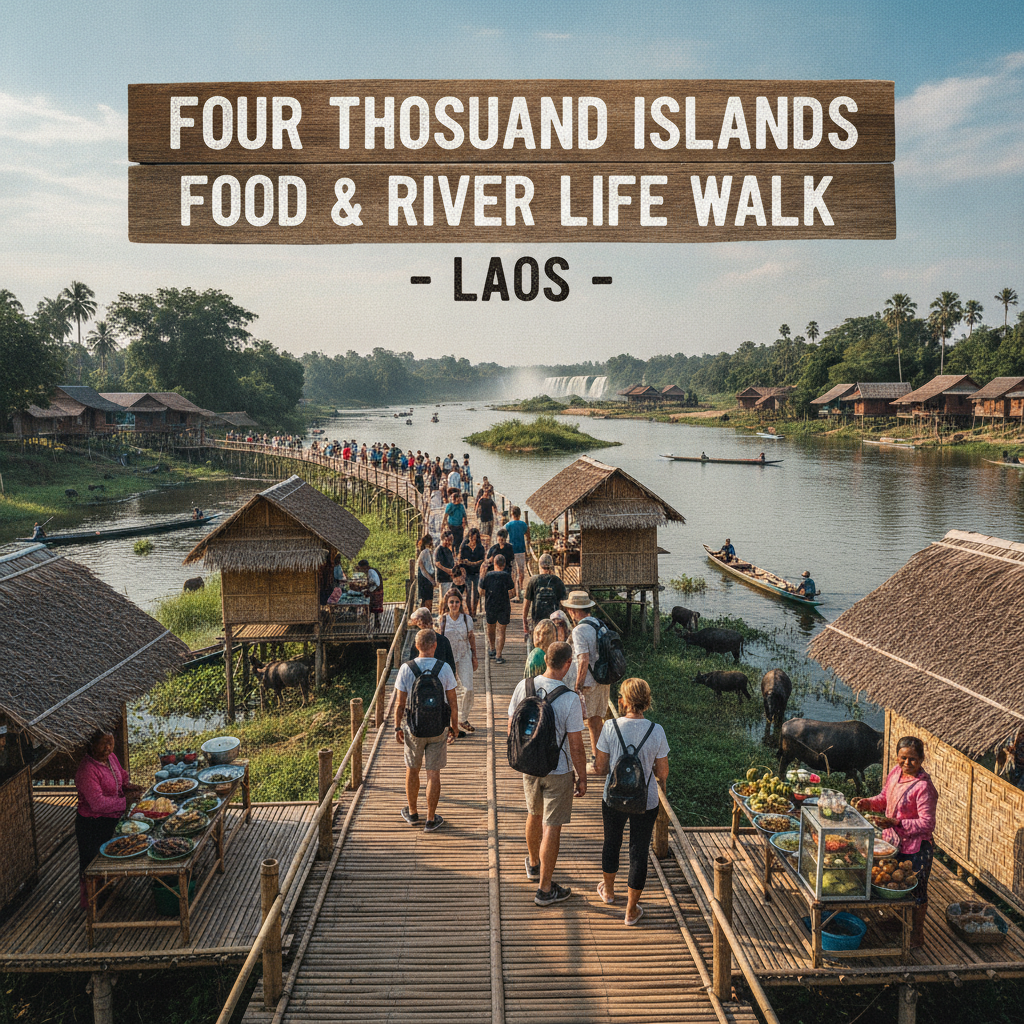
The bamboo and wooden bridge connecting Don Det to the adjacent Don Khon island (the most photographed infrastructure element in the Four Thousand Islands, the ramshackle but functional bridge spanning the narrow channel between the two main tourist islands) is the primary pedestrian connection between the two islands and the most socially animated crossing in the Si Phan Don archipelago — the bridge's foot traffic (the tourists cycling between the two islands, the islanders carrying produce between the markets on Don Khon and the guesthouses on Don Det, and the occasional motorcycle navigating the narrow planking) creates the most concentrated human activity accessible on the quietest islands in mainland Southeast Asia. The bridge crossing provides the most immediate transition between the backpacker-oriented Don Det and the quieter, more village-focused Don Khon.
Walk this route with audio
Stories play automatically as you reach each stop — no tapping needed.