Fergana Rishtan Blue Pottery Craft Village
Visit Rishtan — the village 65 kilometers from Fergana famous for its distinctive blue and white ceramic pottery, the tradition dating to the pre-Islamic period using the local red clay and natural mineral glazes to produce tableware and decorative pieces with the characteristic Rishtan design vocabulary of pomegranates, fish, and geometric borders.
- 1
Rishtan Pottery Village Approach
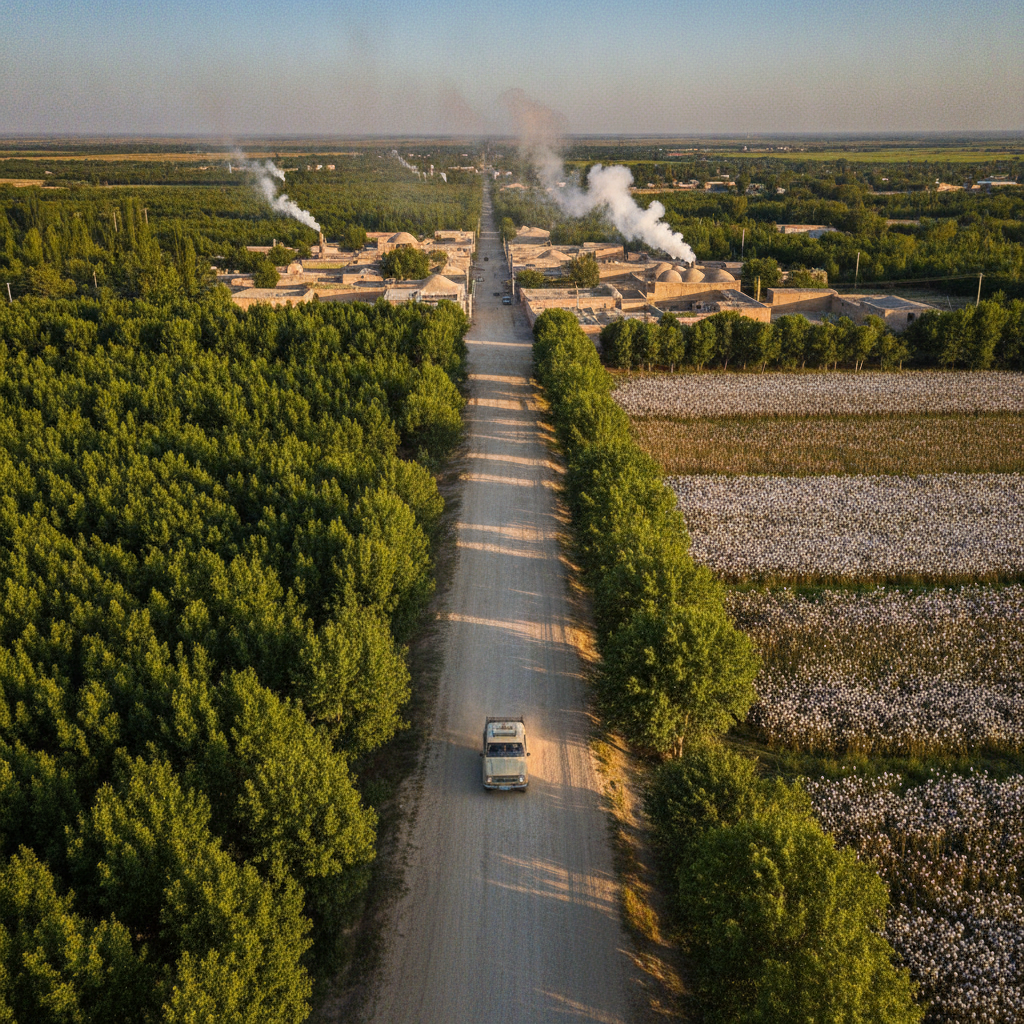
Drive to Rishtan through the Fergana Valley landscape — the road passing through mulberry orchards and cotton fields to the village whose pottery workshops are identifiable from the smoke of the kilns and the ceramic pieces drying in every available outdoor space, the entire village organized around the production of the traditional Rishtan ware.
- 2
Red Clay Raw Material
The red clay raw material of Rishtan pottery — the specific local clay dug from deposits around the village that fires to a warm red-brown body, the clay prepared by washing, settling, and kneading to remove impurities before shaping, the material foundation of a craft that has been practiced in this village continuously since at least the 10th century.
- 3
Wheel Throwing Technique
The wheel throwing technique of Rishtan potters — the craftsmen shaping bowls, plates, and vessels on kick wheels using a pulling technique that produces the slightly uneven walls characteristic of hand-thrown pottery, the asymmetry considered a quality indicator distinguishing hand-made from industrial production.
- 4
Blue Mineral Glaze Application
The blue mineral glaze application — the cobalt-containing glaze applied over the white slip in the distinctive Rishtan patterns, the brushwork of the decorator applying the traditional pomegranate, fish, and geometric border designs with a freedom of hand that makes each piece slightly different, the blue color intensifying during firing.
- 5
Wood-Fired Kiln Firing
The wood-fired kiln firing at Rishtan — the traditional domed kilns loaded with pottery and fired with local brushwood over 12-15 hours, the temperature reaching 900-1000°C, the craftsman monitoring the color of the flame and the draw tiles to judge when firing is complete, the skill of kiln management central to the quality of the finished ware.
- 6
Rishtan Market and Sales
The Rishtan market where pottery is sold — the roadside stalls and workshop-front displays where the village's production is sold to visitors from Fergana and Tashkent, the pieces ranging from small souvenir bowls to large decorative platters, the Rishtan pottery internationally recognized as one of Central Asia's finest ceramic traditions.
Walk this route with audio
Stories play automatically as you reach each stop — no tapping needed.