Essaouira Essential: The Atlantic Ramparts, the UNESCO Medina, Gnawa Music, the Mogador Portuguese Heritage, the Orson Welles and Jimi Hendrix Connections, and the Wind City Character
The Essaouira essential circuit covers the Atlantic ramparts as the most dramatically positioned sea wall in Morocco, the UNESCO-inscribed medina with its distinctive blue and white architecture, the Gnawa spiritual music tradition, the Mogador Portuguese-era defensive heritage, the Orson Welles and Jimi Hendrix artistic connections, and the Essaouira Wind City character.
- 1
Essaouira Ramparts: The Atlantic Sea Wall
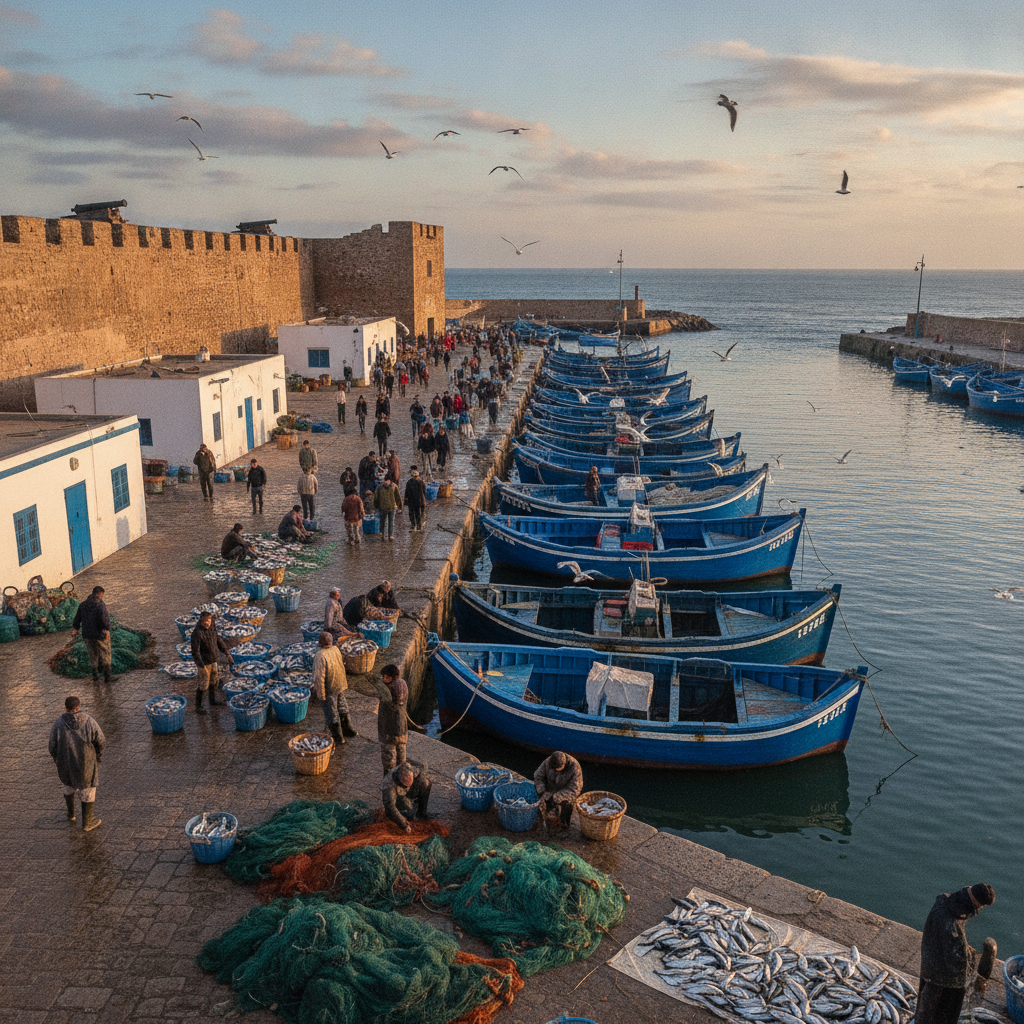
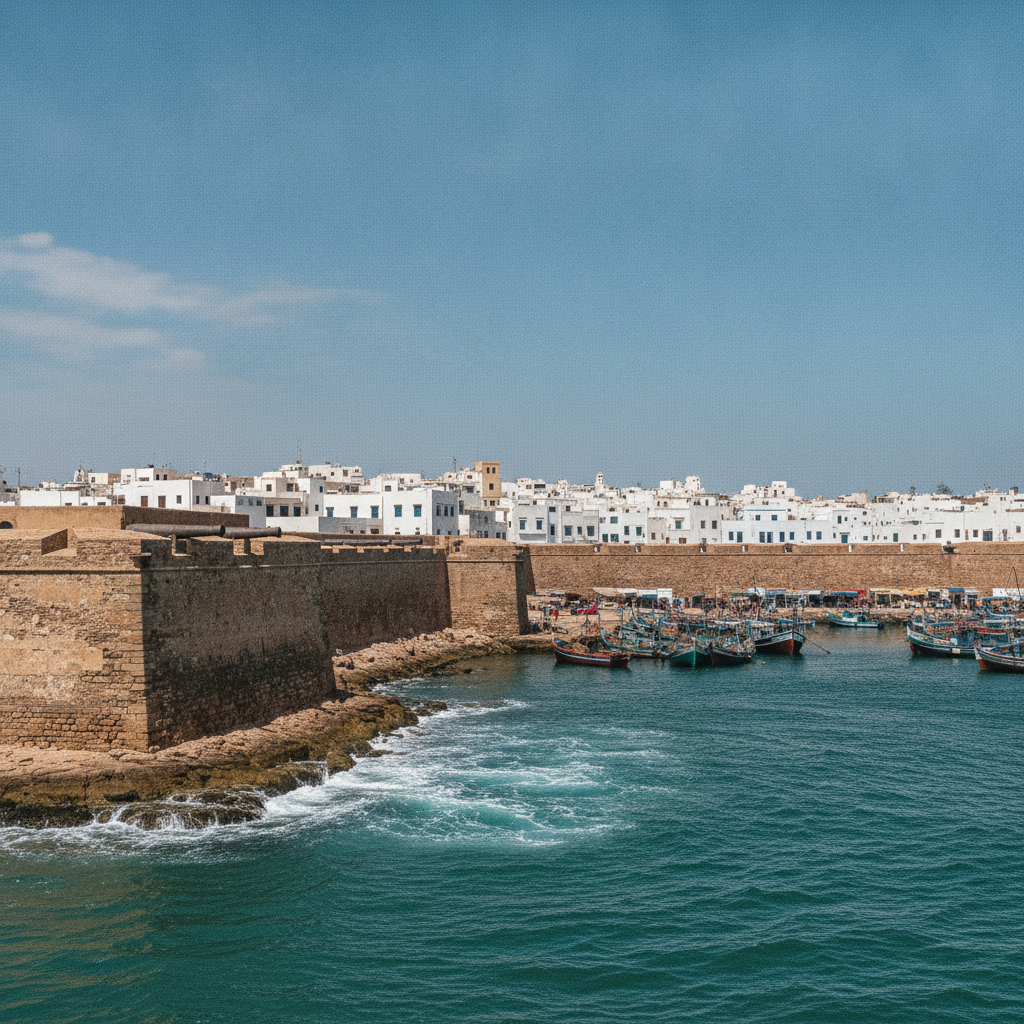
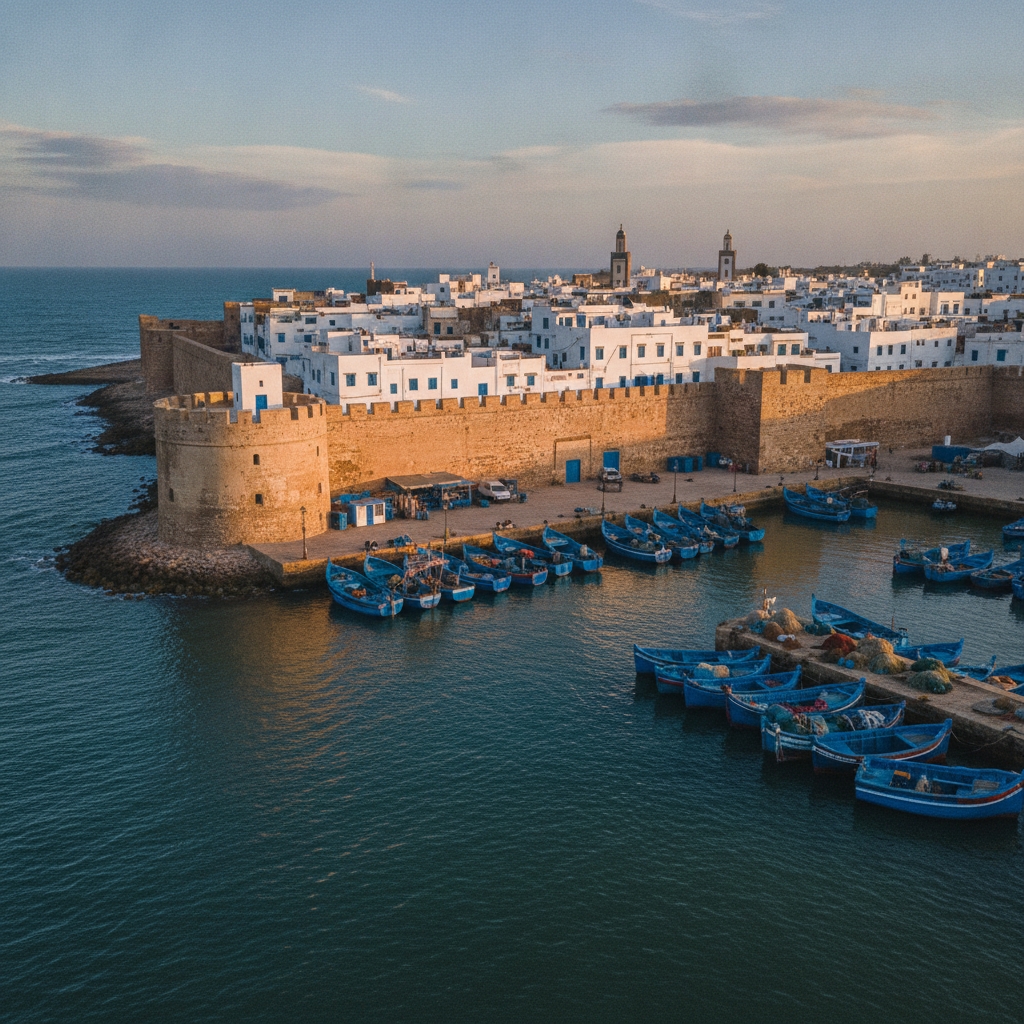
The Essaouira ramparts, the 18th century Atlantic sea fortification built by Sultan Mohammed Ben Abdallah with the French military engineer Theodore Cornut in 1765, are the most dramatically positioned defensive walls in Morocco with the cannon-studded sea bastions rising directly from the Atlantic surf and the Scala du Port gun platform providing the most photogenically complete single view of the Essaouira harbor, the medina, and the Atlantic. The ramparts are in the most complete single state of preservation of any Moroccan coastal fortification and the most atmospheric single evening walk available in any Moroccan medina.
- 2
Essaouira Medina: The UNESCO Blue and White City
The Essaouira medina (UNESCO World Heritage Site since 2001) is the most architecturally distinctive single medina in Morocco with the straight grid-plan streets (unusual in the Islamic medina tradition that favors the organic lane network), the blue and white house facades painted in the Essaouira color identity, and the French fortification engineer influence on the street plan that created the most orderly single medina in the Moroccan Atlantic cities. The Essaouira medina is the most easily navigable single medina in Morocco for the first-time visitor because the grid plan allows the most reliable single orientation.
- 3
Gnawa Music: The Essaouira Spiritual Tradition
The Gnawa music tradition of Essaouira, the most important single center of the Gnawa spiritual music in Morocco, is the musical and ritual practice of the descendants of the sub-Saharan African slaves brought to Morocco via the trans-Saharan trade route who maintained their West African spiritual practices within the Islamic Moroccan framework. The Gnawa lila ceremony uses the guembri (the three-string bass lute), the krakeb (iron castanets), and the singing in the Bambara and Soninke language to invoke the spiritual entities (mluk) in the most complete single living African diasporic spiritual music practice in North Africa.
- 4
Gnawa World Music Festival: The Annual Cultural Event
The Essaouira Gnawa and World Music Festival, held each June since 1998, is the most important single music festival in Morocco and the event that most effectively positioned Essaouira as the cultural capital of the Moroccan music world with the headline international artists, the Gnawa master musicians, the free open-air concerts on the rampart square, and the 500,000 annual festival visitors creating the most festive single annual event in any Moroccan Atlantic city. The festival format of the Gnawa fusion concerts pairing the traditional Gnawa musicians with the international jazz, the blues, and the world music artists creates the most musically innovative single collaboration program in North Africa.
- 5
Orson Welles and Jimi Hendrix: The Artistic Heritage
Orson Welles filmed his 1952 Othello partly on the Essaouira ramparts and the harbor, using the most photogenically dramatic single Moroccan coastal location for the most intellectually ambitious Shakespeare adaptation in film history. Jimi Hendrix visited Essaouira in 1969 and the Hendrix House on the Rue de la Skala (the house where he reportedly stayed) is the most frequently visited single rock music pilgrimage site in Morocco. The combined Welles-Hendrix artistic connection gives Essaouira the most internationally mythologized single artistic heritage of any small Moroccan city.
- 6
Essaouira Wind: The Saharan Coastal Character
The Essaouira trade wind (the Alizee from the northeast) blows with the most consistent single wind force of any Moroccan Atlantic location, making the city the most reliably windy single coastal city in Morocco and the most internationally sought-after windsurfing and kitesurfing destination in Africa. The Wind City character also makes the Essaouira summer (June to August) the most temperate single summer Atlantic coast resort in Morocco with the sea temperature of 18-20 degrees and the trade wind cooling the air temperature to 22-25 degrees while Marrakech 170 kilometers inland reaches 42 degrees.
Walk this route with audio
Stories play automatically as you reach each stop — no tapping needed.
More in Essaouira
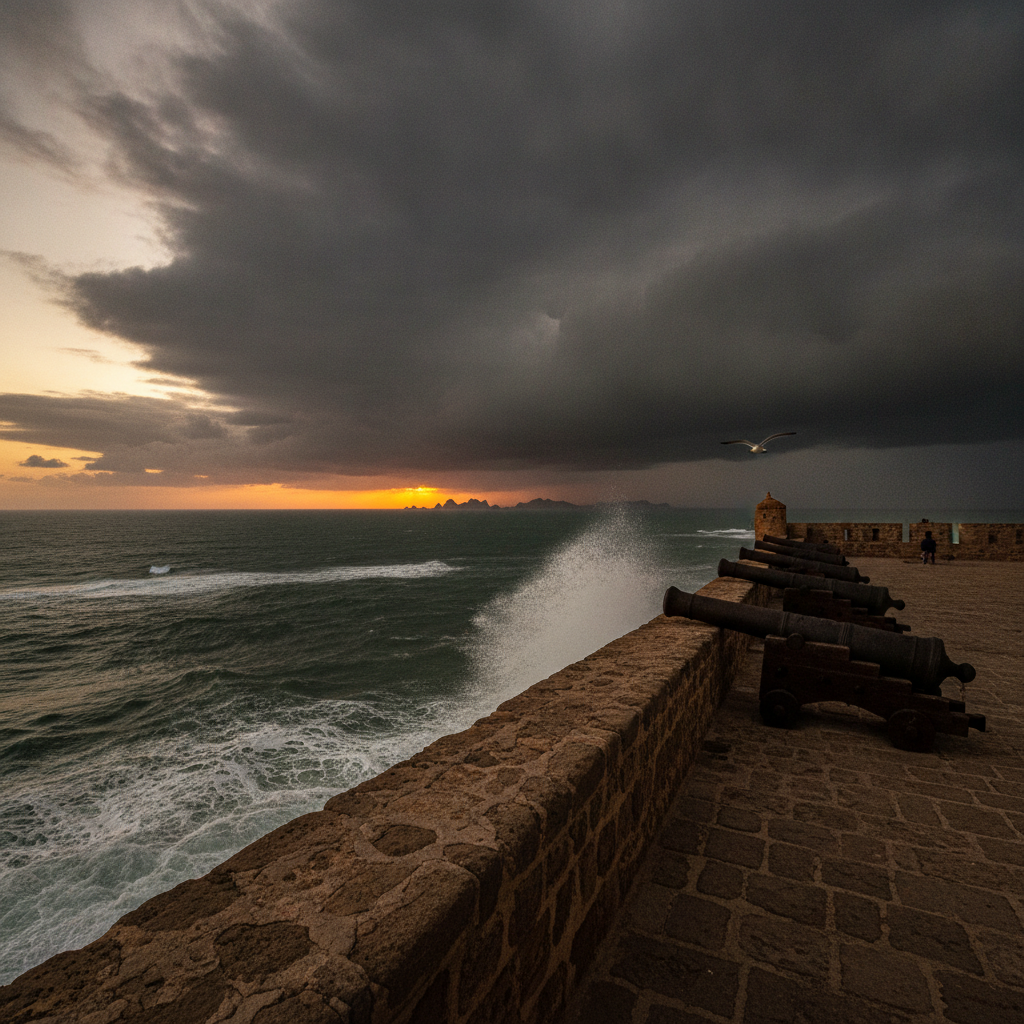
The Guanche Indigenous Population of the Canary Islands Were Amazigh (Berber) Speakers Linguistically Related to the Tamazight Populations of the Moroccan Atlantic Coast Who Were Progressively Conquered by Spanish Settlers in the 15th Century; The Battle of Alcacer Quibir in 1578 Where the Moroccan Saadians Killed Portuguese King Sebastian I Triggered the Portuguese Succession Crisis Leading to the 60-Year Iberian Union of Portugal and Spain Under Philip II; The Essaouira Pastilla au Fruits de Mer (Shrimp, Crab, and White Fish in Warqa Pastry With Saffron Cream) Was Invented in Essaouira as a Seafood Adaptation of the Classic Fassi Bastilla
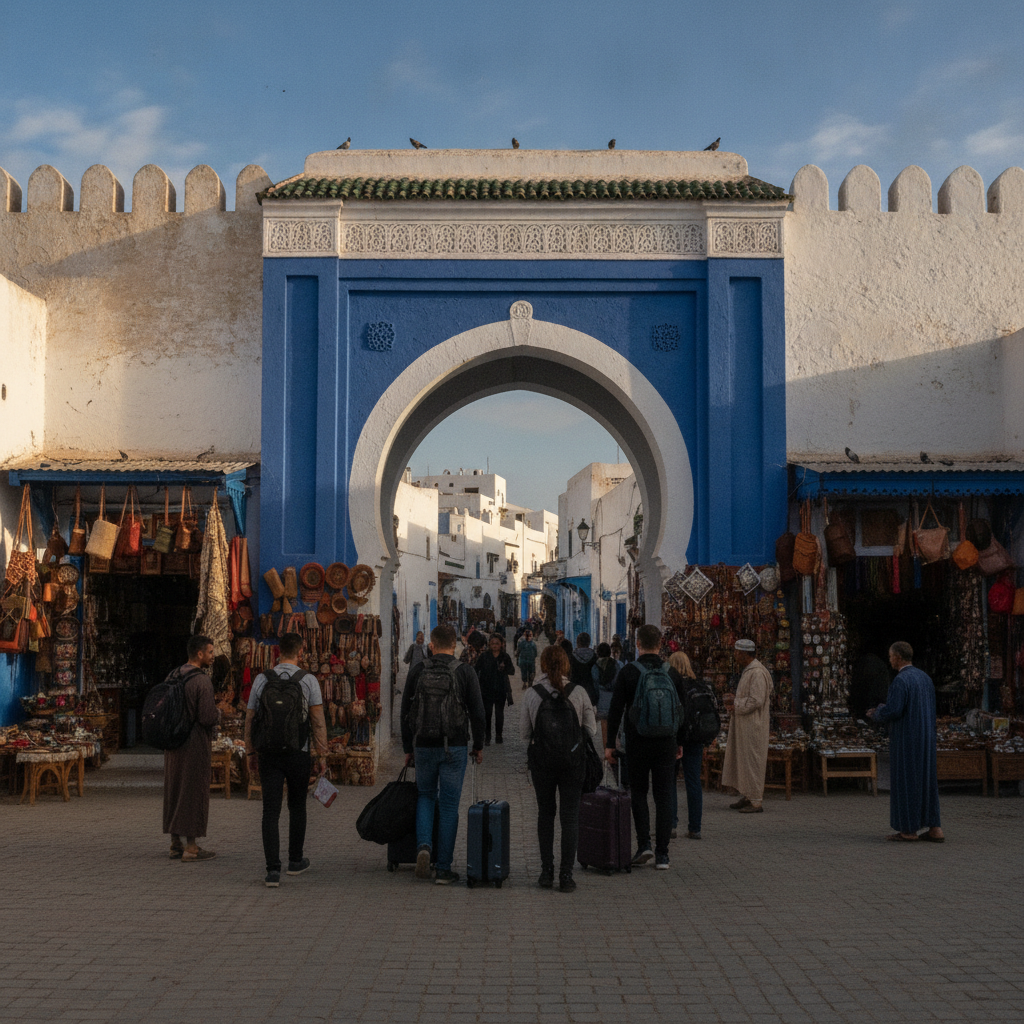
Essaouira Practical: Transport from Marrakech and Agadir, the Best Riad Accommodation, the Optimal Visit Timing, the Wind Season Implications, and the Departure Summary
Essaouira History: The Mogador Portuguese Trading Post, the Phoenician Foundation, the Jewish Merchant Community, the Gnawa Slave Trade Origins, the 18th Century Sultan Rebuilding, and the UNESCO Recognition
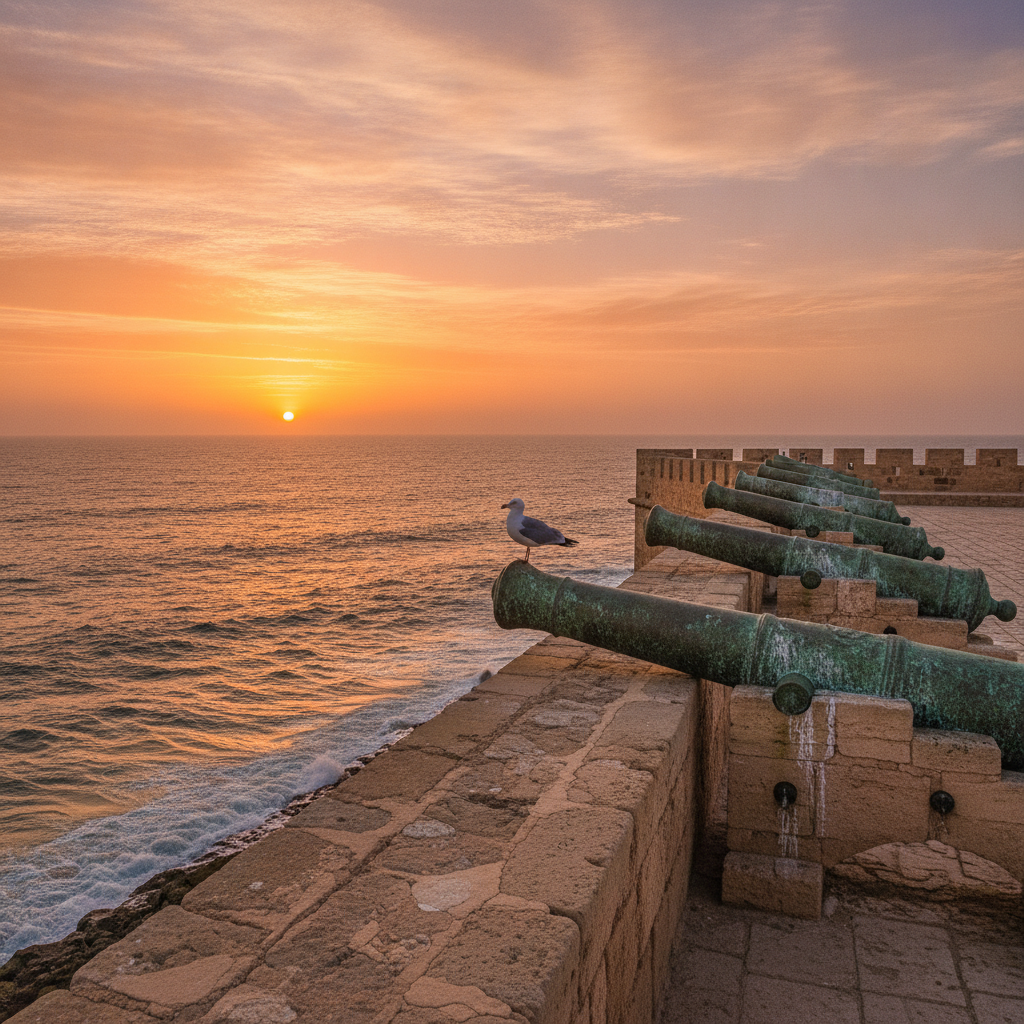
Essaouira's UNESCO-Listed Ramparts Were Designed by French Engineer Theodore Cornut in 1764-1765 Under Sultan Mohammed III and Line the Atlantic With 17th-18th Century Bronze Cannons Seized From European Ships; The Gnawa and World Music Festival of Essaouira Attracts 450,000-500,000 Visitors Over 4 Days in June and Is the World's Largest Gnawa Festival; The Thuya Arborvitae Root Burl Exploitation for the Essaouira Marquetry Craft Is Not Sustainable as Burl Harvesting Kills the Root System Preventing Tree Regeneration
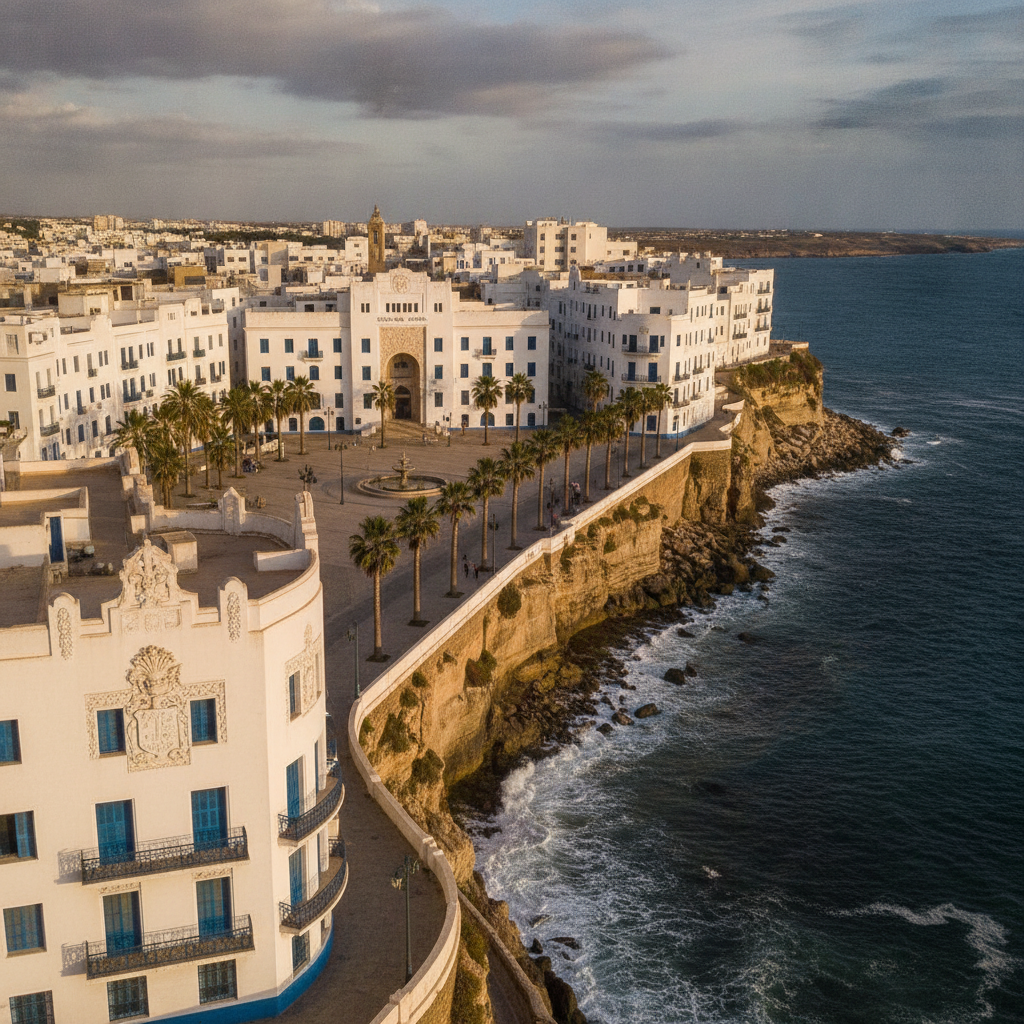
Essaouira South: Sidi Ifni the Art Deco Spanish Enclave, Tiznit the Silver Jewelry Capital, the Souss Valley Connection, and the Route to Agadir