Essaouira Practical: Transport from Marrakech and Agadir, the Best Riad Accommodation, the Optimal Visit Timing, the Wind Season Implications, and the Departure Summary
The Essaouira practical route covers the Supratours bus from Marrakech and Agadir, the best riad accommodation in the medina, the optimal visit timing in spring and autumn to balance the wind and the weather, the wind season implications for outdoor activities, and the departure summary.
- 1
Transport from Marrakech: The Direct Bus
The Supratours direct bus from Marrakech to Essaouira (2 hours 45 minutes, 4 departures daily) is the most efficient single transport connection to Essaouira and the most consistently reliable single bus service on the route. The CTM bus also operates the Marrakech-Essaouira service with the similar journey time and frequency. The grand taxi from Marrakech to Essaouira in the shared 6-passenger taxi takes 2 hours 15 minutes and is the most flexible single departure timing option. The Marrakech to Essaouira road journey through the argan forest landscape is the most scenically rewarding single bus journey in Morocco with the argan trees and the Berber villages and the Jbilet mountains visible from the road.
- 2
Transport from Agadir: The Coastal Connection
The Supratours and CTM buses from Agadir to Essaouira (2 hours 30 minutes) provide the most convenient single coastal connection between the two most visited Atlantic Morocco resorts. The Agadir to Essaouira combination is the most frequently recommended single 2-destination Atlantic Morocco circuit for the visitor who wants the beach resort and the cultural medina in the most geographically compact single itinerary. The coastal highway scenery between Agadir and Essaouira, with the argan cliff landscape and the Atlantic ocean view, is the most visually varied single Atlantic road in Morocco.
- 3
Essaouira Riad Accommodation: The Medina Choice
The Essaouira medina riad accommodation is the most completely contained single accommodation experience in Morocco because the medina is small enough to walk from any riad to any medina destination in under 10 minutes. The most recommended single accommodation categories are the sea-view riads on the Scala de la Ville rampart side (the Beau Rivage, the Lalla Mira) for the Atlantic sunset from the riad terrace and the harbor-view riads near the fishing port for the morning fishing activity sound. The Essaouira riad prices are the most competitive of any Moroccan medina at the equivalent star rating, making it the single best-value authentic riad city.
- 4
Optimal Visit Timing: Spring and Autumn
The optimal Essaouira visit timing is April-May and September-October when the Alizee trade wind is at its most moderate (15-20 knots, pleasant rather than excessive), the sea temperature allows the beach visit (18-20 degrees), and the Marrakech visitor peak has not yet arrived or has departed. June through August brings the maximum wind (25-35 knots, ideal for kitesurfing but challenging for casual beach use) and the maximum visitor numbers following the Gnawa Festival in June. The October visit provides the most complete single Essaouira experience with the fishing season in full activity, the argan harvest visible in the surrounding landscape, and the festival season concluded.
- 5
Wind Season Implications: The Outdoor Activity Calendar
The Essaouira wind season calendar determines the optimal activity for each month: June-August for the professional kitesurfing and windsurfing, September-November for the casual beach use and the walking, December-February for the warmest indoor medina culture and the riad fireplace experience, March-May for the horse riding on the beach and the Essaouira countryside walks. The visitor who arrives in July expecting the Marrakech heat and the calm beach will find instead the 30-knot wind and the 18-degree sea temperature - the most complete single seasonal expectation mismatch in Morocco.
- 6
Essaouira Departure: The Atlantic Summary
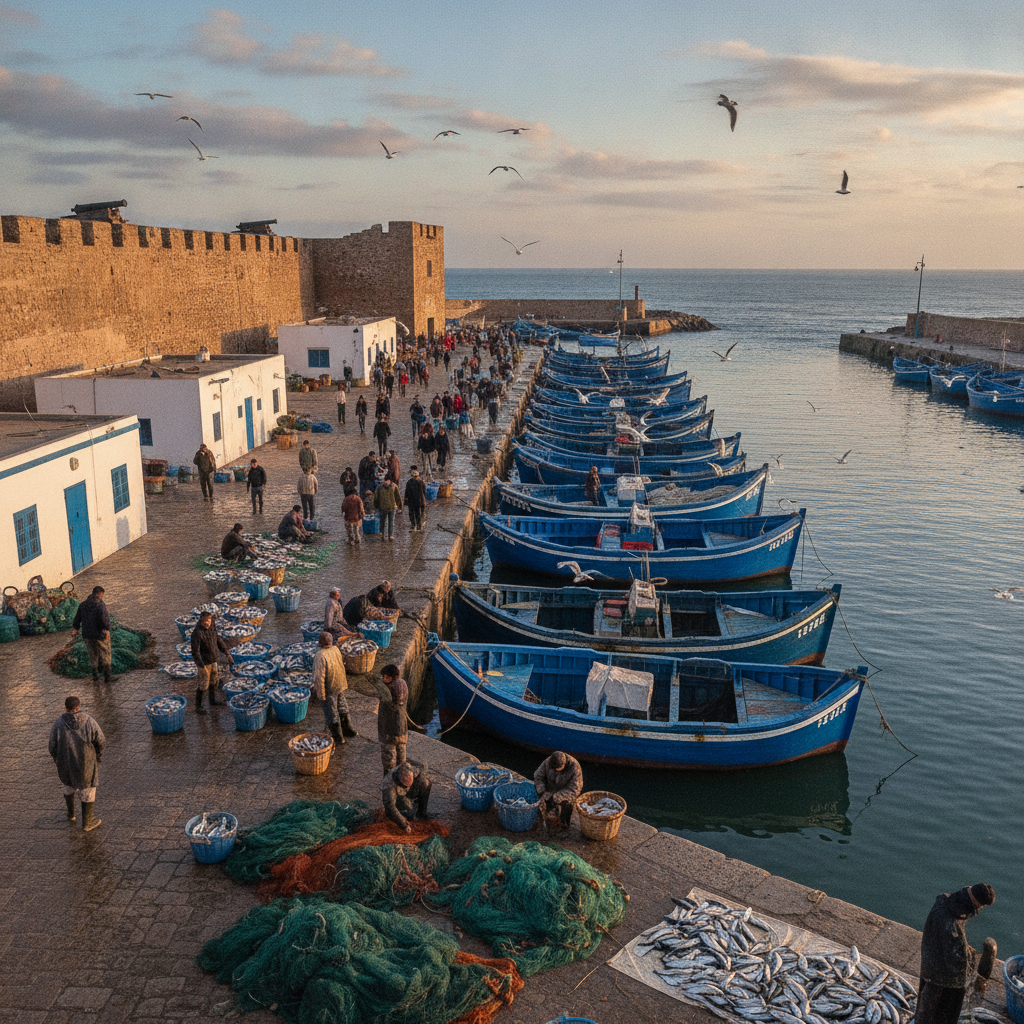
Essaouira is the most completely distinctive single Moroccan coastal city in the international travel imagination because the combination of the Gnawa music, the thuya craft, the blue fishing boats, the Atlantic wind, and the UNESCO ramparts creates a single unified urban character that no other Moroccan city replicates. The visitor who leaves Essaouira having attended the evening rampart sunset, heard the Gnawa guembri in the medina cafe, eaten the fresh sardine at the harbor grill, and walked the Atlantic beach in the Alizee wind carries the most complete single sensory memory of any Moroccan destination.
Walk this route with audio
Stories play automatically as you reach each stop — no tapping needed.
More in Essaouira
The Guanche Indigenous Population of the Canary Islands Were Amazigh (Berber) Speakers Linguistically Related to the Tamazight Populations of the Moroccan Atlantic Coast Who Were Progressively Conquered by Spanish Settlers in the 15th Century; The Battle of Alcacer Quibir in 1578 Where the Moroccan Saadians Killed Portuguese King Sebastian I Triggered the Portuguese Succession Crisis Leading to the 60-Year Iberian Union of Portugal and Spain Under Philip II; The Essaouira Pastilla au Fruits de Mer (Shrimp, Crab, and White Fish in Warqa Pastry With Saffron Cream) Was Invented in Essaouira as a Seafood Adaptation of the Classic Fassi Bastilla
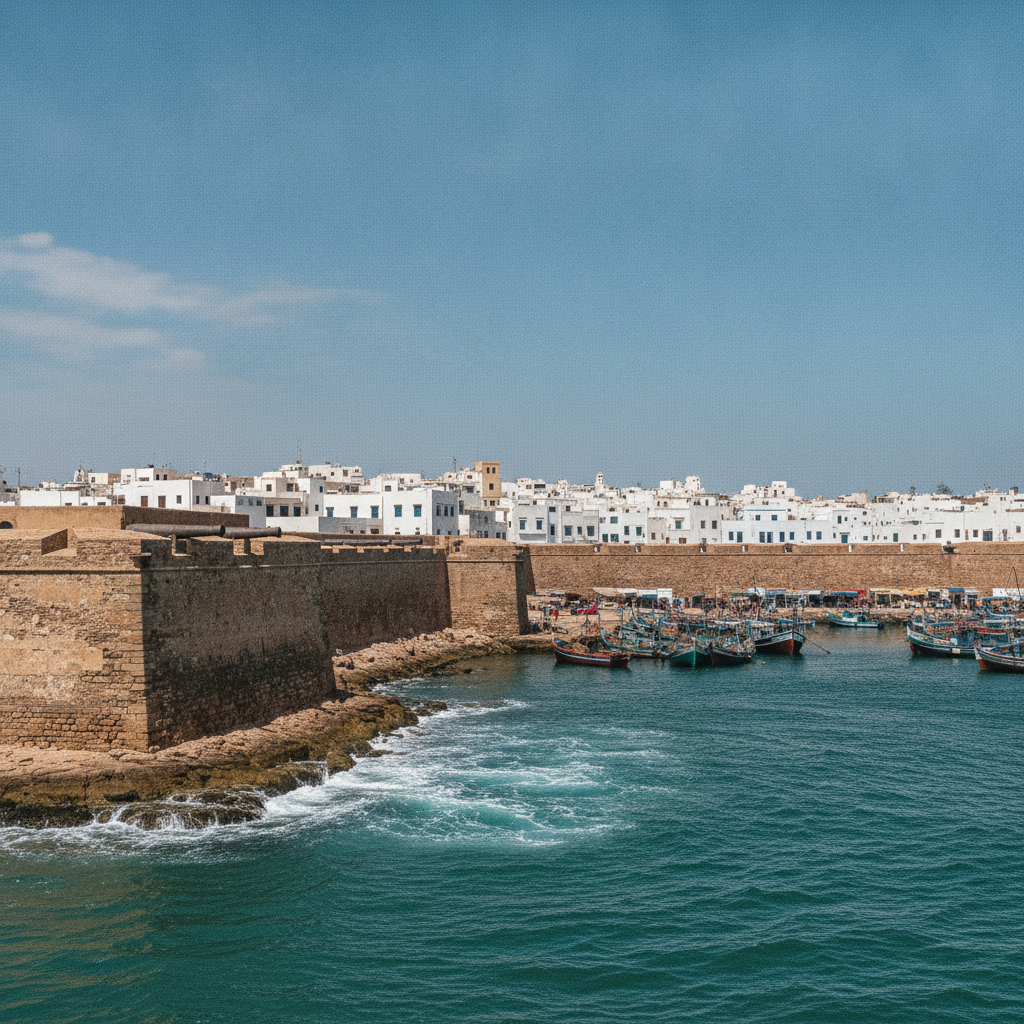
Essaouira Essential: The Atlantic Ramparts, the UNESCO Medina, Gnawa Music, the Mogador Portuguese Heritage, the Orson Welles and Jimi Hendrix Connections, and the Wind City Character
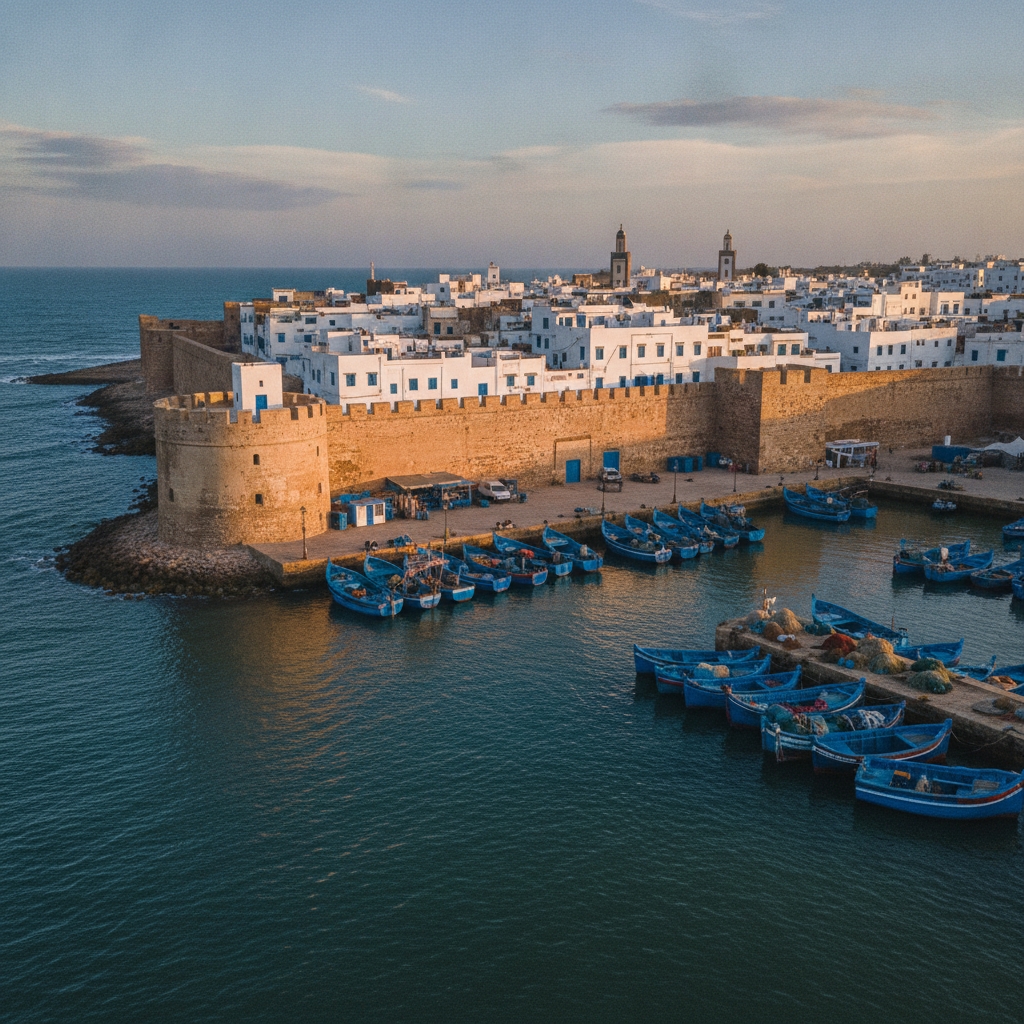
Essaouira History: The Mogador Portuguese Trading Post, the Phoenician Foundation, the Jewish Merchant Community, the Gnawa Slave Trade Origins, the 18th Century Sultan Rebuilding, and the UNESCO Recognition
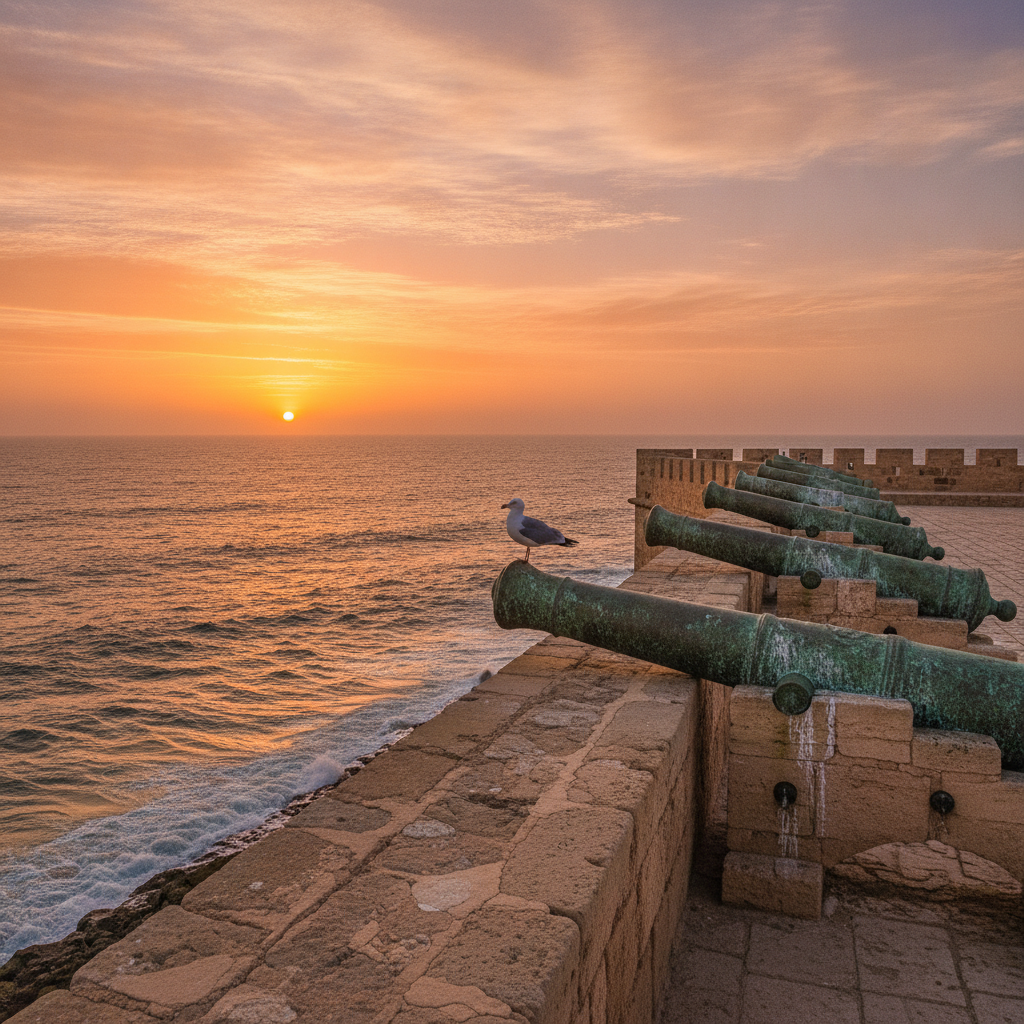
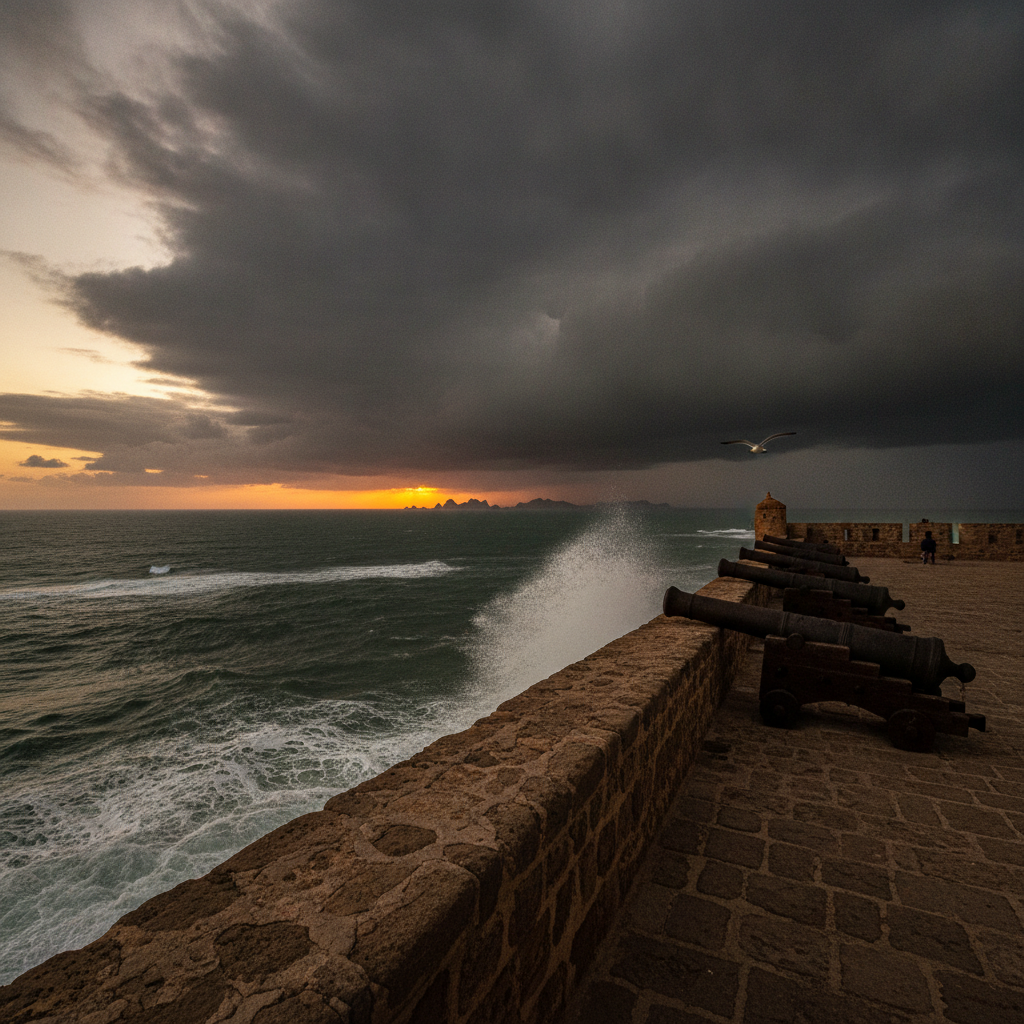
Essaouira's UNESCO-Listed Ramparts Were Designed by French Engineer Theodore Cornut in 1764-1765 Under Sultan Mohammed III and Line the Atlantic With 17th-18th Century Bronze Cannons Seized From European Ships; The Gnawa and World Music Festival of Essaouira Attracts 450,000-500,000 Visitors Over 4 Days in June and Is the World's Largest Gnawa Festival; The Thuya Arborvitae Root Burl Exploitation for the Essaouira Marquetry Craft Is Not Sustainable as Burl Harvesting Kills the Root System Preventing Tree Regeneration
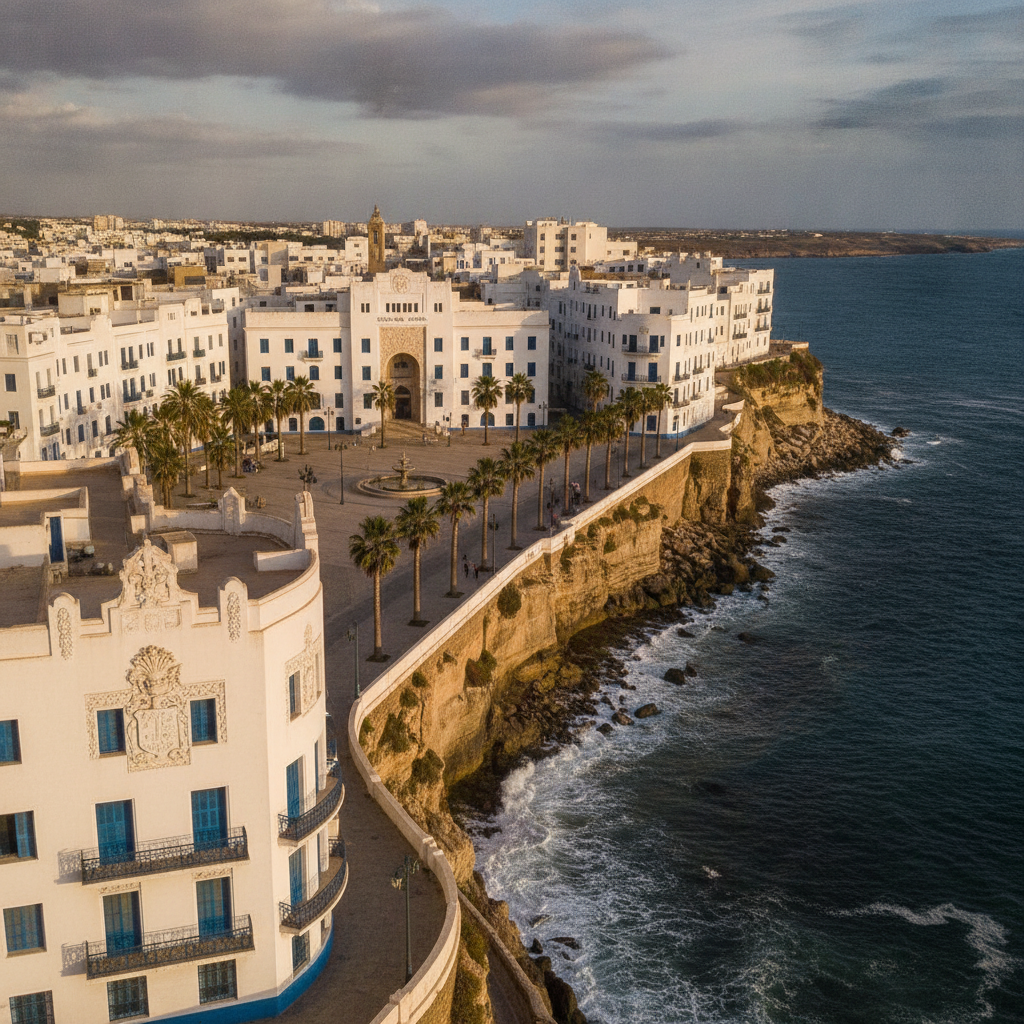
Essaouira South: Sidi Ifni the Art Deco Spanish Enclave, Tiznit the Silver Jewelry Capital, the Souss Valley Connection, and the Route to Agadir