Damascus Souks and Khans
Explore the ancient covered markets and merchant khans of Damascus, where the trade routes of the ancient world converged and the goods of three continents were bought and sold in the specialized markets of one of history great trading cities.
- 1
Souk al-Hamidiyya
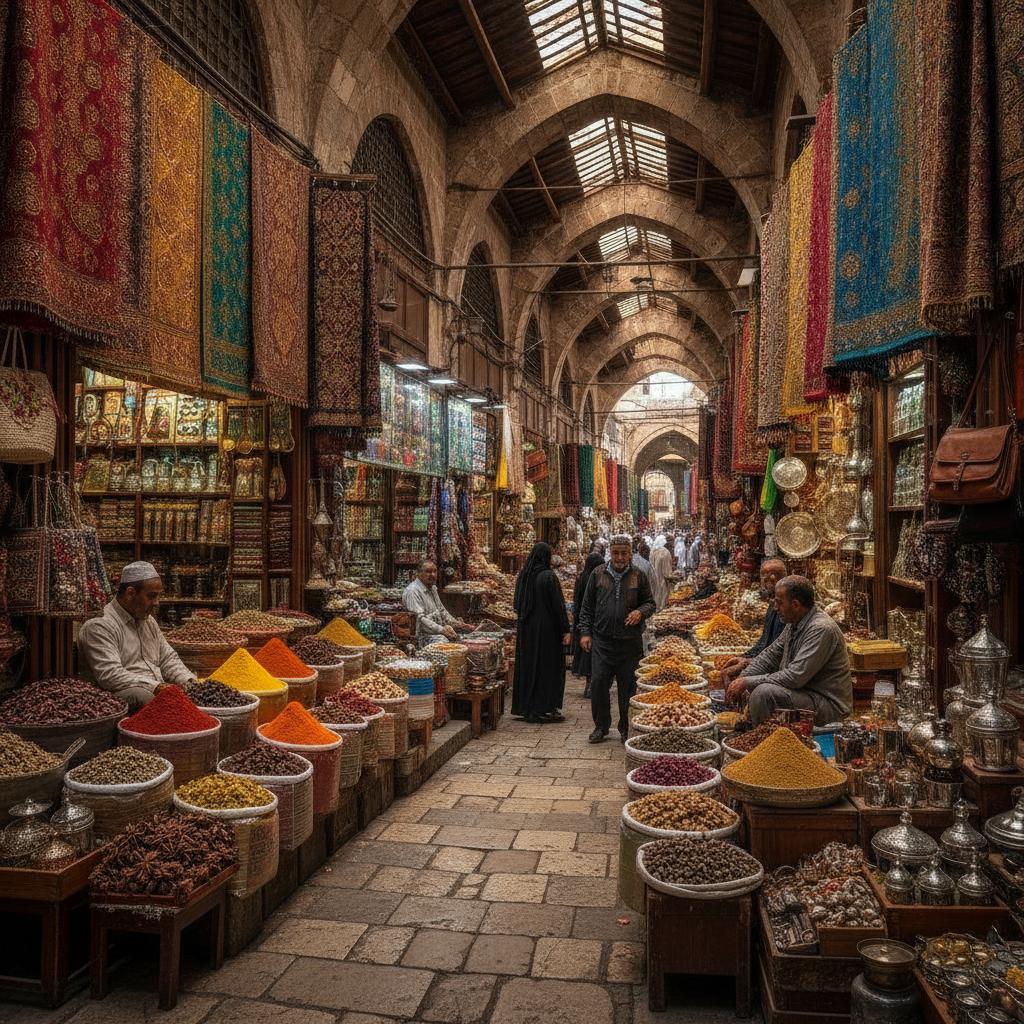
Enter Souq al-Hamidiyya, the great covered market of Damascus built in the 19th century on Roman foundations, its long vaulted hall lined with shops selling textiles, gold jewelry, and traditional crafts where Damascene merchants have traded since antiquity.
- 2
Souk al-Bzuriyeh
Find the Souk al-Bzuriyeh, the spice market adjacent to the Umayyad Mosque, where the fragrances of cumin, cinnamon, dried fruits, and rose water evoke the trade routes that made Damascus wealthy as a stop on the overland Silk Road.
- 3
Khan Assad Pasha
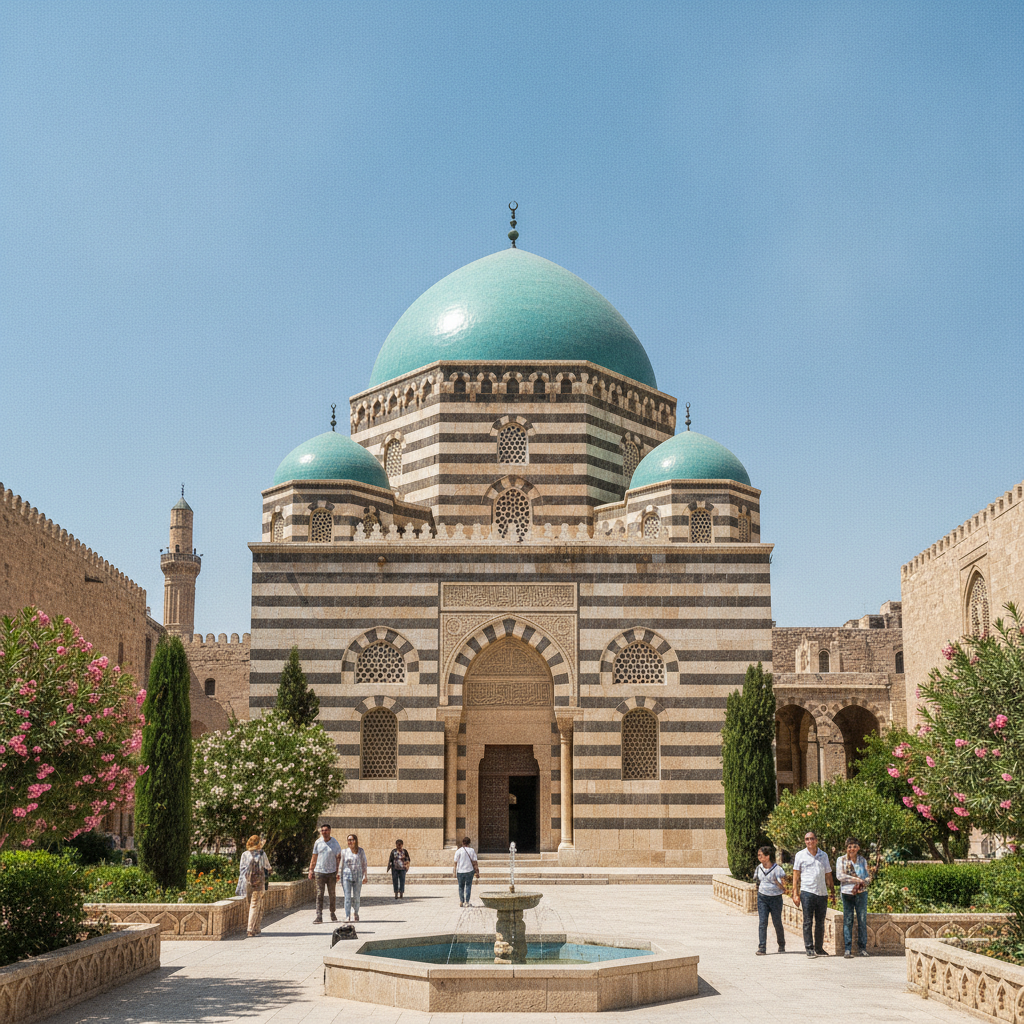
Enter Khan Assad Pasha, the finest Ottoman khan in Damascus, its enormous domed hall with alternating black and white stone striping the masterwork of 18th century Syrian architecture, the great merchant inn where caravans unloaded and traders negotiated.
- 4
Gold Souk
Browse the gold souk where Damascus jewelers display the elaborate Syrian gold work in traditional patterns, the concentration of precious metal working in the old city market the product of centuries of guild organization and inherited craft knowledge.
- 5
Silk Weaving
Find the remaining Damascus silk weavers maintaining the tradition of damask fabric, the woven silk with its distinctive reversible pattern that gave its name to the fabric throughout the world, the ancient textile industry that made the city famous.
- 6
Traditional Crafts
See the traditional Damascus crafts still practiced in the old city market: inlaid wood, mother-of-pearl furniture, copperwork, and blown glass, the artisan traditions passed down through families in a city where craft identity has defined communities for generations.
Walk this route with audio
Stories play automatically as you reach each stop — no tapping needed.