Krak des Chevaliers Was Never Taken by Direct Assault in 127 Years of Hospitaller Control and T.E. Lawrence Called It Perhaps the Best Preserved and Most Admirable Castle in the World; the World's First Coffee Houses Opened in Damascus Around 1530 CE and the Al-Nufara Coffee House Outside the Umayyad Mosque Has Been Operating Since the 16th Century; the Assad Regime That Survived 13 Years of Civil War Collapsed in 11 Days in December 2024
Krak des Chevaliers never taken by direct assault in 127 years, only falling when Baybars I reportedly used a forged letter; T.E. Lawrence calling it perhaps the best preserved and most admirable castle in the world; Damascus's first coffee houses opening around 1530 CE with the Al-Nufara operating outside the Umayyad Mosque since the 16th century; the Assad regime collapsing in 11 days after surviving 13 years of civil war; the bukra fil mishmish (when apricots ripen) Arabic idiom equivalent to when pigs fly; and the Syria complete visitor guide for 2025.
- 1
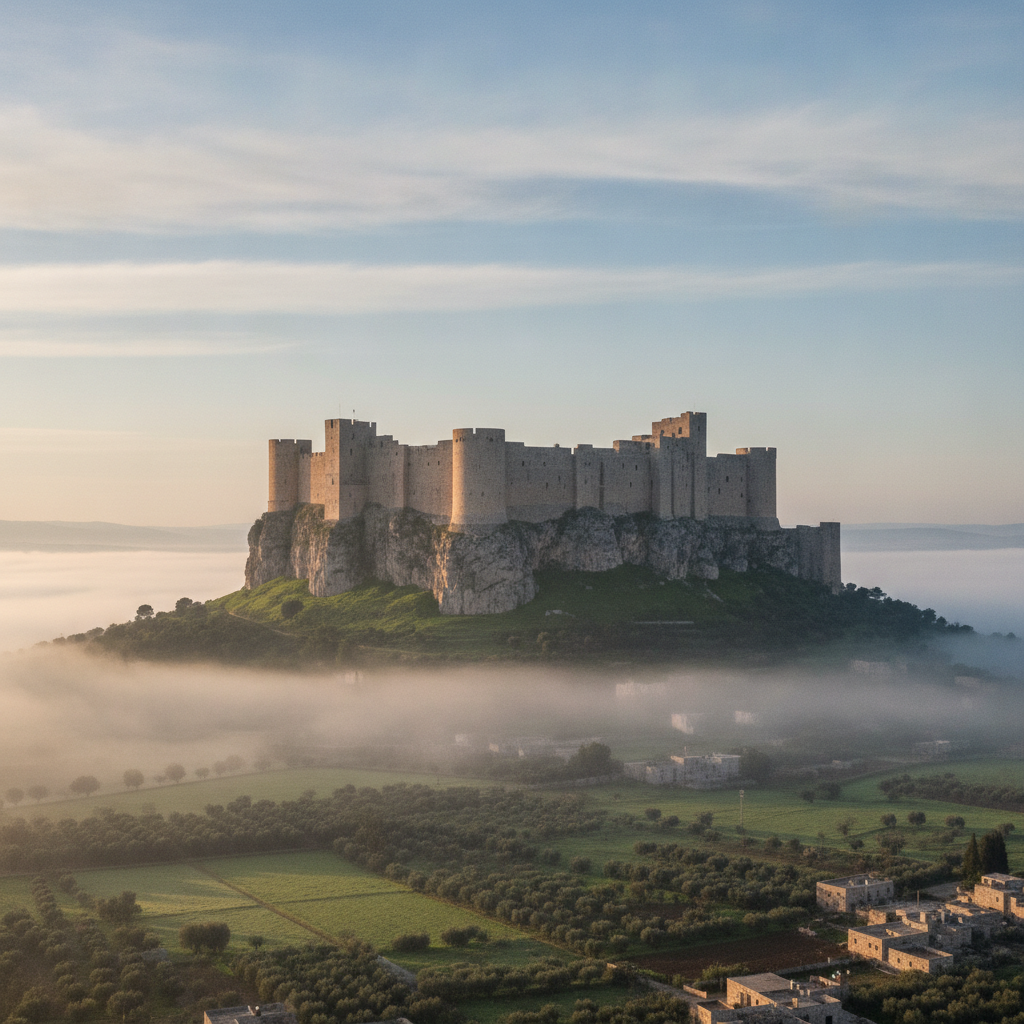
Krak des Chevaliers – The Greatest Crusader Castle in the World
Krak des Chevaliers (Qalat al-Hosn, Arabic: قلعة الحصن) — 150 km northwest of Damascus near the town of Al-Hosn: the greatest and best-preserved Crusader fortification in the world: the castle guide. The history (Krak des Chevaliers was a fortress of the Knights Hospitaller (the Order of St. John) from 1144 to 1271 CE: the Knights Hospitaller were one of the three primary military orders of the Crusades (alongside the Knights Templar and the Teutonic Knights): the location (the castle sits on a 750m rocky spur dominating the Homs Gap — the primary natural pass through the coastal mountain range between the Syrian hinterland and the Mediterranean coast: the castle could house a garrison of 2,000 knights and support staff: the architecture (the castle has a concentric double-wall defense system: the outer wall: lower with semicircular towers: the inner ward: the higher and stronger inner fortification with massive round towers: the glacis (the sloping stone base of the inner ward that makes undermining the walls almost impossible): the Mamluk conquest (Krak des Chevaliers was conquered by the Mamluk Sultan Baybars I in 1271 CE: the castle had never been taken by direct assault in 127 years of Hospitaller control: Baybars reportedly tricked the garrison with a forged letter from the Count of Tripoli ordering surrender: the UNESCO inscription (Krak des Chevaliers and the Castle of Saladin (Saone) were jointly inscribed on UNESCO World Heritage List in 2006: T.E. Lawrence visited the castle during his pre-war archaeological survey and called it perhaps the best preserved and most admirable castle in the world: the Civil War damage (the castle was used as a rebel stronghold during the Syrian Civil War 2012-2014: Syrian government artillery strikes caused some damage to the interior buildings: the UNESCO structures were largely preserved).
- 2
The Anti-Lebanon Mountains – Mount Hermon and the Border Landscape
The Anti-Lebanon Mountains (Jabal al-Sharqi — the Eastern Mountain Range) — the range forming Syria's western border with Lebanon and the source of the Barada River that makes Damascus possible: the landscape guide. The geography (the Anti-Lebanon Mountains run parallel to the Lebanon Mountains separated by the Bekaa Valley: the range extends approximately 150 km north-south: the highest peak: Mount Hermon (Jabal al-Sheikh — Sheikh's Mountain in Arabic: Har Hermon in Hebrew: Djebel el-Sheikh in French): 2,814m: Mount Hermon forms the meeting point of the Syrian, Lebanese, and Israeli borders: the three-way border region: the southern slopes of Mount Hermon in the Israeli-controlled Golan Heights: the eastern slopes in Syria: the western slopes in Lebanon: the Barada River (the Barada River (ancient Abana or Chrysorroas — Golden Stream) rises on the eastern slopes of the Anti-Lebanon Mountains at an altitude of approximately 1,600m and flows 80 km east to Damascus: the Barada is the primary water supply that has sustained Damascus for approximately 8,000 years of continuous habitation: the river enters Damascus through a gorge and was historically distributed through a system of channels (nuhur) that irrigated the Ghouta oasis: the Ghouta today (the Ghouta oasis that Ibn Battuta called one of the four earthly paradises has been severely reduced by urban expansion: the pre-war Damascus urban sprawl consumed much of the historic Ghouta agricultural land: the 2013 chemical attack (the East Ghouta chemical weapons attack on August 21, 2013 — the Assad government used sarin nerve agent in a rocket attack on the rebel-held East Ghouta: 281-1,729 killed (estimates vary widely): the attack crossed the red line drawn by US President Obama but did not trigger US military intervention).
- 3
Damascene Coffee Culture – The First Coffee Shops in the World
The Damascus coffee culture (the history of the world's first coffee houses — the qahvehane — which originated in the Ottoman Arab cities of the 16th century with Damascus as one of the primary centers): the coffee history guide. The origin of coffee (the coffee plant (Coffea arabica) is native to Ethiopia where the beans were first consumed as food (mixed with animal fat) or as a fermented drink (qishr — a drink made from coffee husks and honey) by the Oromo people of Ethiopia: the transition to the roasted beverage (the roasting and brewing of coffee beans to produce the familiar dark beverage developed in Yemen in the 15th century: the Sufi tekkes (Sufi monasteries) in Yemen used coffee (qahwa — a word that originally meant wine or any intoxicating drink) to maintain wakefulness during nighttime dhikr (devotional ceremonies): the spread (coffee spread from Yemen to the Hejaz cities (Mecca and Medina) and then to Cairo, Damascus, and Istanbul in the early 16th century: the first Damascus coffee house (the first coffee house in Damascus (Qahvehane or Maqha) was established approximately 1530 CE: within a generation Damascus had dozens of coffee houses: the social function (the coffee house (qahvehane) became the primary male social space in Ottoman Arab cities: the coffee house provided: coffee and tea: a space for conversation, chess, and backgammon: the hakawati (professional storyteller): the Al-Nufara Coffee House (the oldest surviving coffee house in Damascus: location: outside the eastern entrance to the Umayyad Mosque: the Al-Nufara has been operating on this site since at least the 16th century: the hakawati (the storyteller performs on Thursday and Friday evenings: the current storyteller recites episodes from the Seerah al-Hilaliyya (the Epic of the Banu Hilal tribe) in classical Arabic).
- 4
The Fall of the Assad Regime – December 8, 2024 and What Comes Next
The fall of Bashar al-Assad (December 8, 2024) — the end of 53 years of Assad family rule over Syria and the beginning of an uncertain transition: the analysis. The collapse speed (the collapse of the Assad regime was the most rapid fall of an apparently stable authoritarian government in modern history: the rebel offensive began in Aleppo on November 27, 2024 — 11 days before Assad fled: the Assad army that had held against the rebels for 13 years largely collapsed in the face of the HTS-led offensive: the explanations for the speed of collapse include: the Hezbollah forces that had previously backed Assad were severely weakened by the 2024 Israeli campaign against Hezbollah: the Russian air cover that had protected Assad since 2015 was reduced due to Russian commitments in Ukraine: the Assad army morale had collapsed after years of attrition: the HTS factor (Hayat Tahrir al-Sham (HTS) was designated a terrorist organization by the United States and European Union due to its historical connection to al-Qaeda (as Jabhat al-Nusra — the Nusra Front): the HTS leader Ahmad al-Sharaa (Abu Muhammad al-Julani) formally renounced the al-Nusra Front's al-Qaeda affiliation in 2016: in 2024-2025 al-Sharaa presented himself as a Syrian nationalist leader committed to political pluralism: the international community's response to the new government is cautious: the geopolitical consequences (the fall of Assad was a major strategic setback for Iran — Syria was the critical land corridor connecting Iran to Hezbollah in Lebanon: Israel conducted extensive airstrikes against Syrian military infrastructure in December 2024 to prevent advanced weapons from falling into HTS hands: Russia lost its primary Arab ally: the transition (the key unknowns as of mid-2025: will the transitional government maintain control over all Syrian territory: what is the future of Kurdish autonomy in northeast Syria: when will refugees be able to safely return).
- 5
Damascene Apricot – The Fruit That Traveled the Silk Road
The Damascene apricot (Prunus armeniaca — the apricot tree and its journey from Central Asia through Syria to the world): the botanical and cultural history guide. The apricot origin (the apricot (Prunus armeniaca — Latin name: Armenian plum) is native to a region spanning northeastern China and Central Asia: the apricot was domesticated approximately 6,000 years ago in China: the Chinese apricot was brought westward along the Silk Road: the Silk Road transmission (the apricot reached Persia and the Levant approximately 3000-2000 years ago: the primary transmission route was through the Ferghana Valley and Transoxiana (modern Uzbekistan) to Persia and then to Syria: the Damascene variety (the Damascus apricot (Prunus armeniaca var. syriaca — Syrian apricot) was the dominant variety cultivated in the Ghouta oasis of Damascus for at least 2,000 years: Arab classical writers describe the Damascus apricot as the finest in the world: Ibn Battuta specifically mentions the abundant apricot orchards of the Damascus Ghouta: the word etymology (the English word apricot derives from: Portuguese albricoque and Spanish albaricoque — from Arabic al-barquq (the plum-like fruit): al-barquq derives from Byzantine Greek berikokkia: which derives from Latin praecoquum (early-ripening): the apricot ripens early in the season — the Latin name (praecox — early) refers to this characteristic: the Arabic word for apricot: mishmish (مشمش) — derived from Aramaic mishmishah: the urban legend (the Arabic expression bukra fil mishmish (tomorrow when the apricots ripen) is the equivalent of the English when pigs fly — the apricot season is brief and uncertain: the phrase implies something that will never happen: the current cultivation (the Civil War destroyed most of the apricot orchards of the East Ghouta: some cultivation continues in the Qalamoun Mountains: Syria remains a significant apricot producer in what survives of the agricultural sector).
- 6
Syria Complete Guide – History, Geography, and Visitor Information 2025
The comprehensive Syria and Damascus reference guide (all essential visitor information for Syria and Damascus in 2025 following the fall of the Assad regime): the complete guide. The geography (Syria: total area 185,180 km2: population (pre-war approximately 22 million: 2025 estimate approximately 14-17 million with approximately 6-7 million returned from exile): the climate (Damascus — semi-arid (BSk): summer (June-August): hot and dry: maximum temperatures 35-40C: winter (December-February): cold with occasional snow: the Alawite Mountains receive significant rainfall: the spring (March-May) and autumn (September-November): the best visit seasons: the history timeline (3000 BCE: first urban settlements: 950 BCE: Aramaean capital of Aram-Damascus: 636 CE: Arab-Islamic conquest: 661 CE: Umayyad Caliphate capital: 1174 CE: Saladin enters Damascus: 1516 CE: Ottoman conquest: 1920 CE: French Mandate: 1946 CE: Syrian independence: 1970 CE: Hafez al-Assad coup: 2000 CE: Bashar al-Assad succeeds: 2011 CE: Syrian Revolution begins: 2024 CE: Assad regime falls: the arrival (Damascus International Airport (DAM) partially operational for some international flights in 2025: the primary entry route for most visitors: the Beirut-Damascus Highway (105 km, 2 hours, crossing at Masnaa or Jdeideh border crossings): the primary UNESCO sites: Damascus Old City (1979): Bosra (1980): Palmyra (1980 — partially damaged): Krak des Chevaliers and Castle of Saladin (2006): the Ancient Villages of Northern Syria (2011): Aleppo (1986 — severely damaged): the safety (Damascus proper and the main highway from Beirut: relatively safe in 2025: eastern Syria and areas near the Turkish-occupied north: avoid: southern Syria near Jordanian and Israeli borders: check current advisories: the money (carry USD cash: the SYP parallel market rate is the only practical exchange rate for visitors).
Walk this route with audio
Stories play automatically as you reach each stop — no tapping needed.