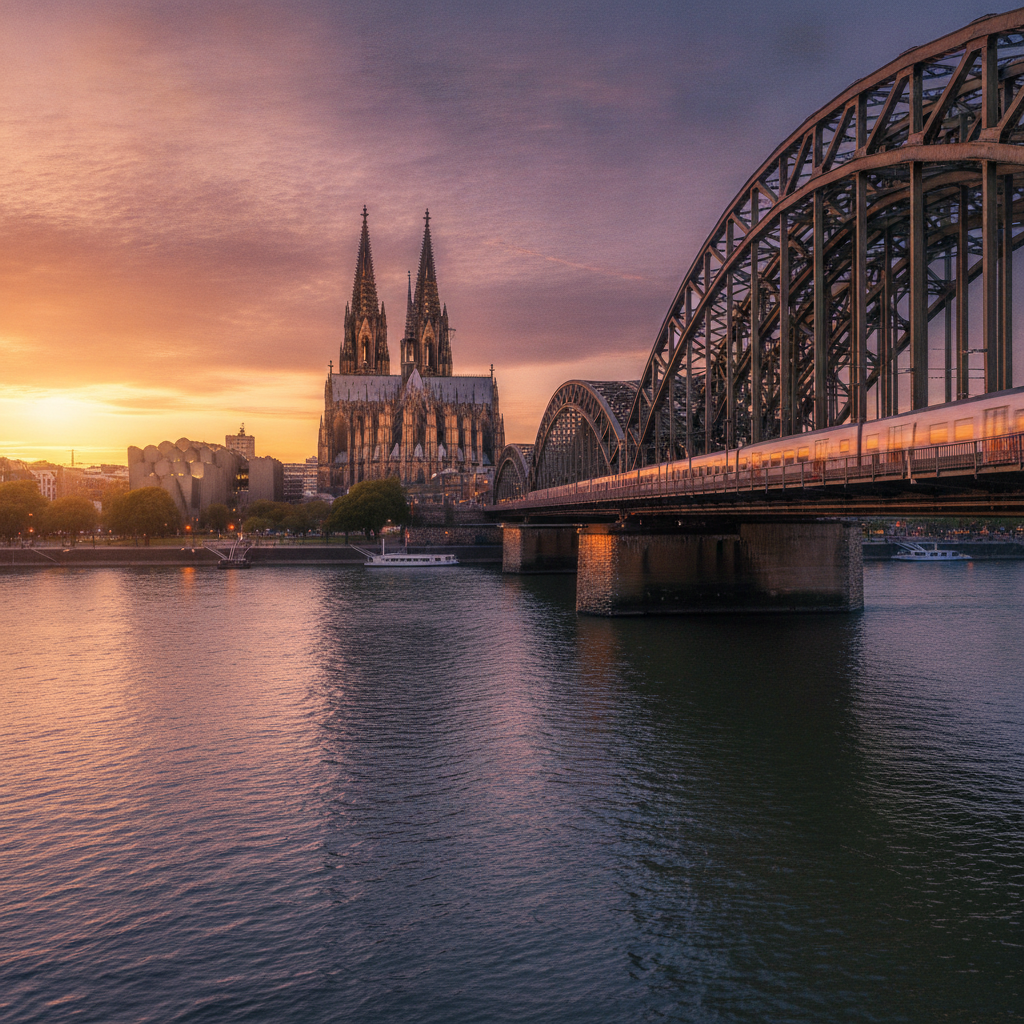
Cologne — Philharmonie, Neustadt, Contemporary Art Galleries, Parks & Transport Hub
Cologne's world-class Philharmonie, the 19th-century Neustadt ring, the most important art market in Germany, the Botanical Garden and city forest, and the central European ICE rail hub make Cologne the most practically connected city in western Germany.
- 1
The Cologne Philharmonie and the Concert Season
Kölner Philharmonie (the underground concert hall at Bischofsgartenstrasse 1 directly beneath the Museum Ludwig — the most acoustically acclaimed concert hall in the Rhine region): the hall (the 2,000-seat shoebox hall designed by Peter Busmann and Godfrid Haberer, opened 1986, the most consistently sold-out concert venue in western Germany with the 100% capacity average for the major symphony concerts, the ceiling design of 1,300 adjustable glass baffles the primary acoustic engineering achievement, the hall design the most technically precise acoustic space in Germany outside the Berlin Philharmonie), the WDR Sinfonieorchester (the Westdeutscher Rundfunk Symphony Orchestra — the resident ensemble of the Cologne Philharmonie, the most internationally broadcast single German radio orchestra, the WDR 3 classical radio the most listened-to classical music channel in the Rhine region, the Saturday evening concert the most attended single classical music event in Cologne), the Gürzenich Orchester (the Gürzenich Orchester Köln — the oldest continuously performing symphony orchestra in Cologne, founded 1857, the resident opera orchestra for the Oper Köln, the most historically rooted single orchestra in the Rhine region, the 300 performances per year the most comprehensive single orchestra season in western Germany), the Philharmonie season (the season September-June with 500+ events per year covering the symphony, the chamber music, the jazz, and the world music — the most diverse single concert hall programme in Germany outside Berlin, the single-night tickets from €15 for the standing position to €200 for the premium seats, the box office at the Bischofsgartenstrasse entrance open Monday-Friday 10am-6pm, Saturday 11am-6pm), the Oper Köln (the Oper Köln currently at the temporary Staatenhaus am Rheinpark venue during the main opera house renovation — the Cologne opera the most programme-innovative opera company in the Rhine region, the season September-June with 250+ performances including the operetta, the chamber opera, and the contemporary music theatre) and the Cologne music schools (the Hochschule für Musik und Tanz Köln at Dagobertstrasse 38 — the largest music conservatory in Germany by student enrollment at 1,600 students, the most productive single source of classical musicians for the Rhine region orchestras, the free student recitals in the conservatory concert hall the most cost-efficient classical music experience in Cologne throughout the academic year from October to July).
- 2
Cologne's Neustadt — the 19th Century Ring District
Cologne Neustadt (the Neustadt ('New Town') — the 19th-century expansion of Cologne beyond the medieval Ring Boulevard, the most architecturally homogeneous single large residential area in Cologne with the unbroken Gründerzeit apartment blocks of 1880-1910): the Ring Boulevard (the 5km Hohenzollernring/Hansaring/Kaiser-Wilhelm-Ring ring of boulevards — the most complete surviving historicist boulevard ring in any German city, the Rudolfplatz at the west end the primary social square of the Neustadt with the medieval Hahnentorburg gate the most juxtapositioned medieval-and-Art-Nouveau single intersection in the ring), the Friesenplatz (the Friesenplatz — the most commercially animated square in the Neustadt-Nord, the U-Bahn hub the primary public transport junction for the entire west Cologne ring district, the café-bars on the square the most regularly visited outdoor seating in the Neustadt, the weekly market on Wednesday mornings the most neighbourhood-authentic shopping experience in the Neustadt-Nord), the Nippes (the Nippes neighbourhood north of the Ring — the most demographically diverse neighbourhood in north Cologne, the Wilhelmsplatz the primary Nippes market square with the Tuesday and Friday morning Wochenmarkt the most regularly attended local food market in the Nippes area, the Neusser Strasse commercial street the most complete non-tourist retail kilometre in the Cologne north), the Deutz and the Mülheim (the right-bank neighbourhoods east of the Rhine — the Mülheim district the most historically working-class of the Cologne right-bank areas, the Keupstrasse in Mülheim the most commercially complete Turkish commercial street in Germany outside Berlin, the most frequently referenced single immigrant community street in the German political discussion of integration since the 2004 Keupstrasse bombing), the Lindenthal (the Lindenthal neighbourhood west of the Neustadt — the most affluent and the most villa-residential neighbourhood in Cologne, the Aachener Strasse the primary commercial artery, the Botanischer Garten (Botanical Garden) at Amsterdamer Strasse 34 the most completely planted free public botanical collection in Cologne, open daily, free) and the Nippes flea market (the Nippes Trödelmarkt at Wilhelmsplatz — the most attended weekend flea market in Cologne, the Sunday market from 8am-3pm the most archaeologically eclectic collection of second-hand objects in the Cologne flea market circuit, the most specifically Cologne-resident-patronised flea market in contrast to the tourist-oriented Altstadt and the specialist design-buyer markets).
- 3
Cologne's Galleries and the Contemporary Art Scene
Cologne art market (Cologne the most important commercial art market city in Germany after Berlin — the most established contemporary art gallery district in the Rhine region, the Art Cologne the most commercially significant art fair in Germany): Art Cologne (the Art Cologne at the Koelnmesse — the world's oldest contemporary art fair, established 1967, the most commercially consequential art fair in Germany at 200+ galleries from 30+ countries presenting 2,000+ artists, the April fair the primary spring art market event in the German cultural calendar, the VIP preview the most commercially active single art market day in Cologne, the fair the most directly influential single event on the Cologne gallery scene by the scale of the commercial transactions), the gallery district (the Cologne gallery concentration in the Neustadt and the Ehrenfeld: the Galerie Gisela Capitain at St. Apern-Strasse 26 the most internationally recognised commercial gallery in Cologne for the primary market in contemporary art, the Galerie Karsten Greve the most established for the secondary market in classic modern and post-war German art, the Galerie Sfeir-Semler and the Galerie Nagel Draxler the most critically discussed for the international contemporary programme), the Museum für Angewandte Kunst (the MAKK at An der Rechtschule 1 — the Museum of Applied Arts the most comprehensively stocked single decorative arts museum in Cologne, the collection from the medieval goldsmith work to the 20th-century industrial design, the Bauhaus collection the most surprising single holding for the visitor expecting only the decorative arts, CHF 5 adults, Tuesday-Sunday 11am-5pm), the Kölnischer Kunstverein (the Kölnischer Kunstverein at Hahnenstrasse 6 — the oldest artists' association in Germany established 1839, the most continuously active non-commercial contemporary art exhibition space in Cologne, the programme the most experimentally curated of the non-museum Cologne venues, free entry or minimal donation, the most important single free-entry contemporary art programme in Cologne), the Kunstmarkt Köln (the Cologne Art Market heritage — the 1967 Cologne Art Market (Kölner Kunstmarkt) the first international contemporary art fair in the world, the most historically consequential single event in the founding of the contemporary art market system, the most often cited single origin event for the global contemporary art fair model) and the Galerie der Gegenwart at the Kunsthalle Köln (the Kunsthalle Köln at Tacheles — the most programmatically ambitious independent Kunsthalle in Cologne, the exhibition programme the most committed to the artist's experimental project without the commercial pressure of the gallery circuit, the venue the most specifically non-profit contemporary art exhibition institution in Cologne, the €5 adults entry the most price-accessible exhibition quality in the Cologne art scene).
- 4
Cologne's Botanical Garden and the Stadtwald
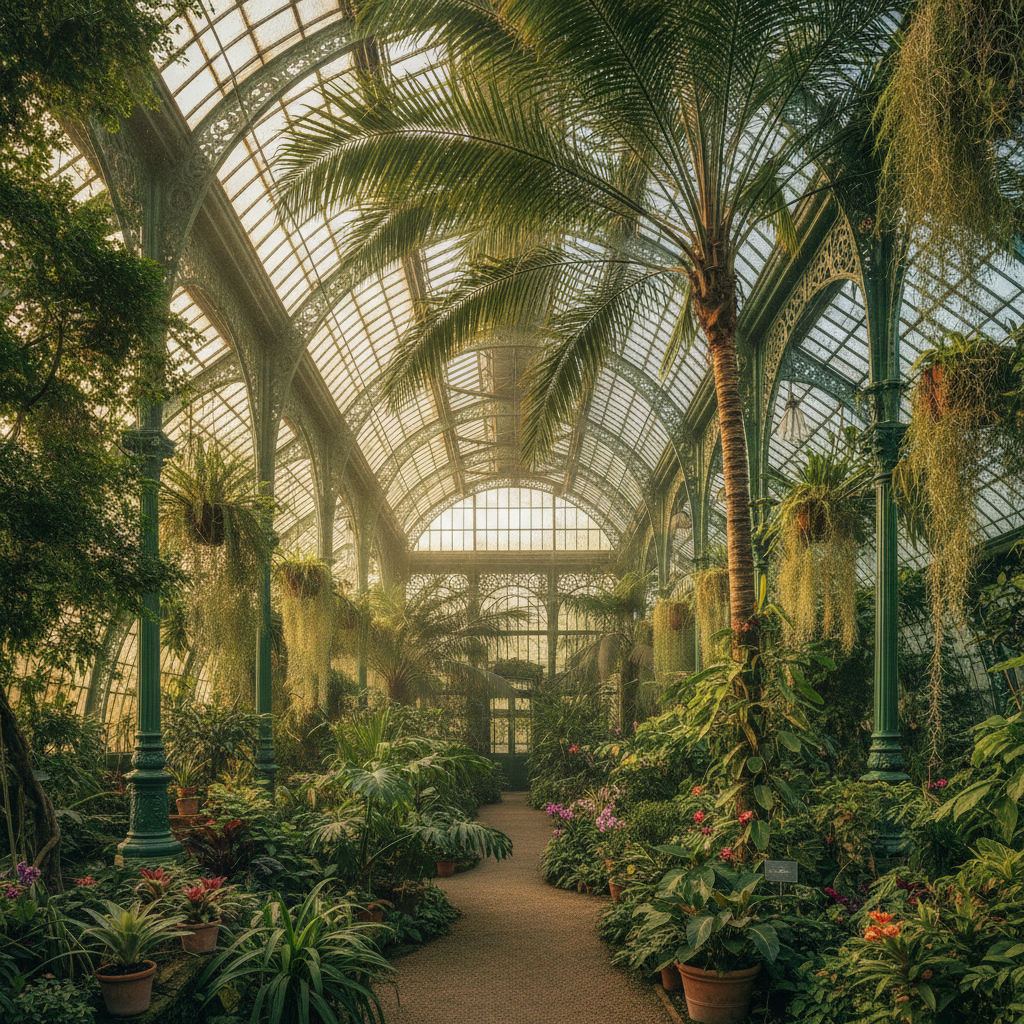
Cologne green spaces (the Cologne park and garden network — the most comprehensively maintained urban greenery system in the Rhine region): the Botanischer Garten (the Cologne Botanical Garden at Flora and Botanischer Garten, Amsterdamer Strasse 34 — the most comprehensively planted public botanical garden in the Rhine region, the 7,000 plant species in the outdoor garden and the 7 tropical greenhouses, the free entry the most cost-efficient single natural science experience in Cologne, open daily from 8am, the rose garden at peak bloom in June the most fragrant single enclosed space in the Cologne park system), the Stadtwald (the Cologne Stadtwald (City Forest) at the western edge of the Lindenthal neighbourhood — the 200-hectare mixed deciduous forest the largest single continuous green space within the Cologne city limits, the Stadtwald the most complete urban forest experience in the Rhine region with the marked hiking trails, the lake (Dürener-Strasse-Weiher), and the restaurant the primary weekend family recreation for the Cologne Lindenthal and Müngersdorf residents, accessible by tram 7 to the Lindenthal Blenheim Allee stop), the Friedenspark (the Friedenspark (Peace Park) adjacent to the Cologne Deutz bank — the landscaped park on the former Deutz city garden site, the Kölner Dom visible from the park the most framed public garden view in Cologne, the Saturday afternoon DJ sessions on the park lawn from May to September the most specifically Cologne open-air DJ culture in the ring of the Rhine parks), the Decksteiner Weiher (the Decksteiner Weiher lake in the Lindenthal — the recreational lake with the swimming, the rowing boats at €6 per hour, the lakeside café the most relaxed summer afternoon destination in the Cologne south, the 3km lake circumference walking path the most gentle and the most family-appropriate nature walk accessible from the Cologne university neighbourhood), the Cologne cemeteries (the Melaten Cemetery at Aachener Strasse 204 — the most historically significant single cemetery in Cologne, the Cologne equivalent of the Munich Alter Südfriedhof and the Hamburg Ohlsdorf, the Art Nouveau grave monuments and the neo-Gothic tomb chapels from the 1880-1920 era the most concentrated single collection of funerary art in western Germany, free daily from 7:30am to dusk) and the Grüngürtel cycling (the inner and outer Cologne Grüngürtel (Green Belt) cycling routes — the 100km+ of off-road cycling paths through the connected park and green belt system, the most complete single urban cycling network in western Germany after the Ruhr Corridor, the cycle map available free at the Cologne Tourist Office the primary cycling reference for the park explorer).
- 5
Cologne's Transport Hub — Day Trips and the ICE Network
Cologne transport (Cologne the most centrally positioned city in the German ICE high-speed rail network — the Cologne Hauptbahnhof the single most connected railway junction in western Germany for the international and the domestic connections): the Cologne Hauptbahnhof (the Cologne Hauptbahnhof directly adjacent to the Dom — the most dramatically cathedral-adjacent railway station entrance in the world, the 292,000 daily passengers the busiest railway station in Germany outside Frankfurt and Berlin, the ICE connections: Berlin 4h10m, Frankfurt 1h04m, Hamburg 3h37m, Munich 4h35m, Paris 3h19m, Brussels 1h48m, Amsterdam 2h42m, and London via Eurostar 4h56m — the most internationally connected single German station for the western European capital cities), Aachen (the Charlemagne capital 75km west — the Dom UNESCO World Heritage Site the oldest cathedral in Germany, the RE train in 35 minutes at €18, the Aachen Thermal baths (Carolus Thermen) the most historically thermal-sourced spa city in Germany), Bonn (the former federal capital 30km south — the Beethoven-Haus at Bonngasse 20 the most visited single composer birthplace in Germany, the Haus der Geschichte (Federal House of History) the most comprehensively documented post-war German democracy museum, the ICE to Bonn in 25 minutes at €8), the Rhine Gorge (the UNESCO Middle Rhine Valley from Koblenz south — the 65km of the most castle-dense river gorge in Europe, the Lorelei rock the most legend-associated single Rhine landmark, the KD Rhine cruise from Cologne to Koblenz at CHF 38 one-way, 5 hours downstream), the Ruhr Museum (the Zollverein UNESCO World Heritage site in Essen — the former Zollverein coal mine and coking plant 55km north of Cologne the most completely preserved industrial complex in Germany, the Ruhr Museum in the former coking plant the most architecturally converted industrial heritage museum in Europe, the RE train from Cologne to Essen in 50 minutes at €18, the most specifically post-industrial cultural tourism destination accessible from Cologne) and the Drachenfels (the Drachenfels castle ruin above Königswinter 25km south of Cologne — the most visited single castle ruin in the Rhine region, the tram railway from the Königswinter Rhine bank to the Drachenfels summit at 322m the oldest rack railway in Germany of 1883, the S-Bahn S12/S13 from Cologne to Königswinter in 30 minutes at €5, the most family-appropriate castle day trip from Cologne).
- 6
Cologne Seasons — Events Calendar and Practical Information
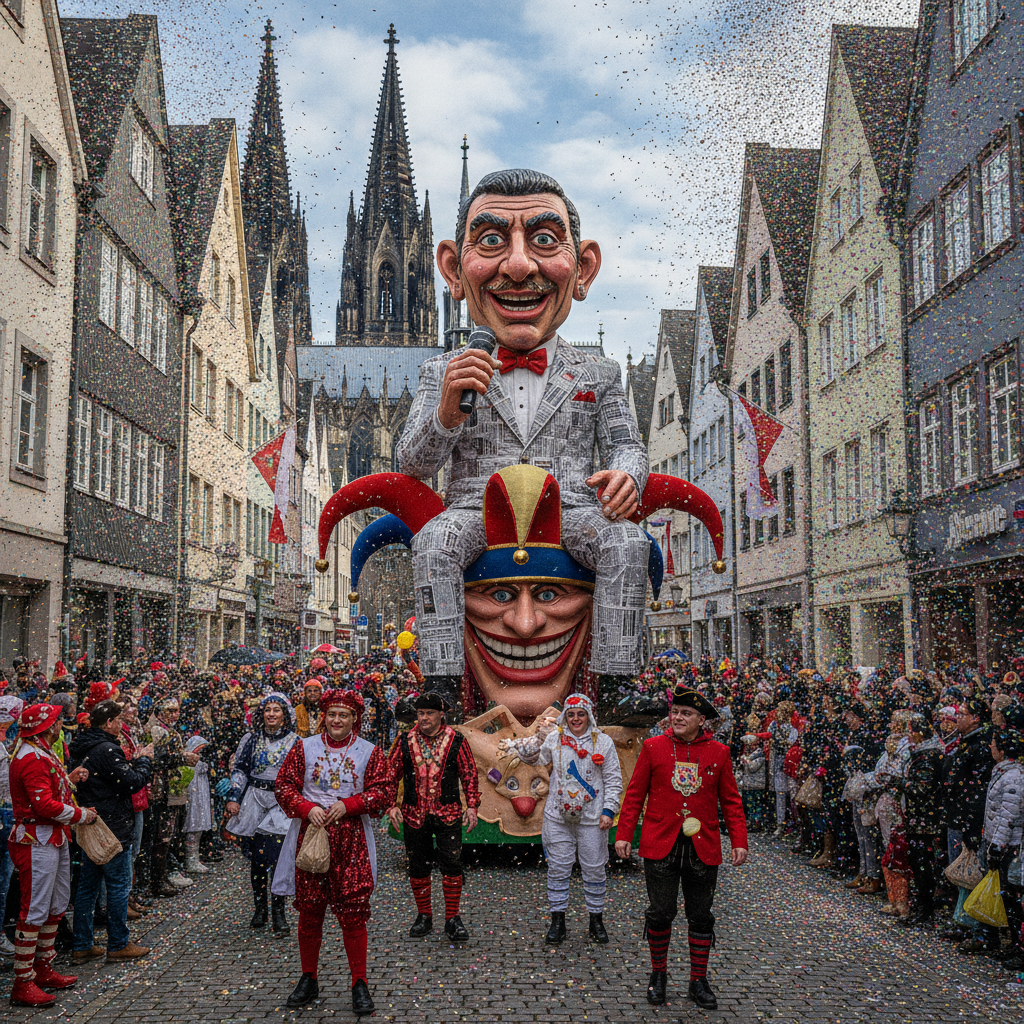
Cologne events calendar (the Cologne annual events calendar the most event-dense in the Rhine region): the Karneval (the Cologne Karneval — the most internationally famous single festival event in Germany after Oktoberfest, the Women's Carnival Thursday and the Rose Monday Parade the climax, dates shifting by year but typically mid-February, accommodation booked 12 months in advance for the Rose Monday weekend at 2-3x the normal rate, the most festive but the most expensive period to visit Cologne), the Cologne Lights (the Kölner Lichter Rhine fireworks in July — the largest single fireworks display in Germany at 5 million Rhine-bank spectators, the Rhine between the Hohenzollern and the Deutzer bridges the best viewing position, the Saturday evening event the most uniquely Cologne summer spectacle, free from both banks), the Christopher Street Day (the Cologne CSD in June — the most attended Pride event in Germany at 1 million participants on the parade route from the Heumarkt to the Chlodwigplatz, the most commercially supported single Pride event in western Germany), Art Cologne (the Art Cologne at the Koelnmesse in April — the most commercially consequential single art fair in Germany, the most internationally attended art event in Cologne, the public admission at the fair on the Friday-Sunday the most accessible single contemporary art market experience in the Rhine region, tickets €30 adults, the Koelnmesse shuttle bus from the Dom the most practical transport to the fair), the Christmas markets (the 7 Cologne Christmas markets from late November to December 23 — the Cathedral Market, the Angel Market at Neumarkt, the Gnome Market at Rudolfplatz, and the Harbour Market the 4 most distinct, free entry to all 7) and the practical (the KölnCard at €9/day covers all public transport plus museum discounts; the Cologne Airport S13 to the Hauptbahnhof in 15 minutes at €3.20; the walking city — all major attractions within 15 minutes of the Dom; the Cologne Tourist Office at Kardinal-Höffner-Platz 1 open daily 9am-8pm the primary visitor information resource).
Walk this route with audio
Stories play automatically as you reach each stop — no tapping needed.
More in cologne
Cologne — Belgian Quarter, Romanesque Churches, Gastronomy, Nightlife & Day Trips
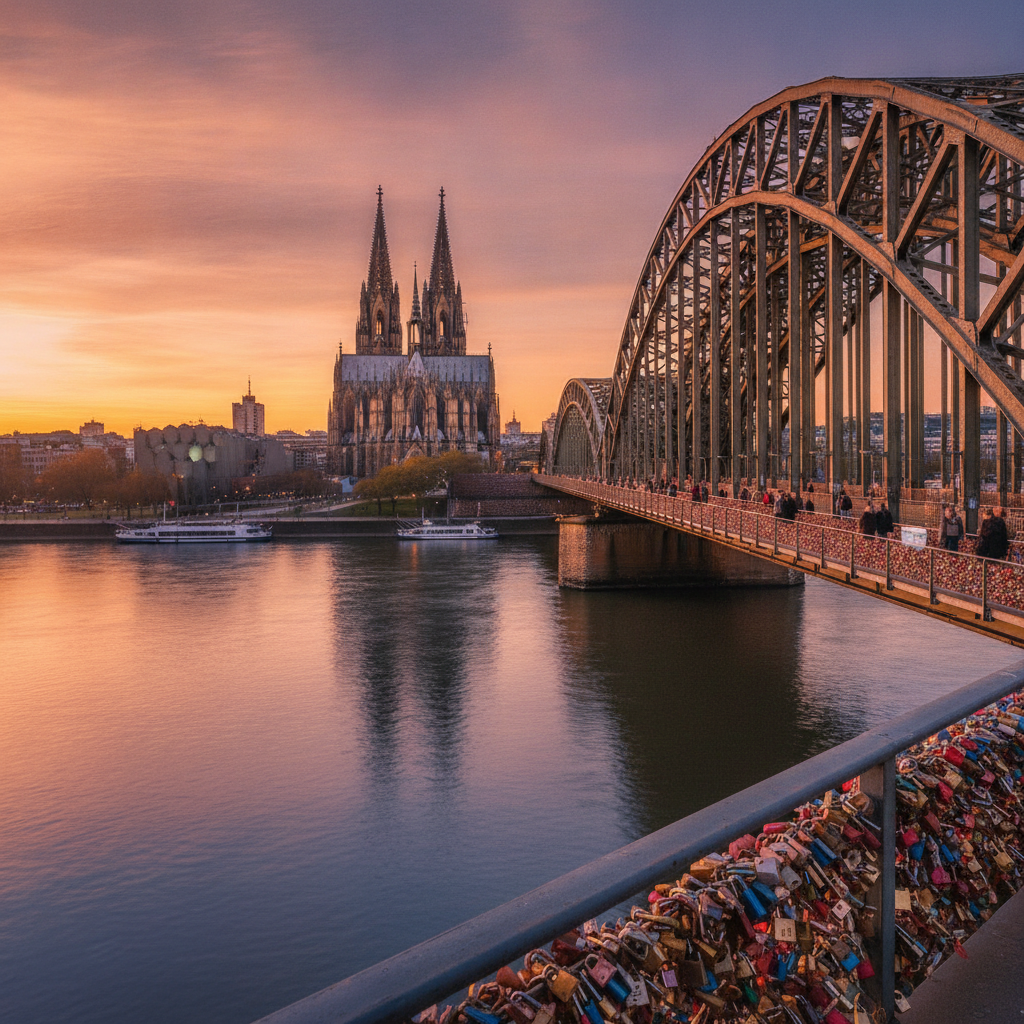
Cologne — Ehrenfeld, Deutz Panorama, Perfume Heritage, Cathedral Interior & Romanesque
Cologne — Museum Ludwig, Wallraf-Richartz, Food Markets, Jewish Heritage & Kölsch Culture
Cologne — Medieval History, Media Industry, Karneval, Südstadt & LGBTQ+ Culture