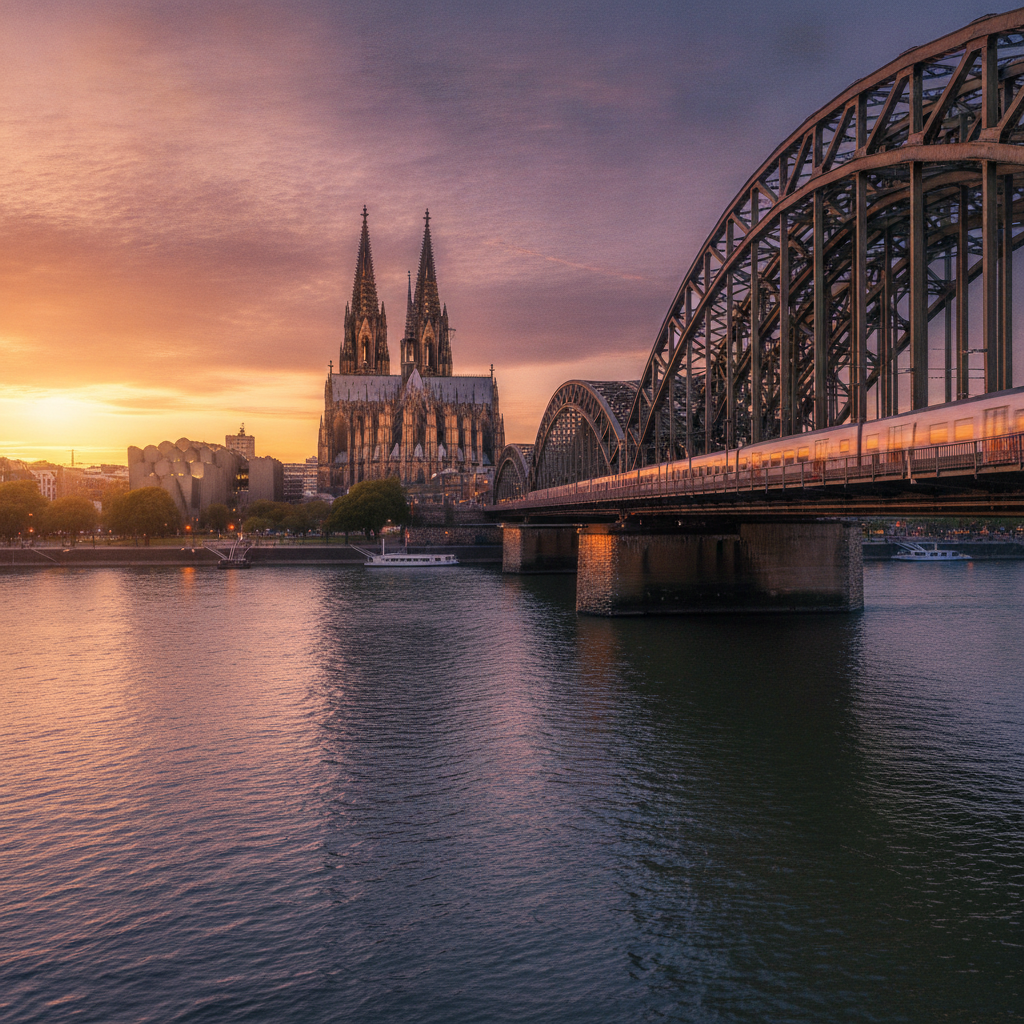
Cologne — Belgian Quarter, Romanesque Churches, Gastronomy, Nightlife & Day Trips
Cologne's depth extends from the fashionable Belgian Quarter and the world's greatest Romanesque church ensemble to the Kölsch brewery culture, the Ehrenfeld club scene, and the Charlemagne capital at nearby Aachen.
- 1
The Belgisches Viertel — Cologne's Trendy Quarter
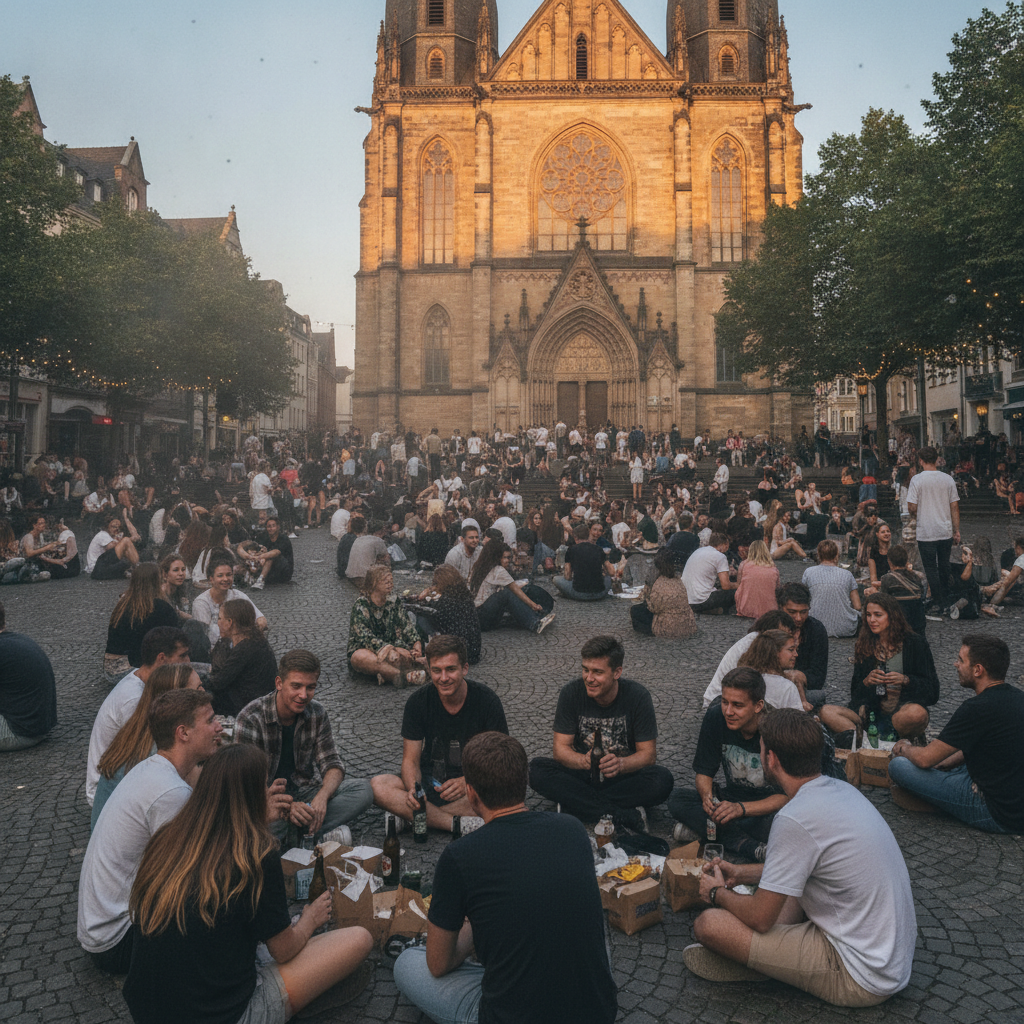
Belgisches Viertel (the Belgian Quarter west of the Ring Boulevard — the most fashionable neighbourhood in Cologne for the independent retail, the café culture, and the contemporary art galleries, the neighbourhood named for the Belgian street names (Brüsseler Platz, Aachener Strasse) assigned in the 1880s): the Brüsseler Platz (the Brüsseler Platz — the most animated outdoor social space in Cologne, the 19th-century square with the St. Michael Church the primary weekend evening gathering point for the entire Cologne young adult population, the square functions as the largest open-air bar in Cologne on warm evenings with 2,000+ visitors bringing their own drinks, the most specifically Cologne social outdoor experience, free and self-catering), the Aachener Strasse (the Aachener Strasse — the primary commercial street of the Belgian Quarter, the most concentrated independent boutique and concept store street in Cologne, the design shops, the independent bookshops, and the international food specialists the most culturally diverse commercial mix in any Cologne neighbourhood street), the galleries (the contemporary art galleries in the Belgian Quarter: the Galerie Gisela Capitain at St. Apern-Strasse 26 the most internationally recognised commercial gallery in Cologne, the Galerie der Spiegel and the Galerie Karsten Greve at St. Apern-Strasse 26 the most significant dealers for the secondary market in German Expressionism), the Cologne Philharmonie area (the Cologne Philharmonie at Bischofsgartenstrasse 1 — the most acoustically acclaimed concert hall in the Rhine region, the WDR Sinfonieorchester the primary resident ensemble, the 2,000-seat underground hall directly beneath the Museum Ludwig, tickets from €15, the Wallraf-Richartz Museum and the Museum Ludwig both within 200m of the Philharmonie the most complete cultural cluster in Cologne) and the Ringe (the Boulevard Ring — the 5km ring of 19th-century boulevards (Hansaring, Hohenzollernring, Kaiser-Wilhelm-Ring, Habsburgerring, Rudolfplatz) circling the Cologne Altstadt, the Rudolfplatz gateway tower the most photographed single element, the most complete surviving historicist boulevard ring in any German city, the street life on the Hohenzollernring the most animated single evening boulevard in Cologne).
- 2
Cologne's 12 Romanesque Churches
Kölner Romanik (the 12 Romanesque Churches of Cologne — the most remarkable single ensemble of Romanesque religious architecture in the world, 12 churches built between 1000 and 1250 CE within a 1.5km radius of the Dom, the most spatially concentrated collection of Romanesque churches in any European city): Great St. Martin (the Gross St. Martin at Fischmarkt — the most prominently positioned of the 12, the crossing tower with the 4 corner turrets and the 12th-century clover-leaf apse the most distinctive Cologne Romanesque exterior, the church on the Rhine waterfront the primary visual counterpart to the Dom in the historic skyline), St. Gereon (the Basilika St. Gereon at Gereonsdriesch — the most architecturally extraordinary of the 12, the 10-sided oval nave (Dekagon) of 1227 on the site of the oval Roman mausoleum of 380 CE the most unusual single church plan in Germany, the 34m interior height the most vertically dramatic interior in a Cologne Romanesque church), St. Aposteln (the Basilika der Heiligen Aposteln at Neumarkt — the most centrally located of the 12, the 3-towered west facade of 1200 and the trefoil choir the most complete surviving Romanesque western facade in Cologne), St. Ursula (the Basilika St. Ursula at Ursulaplatz — the most macabrely decorated of the 12, the Goldene Kammer (Golden Chamber) with the bones of the 11,000 martyred virgins arranged decoratively on the walls the most uniquely extreme Catholic devotional interior in Germany, free, Tuesday-Sunday 9am-12pm and 3pm-5pm), the practical circuit (the 12 Romanesque Churches walk — the complete circuit of all 12 churches on foot takes 3-4 hours, the free self-guided walk map available at the Cologne Tourist Office at Kardinal-Höffner-Platz 1, the most specifically Cologne architectural heritage walk available, the churches all free entry with the occasional exception of a small donation request for the lighting, the most cost-efficient single architectural heritage experience in Cologne) and the St. Maria im Kapitol (St. Maria im Kapitol at Kasinostrasse 6 — the most historically significant of the 12, the church built 1040-1065 on the site of the Roman Capitoline temple (the most directly Roman-to-Christian site continuity in any German church), the carved wooden doors of 1049 the oldest surviving large-scale carved wooden doors in Germany, the most historically specific single artefact in the 12 Romanesque churches circuit).
- 3
Cologne's Food Scene — from Döner to Haute Cuisine
Cologne gastronomy (Cologne the most gastronomically diverse city in western Germany after Frankfurt — the Turkish, the Italian, and the Syrian communities the most influential immigrant food cultures, the Kölsch brewery restaurants the most specifically local food tradition, and the emerging fine dining scene the most internationally recognised since 2010): the Kölsch brewery restaurants (the Brauhaus tradition — the most specifically Cologne dining experience: the Früh am Dom at Am Hof 12-18, the most visited single Kölsch brewery restaurant in Germany, the Gaffel am Dom at Bahnhofsvorplatz 1, the Brauhaus Sion at Unter Taschenmacher 5 the most historically established, the Malzmühle at Heumarkt 6 the most neighbourhood-authentic, all serving the Kölsch in the traditional Stange with the automatic refill until the coaster is placed on top, the Reibekuchen (potato pancake with apple sauce) and the Himmel un Ääd ('Heaven and Earth' — mashed potato and apple with blood sausage and fried onion) the 2 most specifically Cologne food traditions), the Ehrenfeld food (the Ehrenfeld neighbourhood west of the Belgisches Viertel — the most ethnically diverse food district in Cologne, the Venloer Strasse and the Körnerstrasse the primary restaurant streets, the Syrian and the Lebanese restaurants the most critically discussed immigrant cuisine addition to Cologne since 2015, the Lieblingswirt at Körnerstrasse the most reviewed neighbourhood restaurant in the Cologne food press), the Turkish community (the Cologne Turkish community — the 120,000 Turkish-origin residents the largest immigrant community in Cologne, the Keupstrasse in Mülheim the most commercially complete Turkish commercial street in Germany outside Berlin, the döner kebab at the Maybachufer Keupstrasse kiosks the most discussed single immigrant street food in Cologne), the fine dining (the Cologne Michelin starred restaurants — the La Societé at Kyffhäuserstrasse 53 the most consistently starred restaurant in Cologne for contemporary French cuisine, the Alfredo at Habsburgerring 1 the most traditionally Italian fine dining, the Table by Bruno Quartier the most recently awarded, the restaurant density in the Belgian Quarter the highest in Cologne outside the Altstadt) and the Cologne food markets (the weekly market at the Wilhelmsplatz in Nippes on Tuesday and Friday mornings the most neighbourhood-authentic open-air food market in Cologne, the Frischemarkt at the Chlodwigplatz in the Südstadt the most quality-focused south-city market, the Eis-Arena am Chlodwigplatz the most popular artisanal ice cream destination accessible from the Südstadt market).
- 4
Cologne by Night — Clubs, Theatre and the Underground Scene
Cologne nightlife (Cologne the most vibrant nightlife city in the Rhine region — the Ehrenfeld club scene, the Opera House, the Schauspielhaus, and the underground techno clubs collectively creating the most culturally diverse evening programme in western Germany): the Cologne Opera (the Oper Köln at Offenbachplatz — currently in the temporary venue at the Staatenhaus am Rheinpark while the main Opera House undergoes renovation, the Cologne opera company the most frequently programme-innovative opera house in the Rhine region, the season September-June with the 250+ performances, tickets from €10 for the standing room to €200 for the premiere seats, the Gürzenich Orchester Köln the resident opera orchestra), the Stadttheater (the Schauspiel Köln — currently at the temporary Depot 1 venue, the most politically engaged theatre company in the Cologne cultural scene, the ensemble the most consistently awarded German theatre company in the Theatertreffen (Berlin Theatre Meeting) for the politically relevant production, tickets from €12, season September-June), the Ehrenfeld clubs (the Ehrenfeld neighbourhood west of the Ring as the primary nightlife district: the Stadtgarten at Venloer Strasse 40 the most internationally booked jazz and contemporary music venue in Cologne; the MTC at Zülpicher Strasse 10 the most long-established rock and indie club; the Yuca at Lutherplatz 10 the most ethnically diverse Latin dance club; and the Club Volta at Mülheimer Strasse 6 the most architecturally dramatically positioned club in an industrial warehouse), the Cologne underground (the Electronic Beats venues: the Bootshaus club at Auenweg 173 the most internationally ranked electronic music club in Cologne in the DJ Mag top 100, the Kantine club at the Kulturwerk the most authentically local techno club, the Gewölbe at the Cologne main station underground passages the most unusually located club space in Germany) and the Ehrenfeld street festivals (the Ehrenfeld Werkstattfest in June — the most neighbourhood-embedded annual street festival in Cologne, the Venloer Strasse and the Körnerstrasse closed to traffic with the local restaurant terraces and the live music stages, the most authentically Cologne summer street festival outside the Karneval season).
- 5
Cologne's Green Spaces — the Rheinpark and the City Gardens
Cologne parks and green spaces (the Cologne park network comprising 400+ parks and green spaces within the city limits — the most park-rich large city in western Germany by percentage of urban green area): the Rheinpark (the Rheinpark at the Deutz bank of the Rhine — the most completely riverside park in Cologne, the 66-hectare park on the right (east) bank opposite the Altstadt the most extensively used recreational park in the city, the panoramic Rhine-and-Dom view from the park the most freely accessible and the most photogenically complete view of the Cologne skyline available without the Hohenzollernbrücke crowds, the park with the historic parachute tower and the Tanzbrunnen amphitheatre — the Tanzbrunnen hosting the free Sunday afternoon concerts in summer the most relaxed outdoor music experience in Cologne), the Stadtgarten (the Stadtgarten park in the Belgian Quarter adjacent to the Venloer Strasse — the 4-hectare park with the ornamental lake, the Stadtgarten Biergarten the most centrally located beer garden in Cologne with the most educated arts-and-culture-adjacent clientele in the city, the Stadtgarten club the most internationally respected jazz venue in Cologne for the concert programme, the most pleasant single park in the Belgian Quarter for the lunch break or the afternoon sun), the Volksgarten (the Volksgarten in the Südstadt — the 1887 park with the Volksgarten Brauhaus on the artificial lake, the most traditional urban lake beer garden experience in Cologne, the Sunday afternoon at the Volksgarten Brauhaus terrace the most typically Cologne family and social afternoon), the Green Ring (the Grüngürtel — the Cologne green belt system consisting of the inner ring and the outer ring of connected parks and green spaces the most deliberately planned urban green infrastructure in western Germany after the Frankfurt Grüngürtel, the cycle and walking paths through the green belt the most complete off-road urban cycling network in Cologne, accessible from any point on the Ring Boulevard within 5 minutes on foot) and the Cologne Zoo (the Kölner Zoo at Riehler Strasse 173 — the 20-hectare zoo the most visited single paid attraction in Cologne after the Chocolate Museum, the hippo house of 1914 the most historically prestigious animal house in the zoo, CHF 23 adults, daily 9am-6pm in summer, the Elefantenanlage (elephant enclosure) the most comprehensively naturalistic single habitat in the Cologne Zoo, the zoo at the Rheinpark north edge the most conveniently combined with the Rhine park visit in a single afternoon).
- 6
Cologne Day Trips — Aachen, Bonn and the Rhine Valley
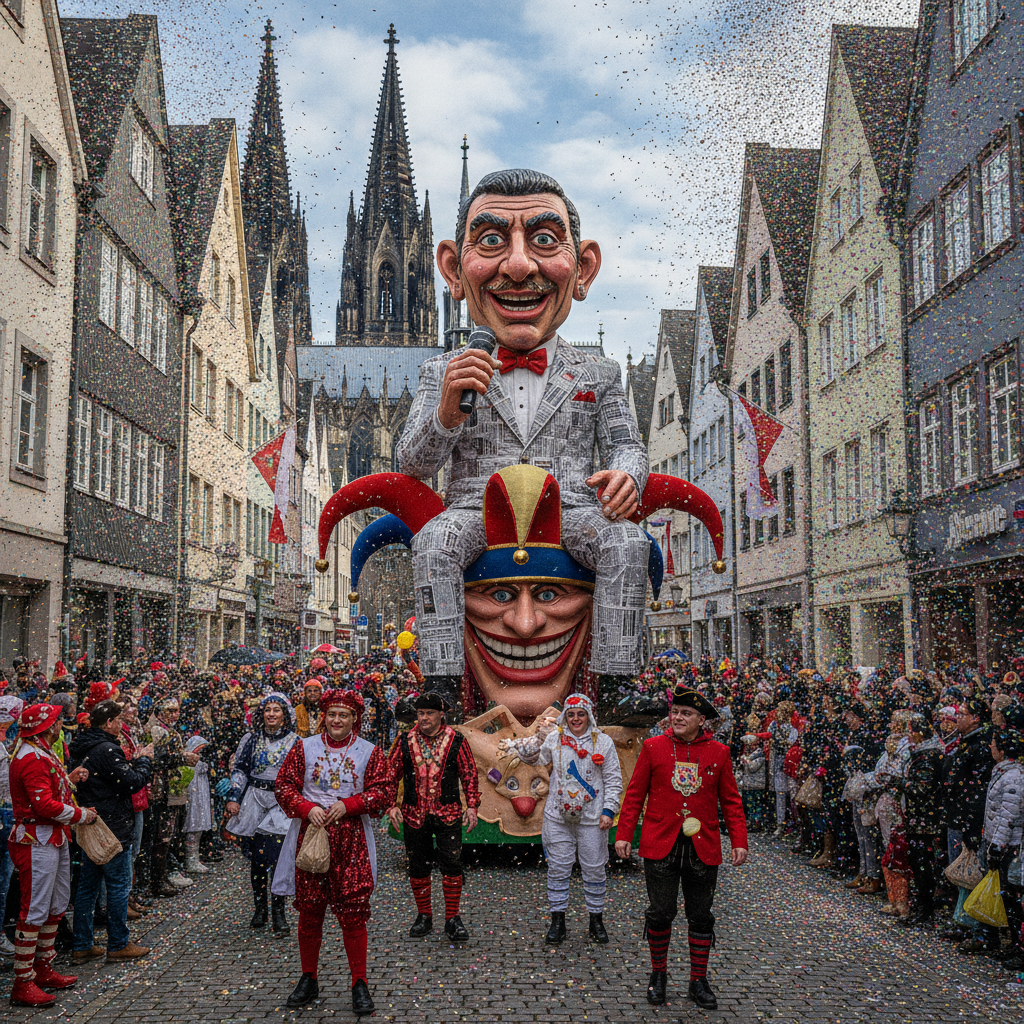
Cologne day trips (Cologne positioned at the centre of the most historically dense day trip radius in Germany — the Charlemagne capital of Aachen 75km west, the former federal capital Bonn 30km south, and the Rhine Gorge UNESCO World Heritage site 60km south the 3 most significant single-day excursions): Aachen (the Aachen Dom — the Palatine Chapel of Charlemagne built 796-805 CE the oldest surviving cathedral in Germany and the UNESCO World Heritage site that marks the foundation of the Holy Roman Empire, the octagonal central space with the 32m cupola the most spatially dramatic Carolingian interior in Europe, the Shrine of Charlemagne the most important single medieval ruler reliquary in Germany, the Aachen Treasury the most historically significant single collection of Carolingian artefacts in the world, CHF 5 adults for the treasury, the Dom itself free, the RE train from Cologne Hauptbahnhof to Aachen in 35 minutes at €18 the most time-efficient connection), Bonn (the former West German capital 30km south of Cologne — the Beethoven-Haus at Bonngasse 20 the birthplace of Ludwig van Beethoven, the most visited single composer birthplace museum in Germany at 100,000 visitors per year, CHF 10 adults, the Bonn Museum Mile: the Bundeskunsthalle, the Kunstmuseum Bonn, the Haus der Geschichte (Federal House of History) the most complete single museum district in the Rhine region, the ICE from Cologne to Bonn in 25 minutes at €8 the most efficiently connected former capital in Germany), the Rhine Gorge (the Middle Rhine Valley UNESCO World Heritage site from Koblenz to Bingen — the most dramatically castle-studded river gorge in Europe with 40 castles in 65km, the Lorelei rock at 133m the most legend-dense single Rhine landmark, the river cruise from Cologne to Koblenz the most scenically complete single Rhine journey, 5 hours downstream, the KD Rhine cruise ticket at CHF 38 one-way), the Cologne Carnival day (the Cologne Karneval on the Rosenmontagszug Monday the most attended single parade day in Germany at 1.5 million spectators — for the visitor not present during Carnival the Cologne Carnival Museum at Maarweg 134 the most complete documentation of the 600-year Cologne Carnival tradition, CHF 5 adults, Tuesday-Friday 10am-5pm) and the Cologne-Messe (the Cologne Trade Fair (Koelnmesse) at Messeplatz 1 — the most internationally significant trade fair centre in Germany after Hannover, the host of Anuga (food), IMM (furniture), photokina (photography), and Art Cologne the most internationally attended specialist trade events, the Art Cologne the most internationally significant art fair in Germany after Art Basel/Zurich, the most commercially consequential annual visitor event in Cologne).
Walk this route with audio
Stories play automatically as you reach each stop — no tapping needed.
More in cologne
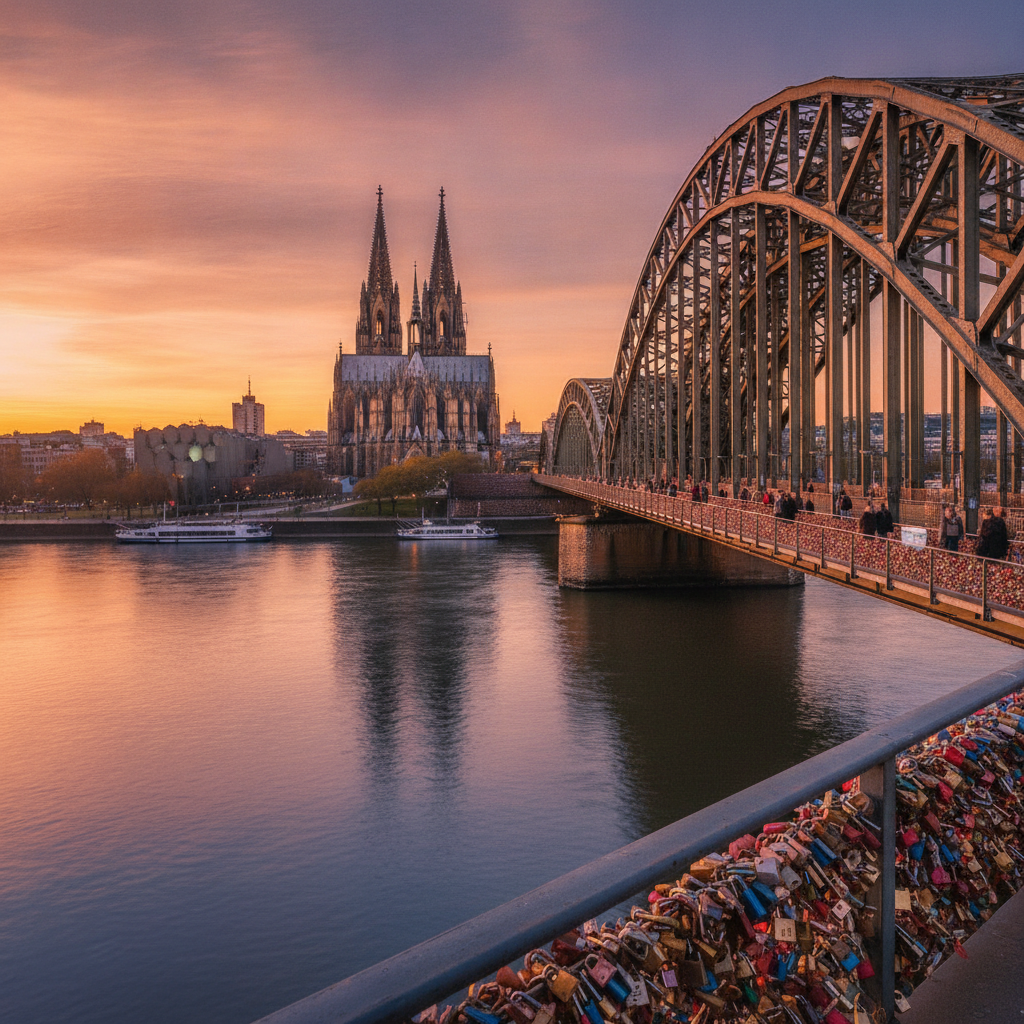
Cologne — Ehrenfeld, Deutz Panorama, Perfume Heritage, Cathedral Interior & Romanesque
Cologne — Museum Ludwig, Wallraf-Richartz, Food Markets, Jewish Heritage & Kölsch Culture
Cologne — Philharmonie, Neustadt, Contemporary Art Galleries, Parks & Transport Hub
Cologne — Medieval History, Media Industry, Karneval, Südstadt & LGBTQ+ Culture