Charleston: America Oldest Museum, Self-Supporting Spiral Staircase and the Swamp Canal Older Than the Nation
Enter the Old Slave Mart Museum on Chalmers Street one of the only institutions in America dedicated solely to the domestic slave trade auction experience, paddle flat-bottomed boats through ancient cypress tunnels at the 1920s swamp garden dammed from the first commercial canal in America, tour the Heyward House where Washington slept in 1791 and see the finest colonial furniture outside Newport, hear the Charleston Symphony at Gaillard Center designed for acoustics, note that the Circular Congregational graveyard holds the oldest gravestone in the city from 1695, and walk Colonial Lake promenade at dawn with the city antebellum rowhouse reflection in the tidal water.
- 1
Old Slave Mart Museum
The Old Slave Mart Museum at 6 Chalmers Street in the French Quarter, which opened in 2007 in a building that was used as one of the most active slave auction sites in the South from 1856 until the practice was banned in 1863, is one of the only museums in the United States dedicated specifically to the history of the domestic slave trade and the enslaved people who passed through it. The building was the auction gallery of a complex that included a cook house, jail, and morgue. Charleston was one of the most active domestic slave market cities in the antebellum period after the international slave trade was banned in 1808. The collection includes artifacts, records, oral histories, and interpretation of both the experience of enslaved people sold there and the functioning of the slave trade economy. The museum is understated and powerful in its approach.
- 2
Cypress Gardens and ACE Basin
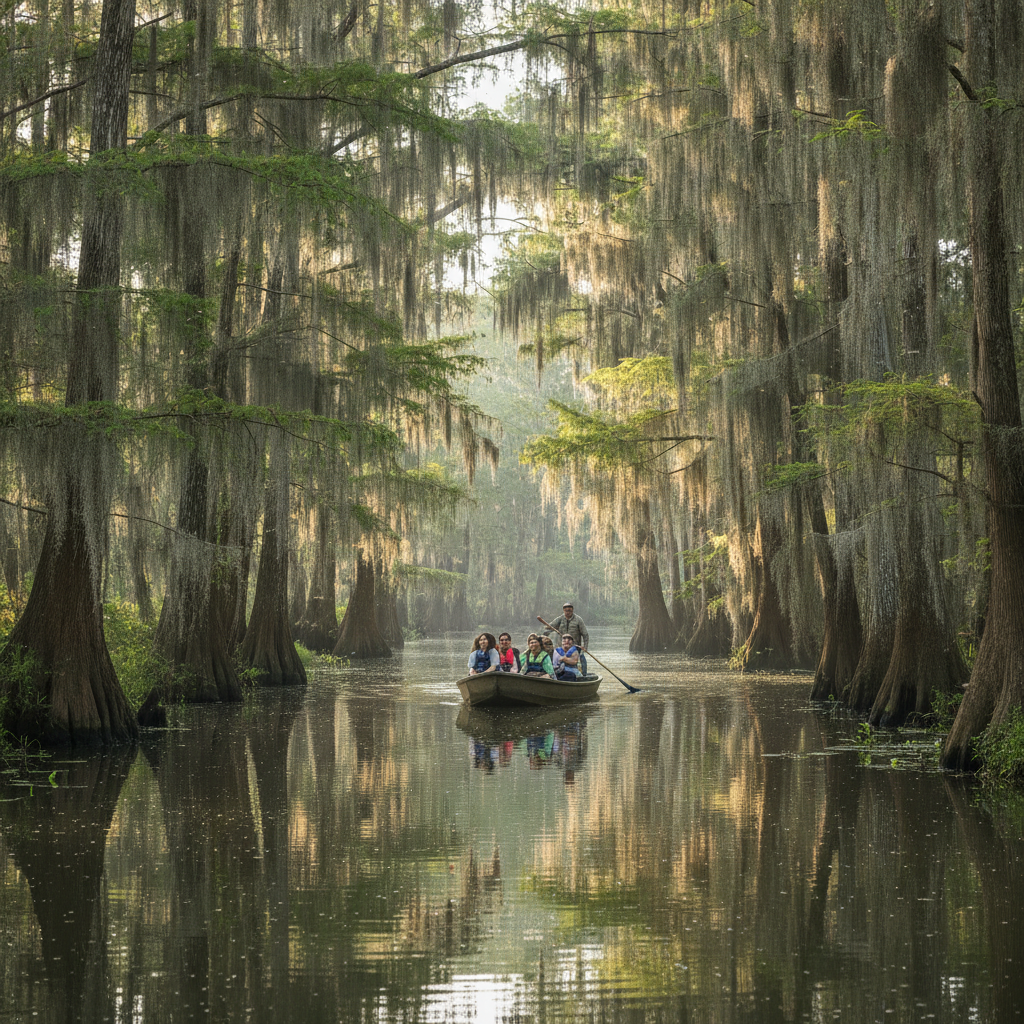
Cypress Gardens, a swamp garden in Berkeley County 24 miles north of Charleston, was created in the 1920s when the Santee Canal, the first commercial canal in America completed in 1800, was dammed to create a freshwater swamp of ancient bald cypress trees draped in Spanish moss. The gardens can be explored by flat-bottomed boat through cypress tunnels and alongside water lilies, herons, anhingas, otters, and alligators. The Mepkin Abbey, a Trappist monastery on the Cooper River north of Charleston, opens its grounds to visitors and sells honey, mushrooms, and eggs from its agricultural operations. The ACE Basin, the estuary formed by the Ashepoo, Combahee, and Edisto Rivers, is one of the largest and most biologically diverse undeveloped estuaries on the East Coast, protected through a combination of federal, state, and private conservation lands covering over 350,000 acres of marsh, forest, and agricultural land.
- 3
Heyward-Washington House and Colonial Interiors
The Heyward-Washington House at 87 Church Street, built in 1772 by Thomas Heyward Jr., a signer of the Declaration of Independence, is the finest surviving colonial urban townhouse in Charleston with its original formal garden, kitchen building, and carriage house intact. President George Washington stayed in the house during his 1791 tour of the Southern states. The interior contains original and period Charleston furniture representing the work of locally trained cabinetmakers who produced some of the finest American colonial furniture outside Newport and Philadelphia. The Charleston Museum on Meeting Street, founded in 1773 and the oldest museum in the United States, holds natural history, decorative arts, and Lowcountry cultural collections. The Nathaniel Russell House, completed in 1808, is the finest example of the Adam or Federal style in Charleston, with a spectacular self-supporting spiral staircase rising three floors without a central support column.
- 4
Gaillard Center and Performing Arts
The Gaillard Center at 95 Calhoun Street, a 1,800-seat concert hall and event venue completed in 2015 as the centerpiece of the Charleston civic center redevelopment, is the primary performance venue for the Charleston Symphony Orchestra and for major Spoleto Festival USA productions. The hall is designed with exceptional acoustics and flexible staging configurations. The Charleston Stage at the Dock Street Theatre and the Long Wharf Theatre present professional theater year-round. PURE Theatre and other smaller companies occupy found spaces in the city. The Charleston Symphony, founded in 1936, presents a full orchestral season in the Gaillard. The visual arts scene is anchored by the Halsey Institute of Contemporary Art at the College of Charleston and a strong commercial gallery network on Broad Street and in the French Quarter. The MOJA Arts Festival in September and October celebrates African American and Caribbean arts with free outdoor performances.
- 5
North Charleston and Industrial Heritage
North Charleston, a separate city of 115,000 people north of Charleston incorporated in 1972, is home to Boeing South Carolina, which assembles the 787 Dreamliner widebody aircraft at a major manufacturing facility opened in 2011, and the former Charleston Naval Base, the largest installation in the southeastern United States before its closure in 1996. The naval base closure devastated North Charleston economically, and the site has been redeveloped as the North Charleston Naval Complex mixed-use area. The Noisette community development project transformed former naval housing. North Charleston also hosts the annual Spoleto performances at the North Charleston Performing Arts Center. The Port of Charleston major cargo terminals are in North Charleston. The city has a substantially African American population and has experienced tensions between economic development goals and community preservation, exemplified by the 2015 shooting of Walter Scott, a Black man, by a North Charleston police officer.
- 6
Colonial Lake and Harleston Village
Colonial Lake, a formal tidal reservoir in the Harleston Village neighborhood southwest of the historic downtown, was created in the early 19th century and is surrounded by a promenade of antebellum and Victorian townhouses on three sides. The lake and promenade were restored in 2017 as a gathering space and serve as a neighborhood social center for morning walkers, dog owners, and evening strollers. The surrounding Harleston Village neighborhood contains some of the finest antebellum rowhouses in Charleston, with a mix of single houses, double houses, and freestanding residences. The Circular Congregational Church at 150 Meeting Street, one of the oldest religious congregations in Charleston dating to 1681, occupies a circular building completed in 1892 on the site of two earlier structures. The graveyard contains the oldest surviving gravestone in Charleston from 1695. The Charleston Horticultural Society maintains gardens throughout the historic district accessible on annual garden tours each spring.
Walk this route with audio
Stories play automatically as you reach each stop — no tapping needed.
More in Charleston
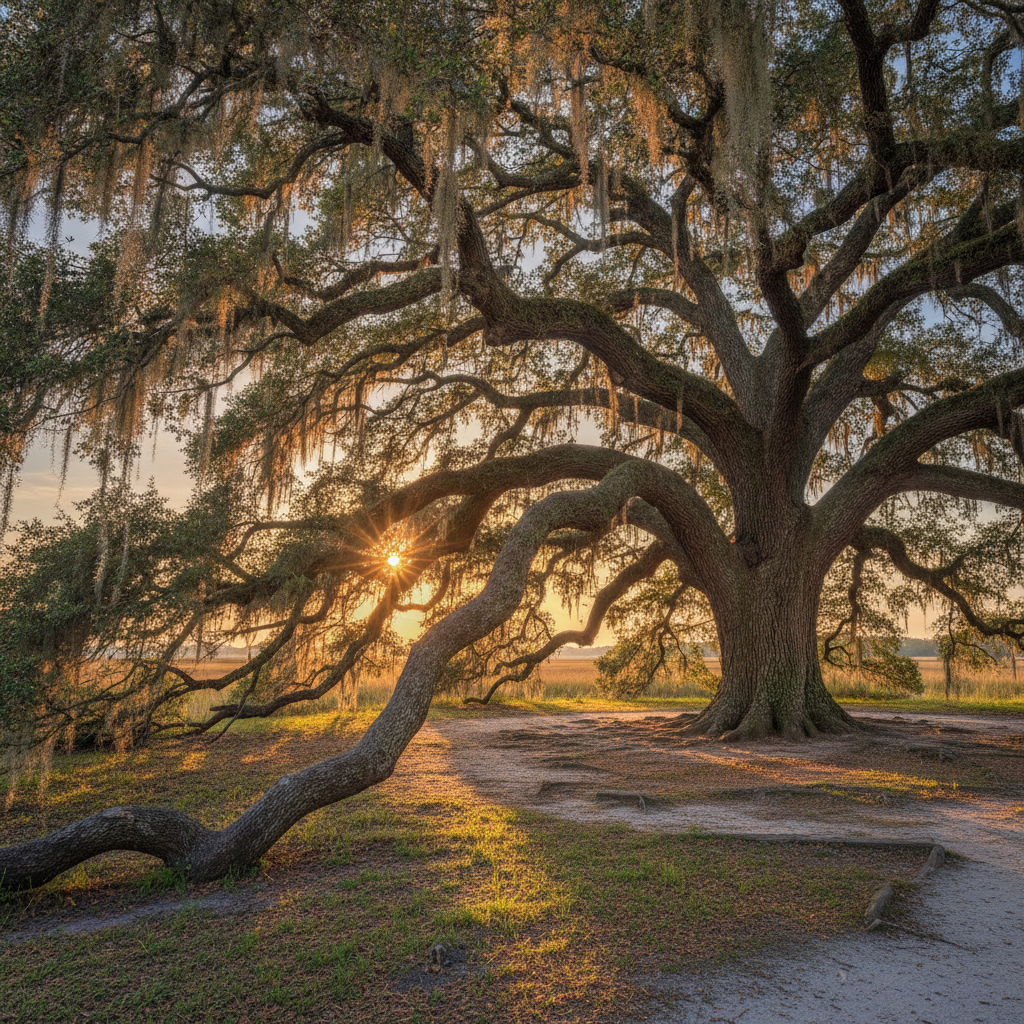
Charleston R4: Angel Oak Johns Island (400-500 years old 8.5m trunk live oak, Spanish moss bromeliad absorbs nutrients from air, Francis Beidler Forest 1000-year-old virgin bald cypress), Sea Islands Gullah heritage (Penn Center St. Helena Island 1862 first school for freed people, MLK SCLC meeting place 1960s, Port Royal Experiment 1861 first test of African American freedom, Hunting Island pristine dark sand beach), Columbia and SC interior (Congaree National Park old-growth bottomland firefly synchronization May-June, SC Aquarium sea turtle rehabilitation, Cowpens Battlefield 1781 Revolutionary War turning point), Francis Marion National Forest (longleaf pine ecosystem 3% remaining, red-cockaded woodpecker, Sewee Visitor Center Cape Romain, Wambaw Creek wilderness canoe trail), New Charleston food (Rodney Scott BBQ 2018 James Beard first Black pitmaster Outstanding SE, whole-hog live oak pits, Leon's Oyster Shop Upper King fried chicken oyster bar, craft cocktail Husk Bar Gin Joint), Ghost tours (most haunted US city top 3, Unitarian churchyard Annabel Lee grave, Old City Jail 1802 Lavinia Fisher first US female serial killer Denmark Vesey 1822 rebellion, Dock Street Theatre ghost Juanita)
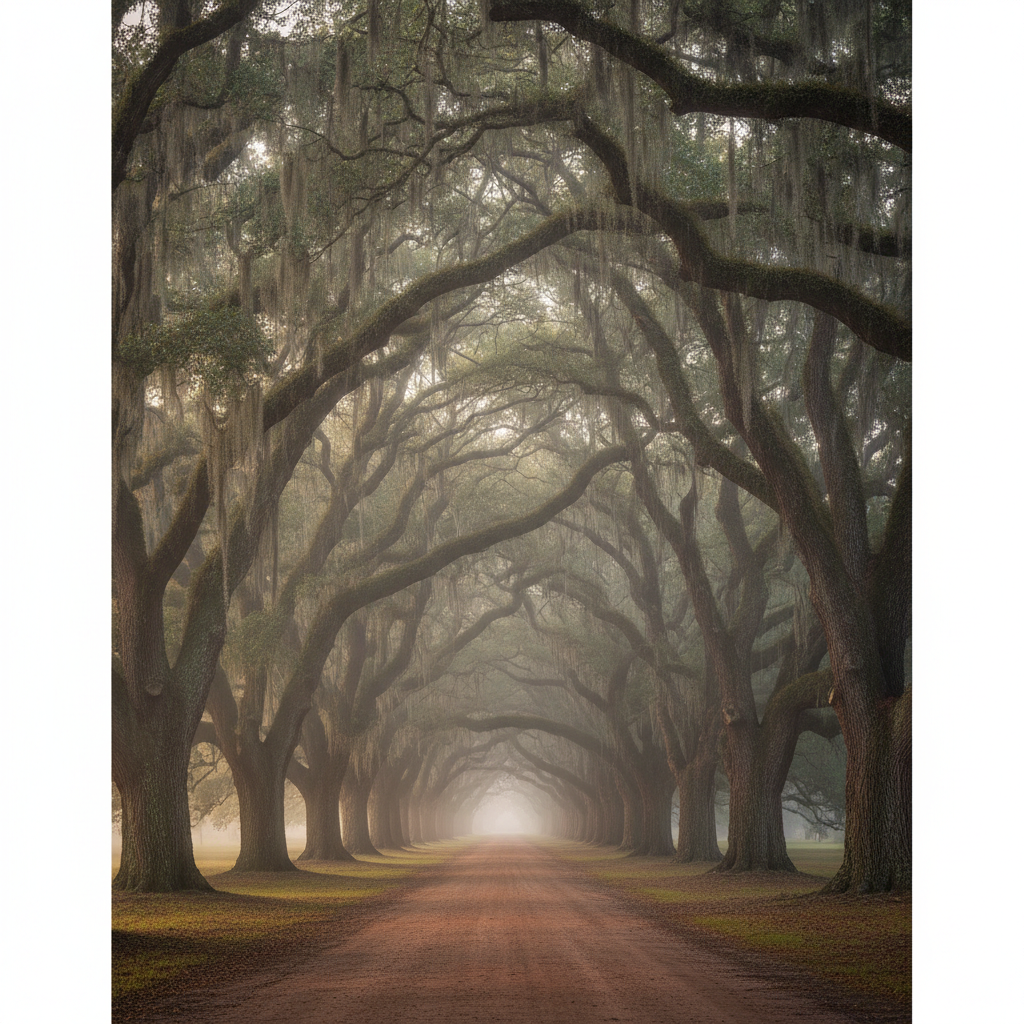
Charleston R2: Ashley River plantations (Middleton Place oldest US landscaped gardens 1741, Drayton Hall 1738 unaltered Palladian most significant US plantation house, Magnolia 1676 oldest US gardens Audubon Swamp Garden, Boone Hall Avenue of Oaks 1743), Plantation tourism ethics and Gullah tours (Slave Street brick cabins Gullah Theater, Sea Islands Johns Wadmalaw Edisto tours), Charleston Earthquake 1886 (magnitude 7.0-7.3 most powerful East Coast historical, 100 dead 2,000 buildings destroyed, Hurricane Hugo 1989 Category 4 USD 7B 27 dead, seawall flood infrastructure), Holy City churches (St. Michael's 1752 oldest SC building, Circular Congregational 1681 oldest congregation graves to 1695, Kahal Kadosh Beth Elohim 1749 oldest active Reform Jewish US, Mother Emanuel 1816 AME shooting June 17 2015 9 killed Confederate flag removed), Outdoor kayaking ACE Basin (350,000 acres largest undeveloped East Coast estuary, Hunting Island Lighthouse 1875 climbable, Congaree National Park old-growth bottomland), Day trips (Columbia USC Gamecocks Dawn Staley, Beaufort Big Chill Prince of Tides Forrest Gump filming, Port Royal Sound Civil War 1861, Hilton Head 24 golf courses)
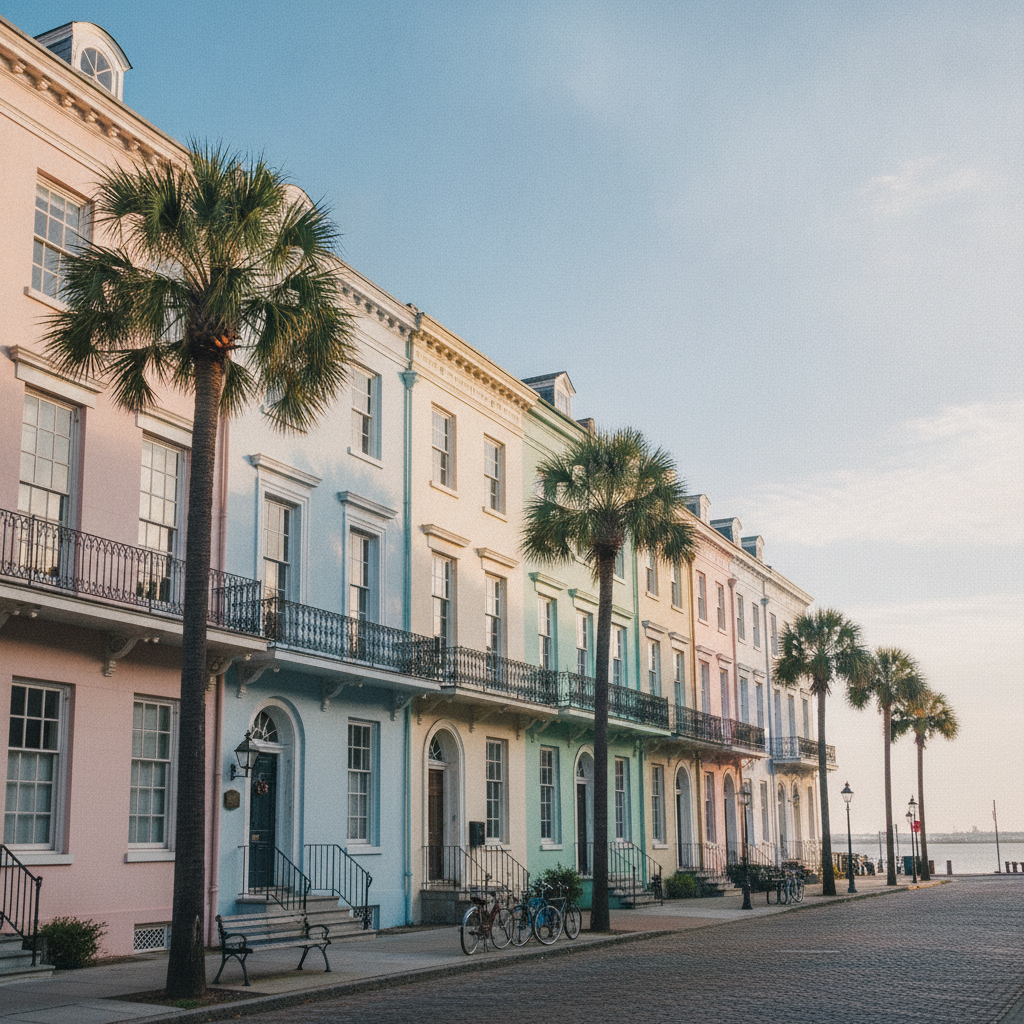
Charleston: First Submarine to Sink a Warship, Gullah Creole Language and the Pastel Row That Started a Design Trend
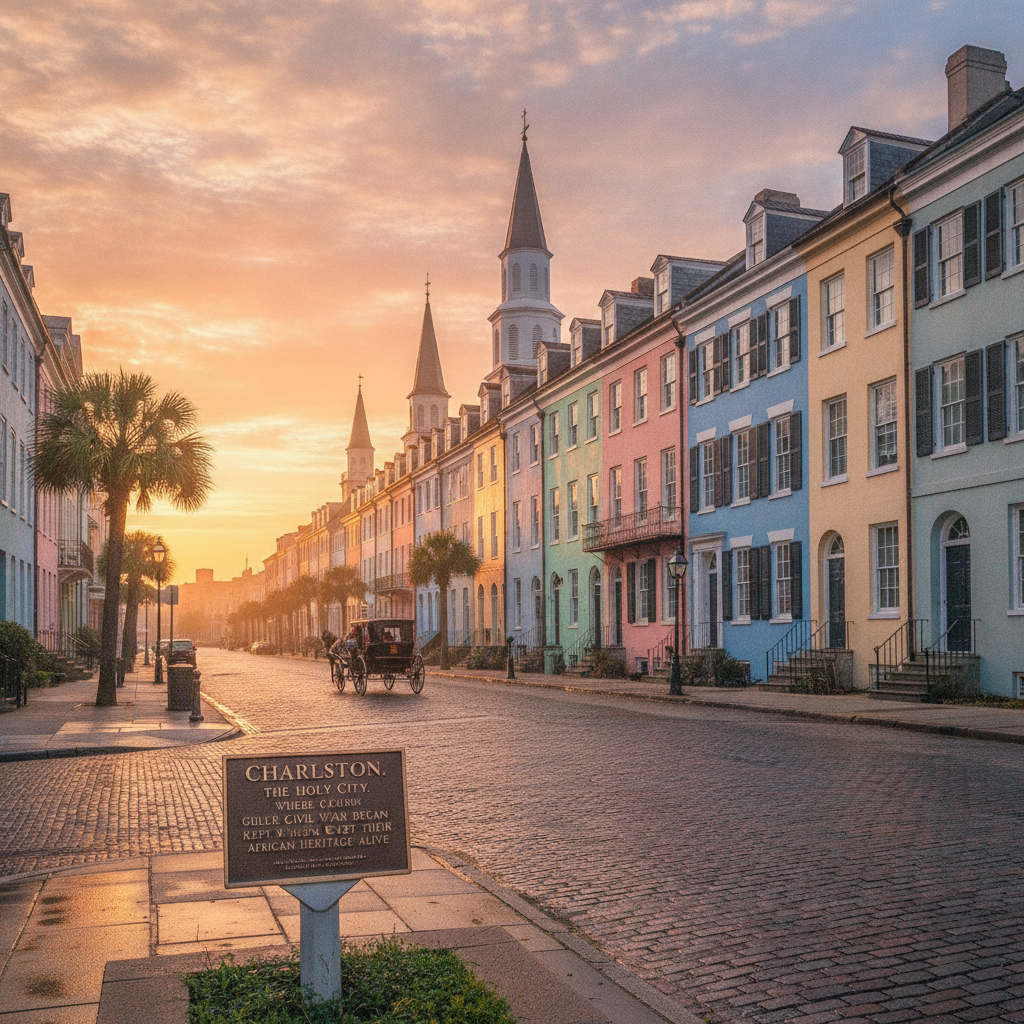
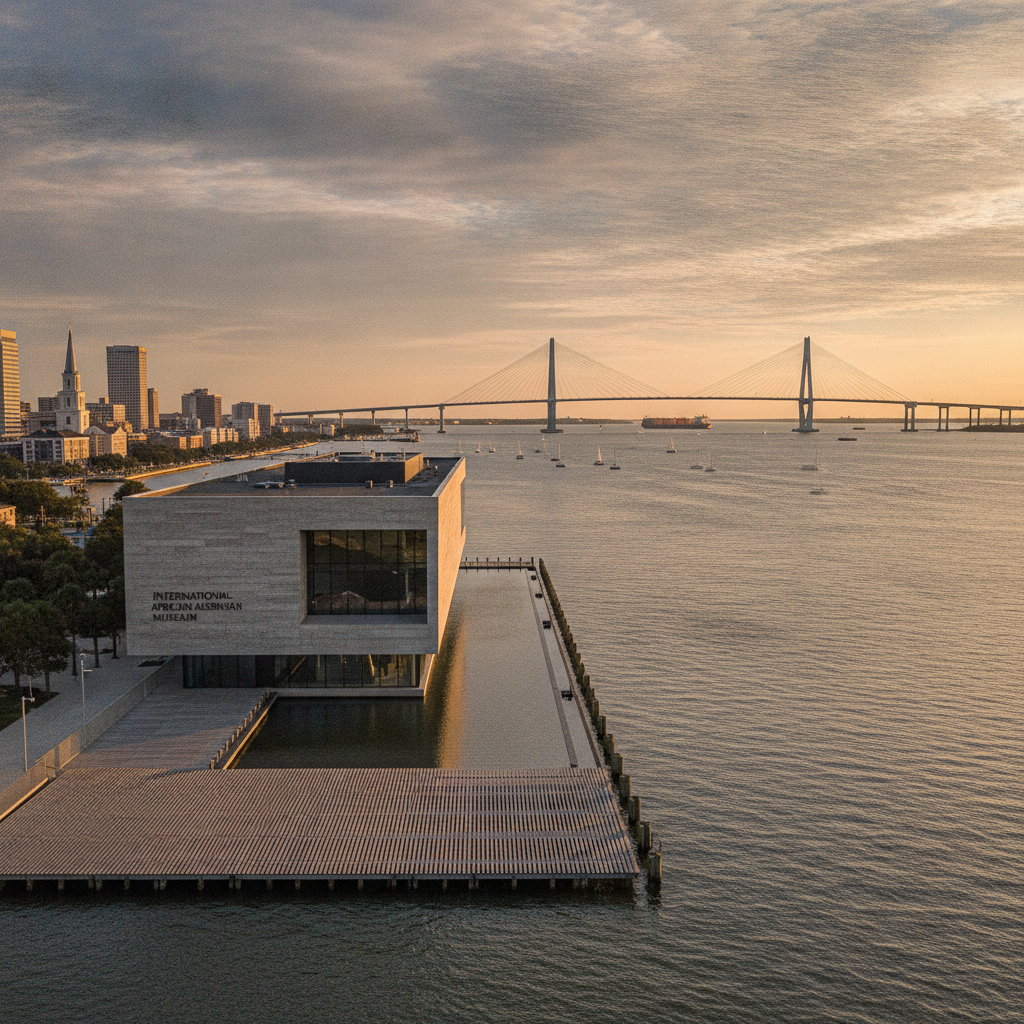
Charleston: Antebellum architecture (Holy City 400 churches, Charleston single house 300 surviving, Rainbow Row 1740s 13 pastel houses, Battery and White Point Garden Fort Sumter views), Fort Sumter (Civil War opened April 12 1861, 34-hour bombardment, 54th Massachusetts Infantry Glory film, H.L. Hunley first combat submarine sank USS Housatonic 1864 recovered 2000), Gullah Geechee culture (creole language rice cultivation sweetgrass baskets, International African American Museum January 2023 Gadsden's Wharf 40% all enslaved Africans imported, Lowcountry rice made Charleston wealthiest colonial city), Lowcountry food (FIG 2003 Lata James Beard 2009, Husk Sean Brock all-Southern-sourced menu, shrimp grits she-crab soup Lowcountry boil, Charleston City Market 1804 sweetgrass weavers), Spoleto Festival USA (largest US performing arts festival 17 days 150 performances 80,000 attendees, first US historic preservation ordinance 1931), Practical (Sullivan's Island Folly Beach Isle of Palms Kiawah Ocean Course 1991 Ryder Cup, ACE Basin largest undeveloped estuary East Coast, spring and fall best seasons CHS airport)
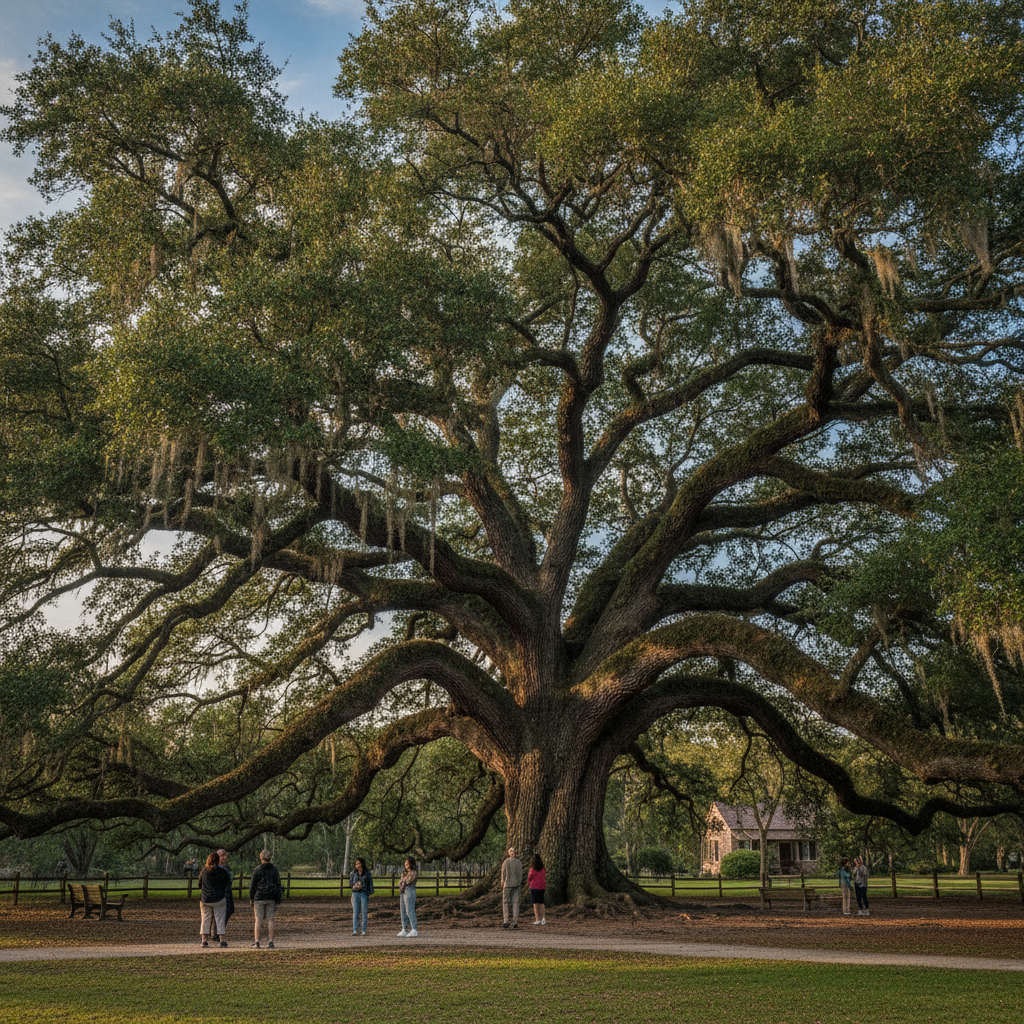
Charleston: 400-Year-Old Tree, Spoleto World Premieres and Sea Island Cotton Grown from West African Knowledge