Balikpapan Orangutan & Borneo Forest Walk
Journey from Balikpapan into the Borneo forest to encounter orangutans — the Bornean orangutan (Pongo pygmaeus) is one of humanity's closest relatives and is found in forests accessible from Balikpapan, with rehabilitation centres and forest reserves providing opportunities to observe these extraordinary great apes.
- 1
Samboja Lestari Orangutan Centre
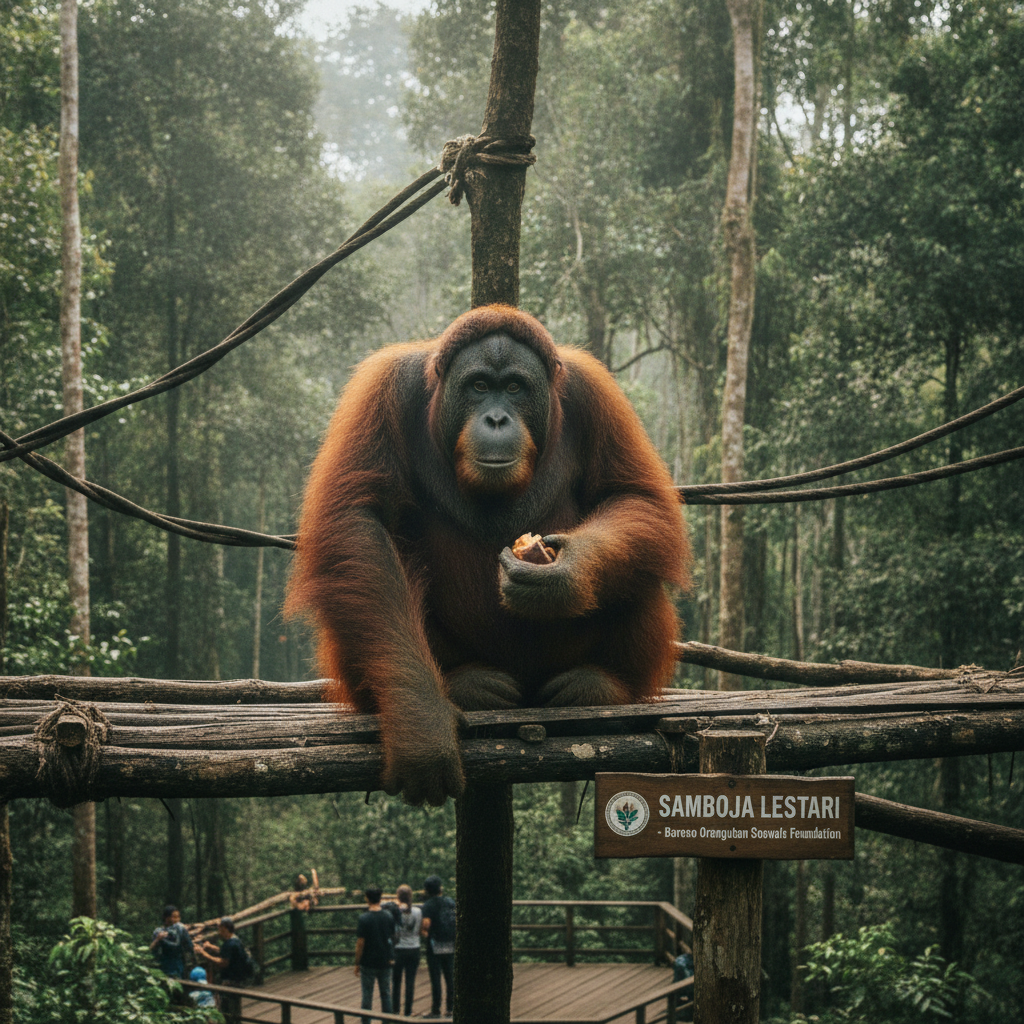
Samboja Lestari, operated by the Borneo Orangutan Survival Foundation (BOSF) 40km north of Balikpapan, is one of the world's largest orangutan rehabilitation centres — the centre that has reforested over 2000 hectares of degraded land and rehabilitates orangutans rescued from the palm oil plantation expansion provides one of the most accessible opportunities to observe orangutans in a forest setting in all of Borneo, with observation towers allowing views of orangutans in natural forest behaviour at the facility's protected forest.
- 2
Sun Bear Sanctuary Samboja
Adjacent to the orangutan centre at Samboja Lestari, the sun bear sanctuary cares for rescued sun bears (beruang madu) — the smallest bear species, found only in Southeast Asian tropical forests, that has lost significant habitat to palm oil expansion in Kalimantan is visible in large forested enclosures that allow natural behaviour. The sanctuary operated alongside the orangutan programme represents a multi-species conservation approach to the biodiversity crisis in Borneo's forests.
- 3
Kutai National Park Access
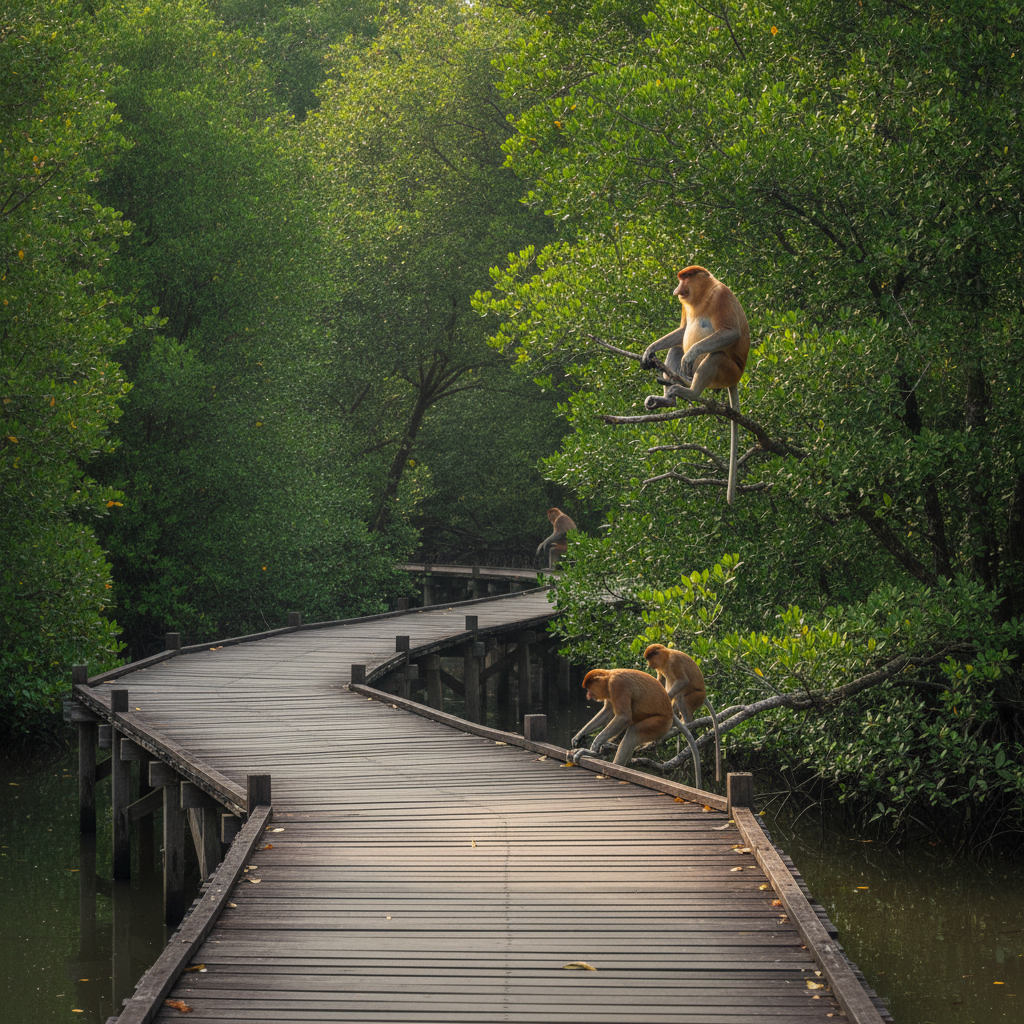
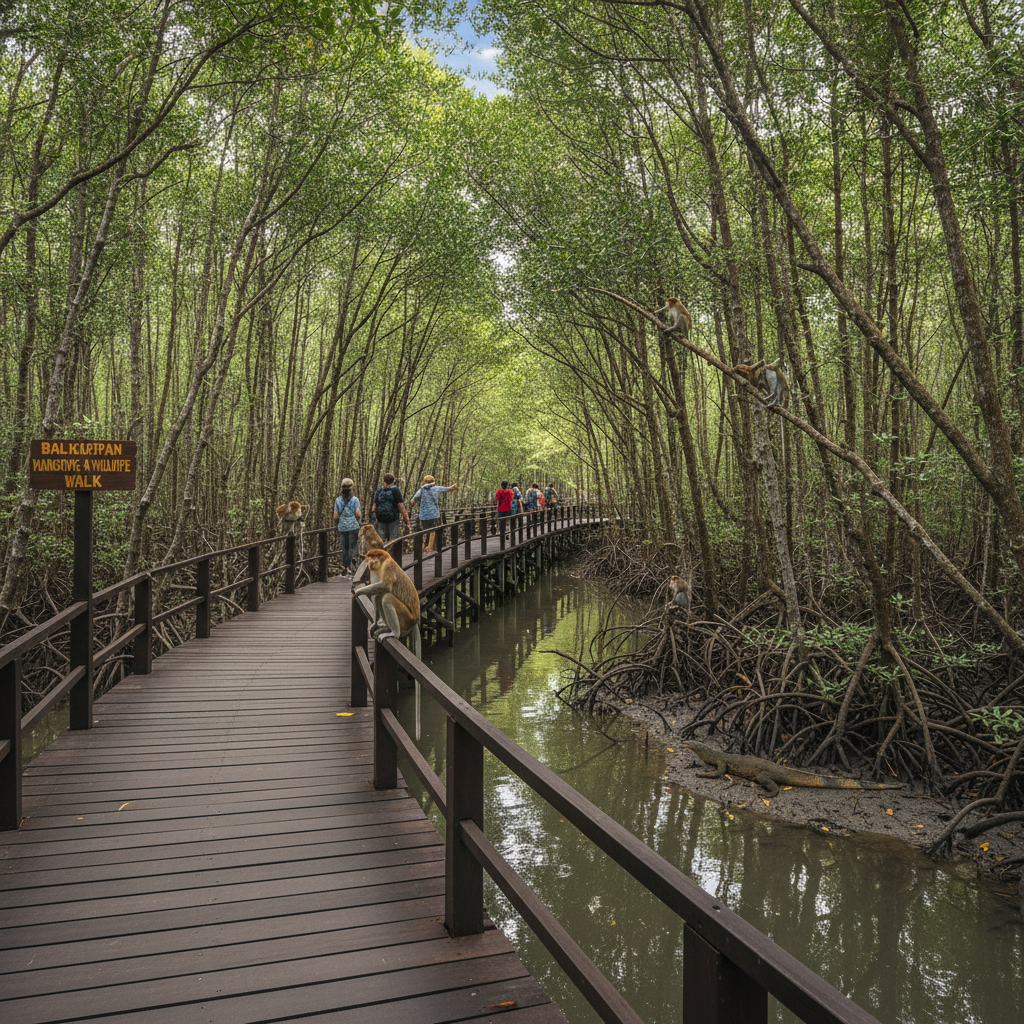
Kutai National Park, accessible by road north of Balikpapan via Samarinda, is the largest protected forest area in East Kalimantan — the park covering 198,629 hectares of lowland and coastal forest supports populations of Bornean orangutan, proboscis monkey, sun bear, saltwater crocodile, and approximately 300 bird species. The park's forests, while impacted by illegal logging and the effects of the 1998 fires that burned much of the coastal zone, represent the most significant remaining lowland forest accessible from Balikpapan.
- 4
Borneo Forest Canopy Structure
The remaining lowland dipterocarp forest around Balikpapan demonstrates the structure of Borneo's most biologically complex habitat — the emergent trees (dipterocarp species like Shorea and Dipterocarpus) reaching 60 metres above the forest floor, the canopy layer at 30-40 metres, the understorey, and the forest floor constitute a vertical habitat structure supporting specialist communities at each level. Understanding this layering is essential to appreciating why lowland forest loss is catastrophically different from highland forest clearance for biodiversity.
- 5
Borneo Pygmy Elephant Context
While Bornean pygmy elephants are found primarily in Sabah (Malaysian Borneo) rather than East Kalimantan, their presence across the island of Borneo illustrates the single biogeographic unit that Indonesian and Malaysian Borneo constitute — the wildlife of Kalimantan's forests (orangutan, proboscis monkey, pygmy elephant, clouded leopard, rhinoceros hornbill) evolved in the same island ecosystem regardless of the political boundary, and the conservation challenges facing these species require international coordination between Indonesia and Malaysia that the political border complicates.
- 6
Palm Oil and Conservation Tension
The landscape around Balikpapan dramatically illustrates the central tension in Indonesian conservation — the oil palm plantations that have replaced lowland forest across East Kalimantan can be seen directly adjacent to the remaining forest fragments that shelter orangutans and other endemic species. Indonesia is simultaneously the world's largest palm oil producer and the country with the greatest responsibility for Bornean orangutan conservation, and Balikpapan sits in the epicentre of this conflict between economic development and biodiversity conservation.
Walk this route with audio
Stories play automatically as you reach each stop — no tapping needed.