Balikpapan Mangrove Forest & Wildlife Walk
Explore Balikpapan's extraordinary urban mangrove reserve — the city has preserved a significant area of mangrove forest within its boundaries, providing habitat for proboscis monkeys, monitor lizards, mudskippers, and mangrove birds accessible by boardwalk from the city centre.
- 1
Hutan Mangrove Balikpapan Boardwalk
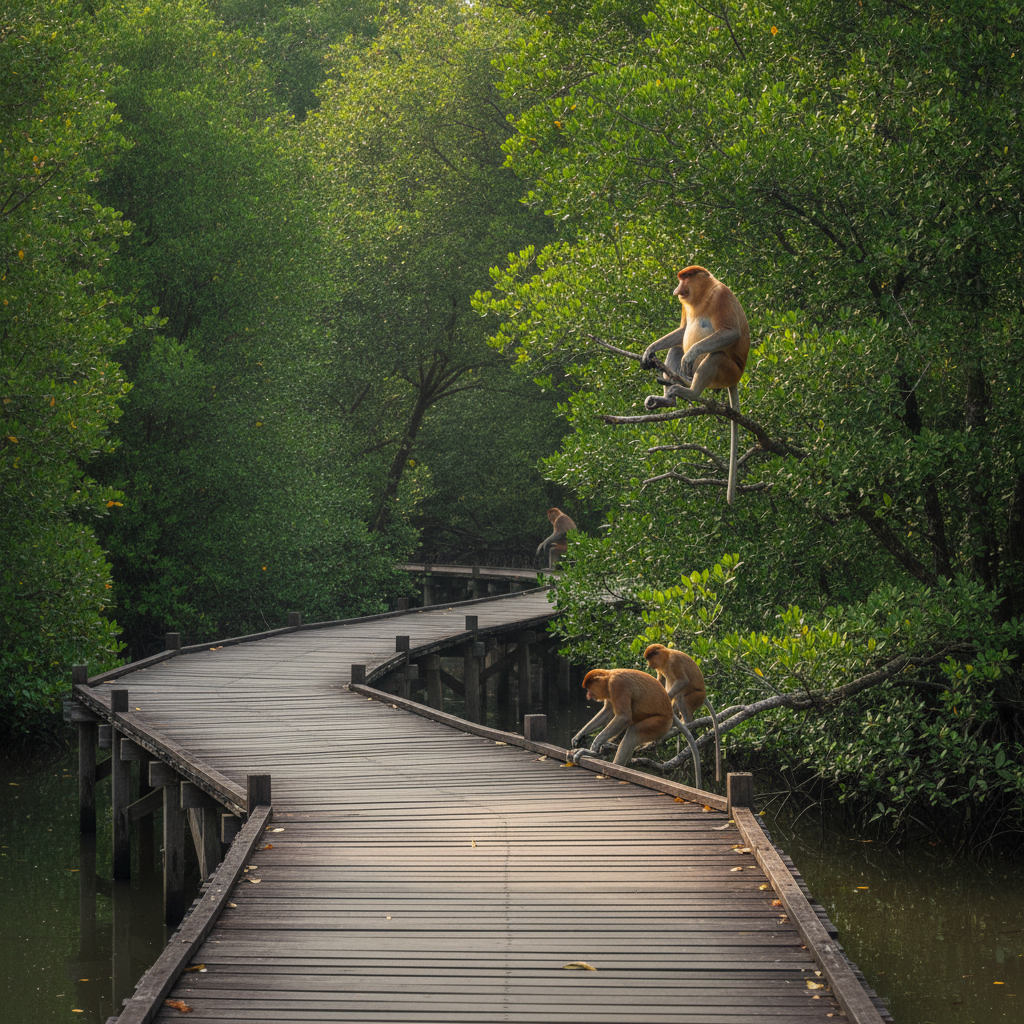
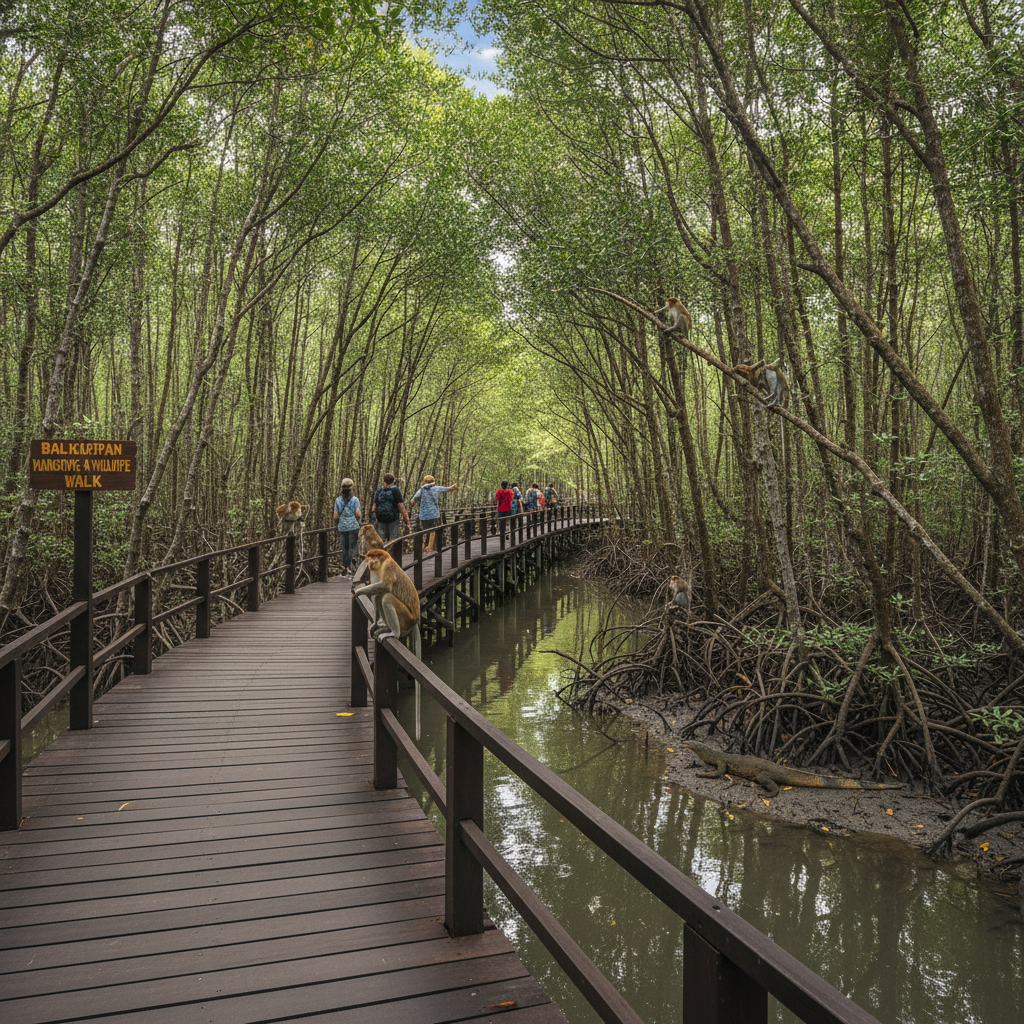
The Balikpapan mangrove forest boardwalk provides access to one of the most accessible mangrove ecosystems in Indonesian Borneo — the elevated wooden walkway through the dense mangrove forest allows visitors to observe the remarkable biodiversity of the tidal zone habitat without disturbing the ecosystem, with the roots, pneumatophores, and aerial architecture of the mangrove trees creating a visual environment unlike any other tropical habitat type.
- 2
Proboscis Monkey Viewing Area
Proboscis monkeys (bekantan) are endemic to Borneo and particularly associated with mangrove and riverine forest habitats — the Balikpapan mangrove reserve maintains a population of these distinctive primates with their large pendulous noses and reddish-orange fur, and the viewing platforms positioned along the boardwalk near their feeding areas allow observation of family groups feeding on mangrove leaves in the late afternoon, providing one of the most reliable proboscis monkey sightings available near an Indonesian city.
- 3
Mangrove Bird Watching Point
The mangrove forest edge and tidal mudflat areas around Balikpapan Bay support a rich waterbird community — the collared kingfisher, mangrove whistler, black-naped oriole, and various egret and heron species that feed along the tidal zone can be observed from the boardwalk viewing points, along with the migratory shorebirds that use the mudflats as a feeding stop during the October-April migration period, making this one of East Kalimantan's most productive birdwatching sites despite its proximity to the city.
- 4
Mudskipper and Fiddler Crab Zone
The exposed mudflats at low tide in Balikpapan's mangrove reserve reveal the extraordinary invertebrate and fish community of the tidal zone — the mudskippers (ambiguous fish that move across mud using their pectoral fins), the fiddler crabs with their single enlarged claw signalling to mates, the mud lobsters constructing their volcano-shaped mounds, and the various species of mangrove snails and bivalves create a community whose adaptations to the intertidal environment are as remarkable as the more charismatic mammals and birds of the forest above.
- 5
Mangrove Ecology Education Centre
The ecological education centre at the entrance to the Balikpapan mangrove reserve explains the environmental services provided by the mangrove ecosystem — the carbon sequestration function of mangrove forests (which store carbon at rates much higher than terrestrial forests), the role of mangrove root systems in protecting coastlines from wave erosion, and the nursery function that mangrove habitats provide for commercially important fish and crustacean species create an environmental value argument for mangrove preservation that the centre makes accessible to school groups and general visitors.
- 6
Balikpapan Bay Conservation Area
Balikpapan Bay itself is a designated conservation area containing the Irrawaddy dolphin population that uses the bay as permanent habitat — the Irrawaddy dolphin (pesut), a freshwater and estuarine species found in rivers and coastal bays across Southeast Asia, has its most accessible population in Indonesia in Balikpapan Bay, where boat tours can observe the dolphins feeding in the bay in a habitat shared with oil tankers and cargo vessels, creating one of the most unusual wildlife conservation contexts in Indonesian Borneo.
Walk this route with audio
Stories play automatically as you reach each stop — no tapping needed.