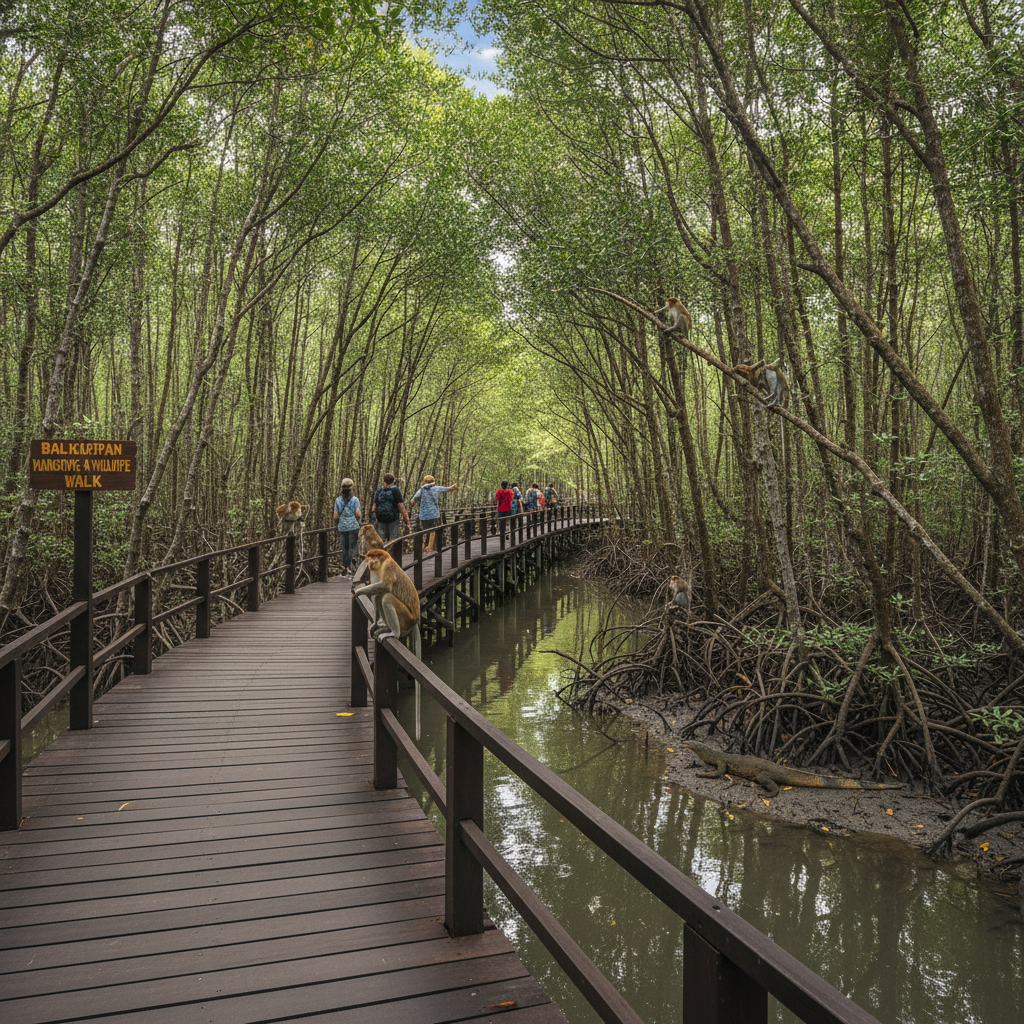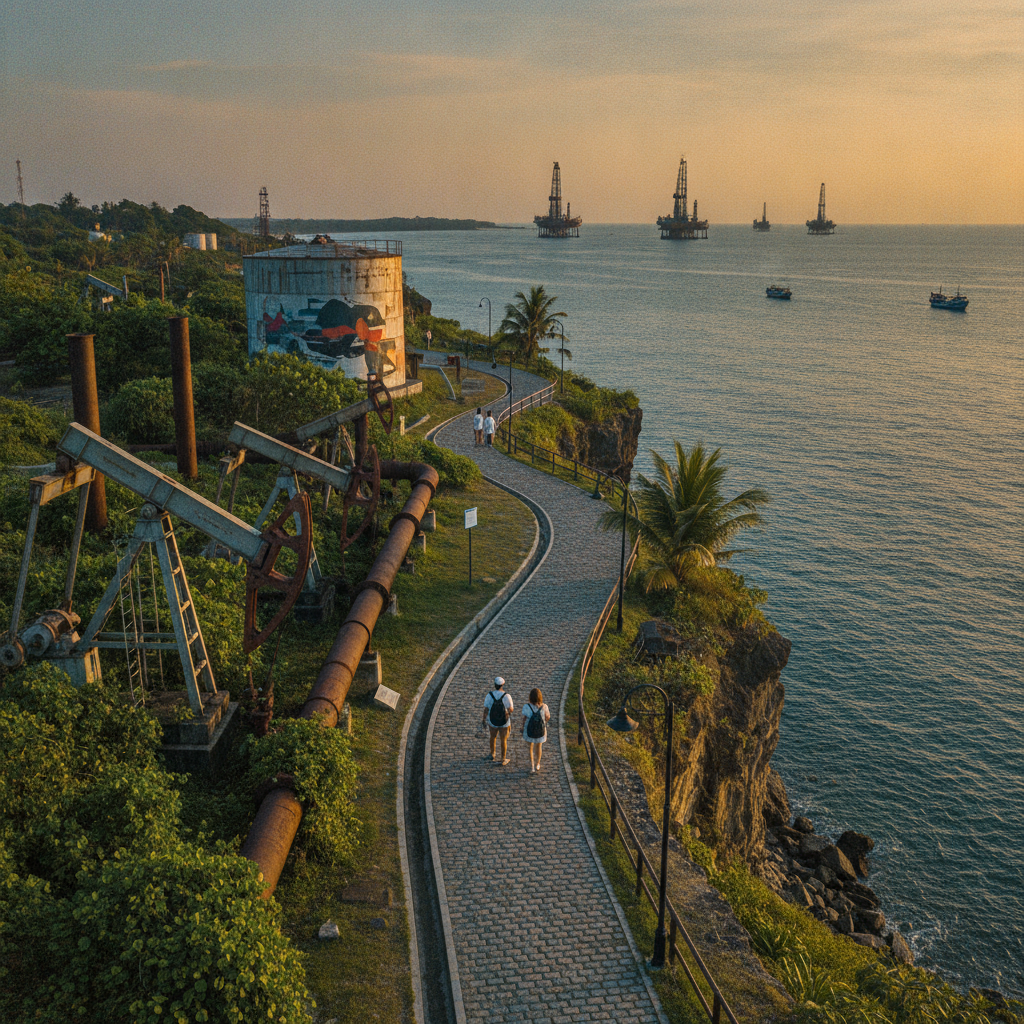
Balikpapan Oil Industry Heritage Walk
Explore Balikpapan's petroleum heritage — the city that became the centre of Dutch colonial oil production in Borneo in 1897 and was the target of major WWII Allied operations to recapture its oil facilities is one of Southeast Asia's oldest oil towns, and its history is inseparable from the petroleum industry.
- 1
Pertamina Oil Refinery View
The Pertamina oil refinery visible from Balikpapan's northern shore is one of Indonesia's largest petroleum processing facilities — the refinery that has operated continuously since the Dutch colonial era processes crude oil from the East Kalimantan fields into fuel products for distribution across eastern Indonesia. The industrial complex visible across the bay, with its towers, pipelines, and flare stacks, represents the physical infrastructure of the petroleum economy that built and continues to sustain Balikpapan.
- 2
WWII Monument Balikpapan
Balikpapan was the site of major WWII battles as Allied forces fought to retake the oil facilities from Japanese occupation — the 1945 Battle of Balikpapan was one of the last major amphibious operations of the Pacific War, with Australian forces conducting the landing that recaptured the strategically critical oil infrastructure. The WWII monuments in Balikpapan commemorate both the Allied soldiers who died in the operation and the local civilian population who survived the Japanese occupation period.
- 3
Museum Perumusan Naskah Proklamasi
The historical museum documents Balikpapan's role in Indonesian national history — the city that was an important petroleum hub during the colonial period and WWII became part of the newly independent Indonesian state in 1945, and the museum traces the development of East Kalimantan from colonial resource extraction to its contemporary status as one of Indonesia's most economically significant provinces, driven by continued petroleum, coal, and palm oil production.
- 4
Sungai Ampal River District
The Sungai Ampal river area in east Balikpapan has historically been a residential and commercial district for the city's longer-established communities — the riverside neighbourhood with its mix of traditional Banjar-style wooden houses on stilts and more modern construction represents a domestic Balikpapan distinct from the oil company residential compounds, and the daily life of the river community maintains a connection to the Kalimantan waterway culture that predates the petroleum era.
- 5
Gunung Dubbs Oil Hill
Gunung Dubbs (Dubbs Hill) is the site where the first oil wells were drilled in Balikpapan in the 1890s — the hill named for the American petroleum engineer who helped develop early processing technology now overlooks the modern city from a residential area, but its position as the origin point of Balikpapan's petroleum history makes it the symbolic starting point for understanding how a small coastal settlement became one of Southeast Asia's most important oil production centres.
- 6
Dermaga Semayang Port
Balikpapan's main cargo port at Semayang handles the petroleum products, coal, and general cargo that flow through one of Borneo's busiest ports — the port infrastructure that loads petroleum products for distribution and receives the consumer goods and equipment needed by the oil industry serves simultaneously as Balikpapan's connection to the global petroleum economy and as the supply hub for the interior of East Kalimantan accessible only by river.
Walk this route with audio
Stories play automatically as you reach each stop — no tapping needed.