Aracaju's Crab Culture: Sergipe's Defining Seafood
Sergipe is Brazil's largest crab producer — and Aracaju's entire food identity revolves around the crustacean; the Passarela do Caranguejo, the crab festivals, and the multiple preparations make it unique in Brazil
- 1
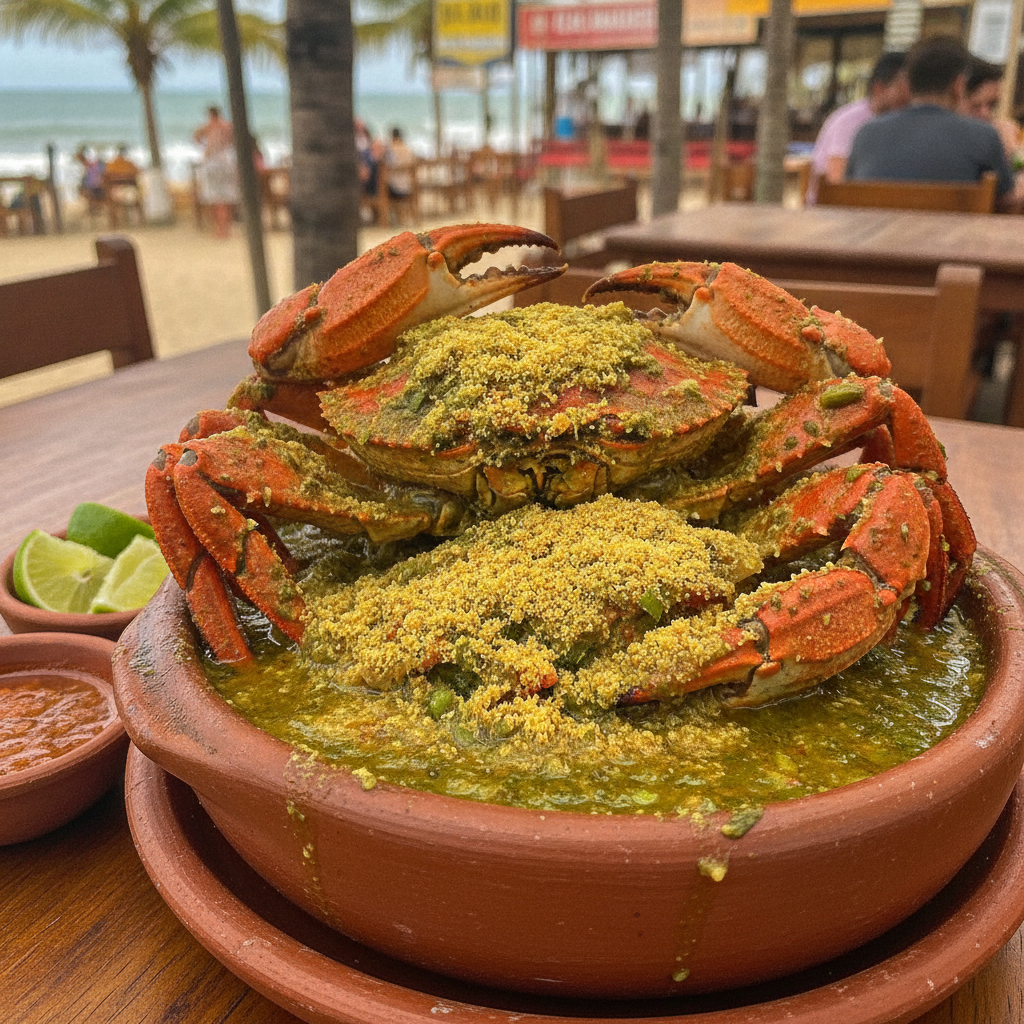
Caranguejo ao Molho Verde
Crab in green sauce - parsley, garlic and olive oil - is Aracaju's signature dish; the crabs are local and the flavor is clean, herbaceous and deeply satisfying when eaten with hands and cassava flour
- 2
Moqueca de Caranguejo
The Sergipe moqueca crab stew—with coconut milk, dendê oil, and green peppers—is slower and richer than the individual crab dishes; the crab meat is extracted and the stew is served over rice
- 3
Aratu Crab Preparation
Aratu - a smaller brackish crab - is cooked in Aracaju in a stew with tomatoes and cilantro; the smaller size means several are needed for one serving but the flavor is more concentrated than the larger caranguejo
- 4
Paçoca de Pilão
Sergipe paçoca - dried meat pounded in a wooden mortar with cassava flour and spices - is the inland equivalent of coastal crab dishes; the combination of both in one meal is the Sergipe Feast
- 5
Crab Festival in Atalaia
The annual Crab Festival on Atalaia Beach brings together all the preparations — crab-eating contests, live music and the communal atmosphere of a city celebrating its most important product
- 6
Oyster Farms at the Estuary
The São Francisco estuary produces oysters farmed by local communities — fresh oysters grilled with butter and garlic are served at Atalaia kiosks as an appetizer within the main crab dishes
Walk this route with audio
Stories play automatically as you reach each stop — no tapping needed.
More in Aracaju
São Cristóvão: Brazil's Fourth-Oldest City & Colonial Gem
Sergipe on the Table: Goat, Dried Beef & Sertão Flavours
Laranjeiras: Sergipe's Afro-Brazilian Cultural Capital
Cânion do Xingó: The São Francisco River's Blue Canyon
São Francisco River Delta: Where the Great River Meets the Sea