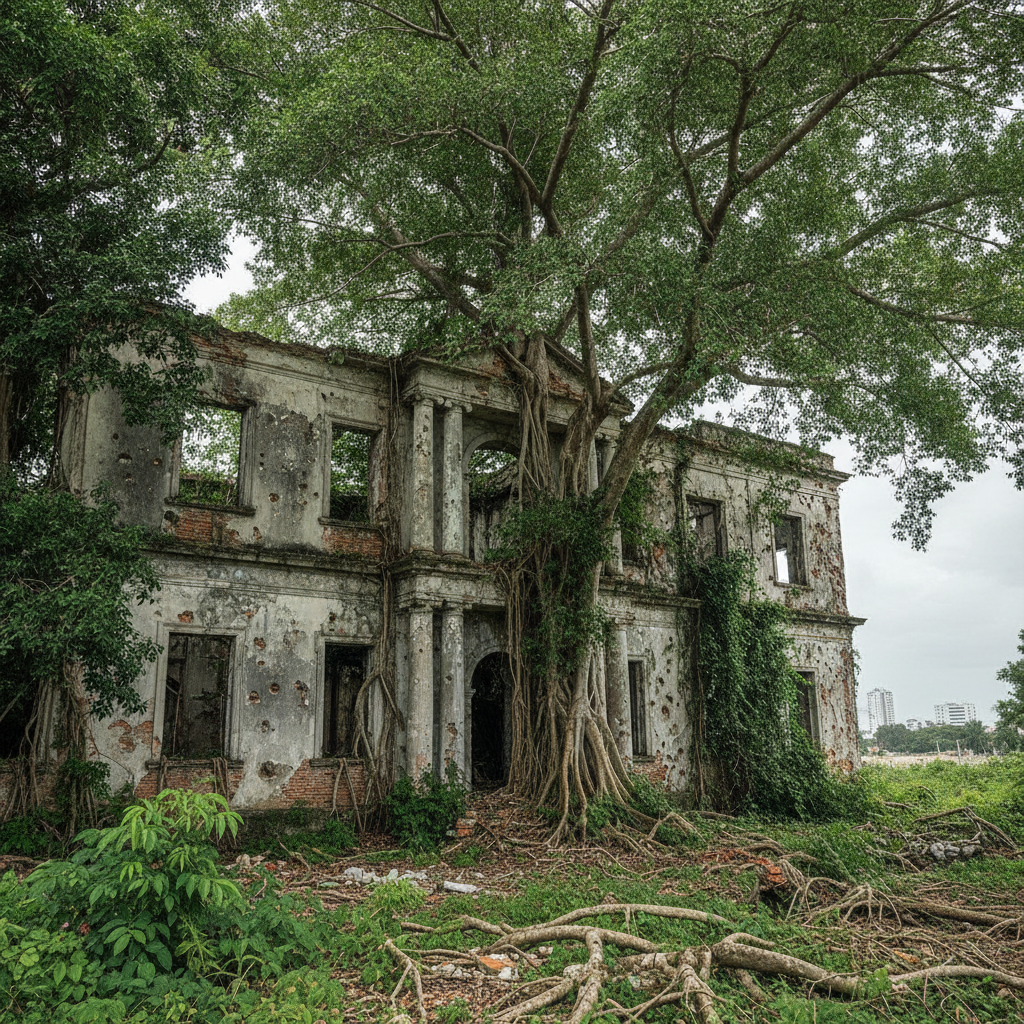


Bissau's Colonial Ruins & Post-War Architecture
Bissau is one of Africa's most melancholy capitals — the 1998 civil war destroyed much of the colonial city, leaving a haunting landscape of bullet-scarred buildings and tropical vegetation reclaiming the ruins

Pidjiguiti Massacre & Guinea-Bissau's Liberation History
The 1959 Pidjiguiti dockworkers' massacre — when Portuguese troops killed striking workers — sparked Amílcar Cabral's independence movement; Bissau's liberation heritage is one of Africa's most inspiring

Guinea-Bissau Cuisine: Smoked Oysters, Caldo & Estuary Seafood
Guinea-Bissau's extraordinary wetland coast produces smoked oysters, mangrove crabs, and Atlantic seafood that underpin one of West Africa's least-known but most flavourful cuisines

Orango's Marine Hippos: The World's Only Salt-Water Hippopotami
Orango Island in the Bijagós harbours the world's only confirmed population of marine hippos — hippopotami that swim in salt water, feed on sea vegetation, and have adapted to tidal rhythms

Tabanka & Carnival: Guinea-Bissau's Musical Traditions
Guinea-Bissau has a vibrant musical culture despite its tiny size — the tabanka brotherhood processions, gumbe music, and the carnival that draws the diaspora back every February

Bijagós Archipelago: UNESCO Biosphere Reserve & Turtle Nesting
The 88-island Bijagós Archipelago is one of West Africa's last pristine wilderness areas — a UNESCO Biosphere Reserve where green sea turtles nest, hippos wade the sea, and the Bijagó people maintain a matriarchal society

Cacheu: Portuguese Fort & Guinea-Bissau's Oldest Town
Cacheu on the river of the same name is Guinea-Bissau's oldest town — the Portuguese fort built in the 17th century was a major Atlantic slave trade entrepôt, and its ruins still command the river

Bandim Market & Bissau's Urban Life
The Bandim market is the social and commercial heart of Bissau — a dense, colourful covered market where Papel, Mandinka, and Fula traders coexist in the smallest capital in West Africa