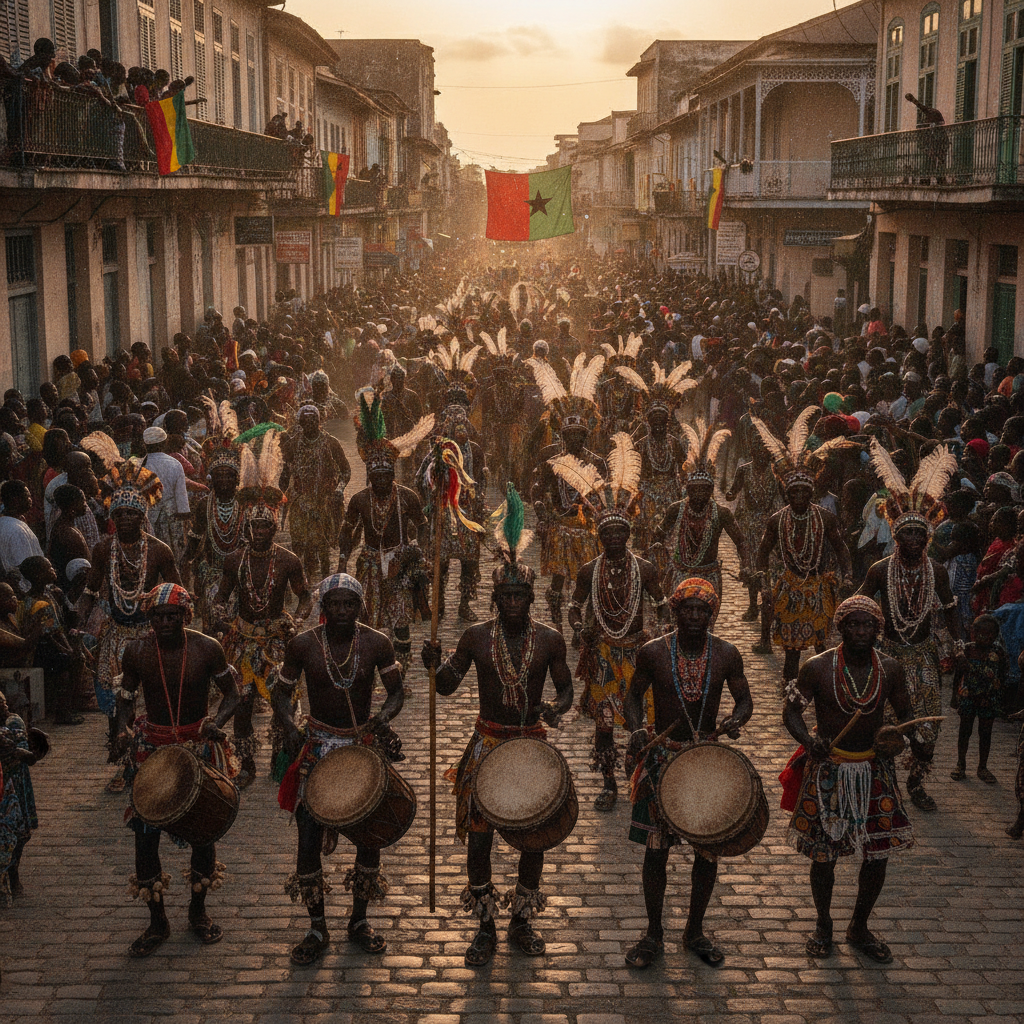
Tabanka & Carnival: Guinea-Bissau's Musical Traditions
Guinea-Bissau has a vibrant musical culture despite its tiny size — the tabanka brotherhood processions, gumbe music, and the carnival that draws the diaspora back every February
- 1
Tabanka Brotherhood Procession
The Tabankan - a brotherhood of mutual aid with origins in slavery - organizes annual street processions where members in matching uniforms parade a full casket through the streets
- 2
Gumbe Music of Bissau
Gumbe — Guinea-Bissau's most distinctive music — combined African rhythms with Portuguese influences; a fast, hypnotic music played on frame drums and sung in Crioulo
- 3
February Carnival Celebration
Bissau's Carnival draws Guinea-Bissau's diaspora back from Lisbon and Paris - the streets fill with music, costumes and dancing that continues for three days
- 4
Papel Community Ceremony
The Papel – the original inhabitants of the Bissau Peninsula – maintain their initiation ceremonies, royal rites and dance traditions despite urbanization and political upheaval
- 5
Crioulo Language Culture
Guinea-Bissau Crioulo – a Portuguese-based creole – is the national lingua franca and the language of music, poetry and street life; distinct from Cape Verdean Crioulo
- 6
Tina Turner and Cesária Évora Influence
The musical connections between Guinea-Bissau and Cape Verde – through shared Crioulo culture – produced one of Africa's most distinctive musical traditions, combining Atlantic and African elements
Walk this route with audio
Stories play automatically as you reach each stop — no tapping needed.
More in Bissau
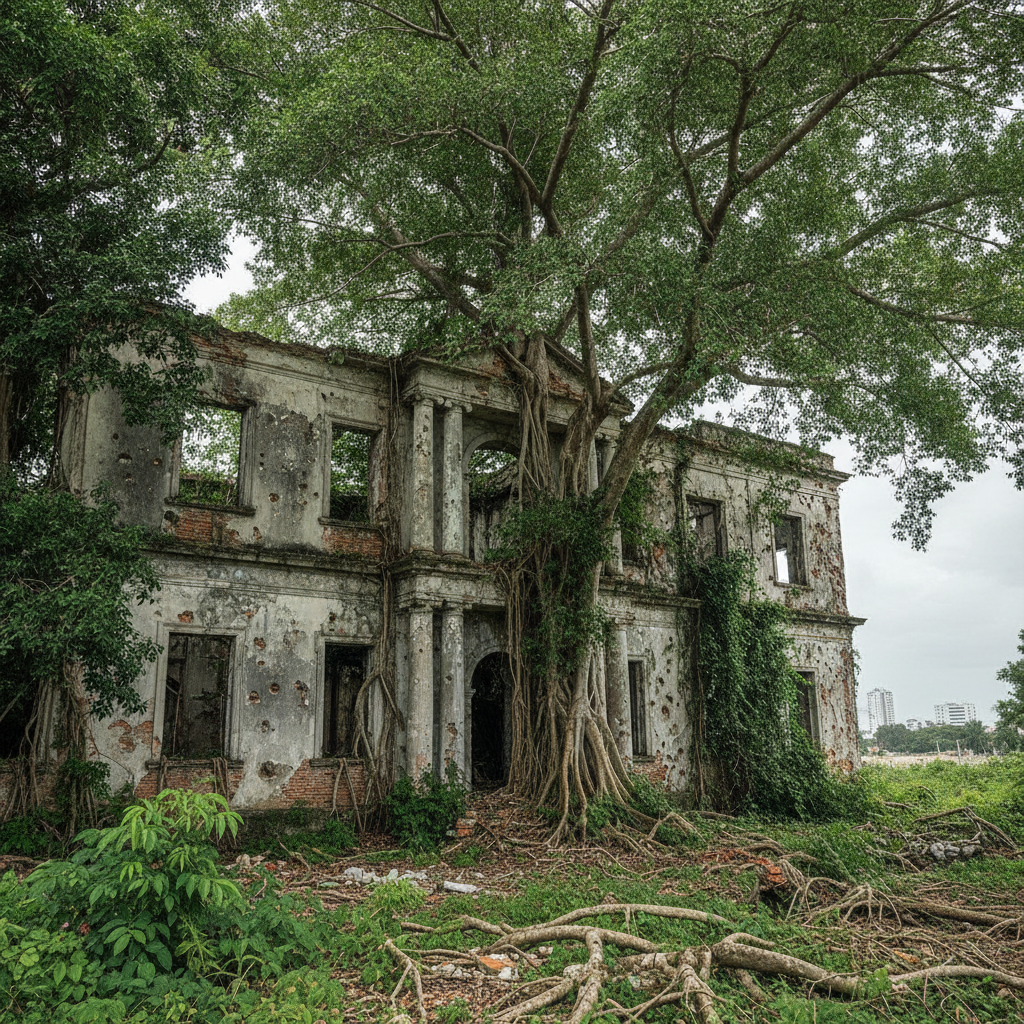
Bissau's Colonial Ruins & Post-War Architecture
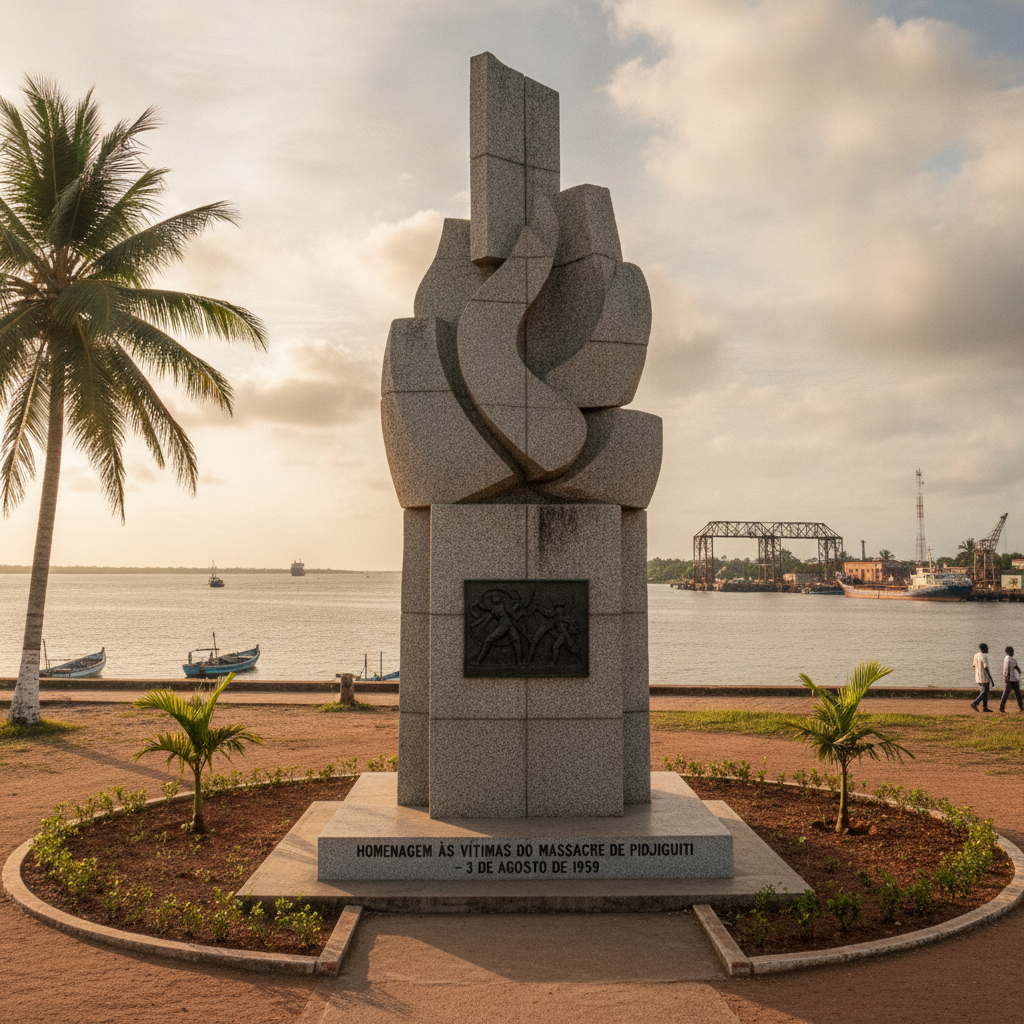
Pidjiguiti Massacre & Guinea-Bissau's Liberation History
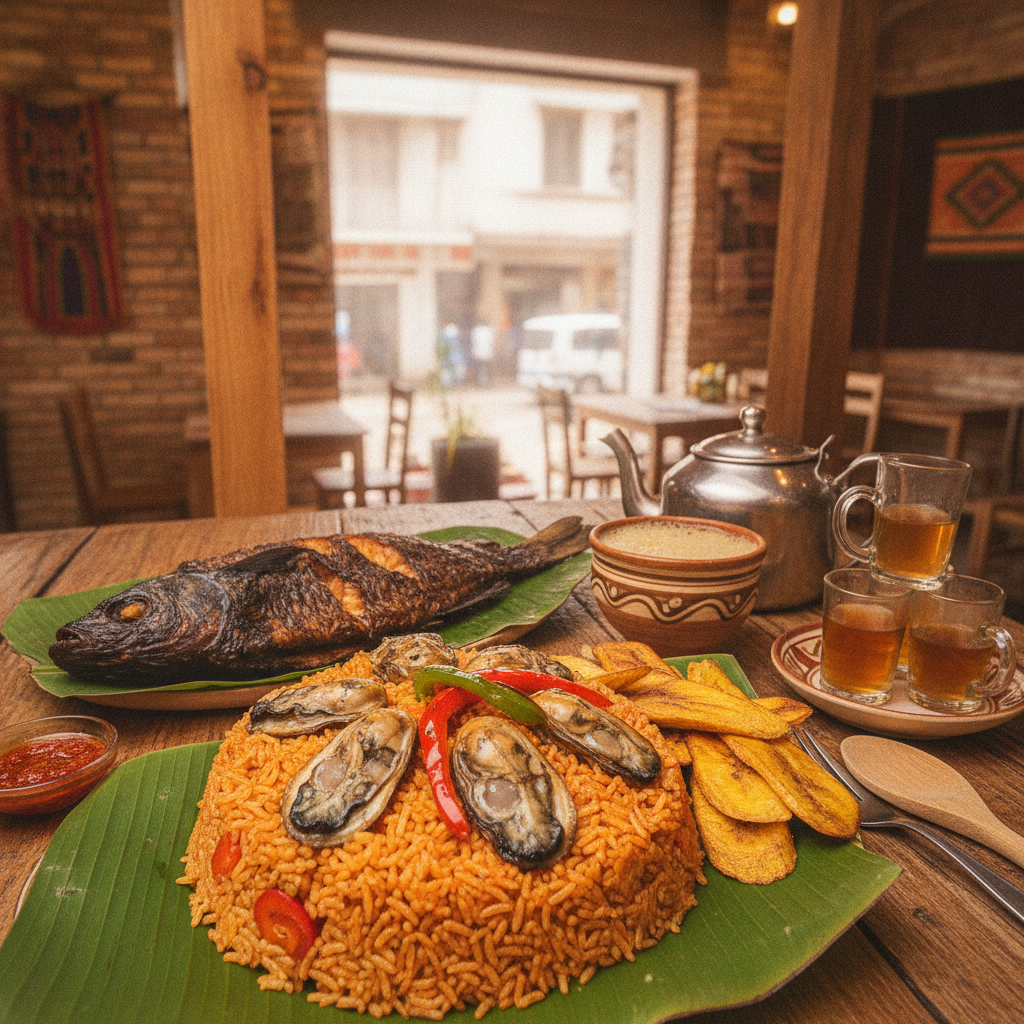
Guinea-Bissau Cuisine: Smoked Oysters, Caldo & Estuary Seafood

Orango's Marine Hippos: The World's Only Salt-Water Hippopotami
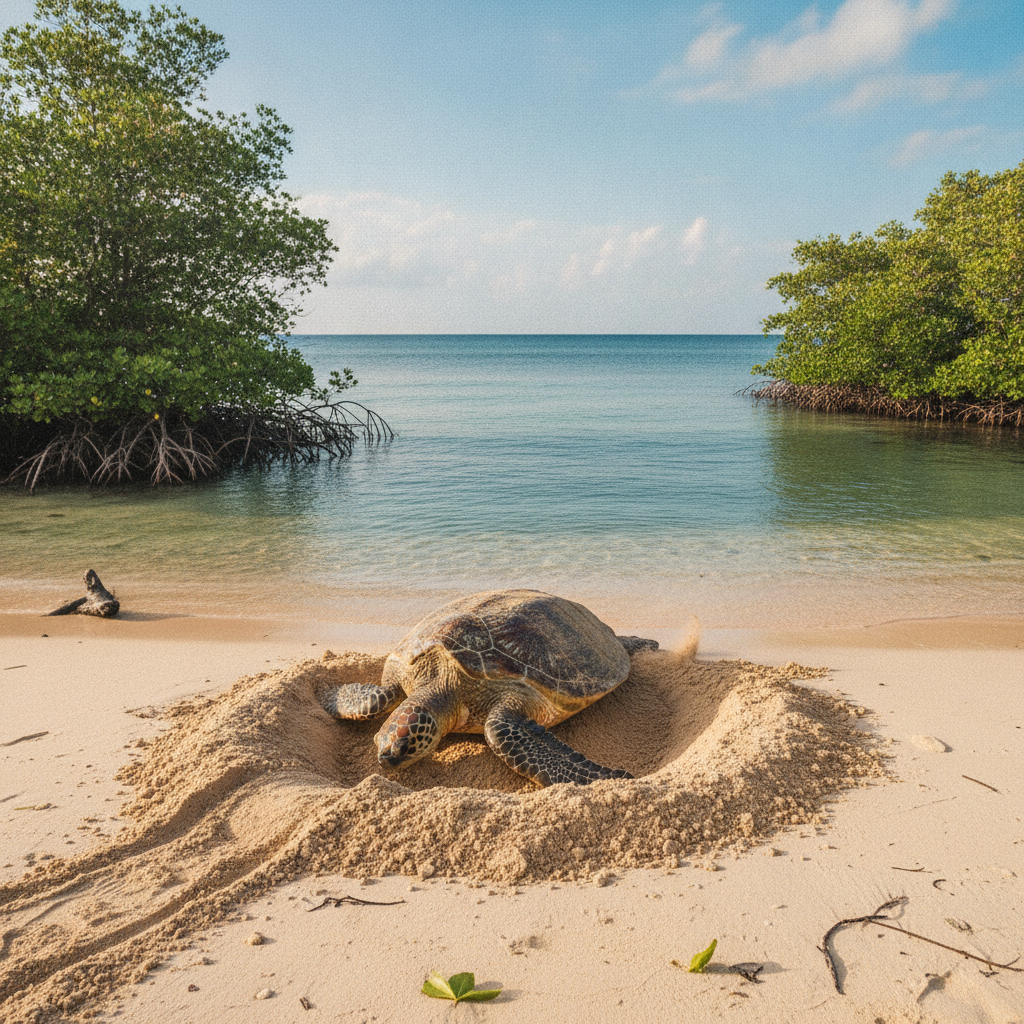
Bijagós Archipelago: UNESCO Biosphere Reserve & Turtle Nesting