Varanasi Complete: Cremation-Ash Holi, the House Where People Go to Die & the Ashoka Lion Capital at Sarnath
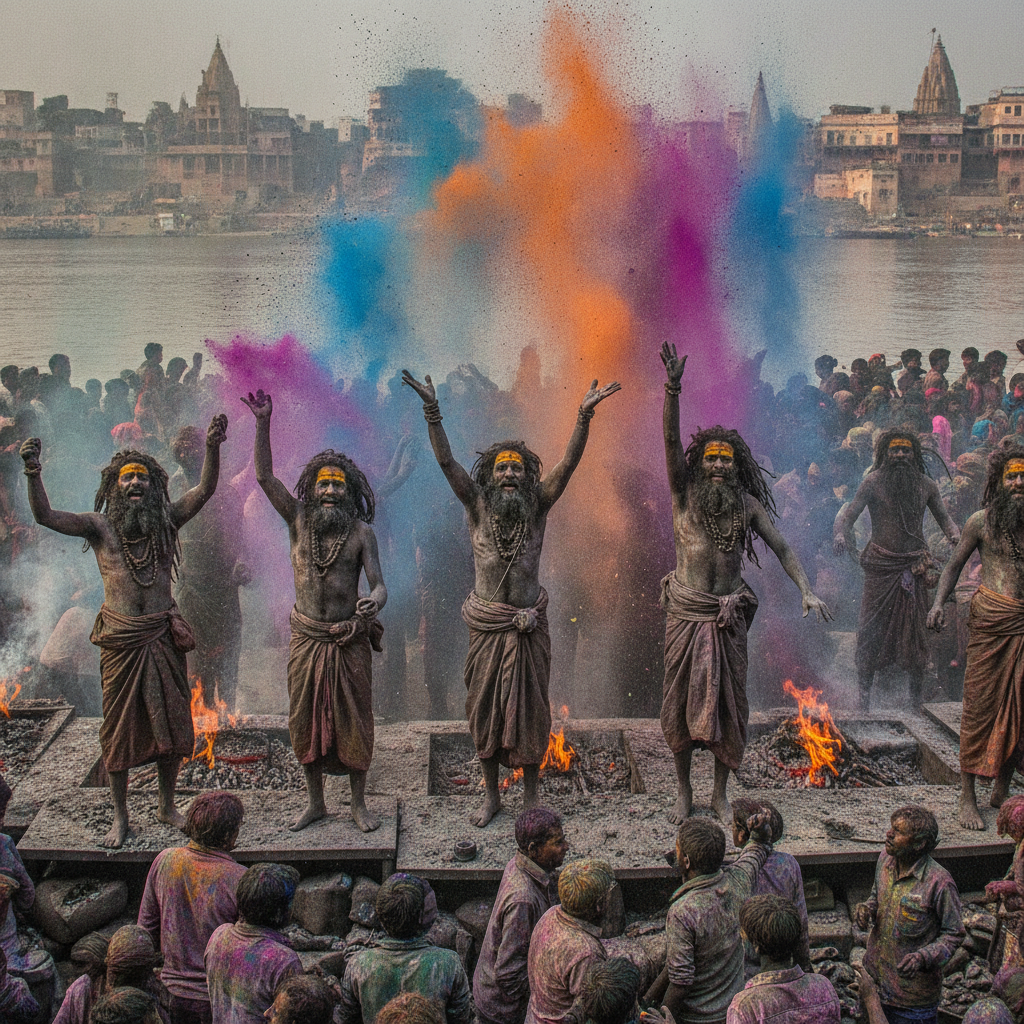
Complete the Varanasi picture—23,000 temples including the Mother India Temple where a marble map of undivided India is the deity, buying Banarasi silk without getting sold a power-loom fake (the real zari burns white ash, the fake turns black), Masaan Holi where Aghori ascetics throw cremation ash from Manikarnika's fires, the Mukti Bhawan guesthouse that accepts only those who come to die with a 15-day maximum stay, the Thai, Japanese, Chinese, and Tibetan monasteries circling Sarnath's Dhamek Stupa, and the scam-navigation guide to Varanasi's boats, guides, and silk shops.
Varanasi's Seasons: The Month-Long Street Ramayana, Bismillah Khan's Shehnai & the Buddhist Circuit to Bodh Gaya
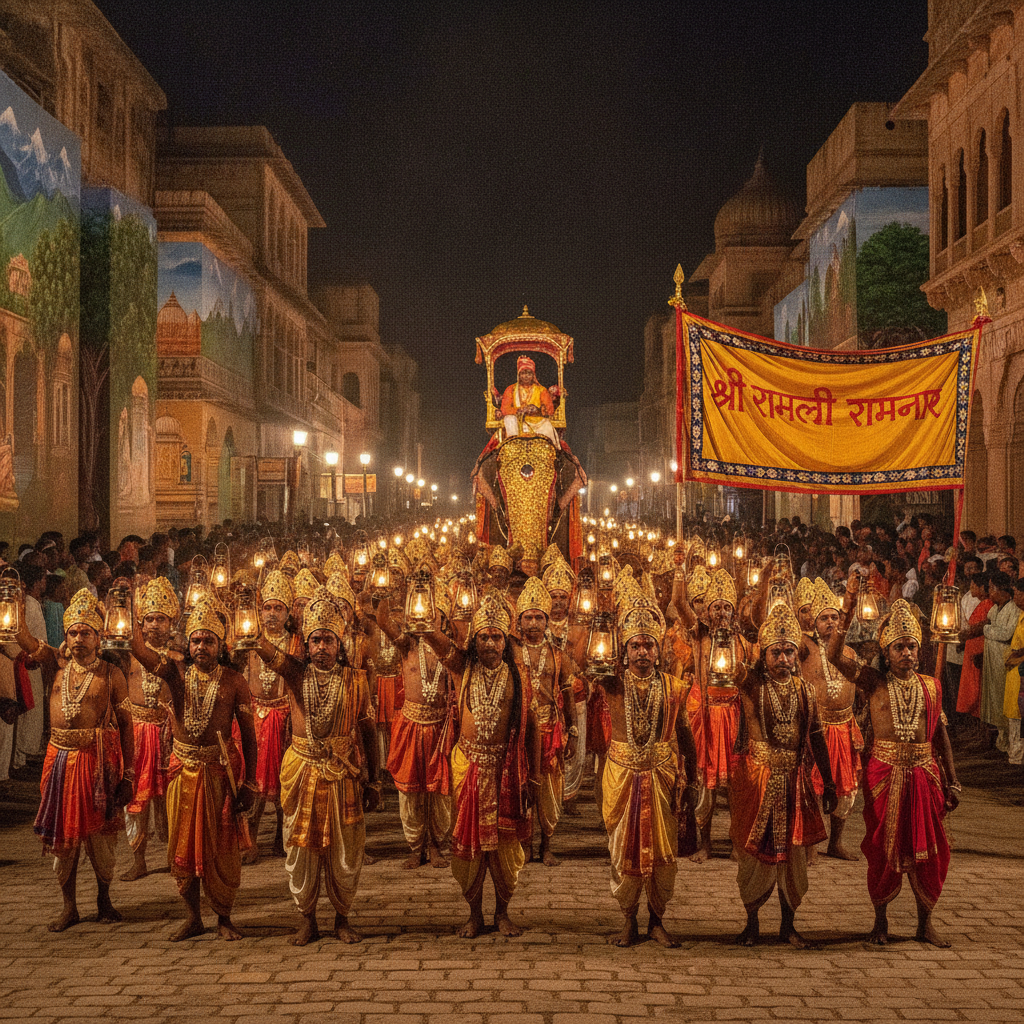
Catch Varanasi at its deepest—the Ramnagar Ramlila that transforms an entire town into the Ramayana landscape for a month, with the Maharaja's elephant as the royal box, the Sanskrit university tradition where pandits memorise texts taking decades to master, Bismillah Khan who refused every international residency offer to stay by the Ganga and play shehnai by the temple, the train to Bodh Gaya where the Buddha sat under a direct descendant of the original Bodhi Tree, weaving households where a ₹100,000 saree returns ₹700 a day to the weaver, and the panda priests whose family registers track your family's pilgrimages back 200 years.
Varanasi Deeper: Classical Music at Shiva's Court, the Ganga's Lethal Pollution & the Poet Who Rejected Both Hinduism and Islam
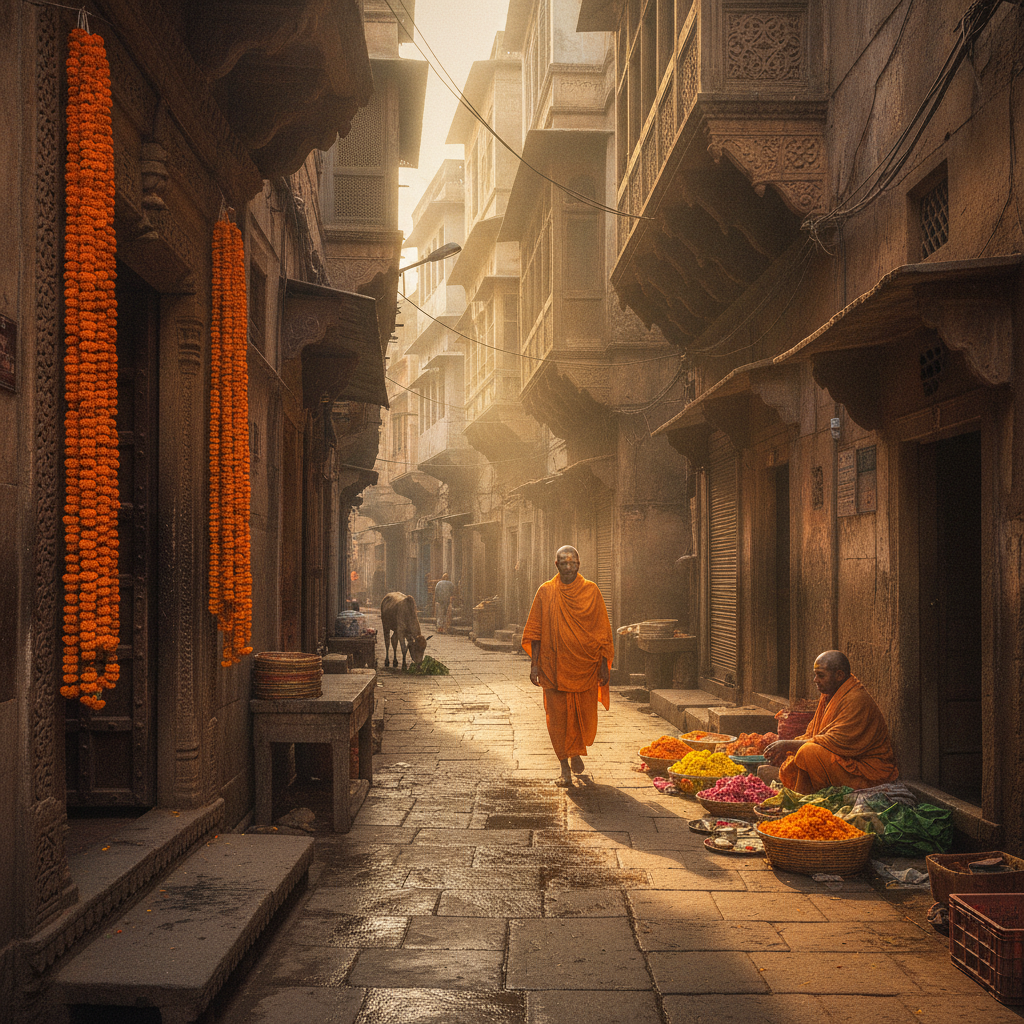
Explore the city beneath the pilgrimage city—the lanes so narrow that two people cannot pass, the Maharaja watching the month-long Ramlila from his elephant at Ramnagar Fort, the Banaras tabla style that Bismillah Khan and Ravi Shankar emerged from, ashrams where distinguishing genuine sadhus from tourist performers is impossible (a Varanasi teaching in itself), the Namami Gange programme that spent ₹20,000 crore and barely moved the coliform count, and the weaver-poet Kabir whose verses rejecting both Hindu idols and Islamic orthodoxy are sung by Hindus and Muslims alike 500 years after his death.
Varanasi Essentials: 88 Ghats, the Burning Ghat That Never Stops & the Buddha's First Sermon at Sarnath
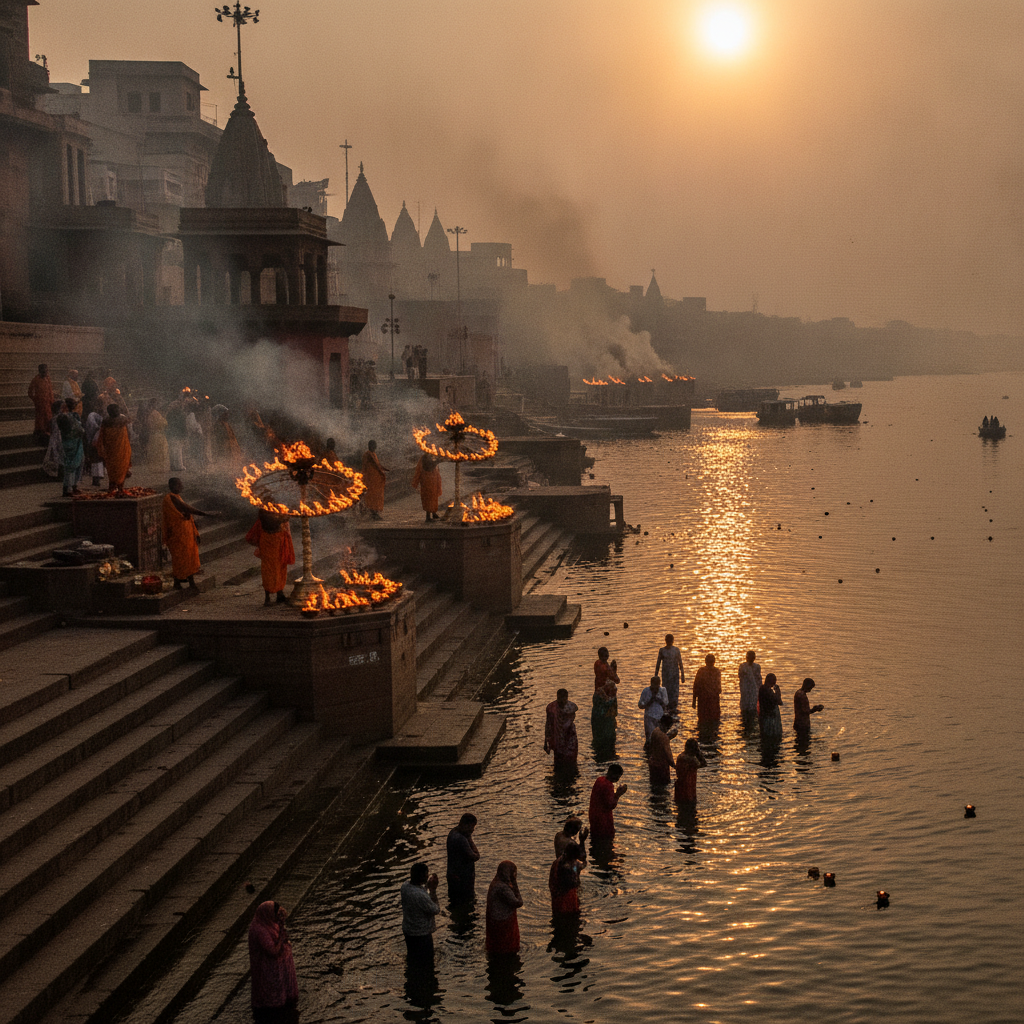
Encounter Hinduism's most sacred city—88 stone staircases descending to the Ganges where pilgrims wash away lifetimes of sin at dawn, Manikarnika Ghat's 24-hour cremations where 300 families a day achieve the moksha liberation that every Hindu hopes for at death, the Ganga Aarti fire ceremony at Dashashwamedh Ghat performed every single evening for centuries, the Dhamek Stupa at Sarnath marking the exact spot where the Buddha gave his first sermon in 528 BC, the contested Kashi Vishwanath Temple with its Mughal-demolished history and Modi-rebuilt corridor, and the Muslim weavers who take 4 weeks to make a single gold-thread Banarasi saree.
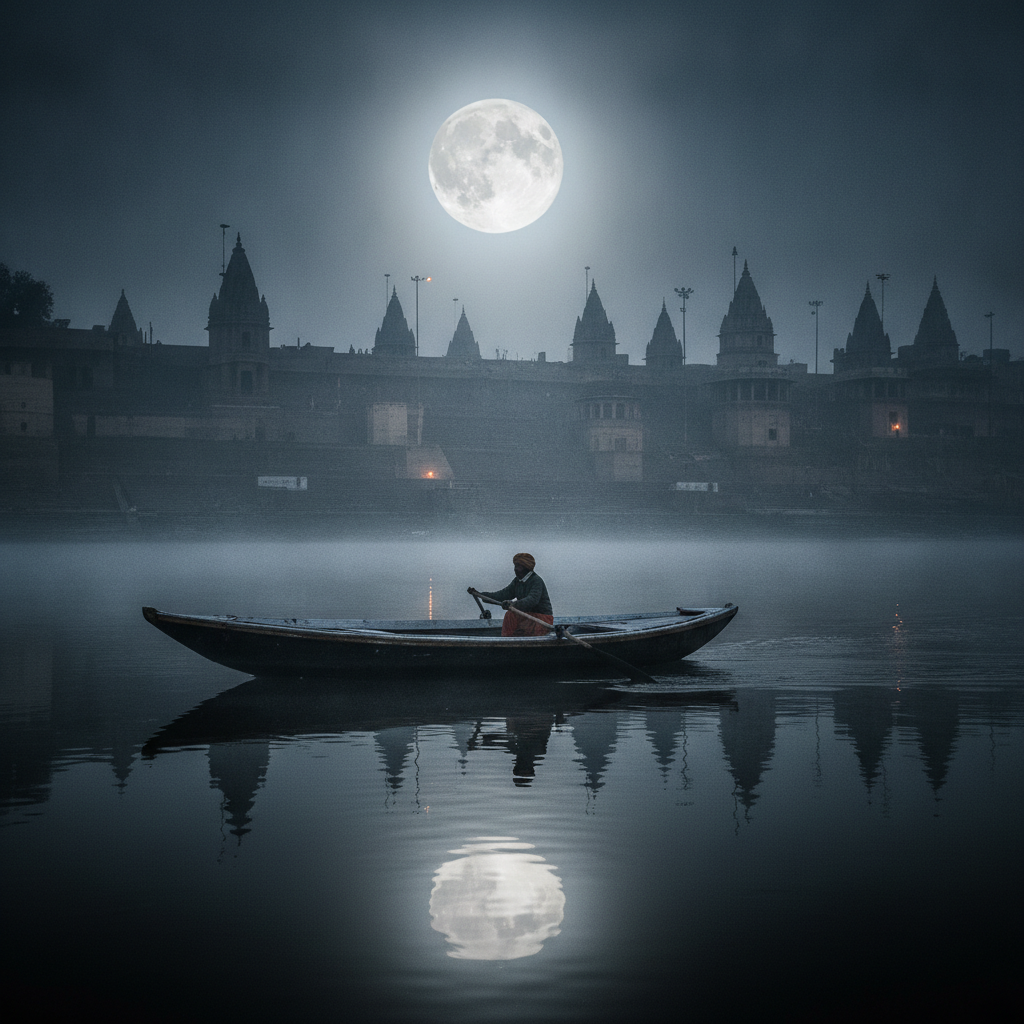
Varanasi's Depths: 3,000 Years of Continuous Life, the Aghori Who Meditate in Cremation Grounds & the Ethics of Watching Death
Sit with Varanasi's hardest questions—how a city mentioned in the Rigveda has been continuously inhabited for 3,200 years, the Aghori ascetics who eat cremation remains to dissolve the illusion of pure and impure, the precise difference between the dawn and full-moon boat rides that locals say are completely different experiences, kachori sabzi at 6am on a leaf plate after a Ganges bath, and the acute ethical challenge of whether to photograph open-air funeral pyres—a question that separates documentary photography from voyeurism without a clean answer.
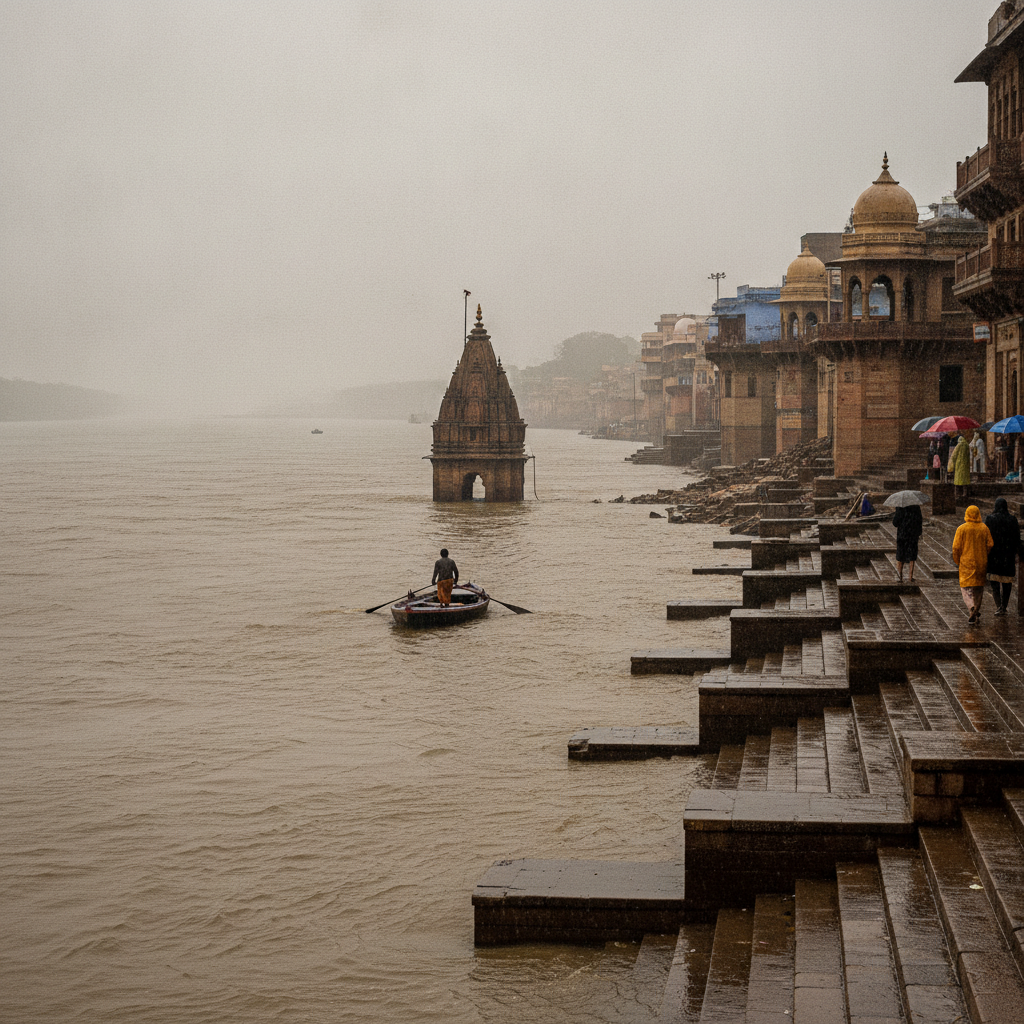
Varanasi's Contradictions: Deepa Mehta's Banned Film, Modi's Constituency & the Productive Vertigo the City Produces
Reckon with Varanasi's unresolvable tensions—the widows of Bengal sent to die in poverty at the ghats, Deepa Mehta's film about them that provoked violent protests before it could be shot, Modi's 63%-majority constituency that brought the Kashi Vishwanath Corridor and the Gyanvapi Mosque legal battle, the Ganga that is simultaneously sewage and sacred (the pilgrims drink both), the monsoon that swallows the lower ghats for three months under 15 metres of brown water, kulhad chai at 5am on a ghat corner, and why writers from Mark Twain to Pankaj Mishra report Varanasi produces not wonder but vertigo—the sense of encountering something about human life that other cities hide.