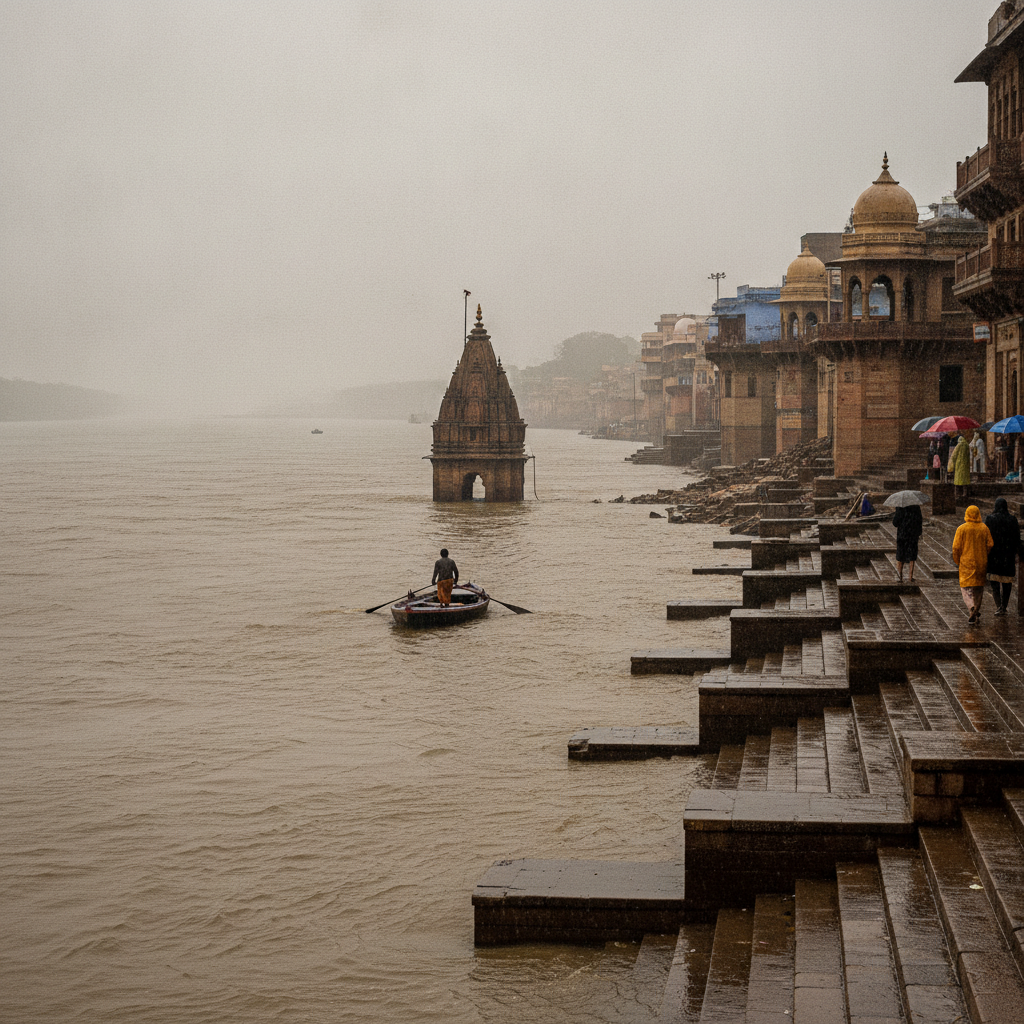
Varanasi Complete: Cremation-Ash Holi, the House Where People Go to Die & the Ashoka Lion Capital at Sarnath
Complete the Varanasi picture—23,000 temples including the Mother India Temple where a marble map of undivided India is the deity, buying Banarasi silk without getting sold a power-loom fake (the real zari burns white ash, the fake turns black), Masaan Holi where Aghori ascetics throw cremation ash from Manikarnika's fires, the Mukti Bhawan guesthouse that accepts only those who come to die with a 15-day maximum stay, the Thai, Japanese, Chinese, and Tibetan monasteries circling Sarnath's Dhamek Stupa, and the scam-navigation guide to Varanasi's boats, guides, and silk shops.
- 1
Varanasi's Temples – A City of 23,000 Shrines
Varanasi claims 23,000 temples—more than any other city in India—ranging from the great Kashi Vishwanath complex to tiny neighbourhood shrines occupying a single alcove in a wall. The Durga Temple (Durga Kund area, 18th century, red-painted, occupied by hundreds of monkeys)—dedicated to the goddess Durga—is one of the most visited after Kashi Vishwanath. The Bharat Mata Mandir ('Mother India Temple', Mahatma Gandhi Kashi Vidyapith, 1936)—uniquely dedicated not to a deity but to Mother India (Bharat Mata as a goddess), with a marble relief map of undivided India as the object of worship—was inaugurated by Mahatma Gandhi. The Tulsi Manas Temple (1964, dedicated to Tulsidas and the Ramcharitmanas) has the entire text of the Ramcharitmanas inscribed on its white marble walls.
- 2
Varanasi's Silk Market & Shopping
The main shopping areas for Banarasi silk sarees in Varanasi are the Vishwanath Gali (near the Kashi Vishwanath Temple), the Thatheri Bazaar (metalware and silk), and the fixed-price government emporiums (UP Handloom, Ganges Vilas). Buying silk sarees requires vigilance: power-loom copies and chemical-dyed imitations are common; the zari thread (which should be real gold or silver) is frequently replaced with cheaper metallic thread. A reliable test: real zari does not tarnish and burns with a white ash; fake zari turns black. The Government Silk Weaving Centre (Varanasi) allows visitors to watch handloom weaving and buy directly at fixed prices. Brass metalware (Varanasi is also a brass manufacturing centre—the distinctive Varanasi brass lamps and vessels used in puja worship are made here) is another authentic craft purchase.
- 3
Varanasi at Holi – The Festival of Colours in the City of Shiva
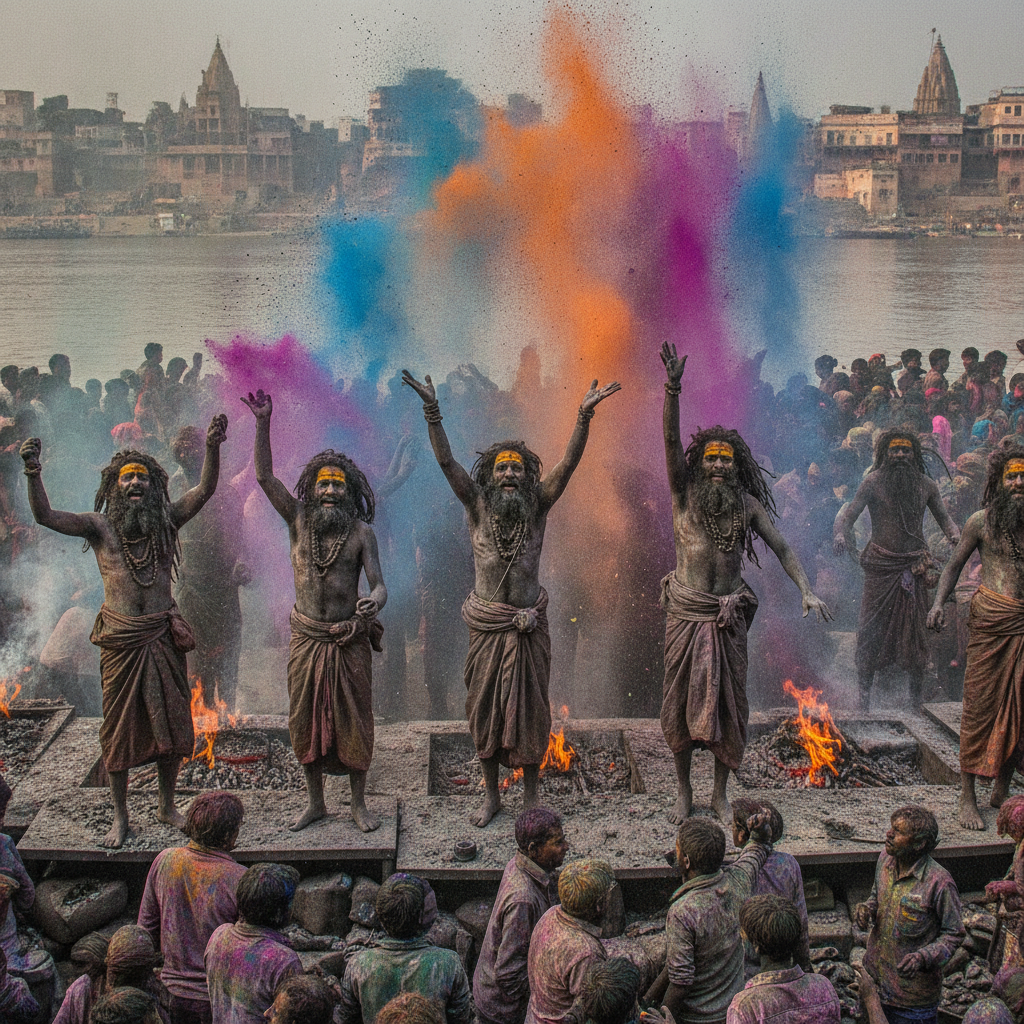
Holi—the spring colour festival (March, one day on Phalgun Purnima full moon)—is celebrated with special intensity in Varanasi. The celebration begins the night before (Holika Dahan) with bonfires; the morning involves drenching everyone in coloured powder and water. In Varanasi, Holi takes on an additional dimension: the sadhus and Aghori ascetics (who meditate in cremation grounds, use human skulls as bowls, and follow extreme Tantric practices) celebrate what is called 'Masaan Holi'—a cremation-ground Holi at Manikarnika Ghat involving ash (from the cremation fires) thrown instead of (or alongside) coloured powder. The Masaan Holi at Manikarnika is one of the most extraordinary—and most disconcerting—festival experiences available to visitors anywhere.
- 4
A Death in Varanasi – The Moksha Belief & the Business of Dying
The belief that dying in Varanasi (specifically within the Kashi 'field' or kshetra, an area roughly 5 km in diameter centred on the Kashi Vishwanath Temple) guarantees moksha (liberation from samsara, the cycle of rebirth) is one of Hinduism's most powerful doctrines. It is attributed to a text (the Kashi Khand) in which Shiva himself promises to whisper the Taraka mantra ('Ram Ram') into the ear of the dying, releasing them. The dying are brought to Varanasi from across India; the Mukti Bhawan ('House of Liberation') is a two-storey guesthouse that accepts only those who come to die—guests may stay a maximum of 15 days (if they survive, they must leave). Several hundred people die here annually. The business of dying—hospice rooms, Dom caste cremation fees, priests for the last rites, flower garlands—is a significant part of Varanasi's economy.
- 5
Sarnath's International Buddhist Circuit
Sarnath has attracted Buddhist pilgrims and monasteries from across Asia since Emperor Ashoka's visit in 249 BC. Today, the area around the Dhamek Stupa is surrounded by monasteries built by Buddhist communities from Thailand, Japan, China, Sri Lanka, Tibet, Myanmar, and South Korea—each in their own national architectural style. The Mulagandha Kuti Vihara (1931, built by the Maha Bodhi Society) contains frescoes by the Japanese artist Kosetsu Nosu depicting the Buddha's life. The Archaeological Museum at Sarnath (one of India's finest small museums) contains the Lion Capital of Ashoka (the original, in cream-coloured Chunar sandstone, 250 BC)—the finest example of Maurya-period sculpture and the source for India's national emblem and the Ashoka Chakra on the national flag.
- 6
Practical Varanasi – Getting There, Getting Around & Staying Safe
Varanasi is served by Lal Bahadur Shastri International Airport (VNS), 26 km from the ghats (taxi ₹700–1,000/€7.70–11). By train: Varanasi Junction (BSB) connects to Delhi (8–12 hours, Shiv Ganga Express), Agra (10 hours), Mumbai (22 hours), and Kolkata (12 hours). From the station, auto-rickshaws to the ghats cost ₹150–250/€1.65–2.75. The old city near the ghats is not navigable by auto-rickshaw; the final approach is on foot or by cycle-rickshaw. Scams in Varanasi are numerous: 'free' boat rides that become expensive, guides who take visitors to silk shops on commission, and helpers who insist on guiding you to the ghat (then demand payment). Best practice: agree all prices in advance, book a licensed guide from Uttar Pradesh Tourism, and use pre-paid taxis from the airport. Best season: October–March (October–November is peak Hindu festival season).
Walk this route with audio
Stories play automatically as you reach each stop — no tapping needed.
More in Varanasi
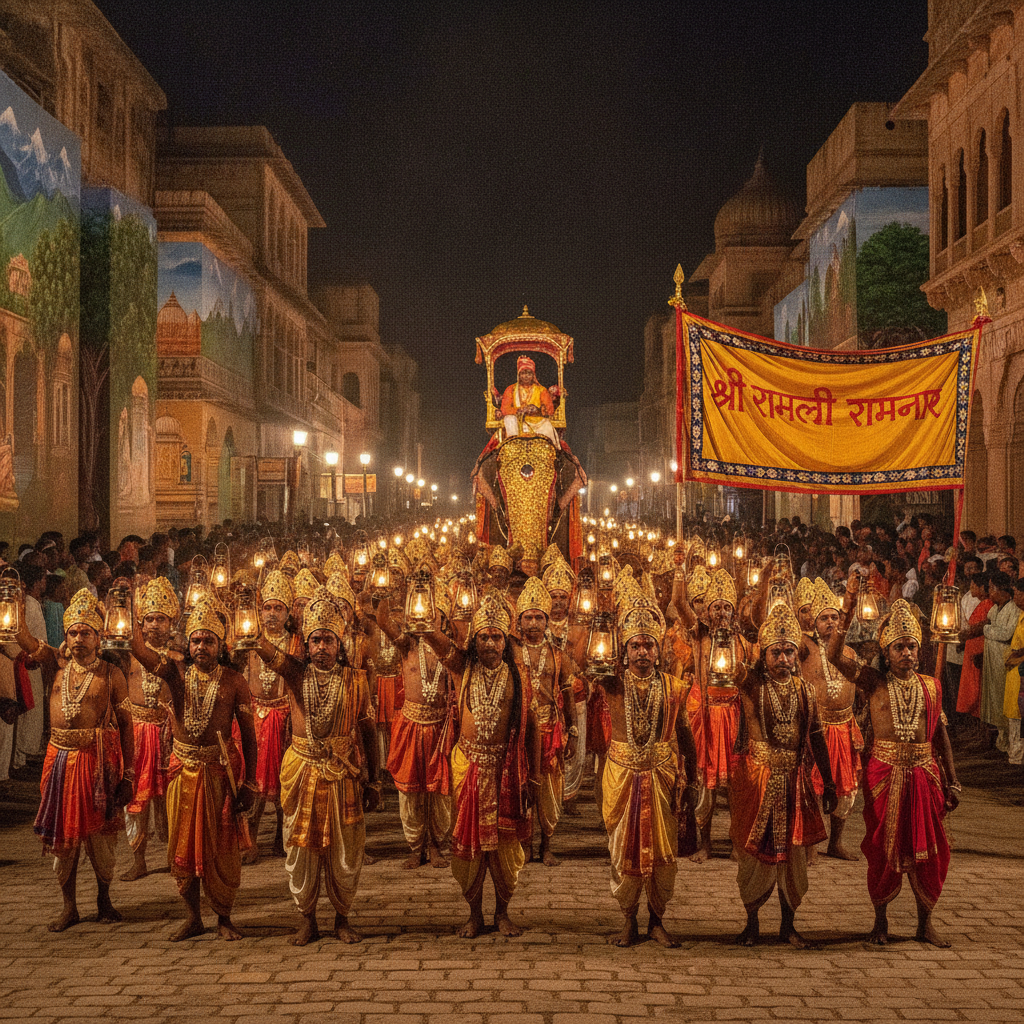
Varanasi's Seasons: The Month-Long Street Ramayana, Bismillah Khan's Shehnai & the Buddhist Circuit to Bodh Gaya
Varanasi Deeper: Classical Music at Shiva's Court, the Ganga's Lethal Pollution & the Poet Who Rejected Both Hinduism and Islam
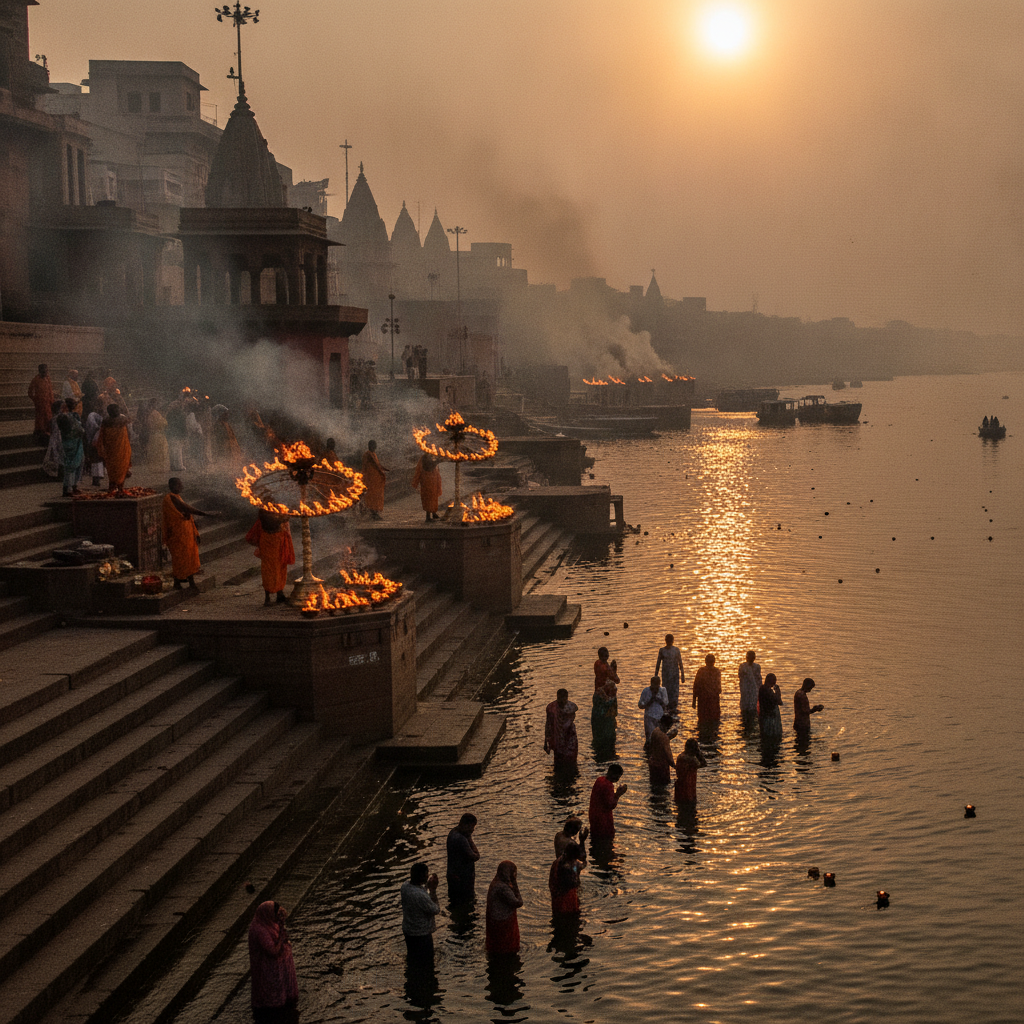
Varanasi Essentials: 88 Ghats, the Burning Ghat That Never Stops & the Buddha's First Sermon at Sarnath
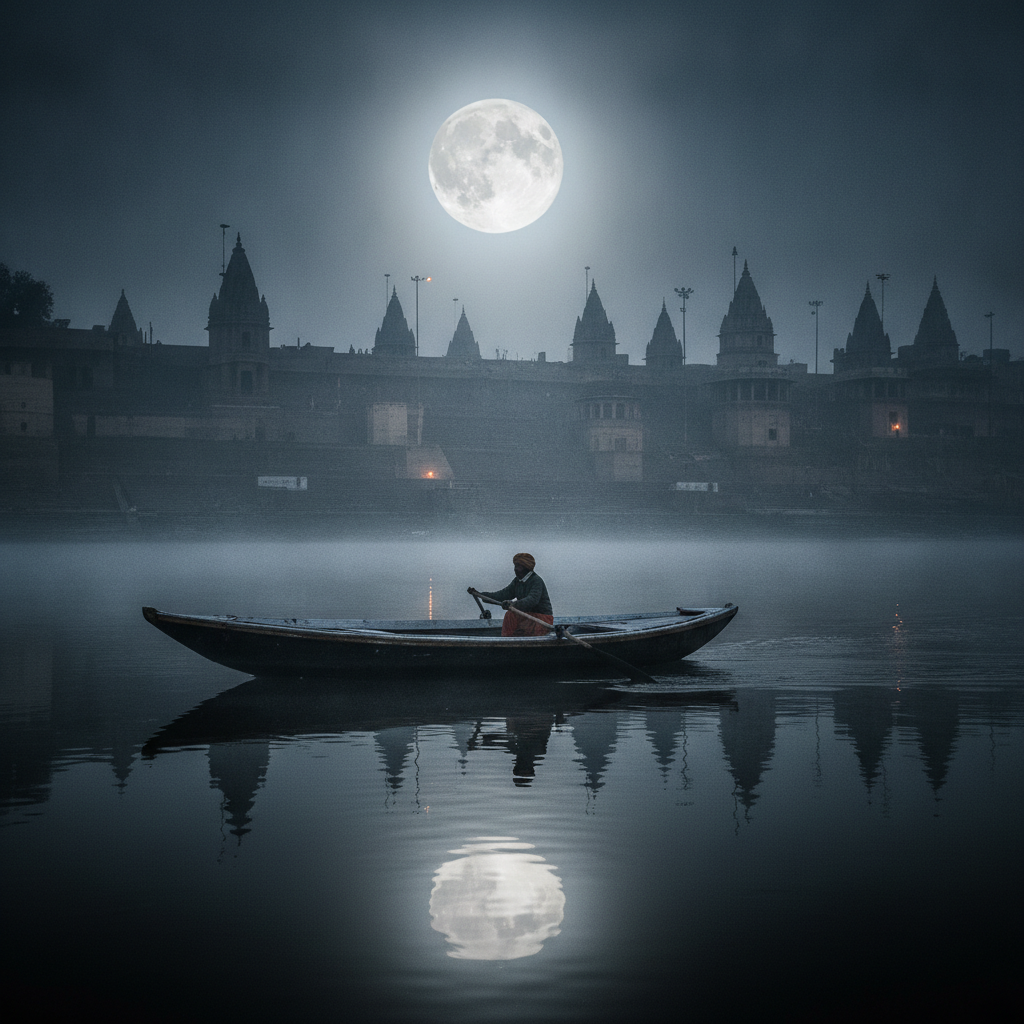
Varanasi's Depths: 3,000 Years of Continuous Life, the Aghori Who Meditate in Cremation Grounds & the Ethics of Watching Death