Ubud's Built Future: IBUKU Bamboo Architecture, Ayung Gorge Rafting & the Water Crisis Threatening the Subak System
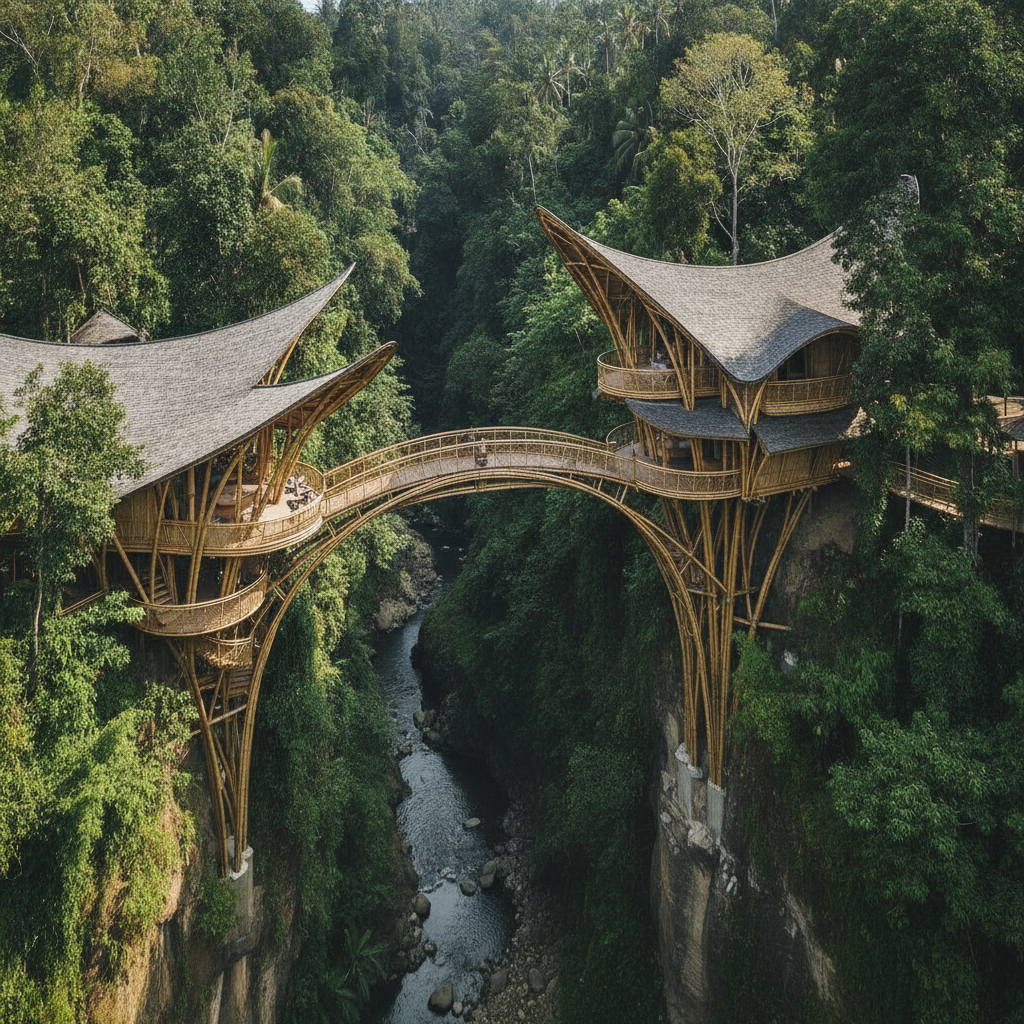
The most internationally recognised Indonesian architecture firm working exclusively in bamboo—IBUKU's Elora Hardy designing the Green School's Heart of School spiral pavilion and the Sharma Springs treehouse cantilevered 30 metres above the Ayung gorge—a material renewable in 3–5 years sequestering carbon as it grows; the Ayung River's Class II–III rafting past Balinese stone carvings in the gorge walls where Colin McPhee composed in the 1930s studying gamelan in Sayan village above; the Ubud Food Festival positioning babi guling and bebek betutu in the same conversation as Noma and Osteria Francescana; 300 spa operations from Rp 60,000 street massage to €500 COMO Shambhala Ayurvedic programme; and the aquifer depletion, rice-paddy-to-villa conversion rates, and 20,000 daily vehicle movements on an 8-metre road that constitute Ubud's actual development crisis.
Ubud's Future: Tourism Carrying Capacity, Besakih's Mother Temple & the Eastern Indonesia Archipelago Beyond Bali
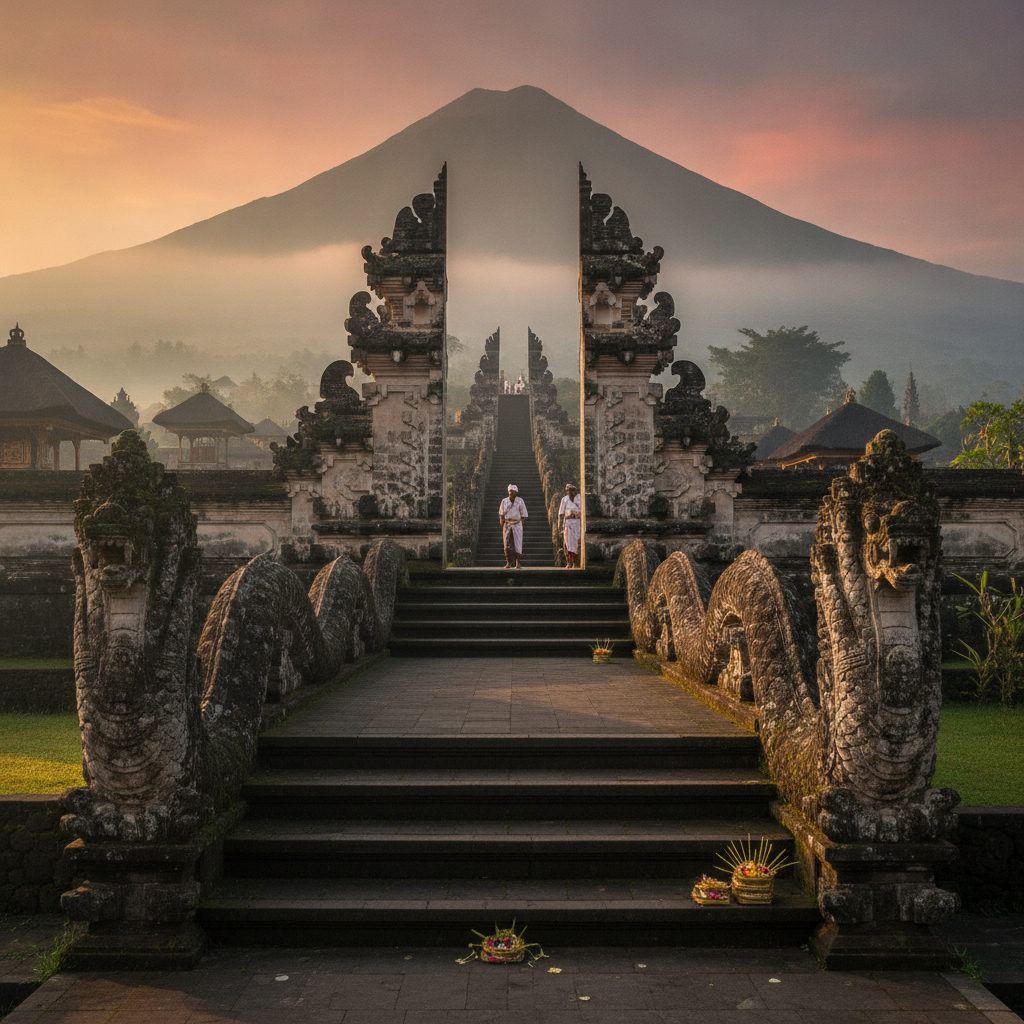
The 6.3 million visitor question—Bali's 1970 figure was under 25,000, the subak water system now competes with hotel spas, rice paddies convert to villa developments at the edge of Ubud each rainy season, and 'Bali needs a break' surfaces periodically in Indonesian policy discourse; Besakih's 23-temple complex on Mount Agung's slope (which erupted 2017–2019 forcing 100,000+ evacuations while Besakih remained in the exclusion zone); Nusa Penida's Kelingking T-Rex cliff in 10 million Instagram photographs reached on roads so rough that scooter casualties are the island's leading tourist statistic; Nyepi's island-wide Day of Silence with airport closed and tourists confined to hotels while Ogoh-Ogoh demon effigies burn the night before; the Bali Spirit Festival's 8,000-person gamelan-meets-kirtan event; and the Lombok-Flores-Sumba eastern chain where you get Rinjani's crater lake, Komodo's dragons, and Sumba's Pasola cavalry festival with 5% of Bali's tourist traffic.
Ubud: Sacred Monkey Forest Temples, UNESCO Subak Rice Terraces & Walter Spies' 1930s Art Revolution
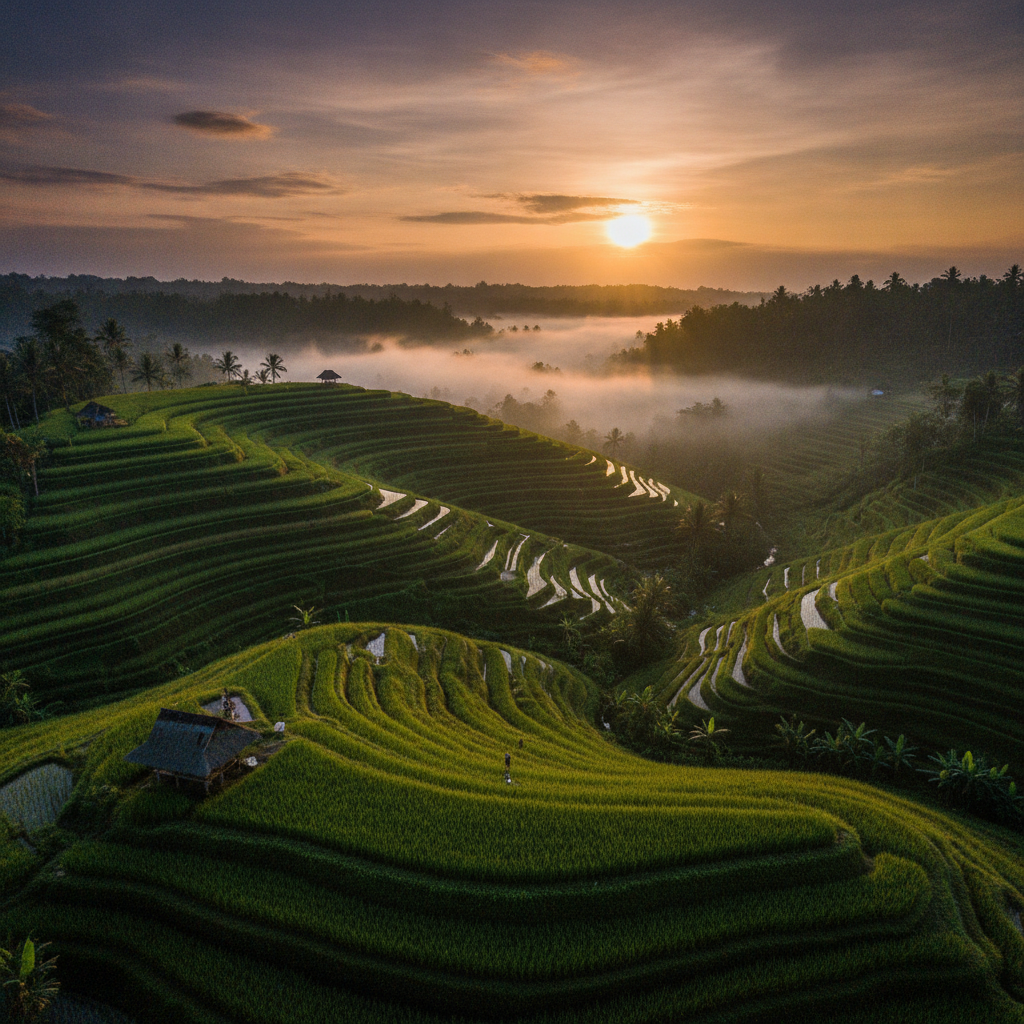
Bali's cultural heart—the Mandala Suci Wenara Wana's 700 macaques guarding three active Hindu temples in a 12.5-hectare forest (grab your sunglasses before entering), the Tegallalang terraces' subak water management system where irrigation schedules are set by temple priests honouring Dewi Sri the rice goddess (UNESCO 2012), the Kecak fire dance at sunset created in the 1930s by German artist Walter Spies combining trance ritual with 150 men chanting in place of gamelan, I Gusti Nyoman Lempad's 116 years of painting the Balinese cosmos, the Yoga Barn's 15 daily classes at a rice-paddy campus, and the Eat Pray Love economy's transformation of balian traditional healing into a $150/session tourist product.
Ubud Off the Beaten Track: Tjokorda Dynasty's Art Patronage, Wayang Kulit's UNESCO Puppetry & Tenganan's Double-Ikat Aga Village
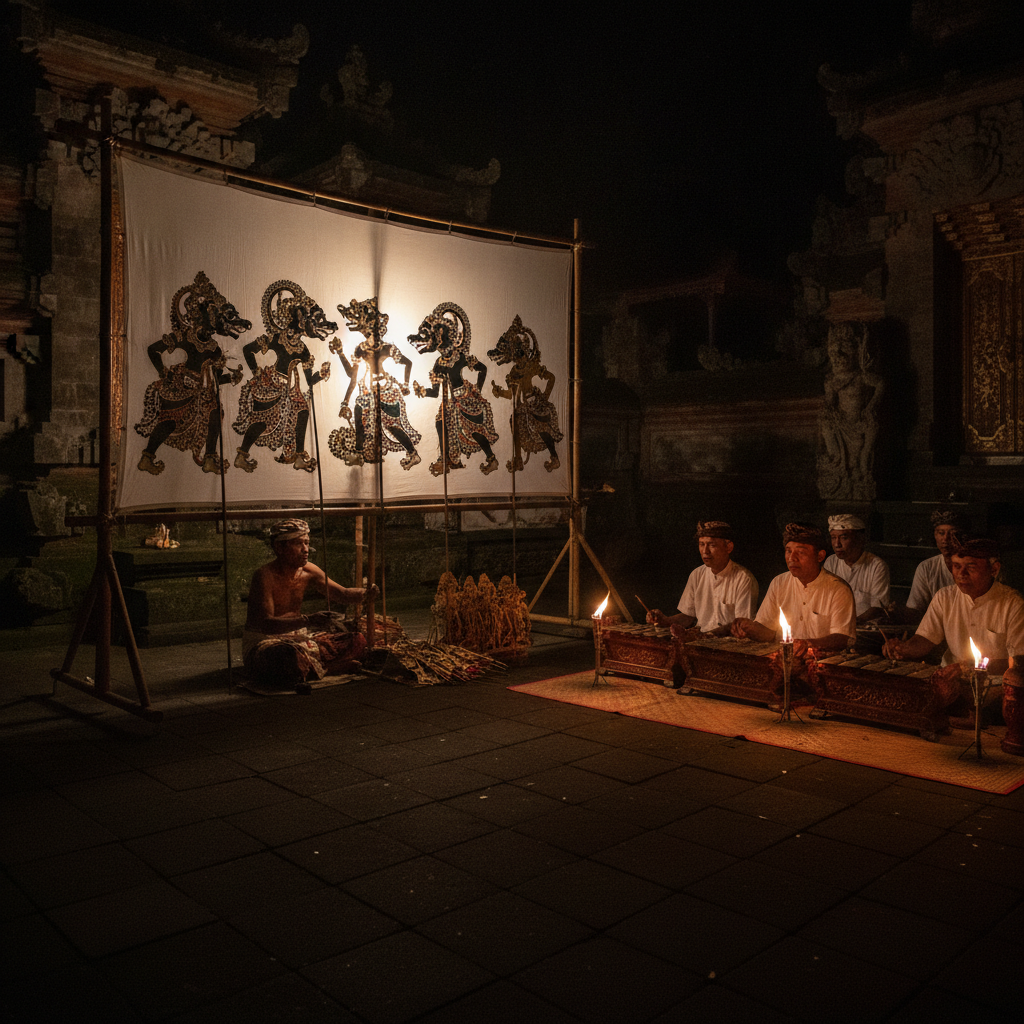
The Tjokorda Sukawati lineage that invited Walter Spies and co-founded the Pita Maha cooperative in 1936 still lives in the Puri Saren palace that also hosts nightly dance performances; Komaneka at Bisma's cliff-edge infinity pool designed by Yoka Sara overlooking the Campuhan gorge; wayang kulit's single dalang simultaneously voicing all characters in Kawi-Balinese-Indonesian improvisation for a gender wayang quartet with no other accompaniment; the Tegallalang swing mirror trick (the Gates of Heaven reflection is a held mirror, not a pool) versus photographing the actual dawn offering culture; Ubud's 07:00 yoga class and 06:00 morning market rhythm that closes the town by 22:00; and Tenganan Pegringsingan's collectively-owned Aga village where the Perang Pandan ritual combat with thorned pandanus leaves is held every June.
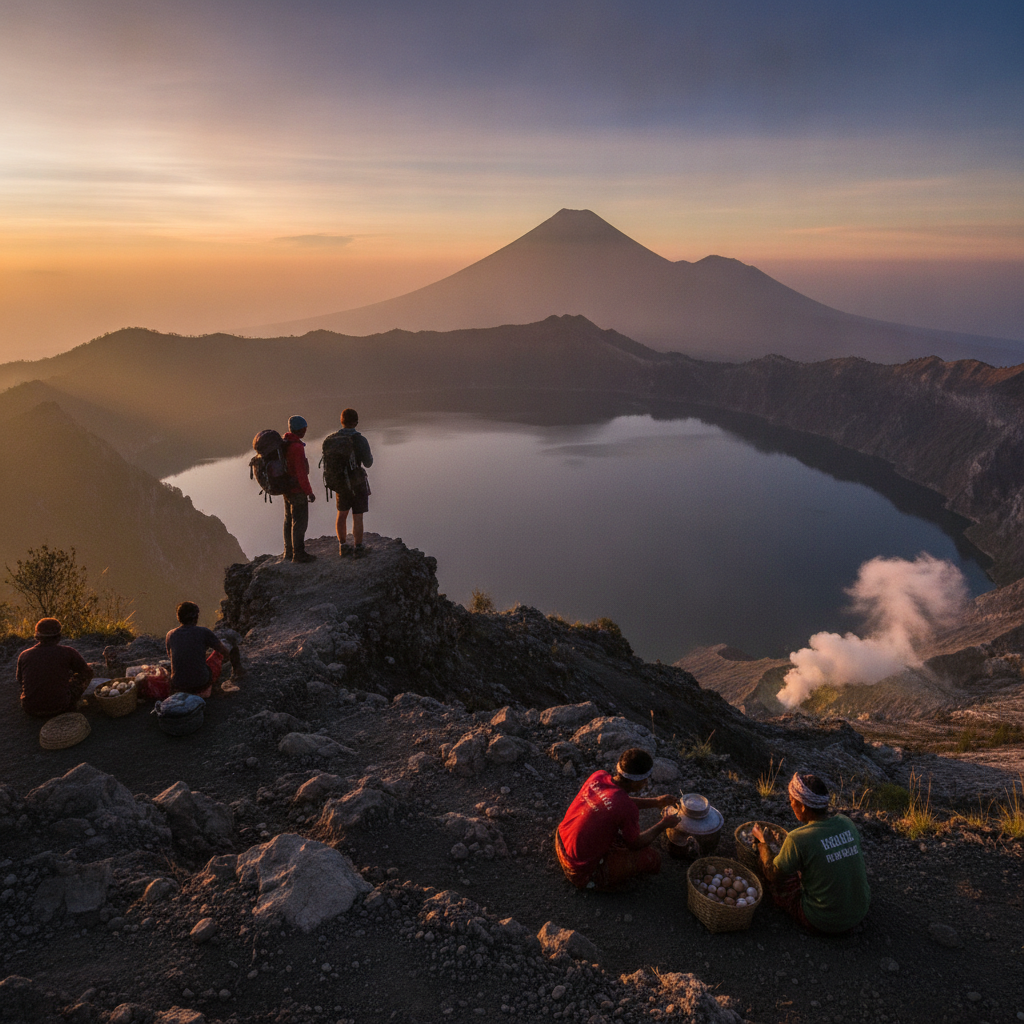
Ubud Beyond the Swing Photos: Batur Crater Sunrise Trek, Geringsing Double-Ikat & Green School's Bamboo Campus
The resident Ubud—the 5,000–10,000 long-term Western residents on 60-day visa runs who discovered Bali in the 1970s then returned in successive waves (Eat Pray Love, digital nomad, COVID), Green School Bali's bamboo campus teaching in English as Asia's most discussed alternative education project, the Batur Guide Association's enforced monopoly with geothermal egg breakfast at the summit and Mount Agung on the eastern horizon, Goa Gajah's demon-faced 11th-century rock-cut sanctuary whose bathing pools were only excavated in 1954, cacao ceremony and kirtan in Ubud's alternative spirituality market versus the Balinese Hindus whose 4,000-year tradition it borrows from, Tenganan's geringsing double-ikat (one of three places on Earth making it), and hiring a local driver rather than taking an Instagram swing package.
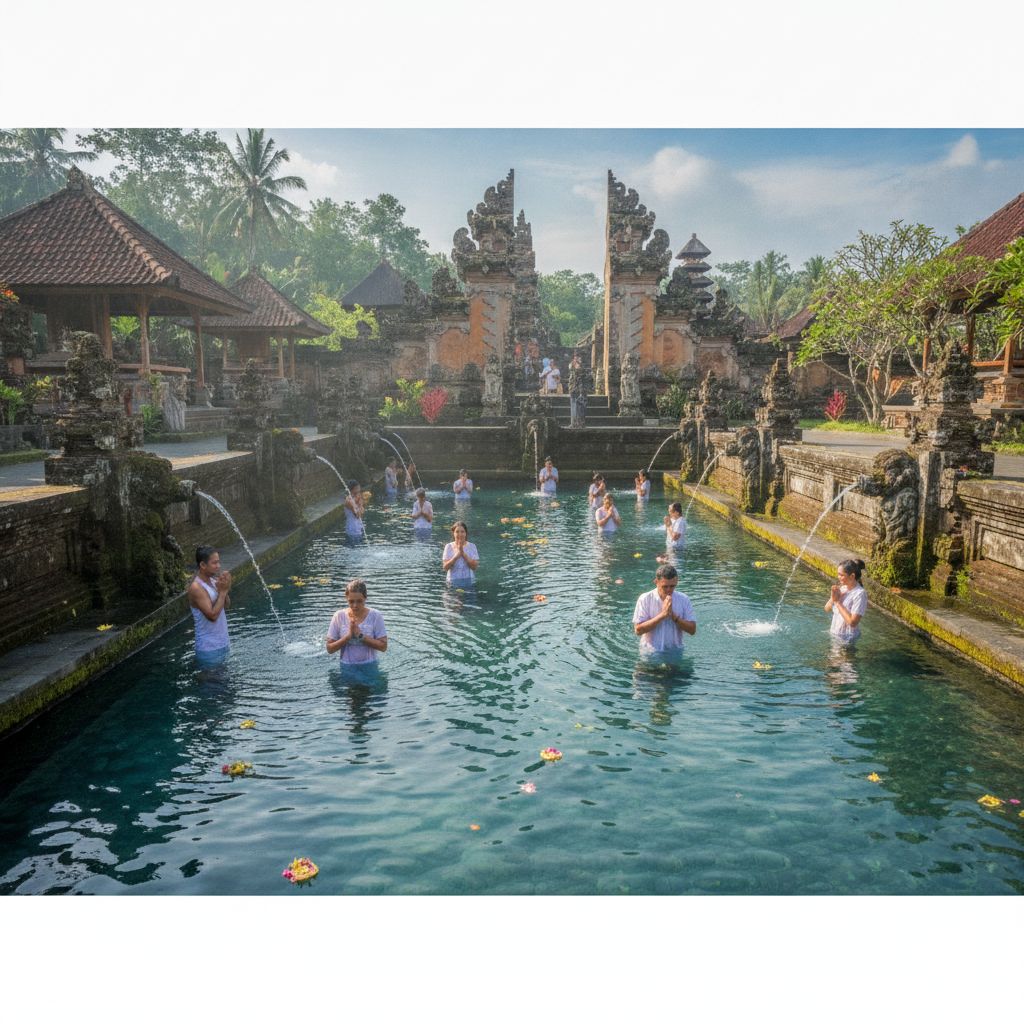
Ubud's Sacred Landscape: 20,000 Balinese Temples, Campuhan Ridge Rice Paddies & Locavore's Farm-to-Table Tasting Menu
The living Bali behind the photos—every Balinese house with a family temple, every rice field with a Dewi Sri shrine, every street corner with a canang sari flower offering placed at dawn (over 20,000 temples on a single island), the villages within walking distance of Ubud where Mas' woodcarvers and Penestanan's 1950s Arie Smit-influenced naïve painters constitute distinct artistic schools, the Campuhan Ridge Walk's two-valley panorama before the tour groups arrive, Locavore's exclusively Indonesian ingredients tasting menu in the Asia's 50 Best list, Tirta Empul's 10th-century holy spring pools where the ethical question of tourists photographing melukat purification rituals has not yet been resolved, and the Ubud Royal Palace's cremation ceremony processions that spin the bade tower at intersections to confuse evil spirits.