Ubud: Sacred Monkey Forest Temples, UNESCO Subak Rice Terraces & Walter Spies' 1930s Art Revolution
Bali's cultural heart—the Mandala Suci Wenara Wana's 700 macaques guarding three active Hindu temples in a 12.5-hectare forest (grab your sunglasses before entering), the Tegallalang terraces' subak water management system where irrigation schedules are set by temple priests honouring Dewi Sri the rice goddess (UNESCO 2012), the Kecak fire dance at sunset created in the 1930s by German artist Walter Spies combining trance ritual with 150 men chanting in place of gamelan, I Gusti Nyoman Lempad's 116 years of painting the Balinese cosmos, the Yoga Barn's 15 daily classes at a rice-paddy campus, and the Eat Pray Love economy's transformation of balian traditional healing into a $150/session tourist product.
- 1
The Sacred Monkey Forest & Ubud's Spiritual Core
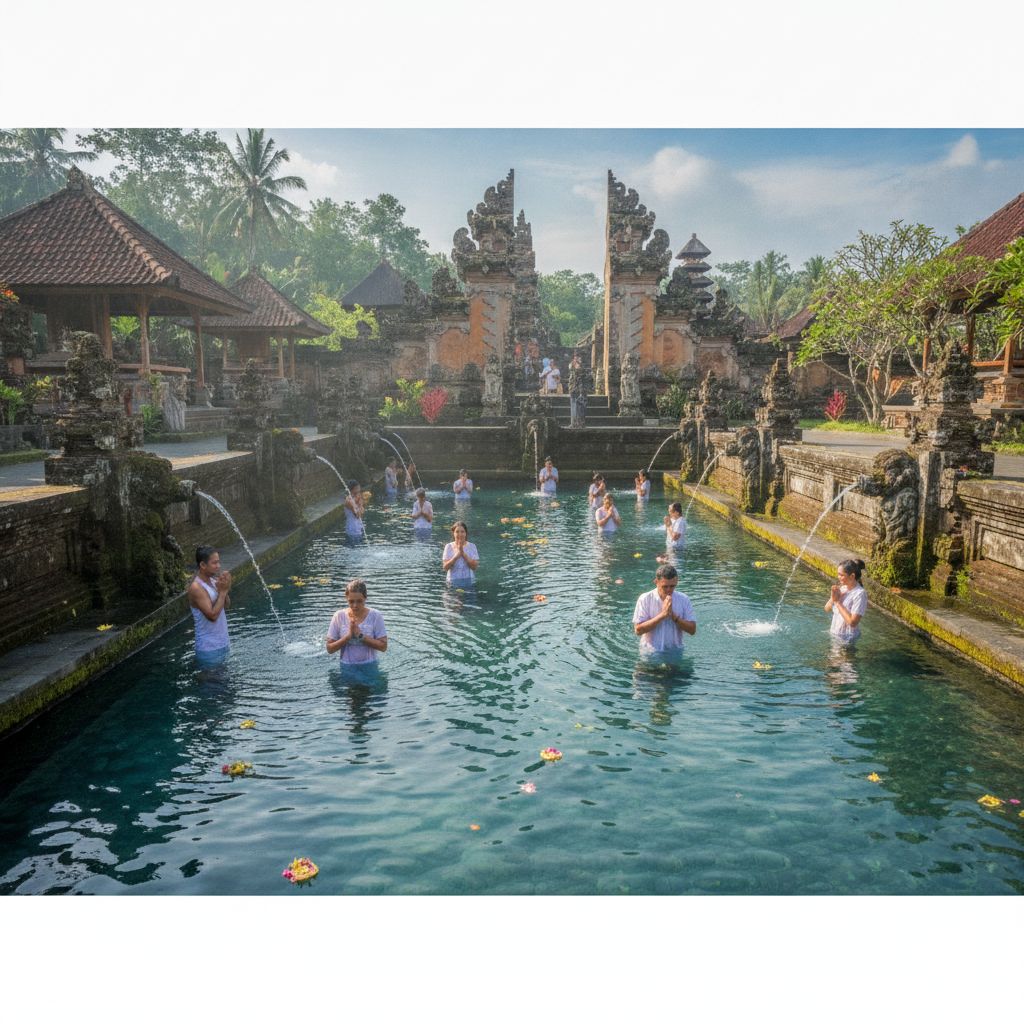
The Mandala Suci Wenara Wana (Sacred Monkey Forest Sanctuary)—a 12.5-hectare nature reserve and temple complex in the heart of Ubud, housing approximately 700 long-tailed macaques (Macaca fascicularis) in three ancient Hindu temples—is Ubud's most visited single attraction and the most tangible expression of Balinese Hinduism's conception of the natural world as sacred. The temples: Pura Dalem Agung Padangtegal (the most significant—the 'Temple of the Dead,' where cremation preparations are made), Pura Beji (a bathing temple for purification rituals), and Pura Prajapati (a secondary cremation site). The monkeys: regarded as sacred guardians of the temples, not pets or zoo animals; they are fed twice daily by temple staff but otherwise interact freely with visitors (caution: they will snatch food, sunglasses, phones, and loose items—the standard advice is to secure everything). The experience: entering the forest from Jl. Monkey Forest Road, descending under a canopy of roots and stone into the temple complex, and emerging into rice paddies on the southern side provides one of Bali's most complete transitions from urban street to sacred forest in under 30 minutes.
- 2
The Tegallalang Rice Terraces – UNESCO Irrigation Heritage
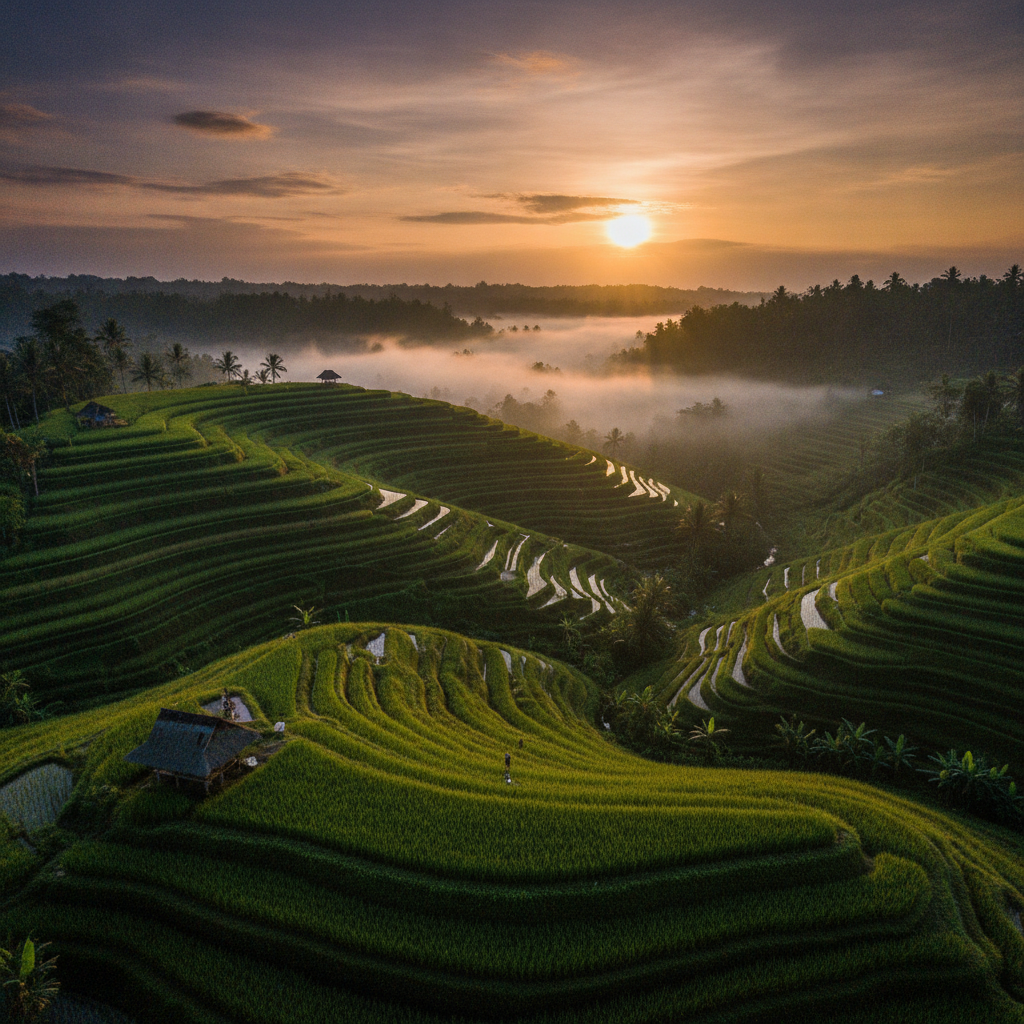
The Tegallalang Rice Terraces—3 km north of Ubud central market along the Tegallalang Road—are the most photographed landscape in Bali: steep hillside terraces of rice paddies cascading down the Cebok River gorge, the green of the growing rice (or the gold of the harvest, or the brown of the fallow field) providing the colour palette that appears in millions of travel photographs. The subak system: the Balinese cooperative water management system (subak) that distributes irrigation water across the terrace system according to an elaborate schedule coordinated by the temple priests and the water temple hierarchy—the system has managed the Bali highlands' water for over a millennium and was inscribed by UNESCO in 2012 as a World Heritage Site (jointly with the Pura Ulun Danu Batur temple that governs the water of the Batur crater lake). The subak's significance: it represents the integration of religious and agricultural management—the Balinese concept that rice cultivation is a sacred activity mediated by the goddess Dewi Sri requires that the irrigation schedule be determined by temple ceremony rather than purely agronomic logic. The tourism impact: the Tegallalang terraces have been partially converted to swing platforms and café terraces for the tourist photography industry—an economic transformation of the agricultural landscape.
- 3
Balinese Dance – Kecak, Legong & Barong
Balinese dance—the most internationally recognised performing art form of Indonesia—is performed in Ubud with a frequency and variety unmatched anywhere else on the island: the Ubud area offers at least 6 different performances nightly (at different temples and performance halls), covering the main Balinese dance forms. The Kecak ('Ramayana Monkey Dance'—at Pura Uluwatu at sunset for the most dramatic setting, also performed in Ubud): a dance created in the 1930s by German artist Walter Spies in collaboration with Balinese artists, combining elements of the traditional sanghyang trance ritual with a Ramayana narrative performed by 150+ men chanting 'cak' in interlocking rhythmic patterns (no musical instruments—the gamelan is replaced by the human voice). The Legong: a refined classical court dance for 2–3 young female dancers, drawing on the same cosmological vocabulary as Javanese bedoyo with distinctly Balinese visual elements (more dynamic movement, more complex hand gestures). The Barong: a narrative dance-drama depicting the battle between Barong (a mythological lion-creature representing protective good forces) and Rangda (the widow-witch representing destructive forces), ending in the non-resolution characteristic of Balinese cosmology (good and evil are eternally balanced, never permanently victorious).
- 4
Ubud's Art Scene – The Legacy of Walter Spies & I Gusti Nyoman Lempad
Ubud's status as a centre of contemporary art—the most internationally connected art community in Indonesia—derives from a specific historical moment in the 1930s when the German artist Walter Spies settled in Ubud and the Dutch artist Rudolph Bonnet arrived, both drawn by the extraordinary vitality of Balinese traditional arts. Spies and Bonnet (with the support of the Ubud royal family, particularly Tjokorda Gde Agung Sukawati) founded the Pita Maha artists' cooperative in 1936—which connected Balinese artists with international collectors, changed the format of traditional Balinese painting (from purely ceremonial to aesthetic objects), and established the commercial infrastructure for Balinese art that has persisted. The most significant Balinese artist: I Gusti Nyoman Lempad (1862–1978—documented as dying at the probable age of 116, making him one of the longest-lived people in recorded history)—a painter, sculptor, and architect whose works synthesise the Balinese cosmological tradition with an entirely individual aesthetic vision. The Ubud museums: the Puri Lukisan Museum (the oldest museum in Bali, founded 1956 in the Ubud royal compound by the Pita Maha members), the Agung Rai Museum of Art (ARMA—the most comprehensive collection of modern Balinese art and international works collected in Bali), and the Neka Art Museum.
- 5
The Ubud Market & Jl. Hanoman – Shopping for Balinese Crafts
Ubud's craft market (Pasar Ubud—the traditional market building at the intersection of Jl. Monkey Forest and Jl. Raya Ubud, with associated warungs and vendor stalls spread through the adjacent streets)—is the primary destination for Balinese handicrafts: carved wood, silver and gold jewellery, batik and ikat textiles (from Bali and the eastern islands), paintings in traditional and tourist styles, incense and ceremonial goods. The product geography: wood carving (concentrated in the villages of Mas and Tegallalang south and north of Ubud respectively—the most sophisticated stone and wood carving workshops in Bali); silver jewellery (Celuk—7 km south of Ubud, the silver-working village where virtually every household is a silver workshop, producing the finest filigree and oxidised silver work in Indonesia); gold work (limited to specific workshops in Ubud and Celuk). Jl. Hanoman: the street running south from central Ubud through the residential and café district—a more relaxed shopping and dining alternative to the main market, with individual designer boutiques, yoga and health food cafés (the highest concentration per square metre in Asia), and the Yoga Barn (the largest yoga centre in Southeast Asia, offering 15+ classes daily at a purpose-built campus in a rice-paddy setting).
- 6
Ubud's Wellness Economy – Yoga, Healing & the Eat Pray Love Effect
The publication of Elizabeth Gilbert's Eat Pray Love (2006, bestseller; film 2010, starring Julia Roberts) transformed Ubud's international profile—specifically the segment set in Ubud, where the narrator studies with a Balinese healer (Ketut Liyer—a real medicine man, now deceased, whose house on Jl. Suweta became a pilgrimage destination). The effect: Ubud's visitor demographics shifted significantly toward solo female Western travellers seeking wellness, spiritual experience, and 'authentic' Balinese cultural immersion; the yoga centre industry, healing retreat market, and 'digital nomad' café culture expanded dramatically. The current wellness economy: Ubud has approximately 100 yoga studios and wellness centres (Yoga Barn, Radiantly Alive, The Yoga Space, dozens of smaller operations), 30+ retreat centres offering programmes from 3-day silent retreats to 3-month intensive programmes, and a significant sector of 'traditional Balinese healing' practitioners (balian—traditional healers). The critique: the Eat Pray Love economy has commodified traditional Balinese healing practices (turning private ceremonial relationships into tourist experiences), created a wellness price premium that locals can't afford, and built an industry of 'authentic Balinese experience' around commodities that the Balinese themselves regard with increasing irony.
Walk this route with audio
Stories play automatically as you reach each stop — no tapping needed.
More in Ubud
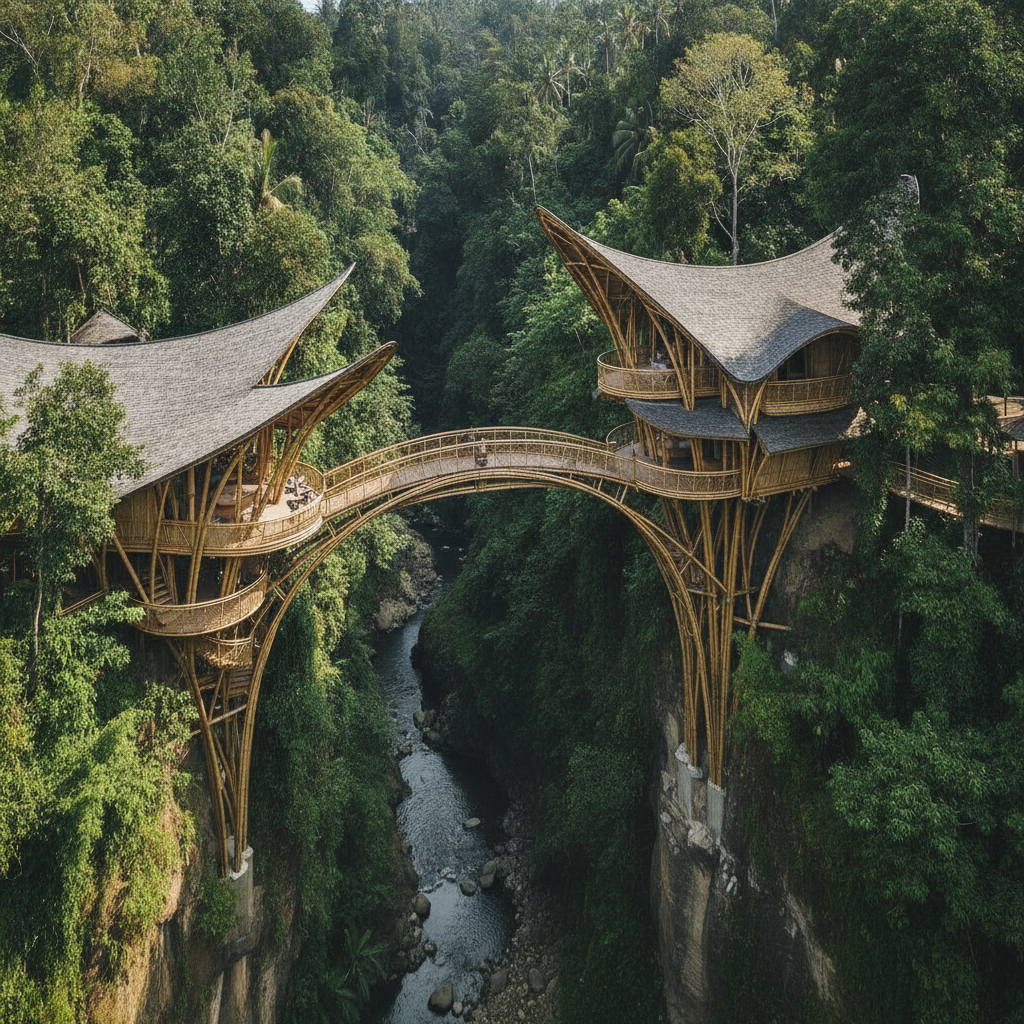
Ubud's Built Future: IBUKU Bamboo Architecture, Ayung Gorge Rafting & the Water Crisis Threatening the Subak System
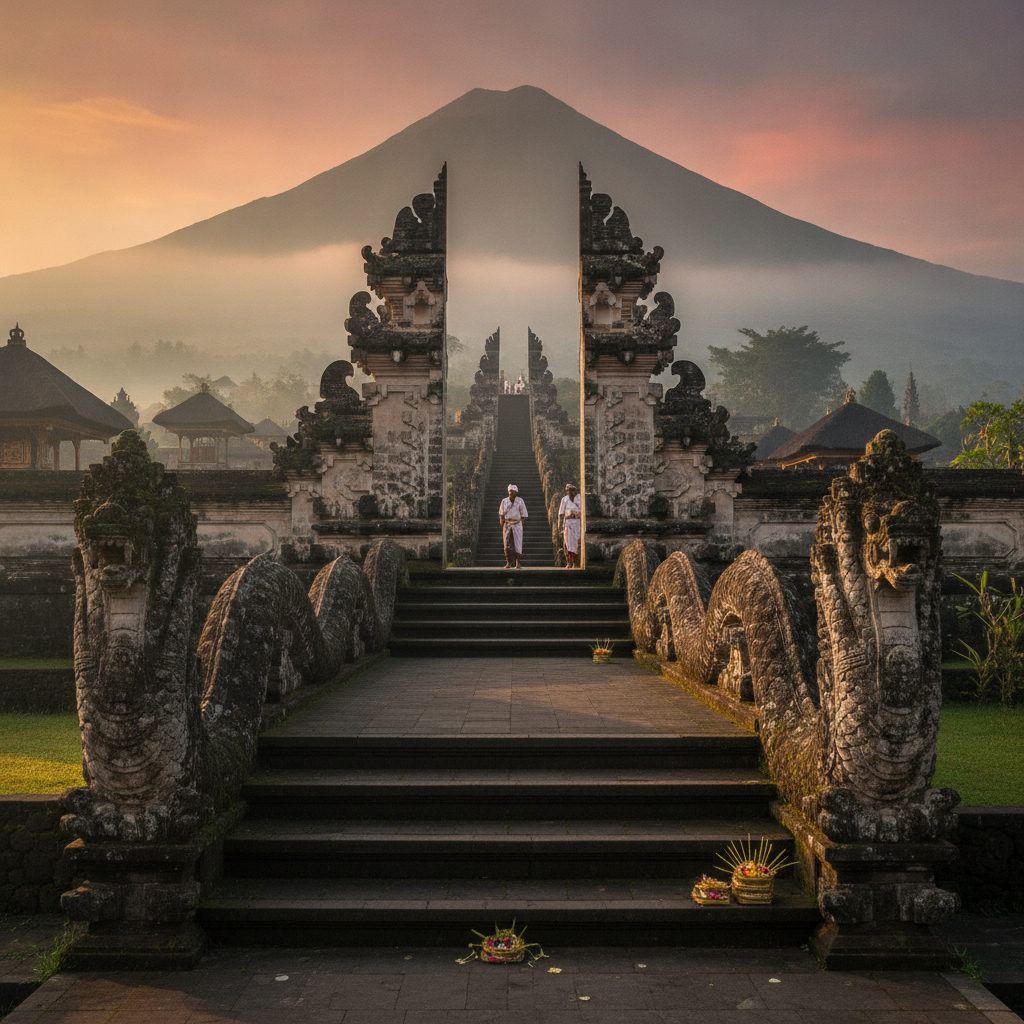
Ubud's Future: Tourism Carrying Capacity, Besakih's Mother Temple & the Eastern Indonesia Archipelago Beyond Bali
Ubud Off the Beaten Track: Tjokorda Dynasty's Art Patronage, Wayang Kulit's UNESCO Puppetry & Tenganan's Double-Ikat Aga Village
Ubud Beyond the Swing Photos: Batur Crater Sunrise Trek, Geringsing Double-Ikat & Green School's Bamboo Campus