Vang Vieng Traditional Lao Culture Walk
Discover Vang Vieng's Lao heritage — beneath the adventure tourism surface, the town has an active Buddhist temple community, the traditional Lao village culture of the surrounding valley, and the ethnic minority heritage of the Hmong and other highland communities that have inhabited the area for generations.
- 1
Wat That Vang Vieng
Wat That is the main Buddhist temple in the centre of Vang Vieng town — the temple compound (the ordination hall, the monks' quarters, the stupa, and the traditional religious art of the interior decoration visible through the open doors of the main sanctuary) provides the most direct encounter with the Lao Buddhist community that continues its traditional practice alongside and largely separate from the tourist economy that has transformed the town's commercial character. The temple's morning alms giving (the monks collecting food from the lay devotees along the town's residential streets from 5:30am) is the most directly observable traditional Lao Buddhist practice accessible in Vang Vieng's daily schedule.
- 2
Phonsavanh Village Community
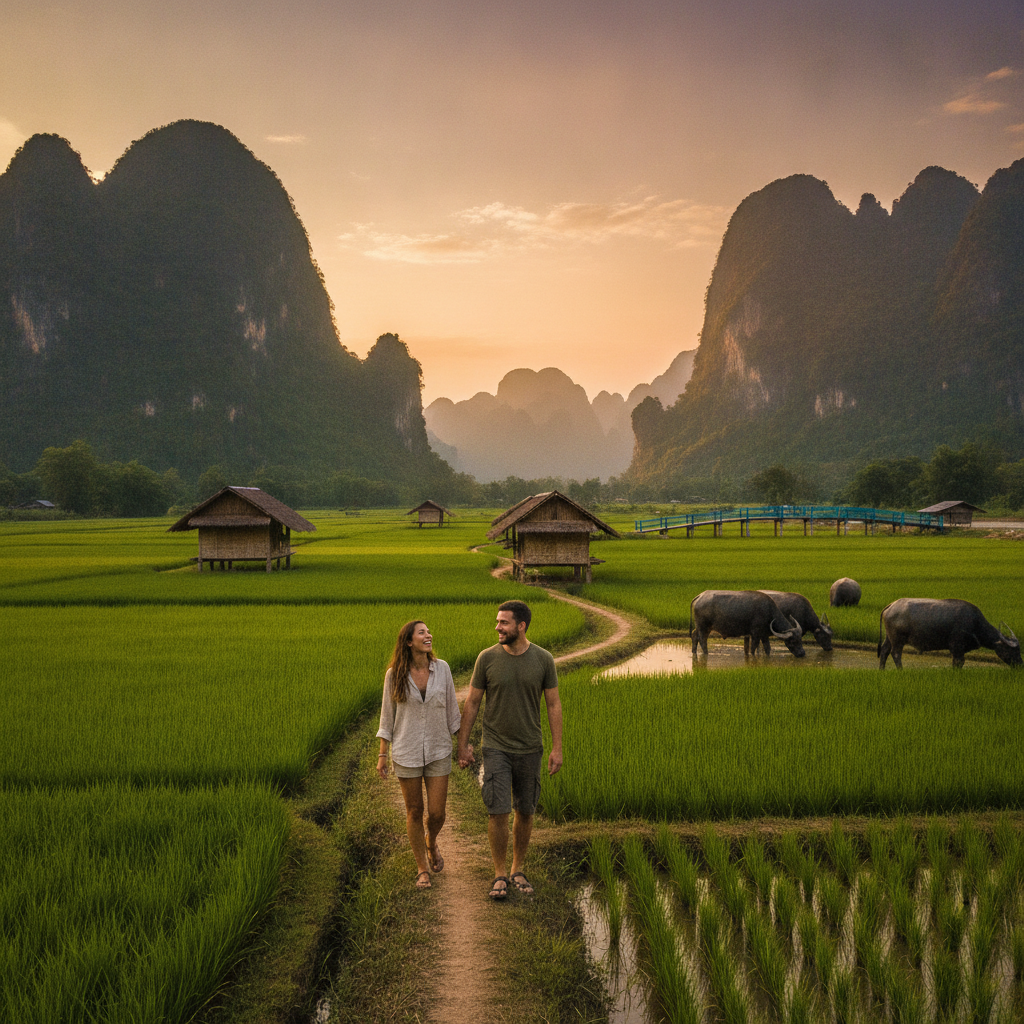
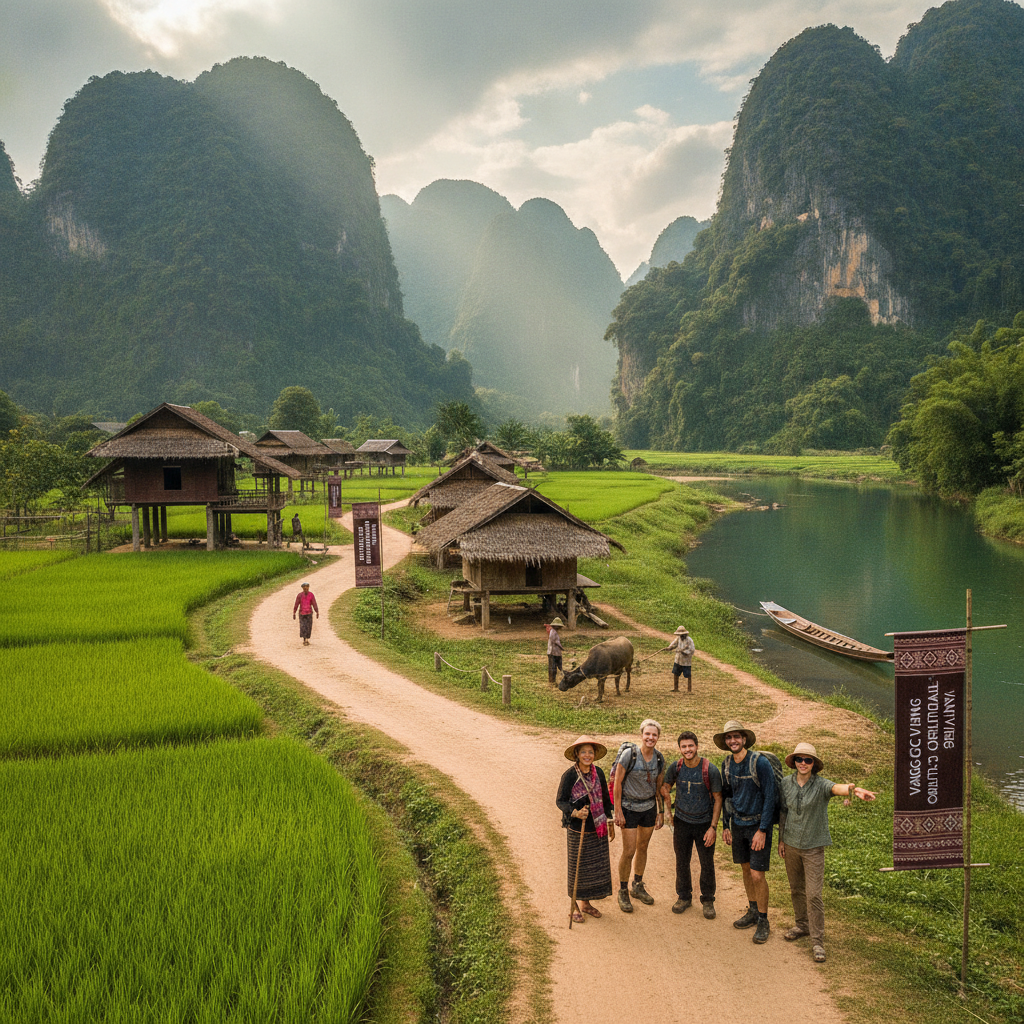
The traditional Lao village community of Phonsavanh (the village north of the tourist district, maintaining the agricultural and community character of the pre-tourism Vang Vieng settlement) provides the most direct encounter with the Lao village life that the tourist development has displaced from the town centre — the village's traditional wooden houses (the elevated stilt houses with the living space above the animal enclosure and the storage area at the ground level), the community water source (the village well or the river access point that serves as the daily gathering point for the women and children collecting water for the household), and the community pagoda that serves as the social and spiritual centre of the village provide the most complete picture of the traditional Lao lowland community accessible near Vang Vieng.
- 3
Lao Weaving Tradition
The weaving tradition in the Vang Vieng area (the production of the traditional Lao silk and cotton textiles visible in the weaving workshops of the village communities on the western bank) provides the most accessible encounter with the traditional Lao textile craft in northern Laos — the foot-treadle looms visible in the ground floor of the village houses (the characteristic sound of the loom audible through the open walls of the weaving area) produce the traditional Lao textile patterns (the geometric supplementary weft designs of the Lao lowland weaving tradition and the distinctive patterns of the highland ethnic minority textiles from the Hmong and other communities in the surrounding mountains). The woven products available for purchase from the village weavers (the sinh skirts, the scarves, and the decorative fabric lengths) are the most authentic textile souvenirs accessible from the Vang Vieng tourist base.
- 4
Pi Mai Lao Festival
Pi Mai Lao (Lao New Year, the Boun Pi Mai water festival celebrated in mid-April) is the most important single festival in the Lao calendar and transforms Vang Vieng (along with every Lao town and village) for three days of water throwing, temple ceremonies, and communal celebration — the water festival's tradition (the throwing of water on passers-by as a blessing and purification for the new year, the religious ceremonies at the temples, and the communal bathing of the Buddha images) is the most directly participatory cultural event accessible to visitors in the Lao tourist calendar. The Vang Vieng Pi Mai celebration (the water-throwing activity concentrated on the main tourist street and the riverside, combined with the traditional Lao music performances and the procession of decorated floats through the town) is the most festive and most socially engaging event of the Vang Vieng year.
- 5
Boun That Luang Vang Vieng
The local Boun That Luang (the full-moon festival at the main stupa of each town, celebrated in November as a scaled version of the major That Luang Festival in Vientiane) at the Wat That stupa in Vang Vieng is the most important single Buddhist festival accessible in the town — the candlelit procession around the stupa (the circumambulation of the Buddhist monument by the monks and the lay devotees holding candles and flowers in the tradition of the most ancient Buddhist devotional practice), the merit-making offerings, and the festival market that sets up in the temple compound create the most complete encounter with the traditional Lao Buddhist festival culture accessible in Vang Vieng.
- 6
Nam Song Dawn Mist
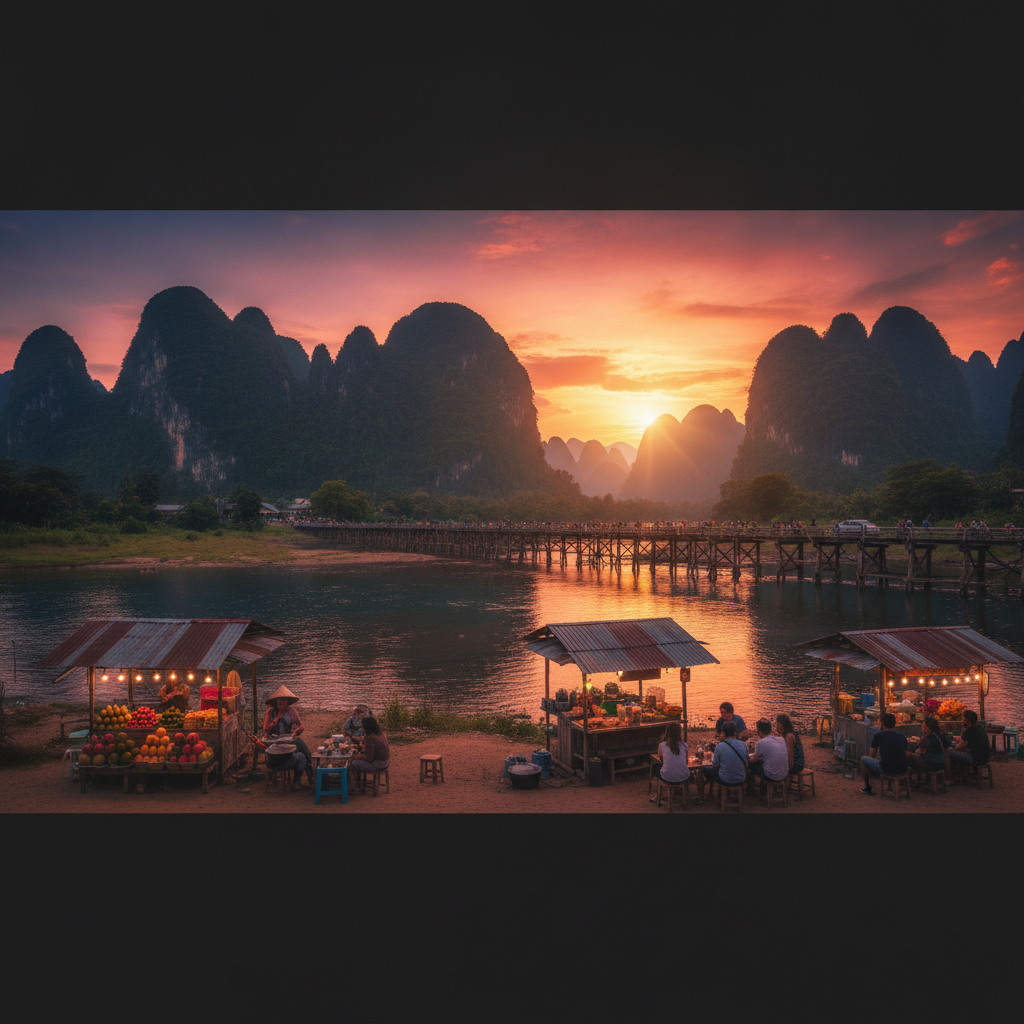
The Nam Song River at dawn (the morning mist visible above the water surface in the cool season months from November through February, the karst towers gradually becoming distinct above the mist as the sun rises, and the first fishermen visible on the river in their dugout canoes setting the overnight fish traps) is the most atmospheric single natural moment accessible in Vang Vieng — the dawn river environment (before the tubing activity begins and before the tourist population wakes) is the most purely natural encounter with the Nam Song landscape available. The riverside walk at dawn (along the tourist-strip river bank before the restaurants open, or along the village paths on the western bank for the more adventurous) provides the most peaceful encounter with the Vang Vieng river that is the raison d'être of the town's tourism economy.
Walk this route with audio
Stories play automatically as you reach each stop — no tapping needed.