Vang Vieng Village Cycling & Rice Field Walk
Cycle Vang Vieng's countryside — the flat valley floor around the Nam Song River, the bamboo bridge crossings, and the traditional Lao village communities in the karst shadow create the most rewarding countryside cycling accessible in northern Laos.
- 1
Bamboo Bridge Crossing
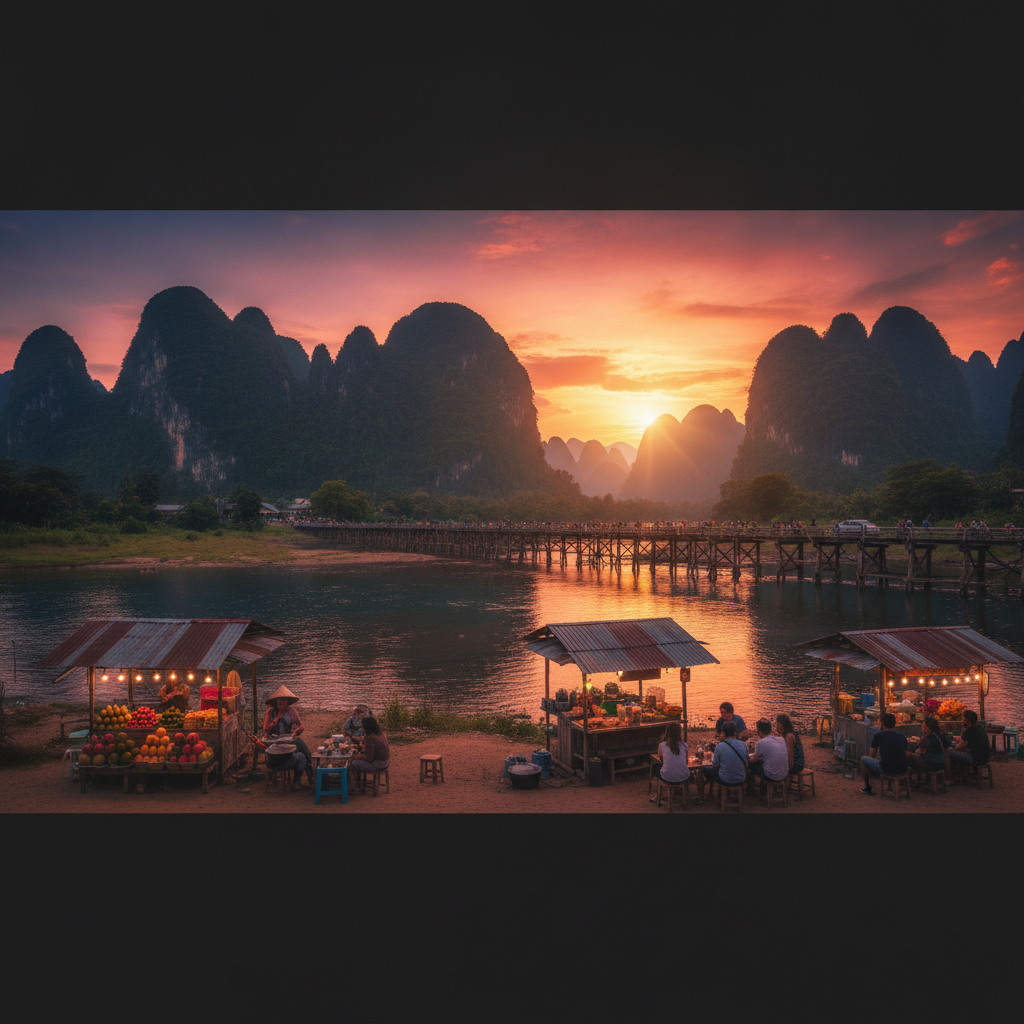
The seasonal bamboo bridges across the Nam Song River (constructed each dry season when the water level drops sufficiently to allow the bamboo pile construction, and then dismantled when the wet season floods rise to destroy them) are the most characteristically Vang Vieng infrastructure feature — the bridges (narrow bamboo walkways on bamboo and wood supports, wide enough for a bicycle to cross with care) provide the primary pedestrian and cyclist crossing to the village communities on the western bank of the Nam Song that are otherwise accessible only by the road bridge north of town. The crossing fee (a small toll collected at the bridge) goes to the village community that builds and maintains the bridge, making the bamboo bridge both the most practical and the most directly community-beneficial tourist interaction accessible in Vang Vieng.
- 2
Western Bank Village Walk
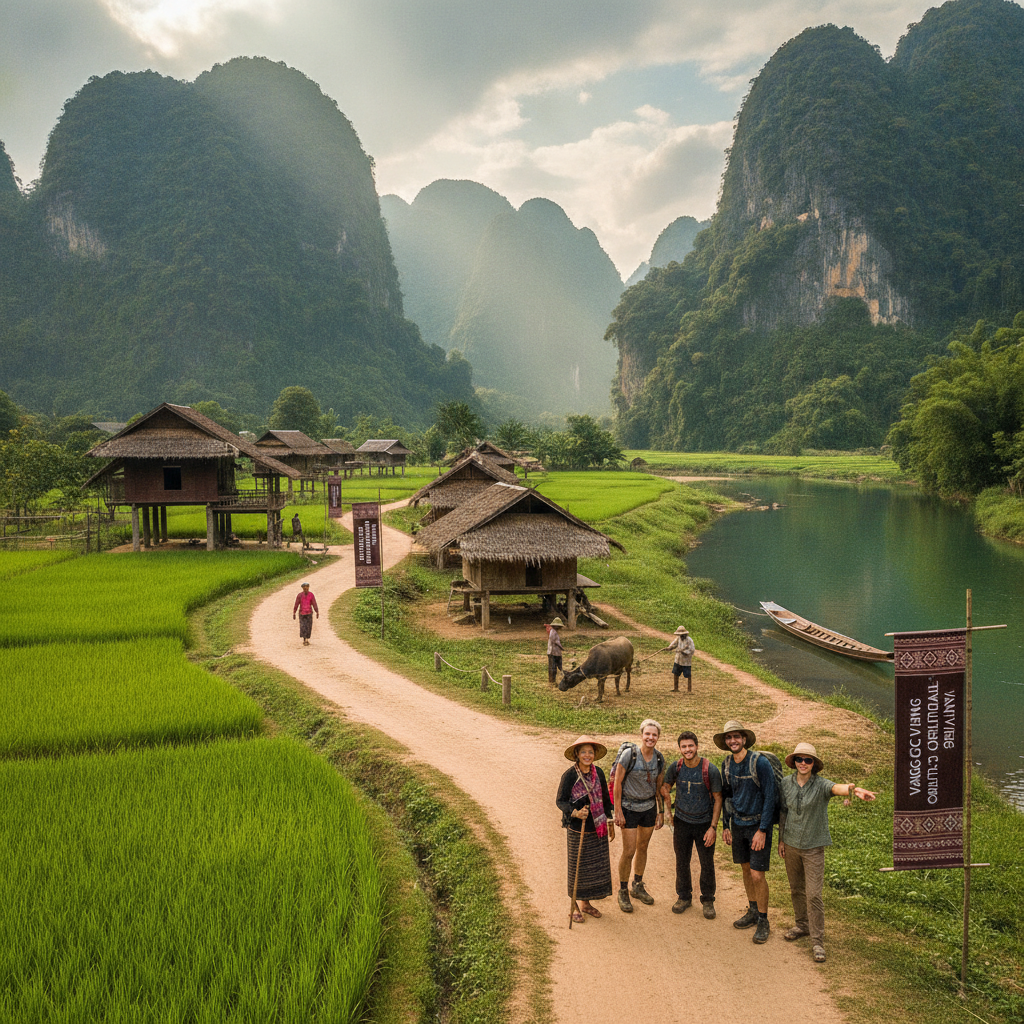
The cycling route through the villages on the western bank of the Nam Song (accessible via the bamboo bridge, the dirt tracks running south through the village communities between the river and the karst cliffs) provides the most authentic encounter with the rural Lao village life accessible from Vang Vieng — the villages here (the traditional wooden houses on stilts, the vegetable gardens, the free-ranging chickens and pigs, and the community pagoda that serves as the village's social and spiritual centre) are less affected by the tourist economy than the town itself and maintain the agricultural and community character of the traditional Lao village. The view from the western bank (the Vang Vieng town and the karst towers visible across the river, with the Nam Song in the foreground) is the most photogenic available of the classic Vang Vieng landscape.
- 3
Rice Paddy Landscape Cycling
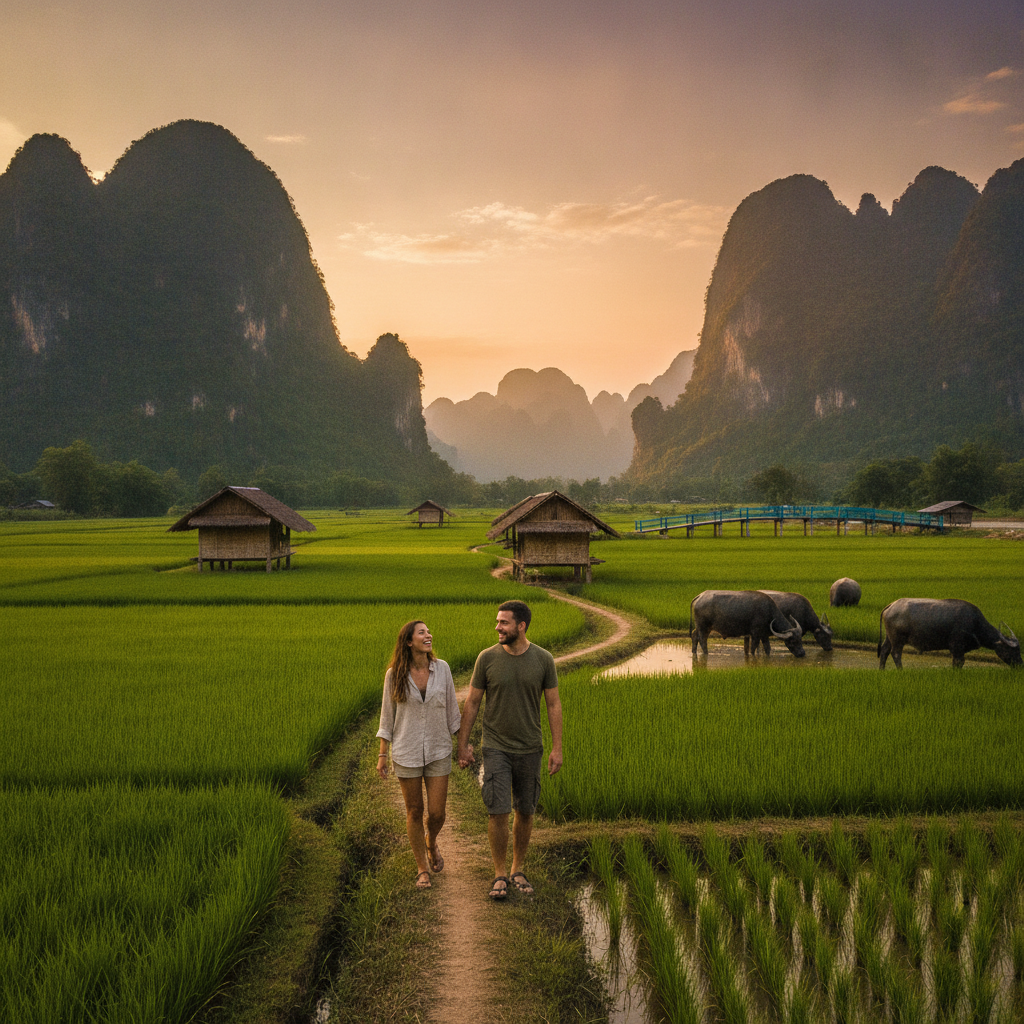
The cycling route through the rice paddies north of Vang Vieng (the flat valley floor between the Nam Song River and the karst cliffs, with the rice paddies (flooded and reflecting the limestone towers in the wet season, golden and ready for harvest in November, dry stubble and ploughed for the next planting in January-February) providing the most varied agricultural landscape accessible in the valley) is the most visually dramatic single cycling day available from the Vang Vieng town base. The karst towers rising above the rice paddy horizon (the classic Vang Vieng image that appears on every promotional image of the town) create the most dramatically framed cycling landscape in Southeast Asia.
- 4
Village Market Morning
The morning market in Vang Vieng town (operating from approximately 5am in the covered market near the bus station) and the smaller village markets accessible by bicycle in the communities surrounding the town provide the most authentic food shopping environment accessible in the area — the fresh produce from the valley's agricultural communities (the vegetables grown in the village gardens, the fruit from the orchards on the valley slopes, and the river fish from the Nam Song catches of the previous night) is the most direct expression of the food culture that supports the Lao village communities in the Vang Vieng valley. The market's rice section (the different varieties of sticky rice and glutinous rice produced by the valley communities, displayed in the conical bamboo containers that are the characteristic Lao market rice presentation) is the most visually distinctive food market display accessible in the Vang Vieng area.
- 5
Organic Farm Vang Vieng
The organic farming operations in the Vang Vieng valley (the small-scale vegetable farms producing chemical-free produce for the Vang Vieng tourist restaurant market, operating on the flat valley land near the river) represent the most direct agricultural enterprise connecting the tourist economy to the local food production — the organic farm tours (the demonstration of the composting, the drip irrigation, and the natural pest management techniques used in the organic production, combined with the farm-to-table meal at the farm restaurant using the fresh harvest) create the most educationally complete food production encounter accessible from Vang Vieng. The farms' produce (the salads, the herbs, and the vegetables that appear in the Vang Vieng restaurant menus marketed as 'local organic') represents the most transparent food sourcing accessible in the Lao tourist restaurant market.
- 6
Lao Village Homestay
The homestay programme in the Lao village communities surrounding Vang Vieng (the traditional family accommodation offered in the villages accessible by the riverside cycling routes) provides the most immersive encounter with the rural Lao village culture accessible from the tourism infrastructure of the town — the homestay (the sleeping on the traditional mat in the family's main room, the evening meal cooked by the family using the sticky rice and the vegetables from their own garden, and the morning participation in the household routine) is the most complete reversal of the tourist-service relationship accessible in the Vang Vieng area, placing the visitor in the position of the guest within the family rather than the customer of the tourist service. The villages accessible for homestay through the Vang Vieng community tourism programme are the most authentic single cultural encounter available in the area.
Walk this route with audio
Stories play automatically as you reach each stop — no tapping needed.