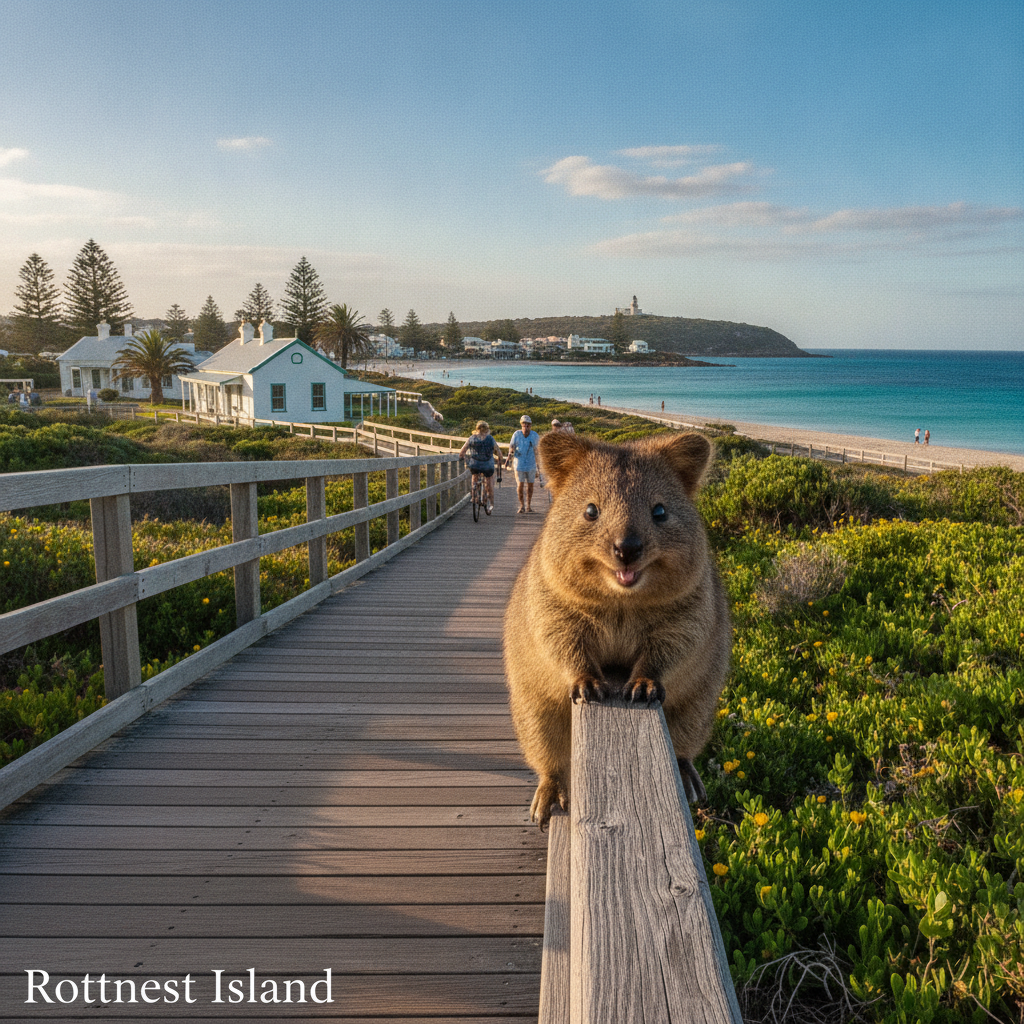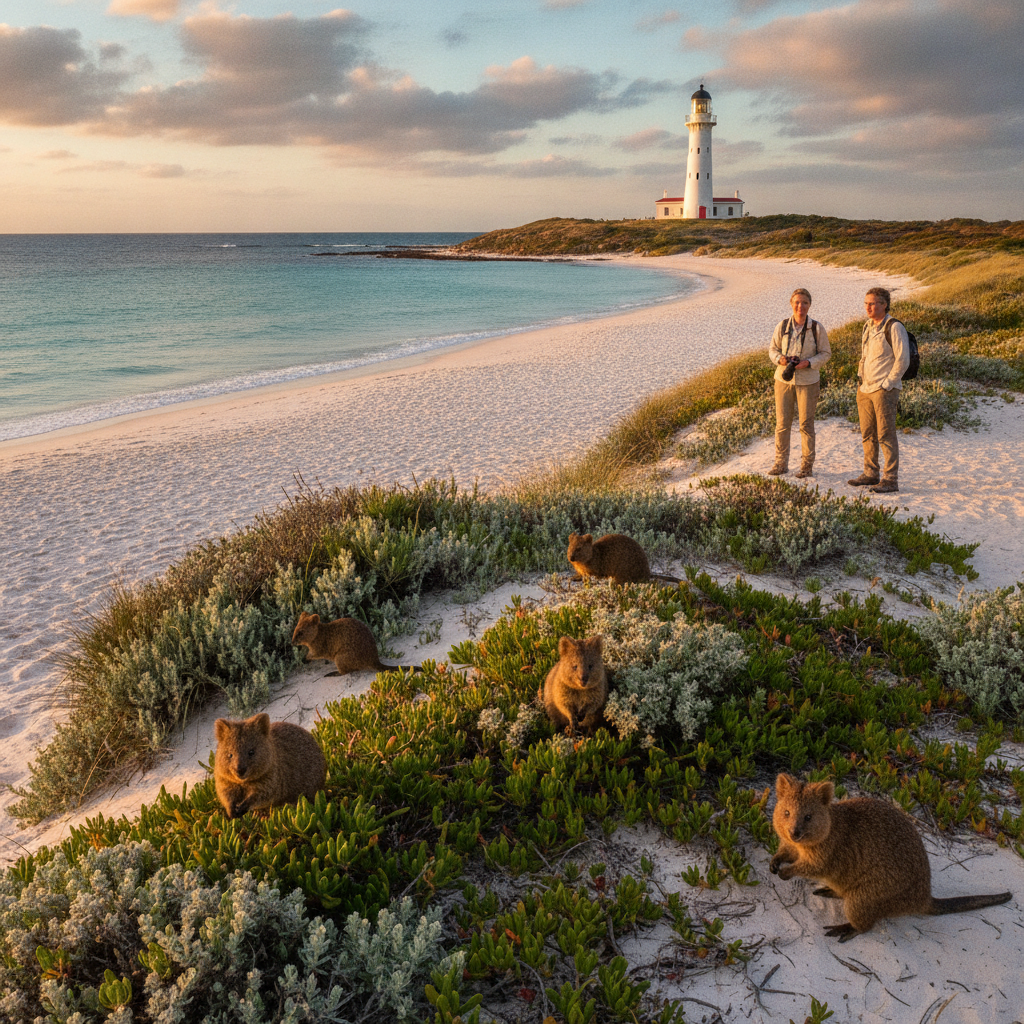
Rottnest Island Wildlife & Ecology Walk
Explore Rottnest Island's wildlife — beyond the famous quokkas, the island has colonies of tiger snakes, osprey nesting on the cliffs, the Rottnest Island wren, and the rich marine life of a protected island 19 km from the mainland.
- 1
Quokka Family Groups
Quokkas on Rottnest Island have no mainland predators — the population of 10,000 quokkas is the largest concentration of the species in the world, and the animals' tameness is the result of millennia without foxes or feral cats on the island.
- 2
Osprey Nest Site West End
Ospreys nest on the limestone pinnacles at the West End — the large fish-hunting raptors build bulky stick nests on the exposed rock stacks and are year-round residents on the island, visible soaring above the western coastline.
- 3
Rottnest Island Fairy Tern Colony
Fairy Terns nest on the sandy spits between the salt lakes — the small, delicate seabirds that breed on Rottnest are a vulnerable species, and the nesting areas are fenced during the breeding season to prevent disturbance from cyclists.
- 4
Tiger Snake Habitat
Rottnest Island has a large population of tiger snakes that arrived when the island was connected to the mainland — isolated from their mainland population for thousands of years, the Rottnest tiger snakes have evolved to be smaller, feeding primarily on lizards rather than frogs.
- 5
Salt Lake Flamingo Mirages
The salt lakes of Rottnest create extraordinary mirages in summer heat — the shimmer above the white salt crystals can produce distant pink reflections that early visitors occasionally mistook for flamingos in the heat haze above the lake surface.
- 6
Western Rock Lobster Habitat
The reefs around Rottnest Island are critical habitat for the Western Rock Lobster — the world's most valuable crustacean fishery, based in WA, uses Rottnest waters as part of the lobster's lifecycle, and the reef's health is directly connected to the fishing industry's sustainability.
Walk this route with audio
Stories play automatically as you reach each stop — no tapping needed.