 Australia
Barossa Valley
Discover routes, attractions, and guides in Barossa Valley.
8 routes

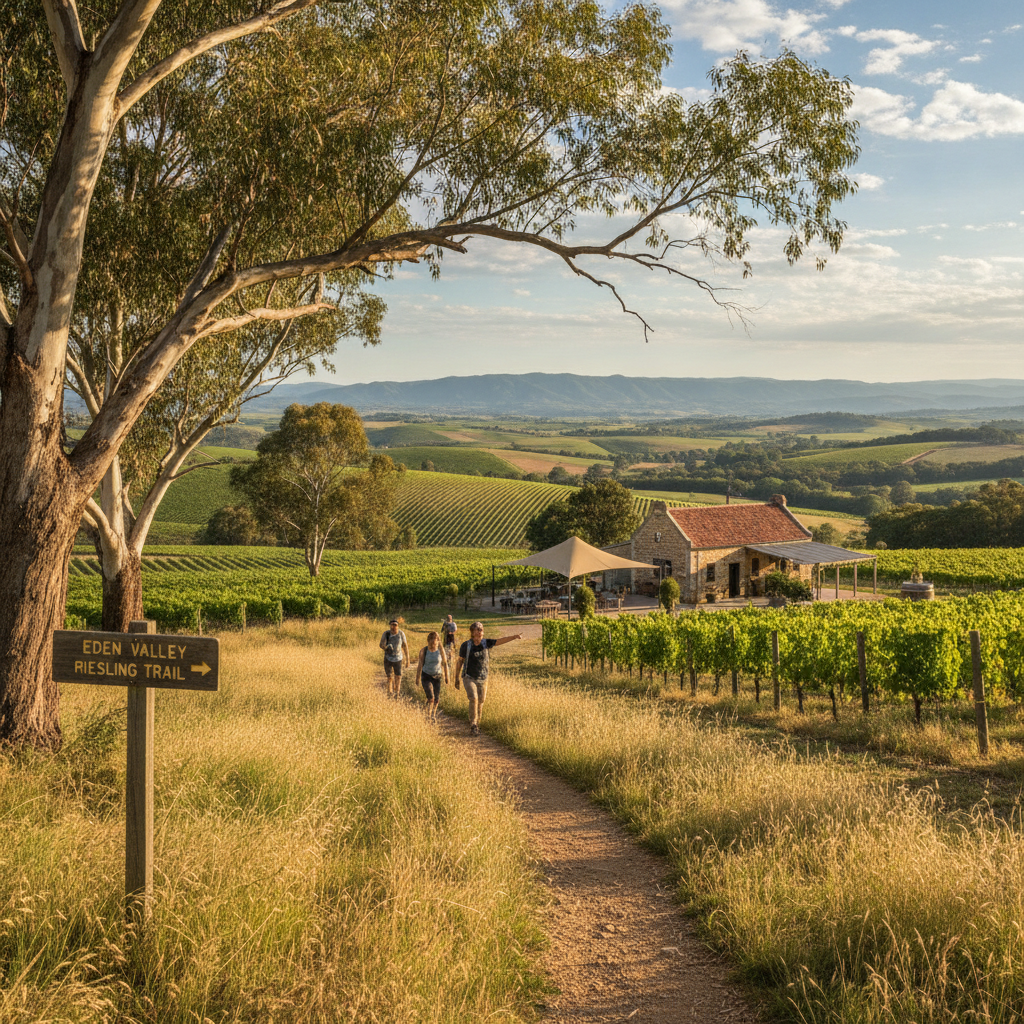
Eden Valley Riesling Trail Walk
Drive up from the Barossa floor into the cooler Eden Valley — elevated vineyards at 400–500 metres produce the Riesling that is the equal of anything from the Rhine or Mosel, a completely different face of the Barossa wine region.

Nuriootpa & Angaston Wine Town Walk
Explore Nuriootpa and Angaston — the Barossa's northern wine towns — where Penfolds, Yalumba, and a cluster of boutique wineries anchor two very different communities: one working-class German, one English colonial aristocracy.

Seppeltsfield Road Cellar Door Drive
Drive the iconic Seppeltsfield Road through the heart of the Barossa Valley — the palm-lined avenue past historic wineries, olive groves, and bluestone buildings is the most picturesque wine road in Australia.

Barossa Old Vine Walk & Terroir Tour
Trace the Barossa's ancient Shiraz vines — the region contains the world's oldest continuously producing Shiraz plantings, with some centenarian vines that survived the 19th century phylloxera plague that destroyed most of Europe's vineyards.

Tanunda Village Heritage Walk
Walk Tanunda — the cultural heart of the Barossa Valley — through Lutheran churches, German heritage streetscapes, and the Zentralmarkt precinct that preserves the living culture of the German settlers who founded this wine region in 1842.

Barossa Food Producers & Farmers Walk
Explore the Barossa Valley's food culture beyond wine — the smoked meats, sausages, bread, cheese, and preserves that German settlers established are still made by artisan producers who have maintained traditions for over 150 years.

Barossa Harvest Season & Vintage Walk
Explore the Barossa Valley during vintage (February-April) — the most energetic period in the wine calendar when the harvest of Shiraz, Grenache, and Riesling fills the air with fermenting grape juice and every winery comes alive.

Barossa Lutheran Heritage & Settlement Walk
Trace the German Lutheran heritage of the Barossa Valley — the six churches, the cemeteries, the German place names, and the living food traditions established by the 2,500 Silesian immigrants who arrived between 1838 and 1860.