Uruguayan Carnival: The Longest Carnival in the World
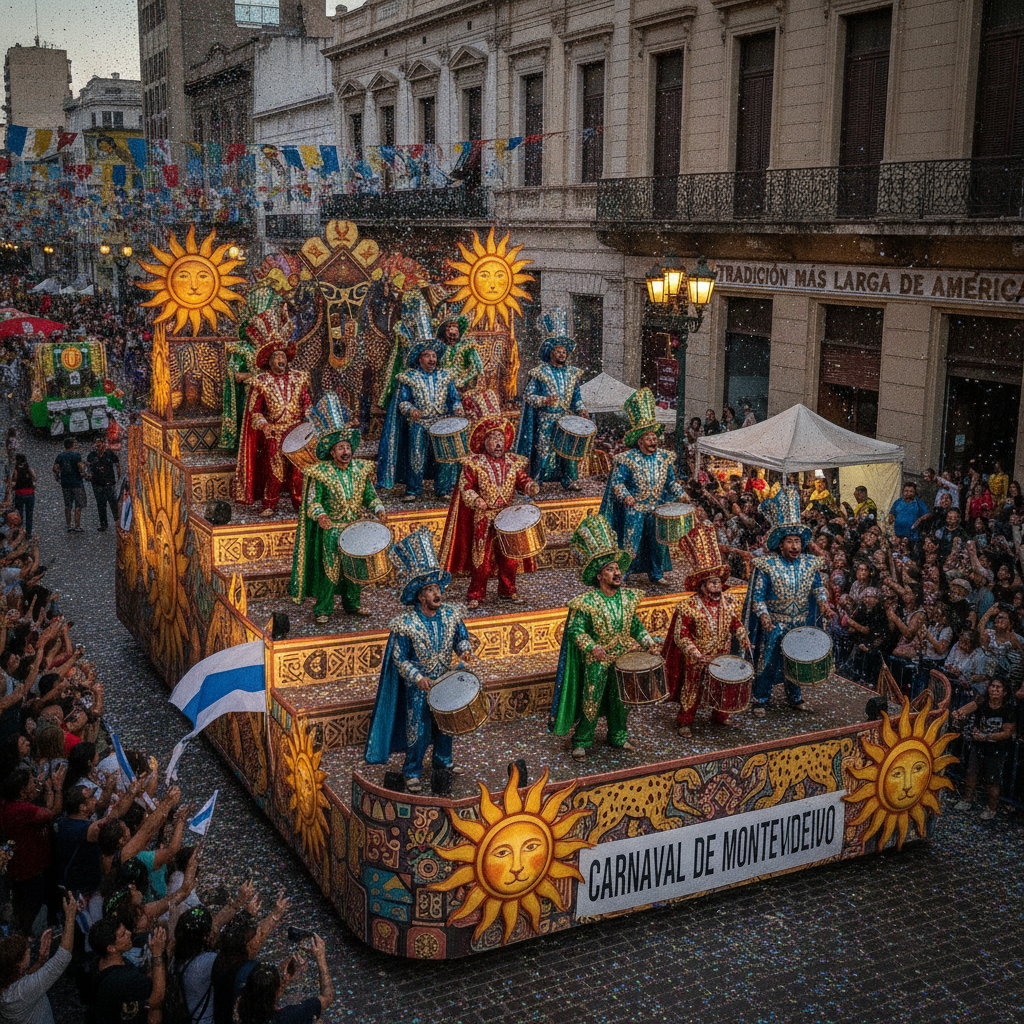
Uruguay's Carnival — lasting 40 days (the longest in the world) — is centred in Montevideo but celebrated across the country; the murga (satirical theatrical singing), the candombe (Afro-Uruguayan drum tradition), and the comparsas (dance groups) make it South America's most distinctive carnival
- 1
Murga Tradition
Murga – a specifically Uruguayan carnival tradition – is a theatrical group of 14-17 performers who perform a satirical critique of the year's politics and social events through song, costume and theatre; the murgan's social commentary is direct, sharp and funny; the annual murga competition (Gran Premio) is the centerpiece of Uruguayan carnival culture
- 2
Candombe drumming
Candombe – the Afro-Uruguayan percussion tradition brought by enslaved Africans in the 18th century – is at the heart of the Uruguayan carnival; the lamadan (processions of candombe drums through the barrios) are the most intrinsically exciting carnival events; the deep bass snare drum, high piano drum and chico create an irresistible rhythm
- 3
40-day duration
Uruguay's Carnival lasts 40 days – from January to February – making it the longest carnival in the world; the extended duration reflects Uruguay's strong Carnival culture and the country's capacity for sustained celebration; the carnival overlaps Punta del Este's New Year's high season, creating a cultural richness during the summer months
- 4
Teatro de Verano
The Teatro de Verano (Summer Theater) in Montevideo's Parque Rodó hosts the official murga, revue and candombe competitions; the 10,000-seat outdoor amphitheater is the cathedral of Uruguayan carnival culture; the competition nights (when the murgas perform their full two-hour shows) are the cultural events of the Uruguayan year
- 5
Barrio Sur and Palermo
The Barrio Sur and Palermo neighborhoods of Montevideo – the historic centers of Afro-Uruguayan culture – are the heart of the candombe tradition; the lamada processions through these barrios (on the first and second Saturdays of February) draw hundreds of thousands of spectators; barrios' carnival paintings, community spaces, and music culture are year-round expressions of Candombe identity
- 6
Carnival and Uruguayan Identity
Carnival is central to Uruguay's national identity – the political satire of the murgan, the African heritage of the candombe and the collective participation across social classes create a uniquely Uruguayan cultural form; carnival was maintained through the military dictatorship (1973-1985) when other political expressions were banned, giving it an additional dimension of cultural resistance
Walk this route with audio
Stories play automatically as you reach each stop — no tapping needed.
More in Punta del Este
Punta del Este: South America's St. Tropez
Punta del Este New Year's: South America's Greatest Party
José Ignacio: Uruguay's Most Exclusive Beach Village
Punta del Este's Food Scene: Where Uruguay's Best Chefs Cook
La Barra: Punta del Este's Creative Neighbourhood