Popayán's Colonial Churches: A City of Faith and Art
Popayán has more colonial churches per capita than any other Colombian city; each church is a repository of Quiteño baroque art, indigenous craft, and the religious history of the Cauca valley
- 1
Iglesia La Ermita
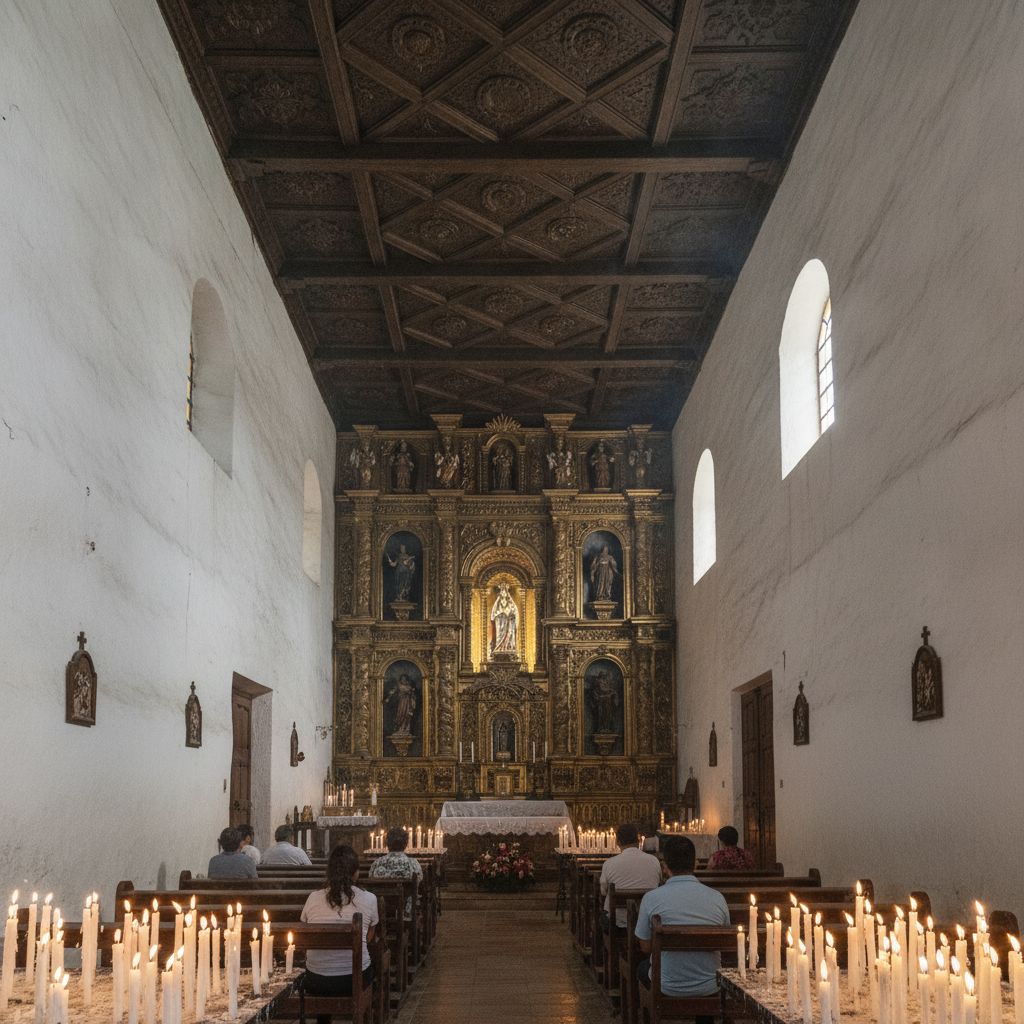
La Ermita — the oldest church in Popayán, built in 1546 — is the simplest and most moving of the colonial churches; the single nave, wooden roof and whitewashed walls enclose high quality colonial religious paintings and a strong sense of living tradition
- 2
Catedral de Nuestra Señora
The Popayán Cathedral – rebuilt after the 1983 earthquake – dominates the Plaza Mayor; the neoclassical reconstruction preserved the colonial proportions and the interior's Quiteño Baroque sculptures; the cathedral is the ceremonial heart of the Holy Week processions
- 3
Iglesia de Santo Domingo
The Church of Santo Domingo (1741) has one of Popayán's finest facades — the Churrigueresque stonework combines Spanish Baroque with indigenous motifs; its current use as a museum rather than an active church allows the architecture and colonial art to be studied in detail
- 4
Quiteño Baroque Art Collection
The colonial churches of Popayán have the finest collection of Quiteño (Quito School) baroque art outside of Ecuador — the polychrome sculptures of saints, the painted altarpieces, and the carved retablos were made in 17th- and 18th-century workshops in Quito and Popayán
- 5
Manuel Chili Caspicara
Popayán sculptor Manuel Chili 'Caspicara' (1723-1796) – a native master of the Quiteño Baroque – produced the city's most revered processional sculptures; his work is the centerpiece of Holy Week processions and is considered among the finest colonial sculptures in America
- 6
Monastery monastery
The surviving cloisters of Popayán—at the Convento de Santo Domingo and the Convento de San Francisco—are the most intimate architectural spaces in the city; the arcaded gardens, the colonial fountains and the religious silence of the monasteries is remarkable
Walk this route with audio
Stories play automatically as you reach each stop — no tapping needed.
More in Popayán
Volcán Puracé: The Active Volcano Above Popayán
Popayán Semana Santa: The Most Solemn Holy Week in America
Nasa-Páez: Cauca's Indigenous Guardians
Popayán: Colombia's White City of Colonial Grandeur
Cauca Valley: Sugar, Struggle & Afro-Colombian Heritage