George Town UNESCO Heritage Walk
Walk George Town's extraordinary UNESCO-listed historic core — the island city founded by Francis Light for the British East India Company in 1786 has one of the finest collections of colonial, Chinese, Indian, and Malay heritage architecture in Southeast Asia, compressed into a walkable historic quarter where 250 years of multicultural urban life have left an extraordinary built legacy.
- 1
Fort Cornwallis
Fort Cornwallis is the largest standing fort in Malaysia — built on the site where Francis Light landed in 1786 to establish the British settlement that would become Penang, the star-shaped fort with its cannons facing the Penang Strait documents the military foundation of a colonial city that grew from a trading post into the most important British port in Southeast Asia. The fort's most famous cannon (Sri Rambai) was originally cast in Portugal and brought to Penang via the Johor Sultanate, and local legend attributes fertility powers to flowers placed in its barrel.
- 2
Penang Esplanade Padang
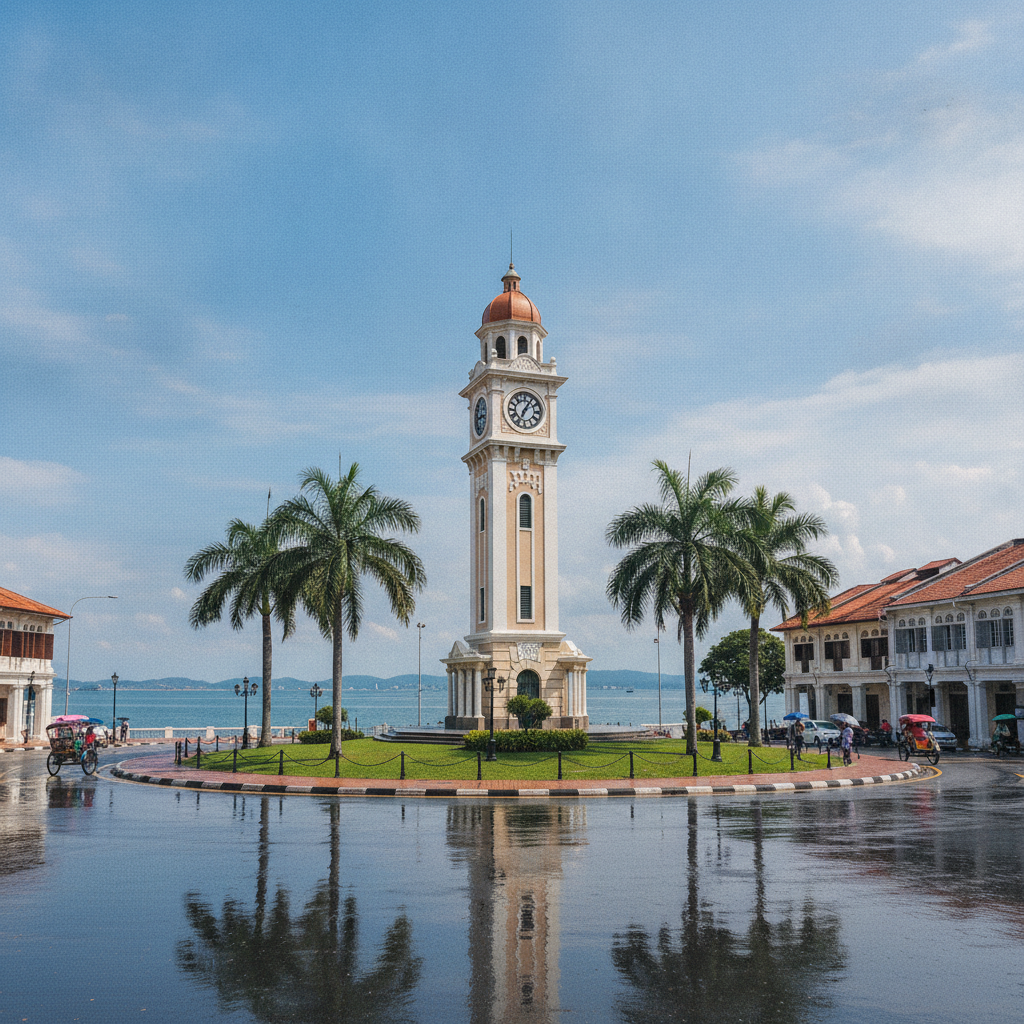
The Esplanade (Padang) adjacent to Fort Cornwallis was the ceremonial heart of colonial Penang — the large open field facing the harbour where colonial cricket was played, military parades were held, and the population gathered for public events maintains its function as a public green space facing the Penang Strait. The surrounding colonial buildings — the Town Hall, City Hall, and the clock tower built to celebrate Queen Victoria's Diamond Jubilee — create the most complete expression of British colonial civic architecture in Penang.
- 3
Little India Lebuh Pasar
Little India in George Town's Lebuh Pasar and Lebuh King areas is one of the most vibrant South Indian commercial districts in Southeast Asia — the Tamil, Telugu, and Punjabi communities who came to Penang as traders, money changers, and labourers established a commercial district of sari shops, gold jewellers, spice dealers, and the temples that anchor the Tamil community's religious life. The Sri Mahamariamman Temple and the Kapitan Keling Mosque in close proximity document the multicultural religious landscape that makes George Town genuinely unique among Southeast Asian cities.
- 4
Kapitan Keling Mosque
The Kapitan Keling Mosque is the most important mosque in Penang — built around 1801 by the Indian Muslim (Jawi Peranakan) community led by their kapitan (community leader), the mosque in Mughal-inspired architectural style with its whitewashed facade and golden dome has been the centre of the South Indian Muslim community's religious life for over two centuries. The mosque's presence adjacent to the Sri Mahamariamman Hindu temple illustrates the compressed religious diversity of George Town's historic core, where different communities established their sacred spaces in close proximity.
- 5
Clan Jetties Weld Quay
The Clan Jetties of George Town are an extraordinary surviving example of Chinese clan settlement — the six wooden jetties extending into the Penang Strait, each associated with a different Chinese clan (Chew, Lim, Tan, Lee, Mixed, Koay), were built on stilts over the water by the fishing and lighter-boat communities of the respective clans. The Chew Jetty is the largest and most visited, with its temple, residential houses, and community of around 200 families still living over the water in what has become simultaneously a living heritage community and one of Penang's most visited tourist destinations.
- 6
Armenian Street Artworks
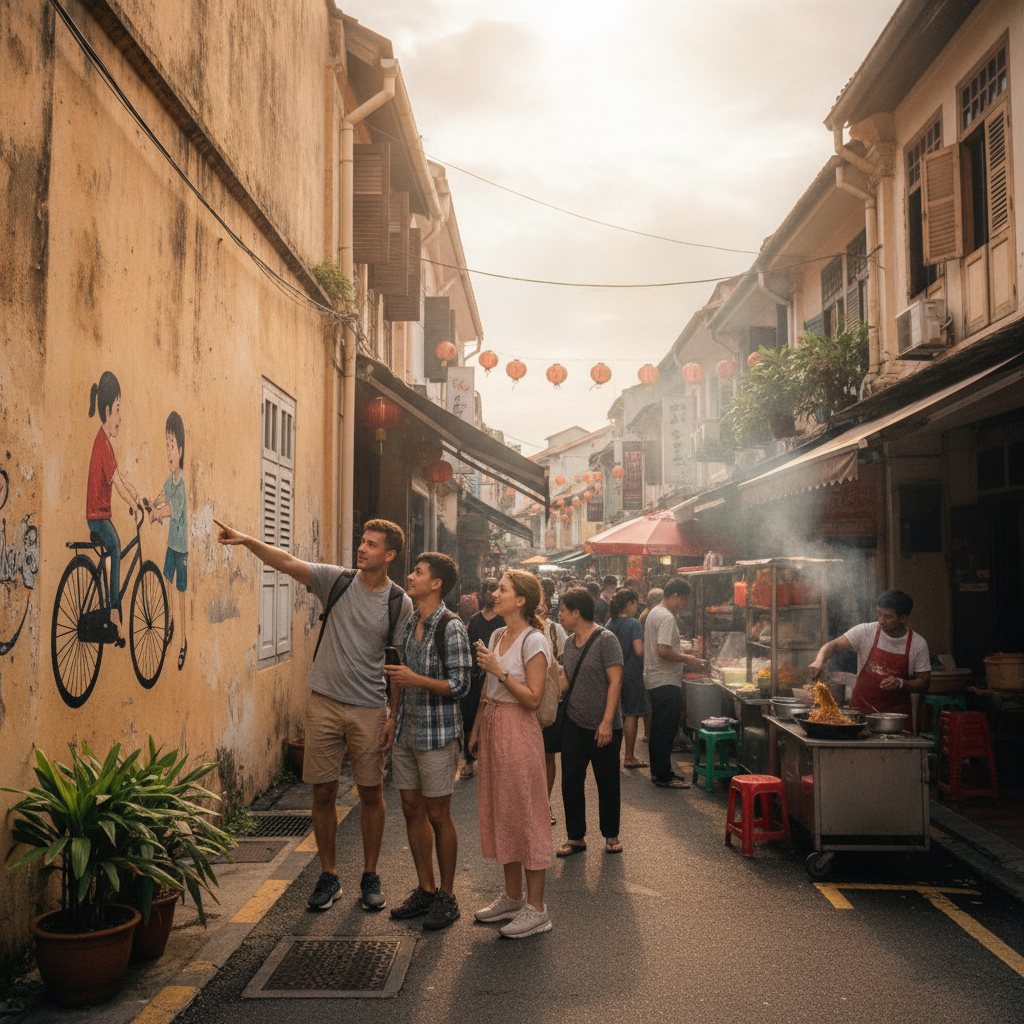
Armenian Street (Lebuh Armenian) is the centre of George Town's famous street art scene — the murals by Lithuanian artist Ernest Zacharevic painted in 2012 (including the iconic 'Children on Bicycle' and 'Boy on Motorcycle') launched a street art movement that has since covered many walls of the historic quarter with works that comment on George Town's cultural heritage, its communities, and its urban transformation. The street art has become one of Penang's most visited attractions, creating a navigational map for exploring the historic quarter beyond the major heritage buildings.
Walk this route with audio
Stories play automatically as you reach each stop — no tapping needed.