Padang Earthquake & Tsunami Resilience Walk
Understand Padang's experience with natural disaster — the city sits in one of the world's most seismically active zones, having suffered devastating earthquakes in 2009, and the visible remnants of damage alongside the rebuilt infrastructure tell the story of a city's resilience and the ongoing risk management challenge of living on the Sumatran fault system.
- 1
2009 Earthquake Damage Sites
The magnitude 7.6 and 7.9 earthquakes that struck Padang in September 2009 killed over 1,100 people and damaged or destroyed more than 250,000 buildings — while most damaged buildings have been rebuilt in the years since, the rebuilt structures and the few remaining damaged sites document one of the most destructive earthquake sequences in recent Indonesian history. The location of collapsed buildings, many of which were poorly constructed multi-storey concrete structures, informed the post-earthquake building code reforms in West Sumatra.
- 2
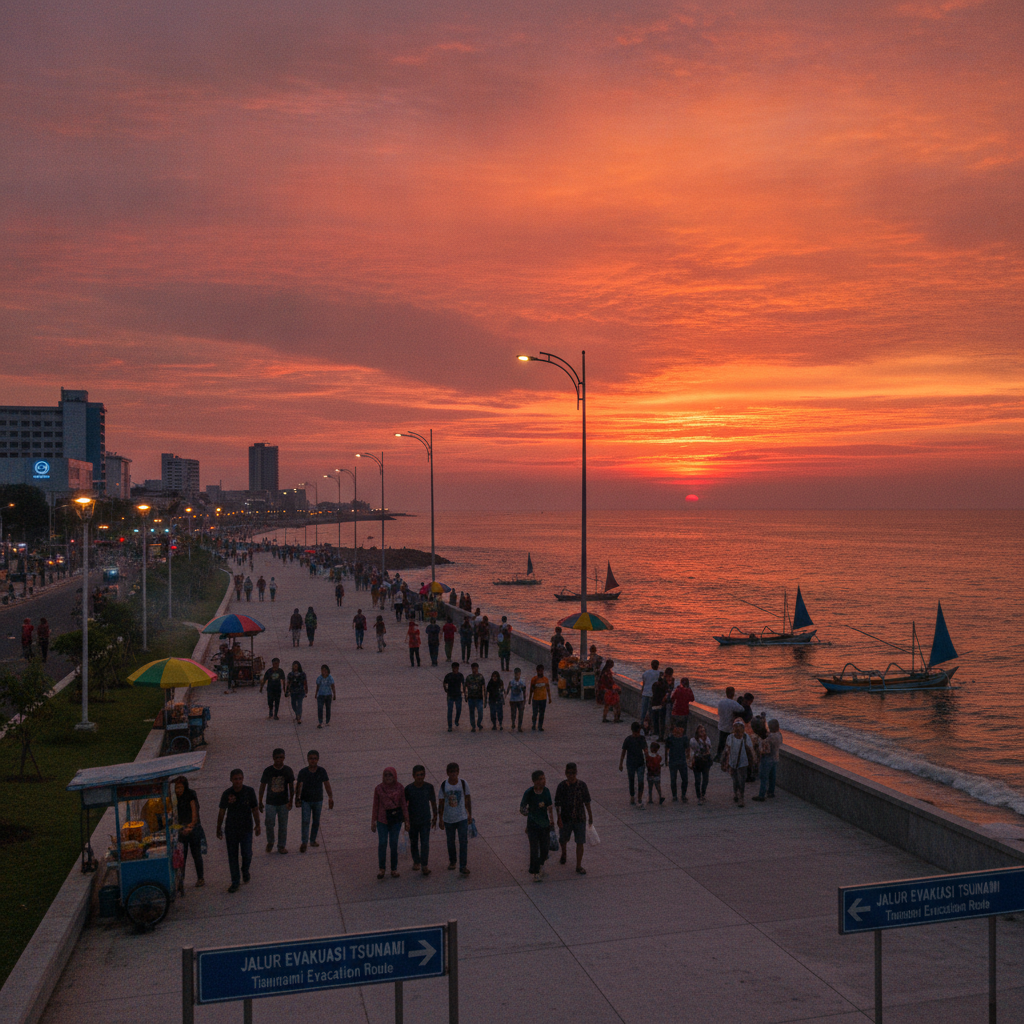
Tsunami Evacuation Routes
Padang's position on the coast above the Sunda megathrust fault zone (the same fault system that generated the catastrophic 2004 Indian Ocean tsunami) means the city lives under constant tsunami risk — the evacuation route signs, the raised concrete tsunami escape buildings in the low-lying coastal districts, and the regular tsunami drills conducted by Padang's government reflect the comprehensive disaster preparedness programme developed after the 2009 earthquakes demonstrated the city's vulnerability to the seismic events that will inevitably recur.
- 3
Vertical Evacuation Buildings
The vertical evacuation buildings (shelter bangunan tinggi) constructed in Padang's beach and low-lying districts following the 2009 earthquake are designed to provide elevated refuge in the event of a tsunami warning — the distinctive concrete structures capable of accommodating thousands of people in the time between a major offshore earthquake and the arrival of the tsunami wave represent the engineered response to a risk that cannot be eliminated but can be managed through infrastructure. The buildings are tested annually in the tsunami drill that has become part of Padang's civic calendar.
- 4
BMKG Earthquake Monitoring Station
The Badan Meteorologi, Klimatologi, dan Geofisika (BMKG) monitoring station in Padang is part of Indonesia's earthquake and tsunami early warning system — the network of seismometers, GPS stations, and ocean buoys that monitors the Sunda megathrust and the Sumatran fault system represents the scientific infrastructure deployed since 2004 to provide the warning time that can save lives. The challenge of the warning system is that major earthquakes from the megathrust directly west of Padang could generate tsunamis reaching the coast in as little as 20-30 minutes, limiting the effective warning window to a narrow margin.
- 5
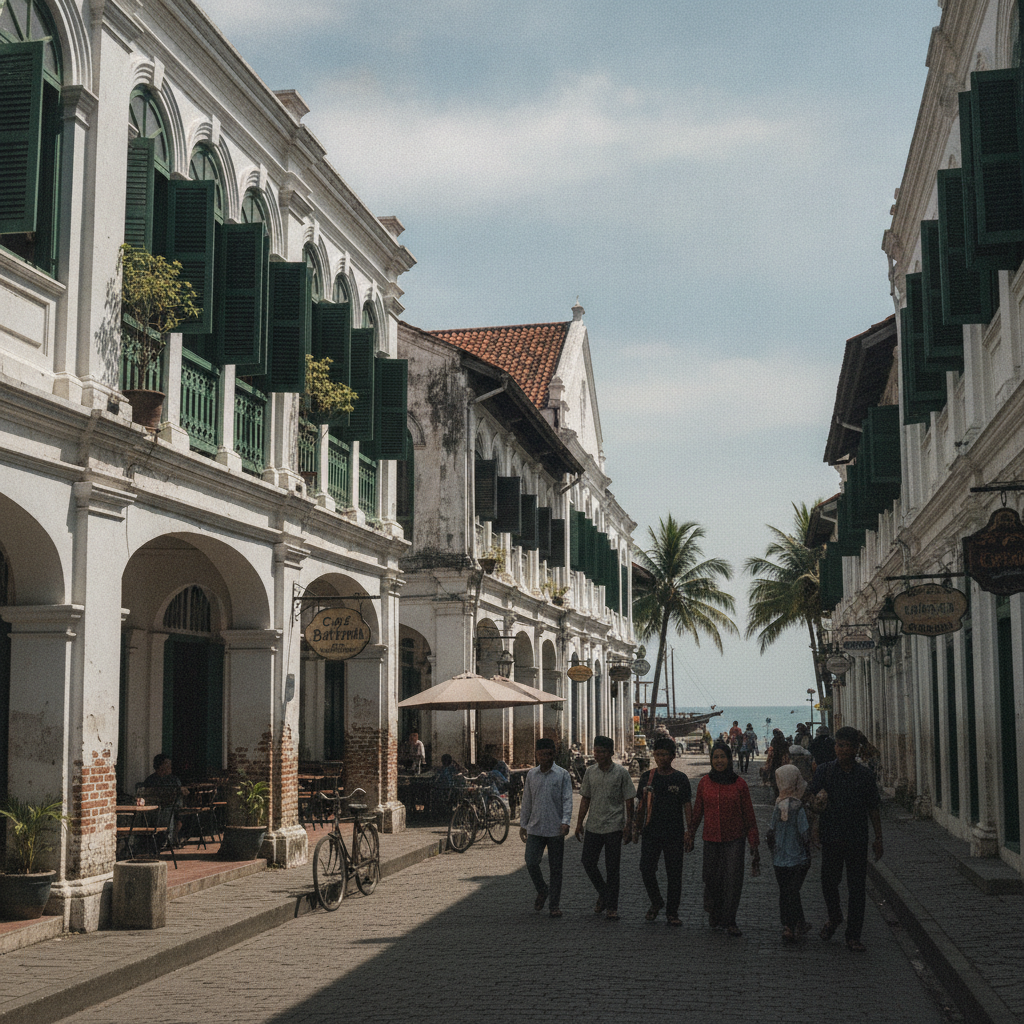
Padang Rebuilt Districts
The rebuilt residential and commercial districts of Padang constructed after the 2009 earthquake demonstrate both the capacity for recovery and the persistent challenges of earthquake-resistant construction in a developing economy — the new buildings incorporating improved seismic standards sit alongside older structures that predate the 2009 events and may not meet current safety requirements. The experience of rebuilding a city twice (Padang was also extensively damaged in the 1926 Padang Panjang earthquake) has created a population with a historically grounded awareness of seismic risk.
- 6
Indian Ocean Seismic Zone Context
Standing on Padang's beach and looking west across the Indian Ocean, you are looking directly toward the Sunda megathrust subduction zone where the Indo-Australian tectonic plate descends beneath the Eurasian plate — the zone responsible for the 2004 magnitude 9.1 Indian Ocean earthquake and tsunami that killed 227,000 people across the region, the 2005 Nias earthquake, and the 2009 Padang earthquakes. The distance from Padang to the megathrust fault is approximately 200km of ocean, placing the city within the near-field tsunami hazard zone where early warning time is severely constrained.
Walk this route with audio
Stories play automatically as you reach each stop — no tapping needed.