Ngapali Fishing Village & Rakhine Culture Walk
Explore Ngapali's fishing culture — the traditional Rakhine fishing villages that stretch along the coast north and south of the tourist beach maintain the deep-sea fishing and coastal agriculture traditions that have shaped this stretch of the Bay of Bengal coast for centuries.
- 1
Pre-Dawn Fish Landing
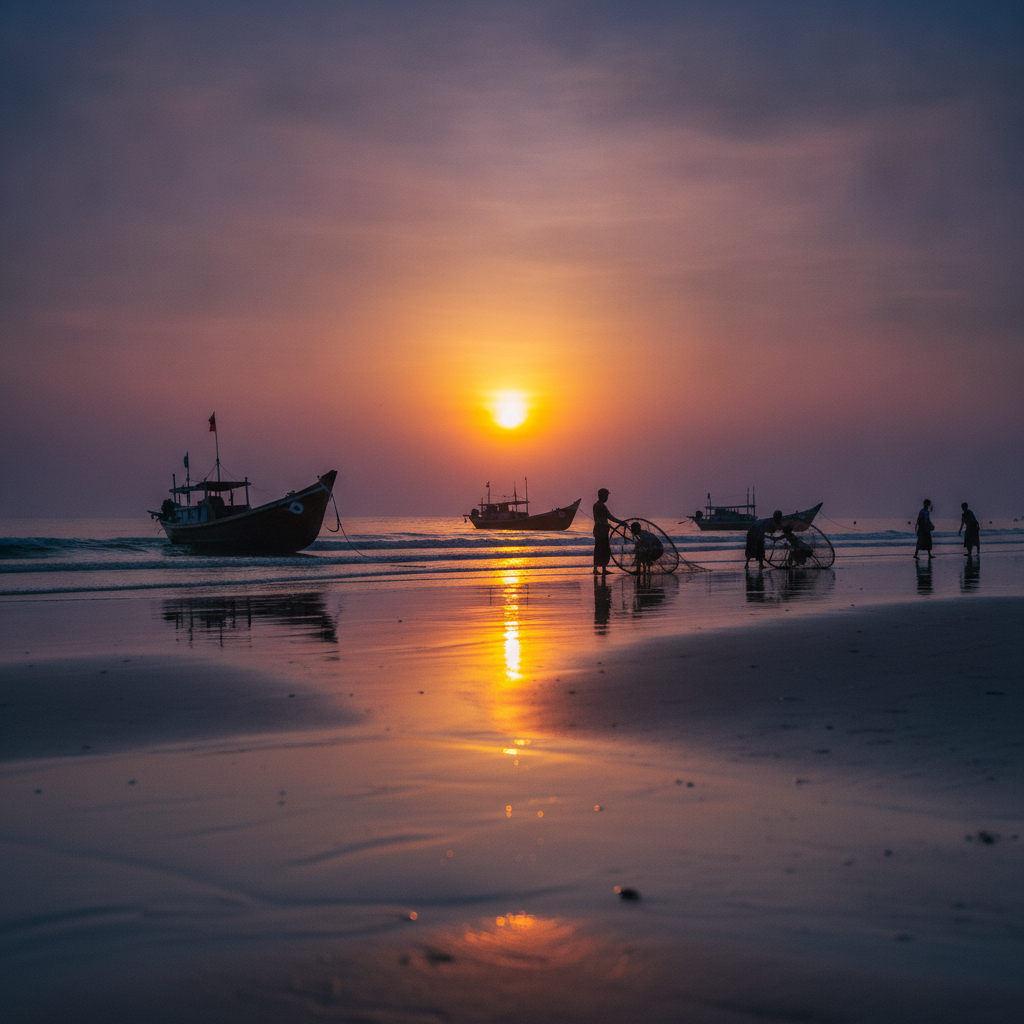
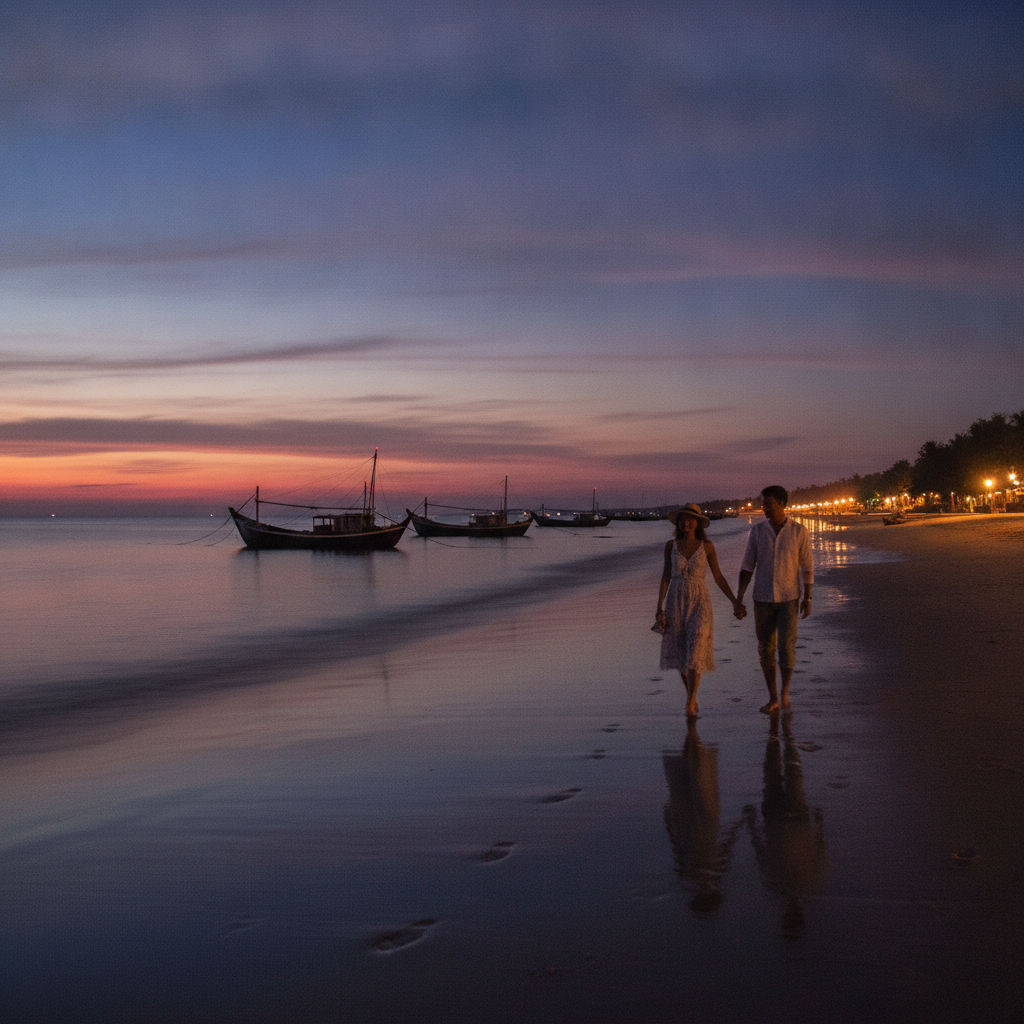
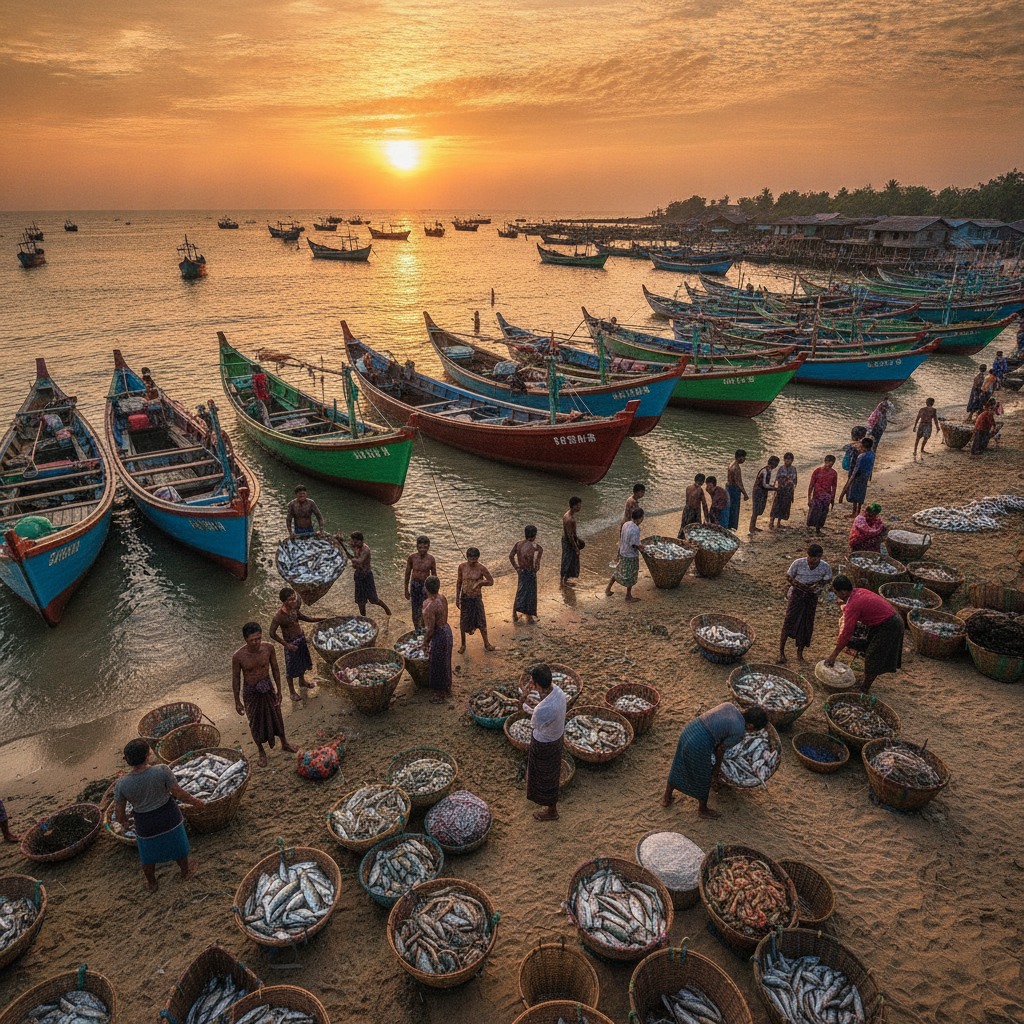
The pre-dawn fish landing at the Lintha village beach (the fishing boats returning from the overnight catch between 4am and 6am, the catch sorted by species on the beach, and the fish buyers from the local market and the resort kitchens negotiating the price of the morning's seafood before the sun has fully risen) is the most immediately productive single event accessible at Ngapali — the landing's activity (the boats driven onto the sand, the fishermen unloading the fish baskets, the women sorting the catch into the species and size categories, and the traditional balance-scale weighing that determines the price for each lot) creates the most completely commercial fishing economy encounter accessible at any beach destination in Myanmar. The pre-dawn landing's atmosphere (the boat headlights on the dark water as the fleet returns, the fishermen's voices, and the gradually lightening sky revealing the boats' silhouettes against the morning horizon) is the most atmospherically dramatic single non-tourist event accessible at the Ngapali beach area.
- 2
Fish Drying Racks
The fish drying racks at the Lintha village (the bamboo framework structures where the excess catch from the overnight fishing is split and laid to dry in the sun, the dried fish that is the most important preserved protein in the Myanmar diet) are the most directly productive food-processing encounter accessible at the Ngapali beach area — the drying process (the fish split along the spine, salted, and laid on the bamboo racks to dry for 2-5 days depending on the species and the intended final product, the racks positioned to catch the coastal breeze that accelerates the drying) produces the ngapi (the fermented fish paste) and the dried fish that are the most essential condiments in the Myanmar and Rakhine cuisine. The drying racks' visual character (the rows of silver fish catching the morning sun, the pungent aroma of the fermentation process, and the fishing village activity continuing around the racks) creates the most immediately sensory encounter with the working fishing economy accessible at the beach destination.
- 3
Rakhine Village Life
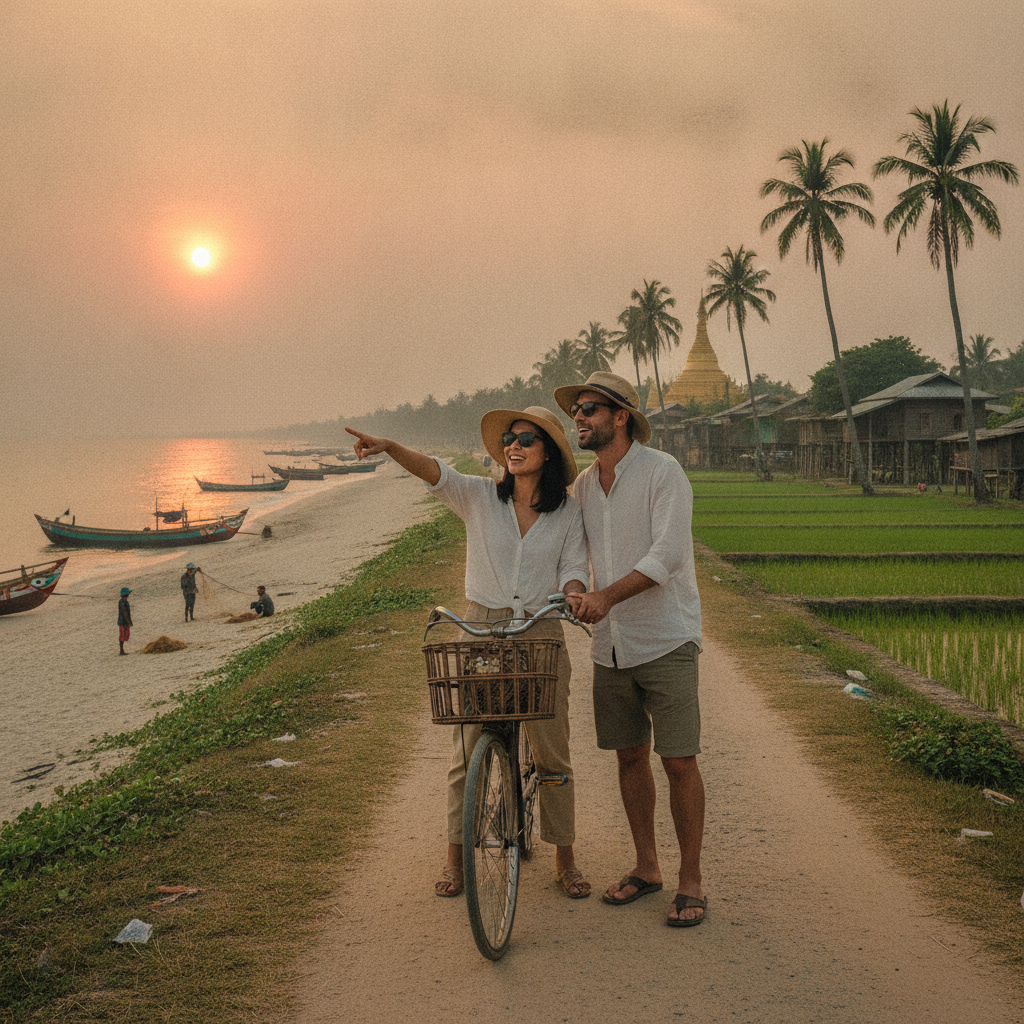
The Rakhine villages north of Ngapali Beach (the communities of the Rakhine ethnic people whose coastal culture, Buddhist tradition, and fishing economy have developed along the Bay of Bengal coast independently from the lowland Burmese culture of the Irrawaddy valley) are the most directly ethnographically distinctive community accessible at the Ngapali beach destination — the Rakhine cultural distinctiveness (the slightly different dialect, the distinctive monastery architecture, and the food culture that is more heavily influenced by the Bay of Bengal fishing economy and the proximity to India via the sea trade routes) creates the most directly non-Burmese cultural encounter accessible at any beach destination in Myanmar. The village monastery (the focal point of the Rakhine community's religious and social life, with the monks visible in the morning alms procession through the village lanes) is the most immediately accessible encounter with the Buddhist practice of the coastal Rakhine community.
- 4
Boat Building Shore
The boat building and repair operations visible at the fishing village shore (the wooden fishing boats in various stages of construction and repair, the craftsmen working on the hull planking and the caulking that is the most critical maintenance task for the wooden deep-sea fishing fleet) provide the most directly productive craft encounter accessible within walking distance of the Ngapali resort section — the boat construction (the traditional Myanmar coastal fishing boat, larger than the Inle Lake longboats and built for the open-water conditions of the Bay of Bengal, with the deeper hull, the wider beam, and the heavier construction that allows the overnight deep-sea fishing that constitutes the primary livelihood of the Ngapali fishing community) and the daily maintenance visible at the shore (the hull painting, the net mending, and the engine maintenance) create the most complete working marine craft environment accessible at the beach destination.
- 5
Ngapali Village Market
The Ngapali village market (the small daily market serving the fishing village and resort worker community, with the fresh seafood from the morning catch, the vegetables grown in the small gardens behind the village, and the basic household goods) is the most directly local commercial encounter accessible at the Ngapali beach area — the market's character (the small scale appropriate to the village community rather than the tourist economy, the familiar negotiations between the regular vendors and their regular customers, and the atmosphere of the ordinary commercial daily routine rather than the tourist market performance) creates the most genuinely local version of the Rakhine coastal market accessible within easy walking distance of the resort section. The market's seafood section (the morning catch immediately available for sale at the most competitive prices accessible at the destination, before the restaurant markup applies) is the most directly informative single indicator of the day's fishing success available at the Ngapali beach area.
- 6
Coconut Palm Agriculture
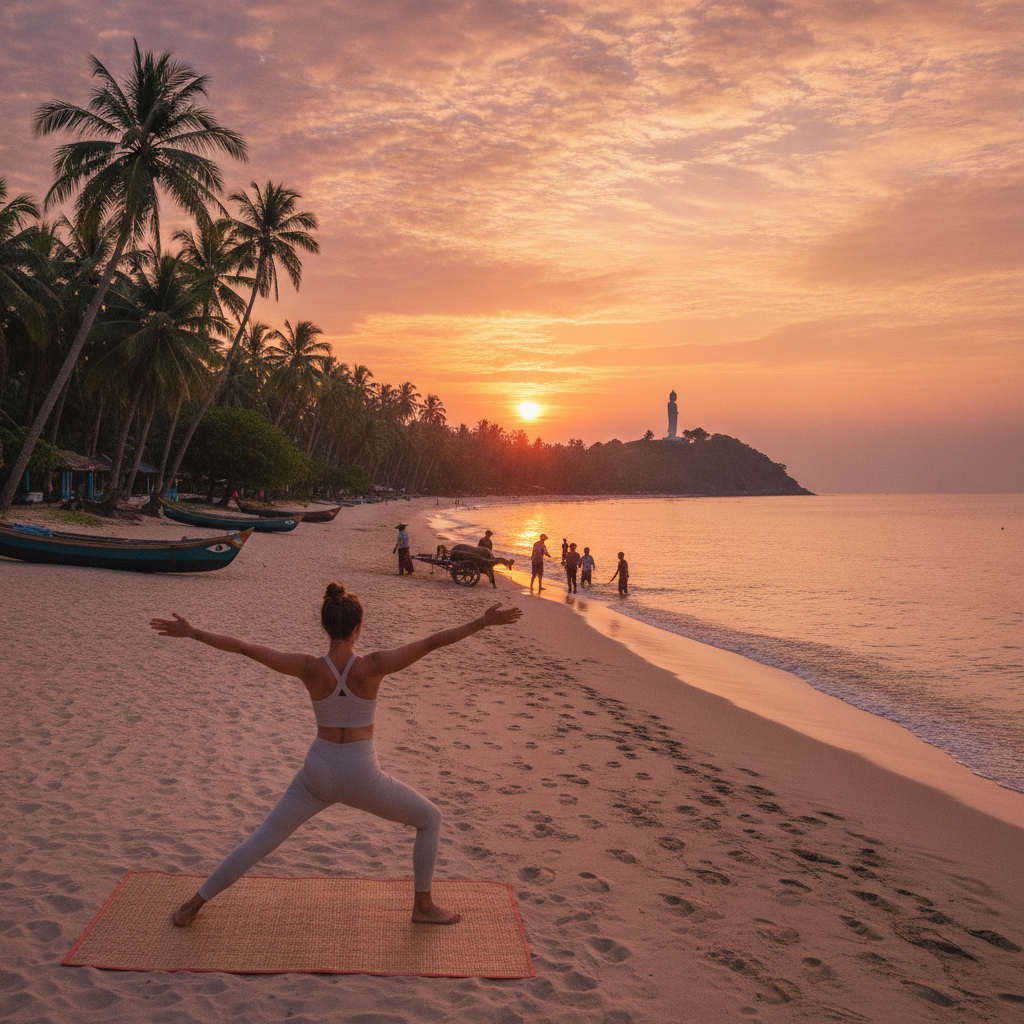
The coconut palm cultivation visible behind the Ngapali beach (the inland coconut groves that supply the resort's fresh coconuts, the copra drying operations that process the mature coconut meat for the oil-pressing market, and the toddy palm tapping visible on the palms at the village edges) is the most directly agricultural encounter accessible from the beach resort area — the coconut's economic centrality to the Rakhine coastal community (the fresh coconut water as the village's primary safe drinking source before the infrastructure improvements, the coconut milk as the primary fat in the Rakhine curry cooking, and the copra as the cash crop that connects the coastal village to the national commercial economy) creates the most multi-function single crop encounter accessible at the beach destination. The fresh green coconut available at the beach vendors (the top sliced off on the spot, the cool coconut water drunk directly through the opening) is the most refreshingly appropriate single beach food accessible throughout the Ngapali day.
Walk this route with audio
Stories play automatically as you reach each stop — no tapping needed.