Mindo's Secret Mammals: Ocelots, Tapirs & Woolly Monkeys
Mindo's cloud forest harbours an impressive mammal community that is rarely seen but frequently detected; the ocelot, the mountain tapir, and the woolly monkey inhabit the protected forest around the village
- 1
Ocelot and spotted cats
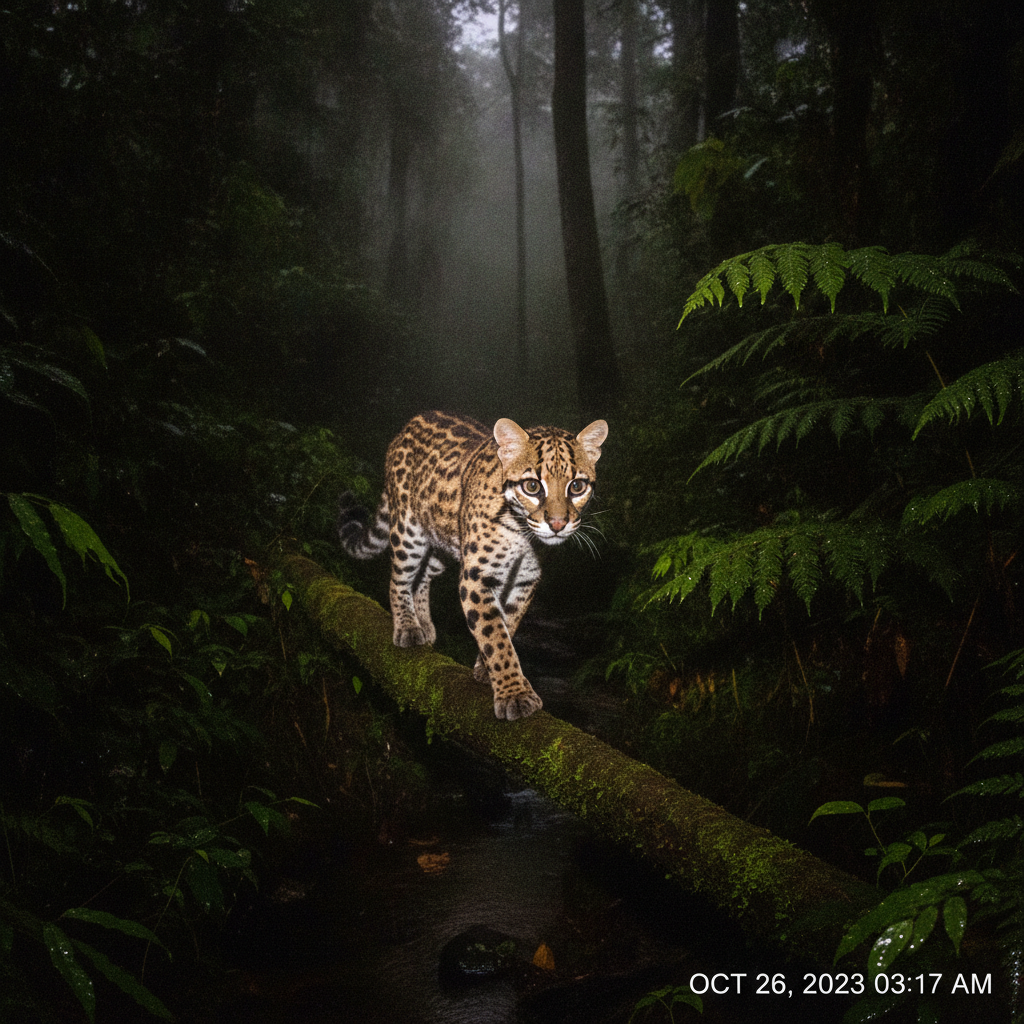
The ocelot - the most beautiful of the smaller spotted cats - lives in the Mindo cloud forest; camera traps set by researchers and lodges regularly capture ocelots on forest trails; margay (which can go down trees head first) and oncilla also occur in the
- 2
area Spectacled bear presence
The spectacled bear has been documented in the Mindo-Nambilo forest with camera traps - the bears descend from the higher altitudes to feed on the fruits of the cloud forest; the presence of bears in the forest so close to Quito is remarkable and reflects the effectiveness of the protected area
- 3
Mountain Tapir tracks
The bergstapir leaves distinct tracks—three-toed footprints the size of a fist—in the muddy cloud forest trails above Mindo; the tapir's mounds and their feeding damage to the tree bark are visible on the upper forest paths; sightings are very rare but traces are regularly found
- 4
Woolly Monkey Troops
The woolly monkey - a large, placid primate with a prehensile tail - lives in the undisturbed cloud forest sections near Mindo; troops of 15-20 animals feed on forest fruits in the canopy; their presence is a reliable indicator of intact cloud forest
- 5
Nocturnal Mammal Activity
The cloud forest at night belongs to the mammals - kinkajou (honey bear) feeding in the tree canopy, agoutis rustling in the undergrowth and the occasional ocelot on the trail are spotted on guided night walks; The night ecology of Mindo Forest is as rich as the daytime ecology
- 6
Puma in the forest
Camera traps in the Mindo-Nambillo forest have caught the puma (mountain lion) — the apex predator in the Andean cloud forest; the puma's prey (deer, peccaries, and rodents) all occur in the Mindo forest; the complete food chain of mammals, preserved in a small protected area 2 hours from Quito, is remarkable
Walk this route with audio
Stories play automatically as you reach each stop — no tapping needed.