
Marrakech Cuisine: The Tagine Slow-Cook Tradition, Couscous Friday Culture, Bastilla the Sweet-Savory Pastry, the Djemaa el-Fna Food Stalls, the Cooking Class Culture, and the Marrakech Food Tour
The Marrakech cuisine route covers the tagine as the defining Moroccan cooking vessel and the philosophy of slow cooking, the Friday couscous as the Islamic communal meal tradition, the bastilla pigeon and almond pastry as the most sophisticated Moroccan dish, the Djemaa el-Fna food stall experience, the cooking class industry, and the Marrakech food tour circuit.
- 1
Tagine: The Moroccan Slow Cooking Philosophy
The tagine, the conical-lidded earthenware cooking vessel that gives its name to the Moroccan slow-cooked stew, is the most fundamentally characteristic single cooking method in the Moroccan culinary tradition. The tagine cooking vessel creates a self-basting steam circulation that keeps the meat and the vegetables moist without added water and the long slow cooking time (2 to 4 hours over the charcoal brasero) develops the most complex single flavor from the simplest ingredients - the olive, the preserved lemon (hamad m'rakad), the onion, the argan oil, the ras el hanout spice blend, and the lamb or the chicken. The Marrakech tagine in its earthenware vessel served at the table is the most directly traditional single Moroccan dining experience.
- 2
Couscous: The Friday Communal Meal
Couscous, the North African staple of the hand-rolled semolina grain steamed above the broth in the couscoussier pot, is the most socially significant single Moroccan food because the Friday couscous (couscous of Friday, following the Friday communal prayer) is the most universally observed single Moroccan food tradition, eaten by families from the shared central bowl after the mosque attendance. The Marrakech couscous with the seven vegetables (the traditional number), the lamb shoulder, the caramelized onion and raisin garnish, and the steamed chickpeas represents the most complete single expression of the couscous tradition and the meal that most completely expresses the Islamic concept of communal sharing.
- 3
Bastilla: The Sweet-Savory Moroccan Masterpiece
Bastilla (also B'stilla or Pastilla), the traditional Moroccan pastry of paper-thin warka pastry sheets layered with the pigeon (or chicken) cooked with the egg and the spice filling and the top layer of the crushed almonds, the cinnamon, and the icing sugar in the most surprising single sweet-savory combination in North African cuisine, is considered the most technically demanding and the most festively prestigious single dish in the Moroccan kitchen. The Marrakech bastilla is served at weddings, the Eid celebrations, and the high-end restaurant as the most completely elaborated single appetizer in the country, requiring the most skilled single pastry technique in the Moroccan culinary tradition.
- 4
Djemaa el-Fna Food Stalls: The Evening Feast
The Djemaa el-Fna evening food stalls (numbered 1 to over 100 in the central square) are the most atmospheric single outdoor restaurant in the world, where the charcoal grills the merguez sausages, the lamb kebab, the harira soup, the snail soup, the sheep head, the camel meat, the fried fish, the grilled vegetables, and the msemen flatbread are all available simultaneously from the most theatrical single street food service in North Africa. The numbered stall system (each stall has a number and each stall holder promotes his stall with the most energetic single salesmanship in the Marrakech food culture) is the most entertainingly competitive single dining selection process in Morocco.
- 5
Moroccan Spice Market: Ras el Hanout and the Spice Heritage
The Marrakech spice market (Souk des Épices at the Djemaa el-Fna north side) is the most aromatically concentrated single retail space in Morocco with the 40-plus spice blend of ras el hanout (head of the shop, the merchant best blend), the cumin, the ginger, the cinnamon, the turmeric, the saffron from the Taliouine valley (the world finest single saffron growing region), the harissa paste, and the preserved lemons (hamad m'rakad). The Marrakech spice merchant is the most persuasive single retail vendor in Morocco and the ras el hanout purchase is the most culturally appropriate single souvenir from the Marrakech market.
- 6
Marrakech Cooking Class: The Riad Kitchen Experience
The Marrakech cooking class in the riad kitchen is the most popular single cultural activity for the international visitor in Marrakech with over 50 cooking schools offering the morning market tour through the souk, the ingredient selection with the Moroccan teacher, and the 3-hour kitchen session producing the tagine, the couscous, the bastilla, and the Moroccan salads (the zaalouk eggplant, the taktouka pepper-tomato, and the harira soup) in the most directly educational single Moroccan cultural experience available. The riad kitchen cooking class is the most effective single format for the non-Moroccan visitor to understand the medina food ingredient sourcing and the Moroccan cooking technique.
Walk this route with audio
Stories play automatically as you reach each stop — no tapping needed.
More in Marrakech
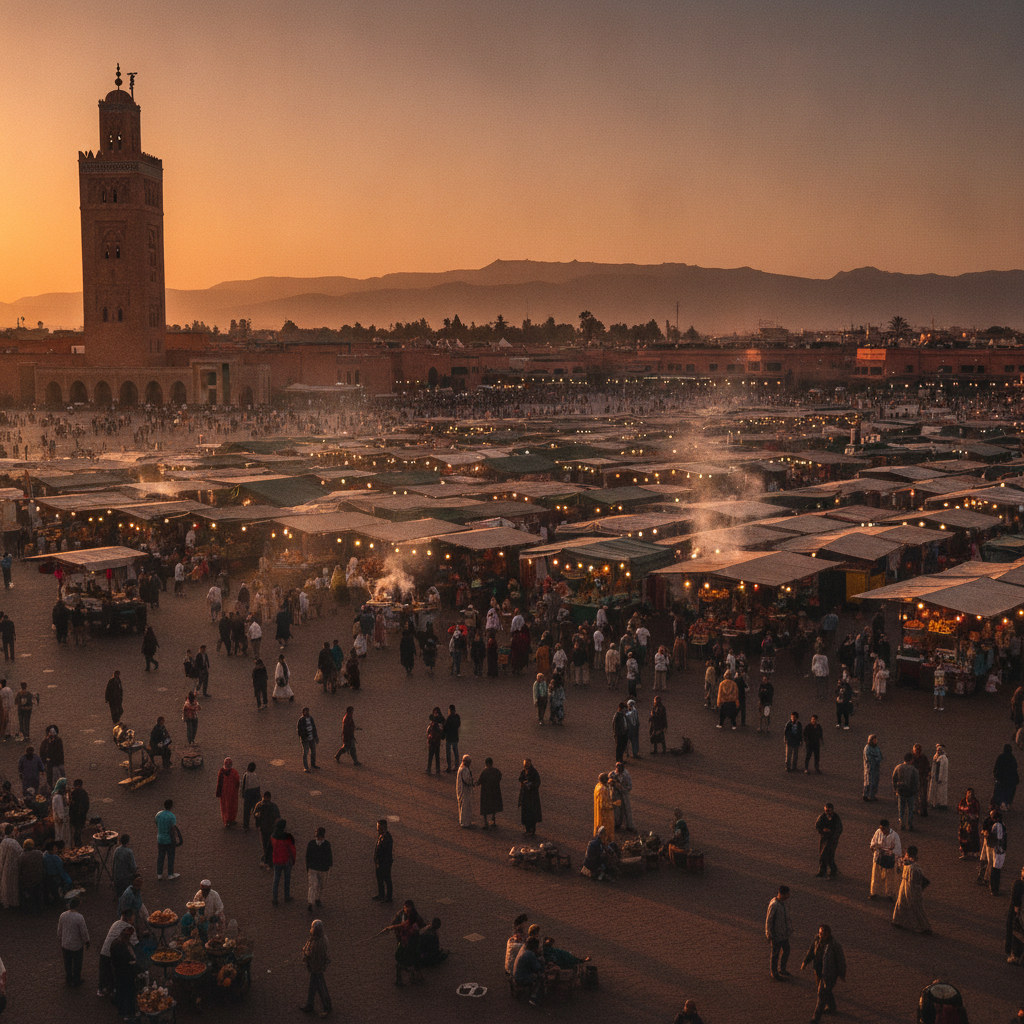
Djemaa el-Fna, the Medina & the Souks — Marrakech's Living UNESCO Heritage
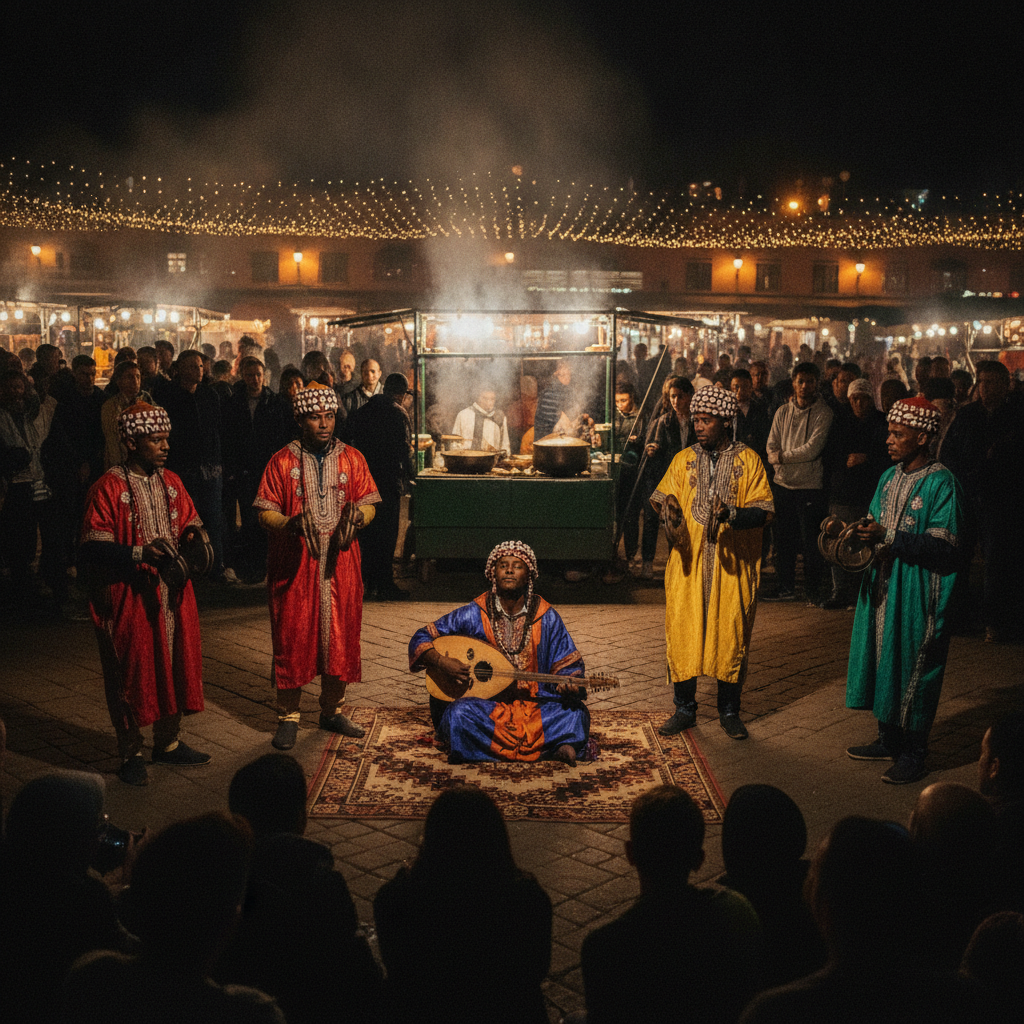
Gnawa Music, Sufi Culture & the Spiritual Heart of Marrakech
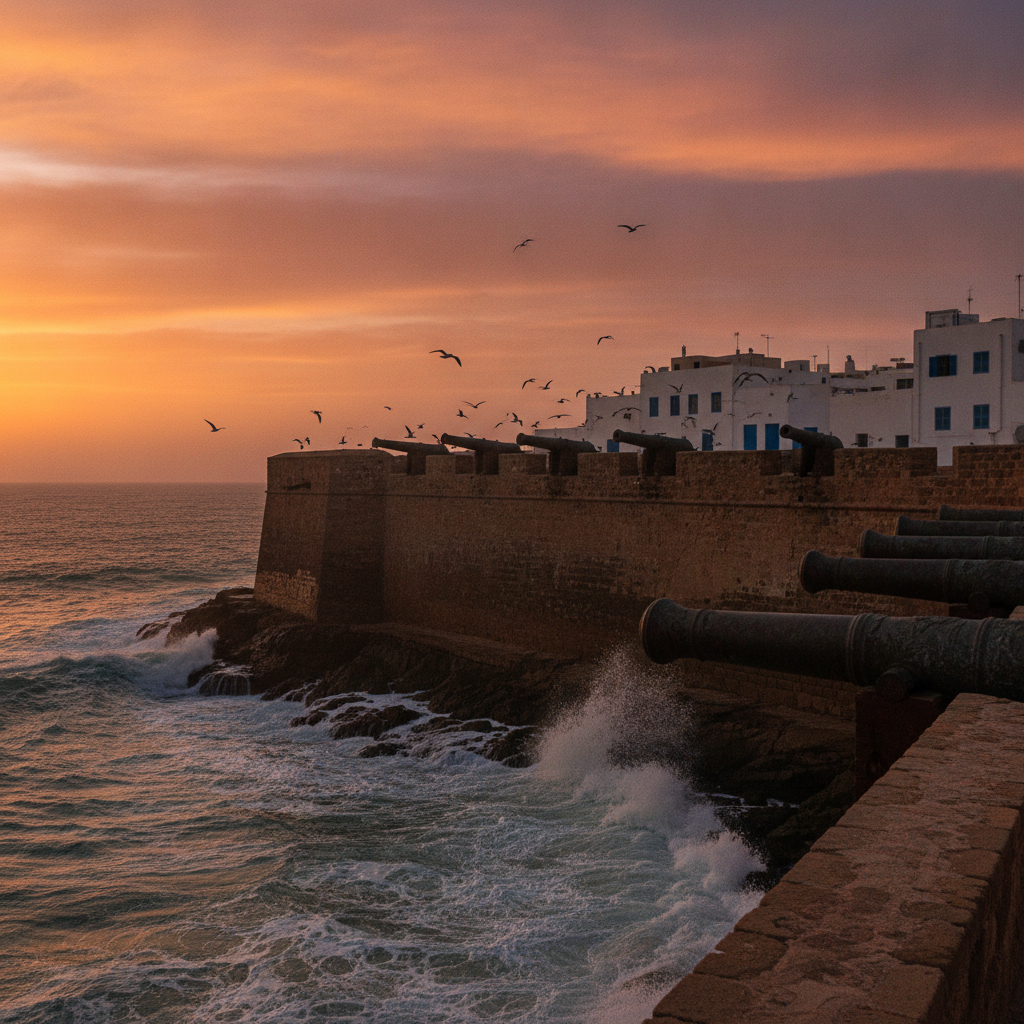
Essaouira — Marrakech's Atlantic Escape
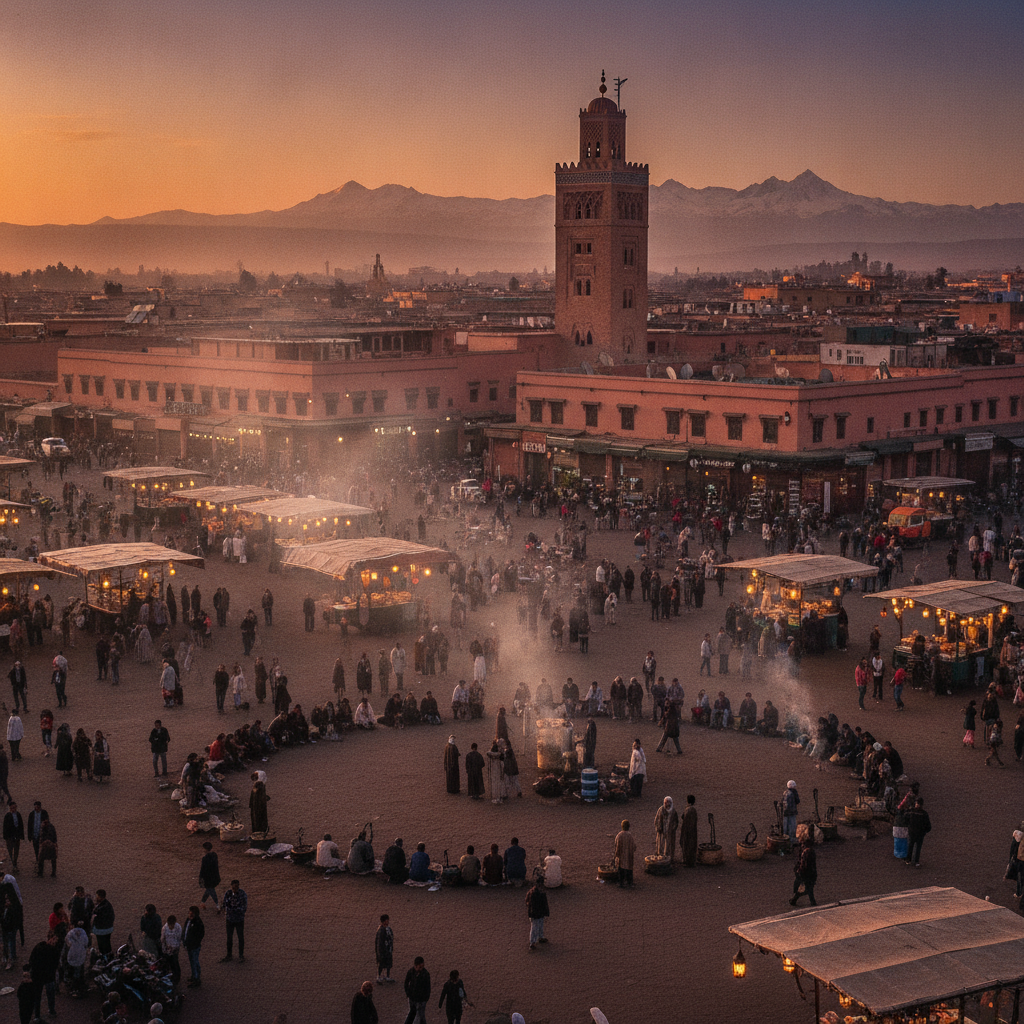
Marrakech Essential: Djemaa el-Fna the Living Square, the Medina Souks, the Koutoubia Mosque, the Bahia Palace, the Saadian Tombs, and the Pink City Character
Moroccan Crafts — Leather Tanneries, Pottery & Artisans
