Malacca Bukit China & Chinese Heritage Hill Walk
Climb Bukit China — the largest Chinese cemetery outside China is also one of the most historically significant hills in Southeast Asia, where the Chinese diplomatic presence in Malacca during the sultanate period has left a heritage of wells, graves, and history stretching back to the early 15th century.
- 1
Bukit China Hill Summit
Bukit China (Chinese Hill) is the largest Chinese cemetery outside mainland China — the 25-hectare hill with over 12,500 graves spanning 500 years of Chinese burial from the Malacca Sultanate period to the present is the most significant single site of Chinese heritage in Southeast Asia. The graves on the hill document the entire history of Chinese settlement in Malacca, from the earliest Ming dynasty-era merchants who established the Chinese community during the sultanate period to the elaborate Victorian-era Peranakan family grave monuments and the modern Chinese Malaysian burials that continue on the hill today.
- 2
Sam Poh Kong Temple
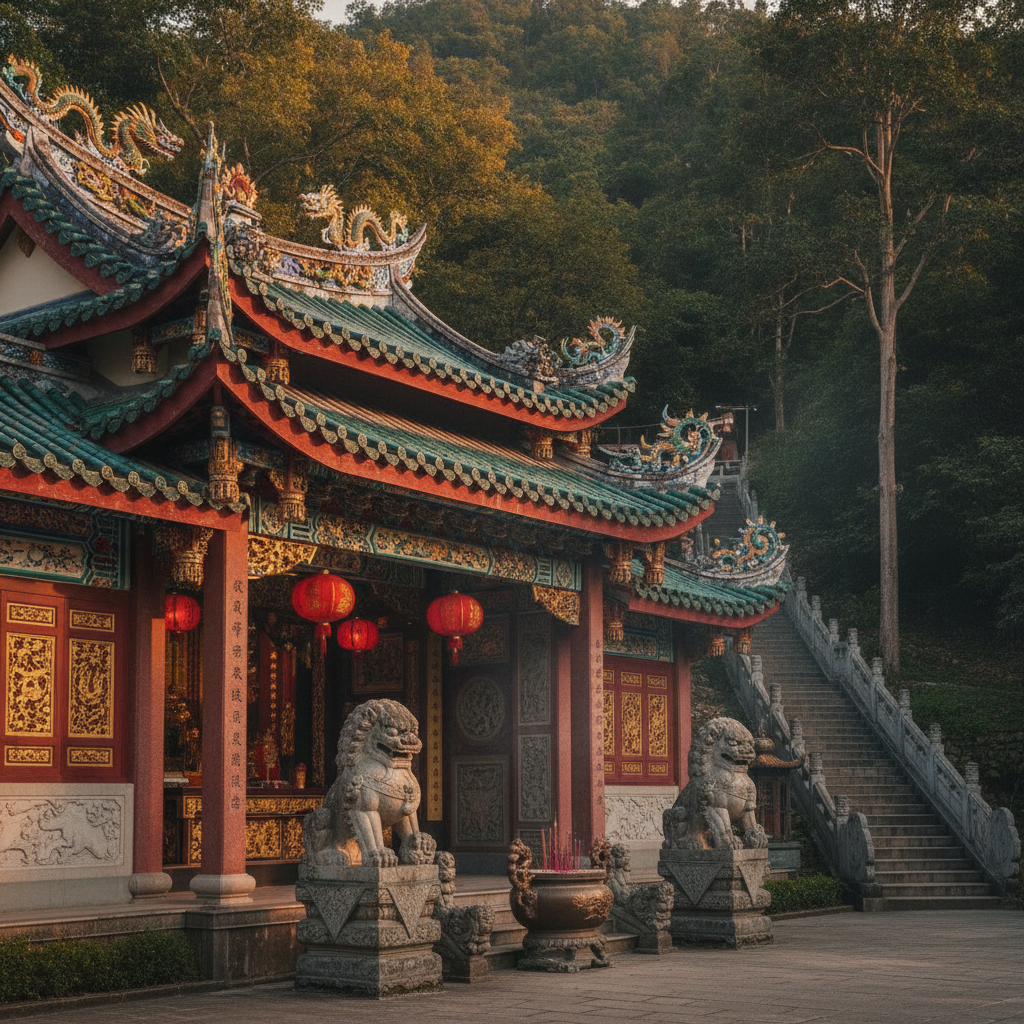
Sam Poh Kong Temple at the base of Bukit China is dedicated to Admiral Zheng He (Sam Poh = the Three Treasure Eunuch, Zheng He's honorific) — the temple marks the historical connection between the Ming dynasty's great seafaring expeditions (1405-1433) and the establishment of the Chinese diplomatic presence in Malacca. Zheng He visited Malacca multiple times during his voyages, and the Malacca Sultanate's alliance with the Ming dynasty (cemented by the marriage of the Chinese emperor's princess Hang Li Po to Sultan Mansur Shah around 1459) brought the Chinese diplomatic community to Bukit China as their residential area.
- 3
Hang Li Po's Well
The Perigi Hang Li Po (Well of Hang Li Po) at the foot of Bukit China is one of Malacca's most visited historical sites — the well traditionally associated with the Chinese princess Hang Li Po, said to have been sent from the Ming imperial court to marry Sultan Mansur Shah of Malacca in the 15th century, supplied fresh water to the Chinese diplomatic community on Bukit China and later to the Portuguese garrison. The well's water was considered so pure that it was used to fill the water casks of ships calling at Malacca port, and Portuguese soldiers were said to have fought battles to defend the well during sieges.
- 4
Peranakan Grave Monuments
The most elaborate grave monuments on Bukit China are the 19th-century Peranakan family graves that demonstrate the material culture of wealthy Baba-Nyonya families at the height of their prosperity — the large horseshoe-shaped graves (the Chinese shape representing the womb of the earth that receives the body and then nurtures it) with their carved marble panels, elaborate ceramic tile decoration, and inscriptions documenting the family connections and achievements of the deceased combine Chinese grave architecture with Malay and European decorative elements in a specifically Peranakan mortuary tradition. The grave monuments document the family structures, social hierarchies, and material aspirations of the Peranakan community in a way that complements the domestic objects in the heritage houses.
- 5
Bukit China Defence History
Bukit China has been a target for development projects three times in Malacca's modern history — proposals in the 1980s and 1990s to develop the hill for commercial purposes were each defeated by community protests led by the Malacca Chinese community, with the most significant battle occurring in 1984 when the state government's proposal to use 80% of the hill for a golf course and hotel development was defeated after intense lobbying. The preservation of Bukit China as an intact cultural heritage site against successive development pressures makes it one of the most significant victories for heritage conservation in Malaysian civil society.
- 6
Chinese Diaspora Malacca Heritage
Malacca is the oldest continuous site of overseas Chinese settlement in Southeast Asia — the Chinese community established in Malacca during the 15th-century sultanate period created the diaspora cultural model (maintaining Chinese cultural practices while adapting to local conditions and intermarrying with local populations) that was replicated by Chinese settlers throughout the peninsula, the archipelago, and later Australia and the Americas. The Peranakan cultural synthesis that developed in Malacca (and subsequently in Penang and Singapore) represents the first and most complete example of the Chinese diaspora culture that now encompasses over 50 million people worldwide.
Walk this route with audio
Stories play automatically as you reach each stop — no tapping needed.