Lyon — Vieux-Lyon, the Fourvière Hill & Roman Ruins, the Presqu'île, Bouchons, the Silk Workers' Croix-Rousse
Lyon is France's gastronomic capital and second-ranking Renaissance city — the largest Renaissance district in France, the Roman amphitheatres on Fourvière, the unique traboule passageways, the bouchon restaurant tradition of the mères lyonnaises, and the Canut silk workers' Croix-Rousse hill.
- 1
Vieux-Lyon — the Largest Renaissance District in France
Vieux-Lyon (the historic old town of Lyon — the largest and the most completely preserved Renaissance urban district in France, UNESCO World Heritage since 1998, the most architecturally coherent single Renaissance district in any French city): the Saint-Jean quarter (the Saint-Jean neighbourhood — the most completely authentic Renaissance streetscape in Vieux-Lyon, the rue Saint-Jean the most architecturally Renaissance-facade-continuous single street in the Vieux-Lyon quartier, the galerie façades the most Renaissance-commercial single street-level arcade in France, the most photogenically Italianate single street in any French city), the traboules (the traboules of Vieux-Lyon — the most specifically Lyonnais single architectural feature: the covered passageways that cut through the Renaissance apartment blocks from the street to the courtyard and through to the next street, used historically by the silk workers to transport the silk bales dry-weather-protected through the city, the most distinctive single urban passageway system in any French city, the Maison des Canuts entry at 31 rue du Bœuf the most visited single traboule, 40 traboules open to the public in Vieux-Lyon free), the Saint-Jean Cathedral (the Cathédrale Saint-Jean-Baptiste de Lyon at Place Saint-Jean — the Romanesque-Gothic cathedral the most architecturally historically layered single cathedral in Lyon, the astronomical clock (the Horloge Astronomique) the most technically complex single medieval mechanical timepiece in any French cathedral, the clock performing animated figure shows at 12 noon, 2pm, 3pm, and 4pm the most visited single mechanical clock performance in the Rhône-Alpes, free entry to the cathedral), the Lugdunum (the Musée Lugdunum (Musée Gallo-Romain) at 17 rue Cléberg — the most comprehensively Roman Lyon artefact-collecting single museum in France, the Roman Lyon collection including the Claudian Tables (the bronze inscription of Emperor Claudius's 48 CE speech to the Senate — the most historically significant single Roman imperial epigraphic document in any French museum), free Sunday mornings), the Place du Change (the Place du Change in Vieux-Lyon — the most historically money-changing-trade-associated single square in Vieux-Lyon, the Loge du Change (1749, designed by Soufflot) the most elegantly Baroque single commercial building in the Vieux-Lyon historic centre) and the Fourvière funicular (the Fourvière funicular from the Place Saint-Jean to the Fourvière Hill — the most efficient single mechanical access to the most panoramic single city viewpoint in Lyon, the 4-minute ascent the most dramatically elevation-changing single funicular ride in any French city centre, €3.20 return, included in the Lyon City Card, the most economically logical single vertical transport inclusion in any French city visitor card).
- 2
The Fourvière Hill — the Roman Amphitheatres and the Basilica
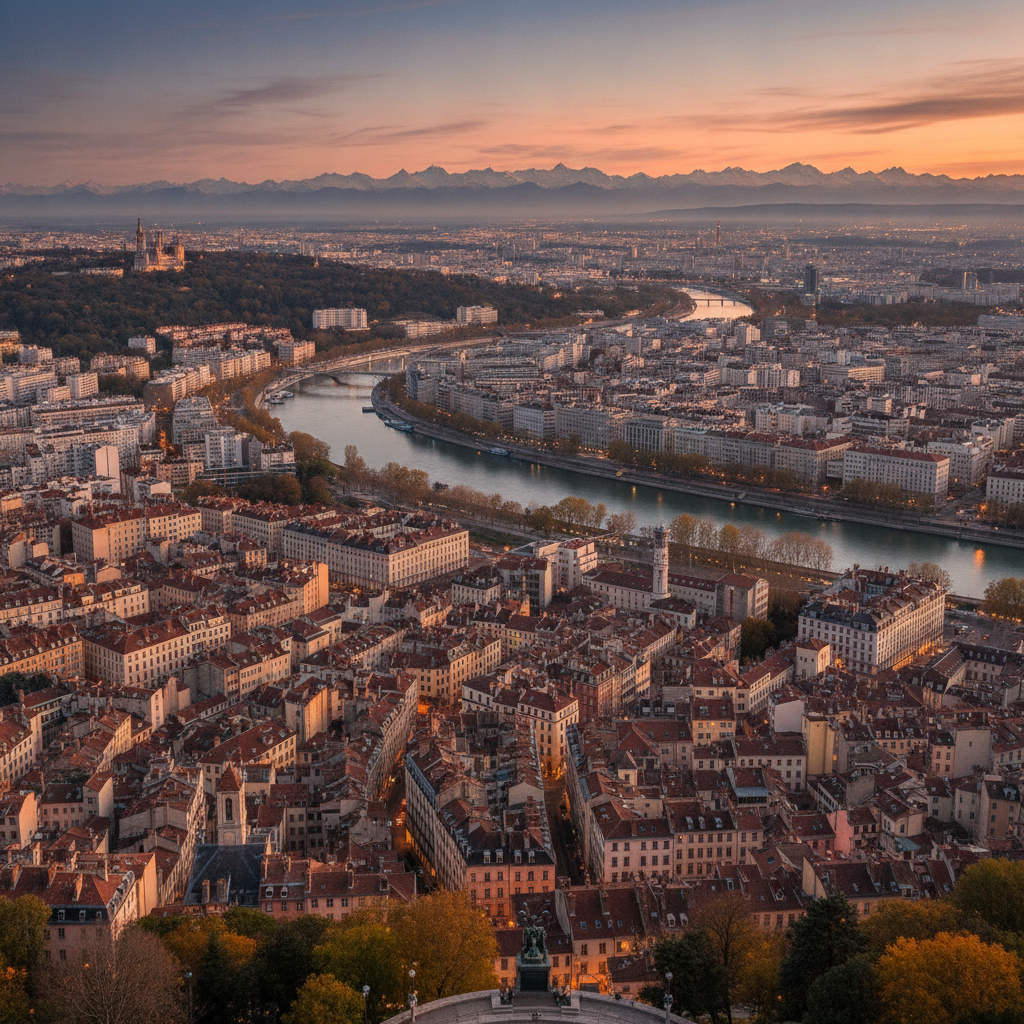
Fourvière Hill (the Fourvière hill above Vieux-Lyon — the most historically Roman-settlement-significant single hill in the Lyon urban landscape, the original Roman Lugdunum (Lyon) founded here in 43 BCE by Plancus on the orders of Julius Caesar, the most archaeologically Roman single hill in any French city): the Basilica of Notre-Dame de Fourvière (the Basilica of Notre-Dame de Fourvière at 8 Place de Fourvière — the most recognisable single silhouette in the Lyon skyline, the 1872-1884 neo-Byzantine basilica the most ornately inlaid-mosaic single church interior in France (1 hectare of mosaic and 5,500 square metres of paintings and frescoes), the most architecturally eclectic single church building in any French city, the panoramic view from the basilica esplanade the most comprehensive single city panorama in Lyon — the rooftops of Vieux-Lyon below, the Saône and the Rhône rivers, the Presqu'île, the Croix-Rousse hill, and on a clear day the Mont Blanc 200km east the most geographically extensive single view from any French city church terrace, free entry), the Roman Theatre (the Théâtre antique de Fourvière — the most completely preserved single Roman theatre in France, the 11,000-seat theatre (the largest Roman theatre in Gaul) built in 15 BCE, the most historically ancient single performing arts venue in Lyon, the summer performances in the original Roman stone theatre (Les Nuits de Fourvière festival from June to August) the most atmospherically Roman-heritage-performing-arts single festival in France), the Odeon (the Odéon de Lugdunum adjacent to the Roman theatre — the smaller Roman concert hall of 3,000 seats the most completely mosaic-floor-preserving single Roman performance space in France, the polychrome marble mosaic floor the most elaborately decorative single Roman floor in any French archaeological site), the Lugdunum museum (the Musée Lugdunum (Musée Gallo-Romain) at 17 rue Cléberg built INTO the Fourvière hillside — the most architecturally innovative single archaeological museum in France, the museum integrated into the hillside with the Roman theatre visible from the museum terrace, the Claudian Tables the most internationally historically significant single Roman bronze inscription in any French museum, €8 adults free Sundays) and the esplanade view (the esplanade du Fourvière — the most visited single viewpoint in Lyon, the panoramic view from the esplanade the most geographically comprehensive single Lyon panorama including the Presqu'île, the rivers, the Croix-Rousse, the Alps on the horizon, and the basilica facade immediately above, the most photographed single Lyon panoramic composition, free access 24 hours).
- 3
The Presqu'île — Lyon's Urban Heart between the Rivers
Presqu'île (the Presqu'île — the peninsula between the Saône and the Rhône rivers in central Lyon, the most architecturally Haussmann-and-Second-Empire-urbanistically-planned single French city centre outside Paris, the UNESCO World Heritage included section of the Lyon historic centre): the Place Bellecour (the Place Bellecour — the most impressively large single public square in any French city after the Place de la Concorde in Paris at 62,000 square metres, the equestrian statue of Louis XIV the most centrally positioned single royal equestrian monument in any French city square, the most photogenically large single open space in the Lyon historic centre, the most efficiently used single Lyon tourist orientation point with the Fourvière basilica visible to the west and the Croix-Rousse hill to the north), the Place des Terreaux (the Place des Terreaux — the most culturally animated single square in Lyon, the fountain by Frédéric Bartholdi (1889 — the same sculptor as the Statue of Liberty) the most internationally Bartholdi-sculptor-associated single French civic fountain outside his Colmar hometown, the Hôtel de Ville (Lyon City Hall, the most magnificently Baroque single civic building in any French Rhône-Alpes city) and the Musée des Beaux-Arts (the most comprehensively French painting collection of any French city museum outside Paris) framing the square), the Musée des Beaux-Arts (the Musée des Beaux-Arts de Lyon at 20 Place des Terreaux — the most comprehensively French painting-and-sculpture-collecting single museum outside Paris, the museum the most culturally rich single art museum in any French city outside the Musée d'Orsay and the Louvre, the Egyptian antiquities the most specifically non-Paris single ancient Egyptian collection in France, €12 adults free first Sunday of the month), the rue de la République (the rue de la République — the most architecturally Haussmannian single pedestrian street in Lyon, the continuous Second Empire facades the most formally uniformly composed single pedestrian shopping street in France outside Paris's rue de Rivoli, the most efficiently pedestrian-zoned single central commercial street in any French city) and the Opéra de Lyon (the Opéra National de Lyon at Place de la Comédie 1 — the most architecturally innovative single opera house in France (the 1993 renovation by Jean Nouvel inserting a barrel-vaulted glass semicircle atop the original 1831 neo-Classical facade), the most architecturally ambitious single performing arts building in any French city outside Paris, the Lyon opera programme the most adventurously contemporary-opera-repertoire-programming single French regional opera).
- 4
The Bouchons — Lyon's Unique Restaurant Tradition
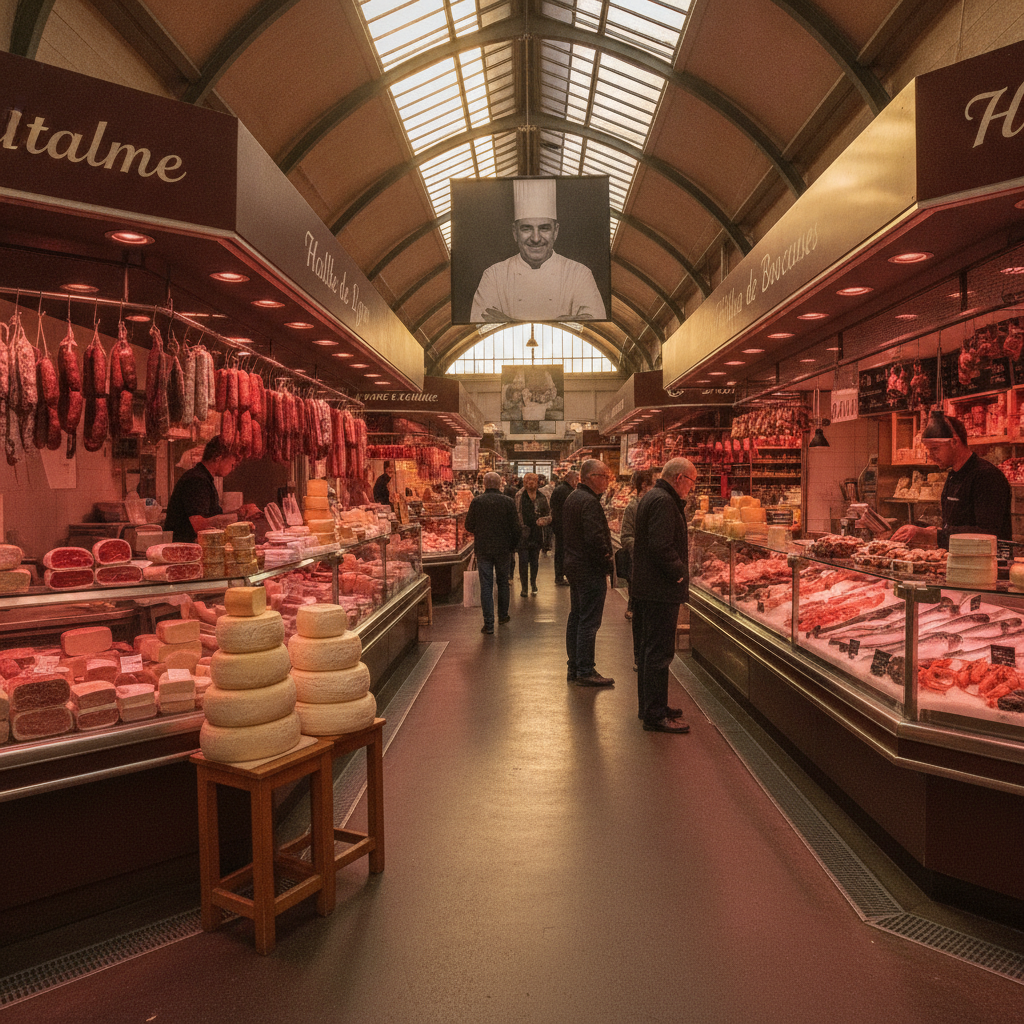
Lyon bouchons (the bouchon lyonnais — the most specifically Lyonnais single restaurant format in any French city, the bouchon the most regionally cuisine-defining single restaurant type in France after the Parisian brasserie): the bouchon tradition (the bouchon lyonnais — the traditional Lyon workers' restaurant (named for the wisp of straw ('bouche') used to rub down the horses in the original post-stage taverns), the most specifically working-class-origin single French restaurant tradition, the most characteristically rustic single French restaurant interior: the checked tablecloths, the wooden bench seating, the chalkboard menu, and the carafe of Beaujolais or Côtes du Rhône the 4 most typical single bouchon atmospheric elements), the cuisine (the bouchon cuisine — the most offal-and-pork-centric single French regional cuisine: the tablier de sapeur (breaded and fried tripe — the most confrontingly named single dish in the bouchon repertoire (literally 'fireman's apron')), the quenelle de brochet (the fluffy pike fish dumpling with the Nantua crayfish sauce — the most specifically Lyonnais single elegant dish), the saucisson de Lyon (the coarse-grained boiled pork sausage the most specifically Lyonnais single charcuterie), the andouillette (the coarse-grain offal sausage the most aromatic single bouchon dish), the salade lyonnaise (the frisée lettuce with the lardons and the poached egg the most universally bouchon-ordered single starter)), the mères lyonnaises (the mères lyonnaises — the most important single tradition in the Lyon culinary heritage: the 'Lyon Mothers', the female cooks who defined the Lyon cuisine from the early 20th century: Mère Brazier (the first woman to earn 3 Michelin stars, 1933 — the most historically significant single female chef award in the history of Michelin), the most specifically female-chef-heritage single French culinary tradition), the recommended bouchons (the recommended true bouchons: the Chez Georges at 8 rue du Garet the most atmospherically characteristic single bouchon in Lyon, the Café du Jura at 25 rue Tupin the most consistently quality-food single traditional bouchon, the Chabert et Fils at 11 rue des Marronniers the most specifically tourist-accessible single certified bouchon in Vieux-Lyon, the official Authentique Bouchon Lyonnais certification programme the most specifically quality-verified single restaurant certification in any French city) and the Paul Bocuse legacy (the Paul Bocuse (1926-2018) Lyon heritage — the most internationally famous single French chef, the most specifically Lyon-chef-identity-associated single culinary figure in the history of French gastronomy, the L'Auberge du Pont de Collonges at 40 route de la Plage the most consistently 3-Michelin-starred single French restaurant (holding 3 stars from 1965 to 2020 — the most tenacious single Michelin 3-star tenure in any French restaurant), the Bocuse Halles de Lyon Paul Bocuse market at 102 cours Lafayette the most comprehensively Lyonnais-food-product-stocked single covered market in France).
- 5
The Croix-Rousse — the Silk Workers' Hill
Croix-Rousse (the Croix-Rousse hill north of the Presqu'île — the most historically silk-industry-associated single neighbourhood in Lyon, the 'hill that works' (la colline qui travaille) in contrast to the 'hill that prays' (Fourvière), the most completely traboule-networked single Lyon neighbourhood): the silk history (the Lyon silk industry (la soierie lyonnaise) — the most internationally prestigious single French luxury textile industry from the 16th century, Lyon the most important single European silk weaving centre outside Italy from the 16th to the 19th century, the Jacquard loom invented in Lyon by Joseph Marie Jacquard in 1804 the most mechanically revolutionary single textile invention in French industrial history, the croix-roussiens (Canuts) the most politically organised single craft textile worker community in 19th-century France — the Canut revolts of 1831 and 1834 the most historically significant single worker uprising in pre-industrial French history), the traboules (the Croix-Rousse traboules — the most densely traboule-networked single Lyon neighbourhood, the traboules used by the Canut silk weavers to carry the silk fabrics protected from the rain, the most specifically functional single reason for the traboule construction (in Vieux-Lyon the traboules served as shortcuts, in Croix-Rousse they served as covered silk transport routes), the Résistance use (the traboules used by the Lyon Resistance to evade the Gestapo during the Occupation — the most dramatically historically consequential single use of an architectural feature in any French city), the Cour des Voraces (the Cour des Voraces at 9 place Colbert — the most dramatically multi-storey single traboule courtyard in Lyon, the 6-storey staircase the most vertically imposing single traboule interior, the most visited single Croix-Rousse traboule), the Boulevard de la Croix-Rousse market (the Boulevard de la Croix-Rousse outdoor market on Tuesday, Thursday, and Saturday — the most atmospherically local single outdoor market in Lyon, the most authentically non-tourist-oriented single Lyon food market, the Lyonnais charcuterie, the Rhône Valley cheeses, and the seasonal fruit the most specifically Lyonnais single market produce combination) and the Maison des Canuts (the Maison des Canuts at 10-12 rue d'Ivry — the most comprehensively silk-weaving-history-narrating single museum in Lyon, the working Jacquard looms the most directly historically instructive single industrial heritage demonstration in any Lyon museum, €7 adults, the guided tour including the weaving demonstration the most specifically Canut-heritage-educational single Lyon museum visit).
- 6
Lyon Practical — the City Card, Festivals and Getting There
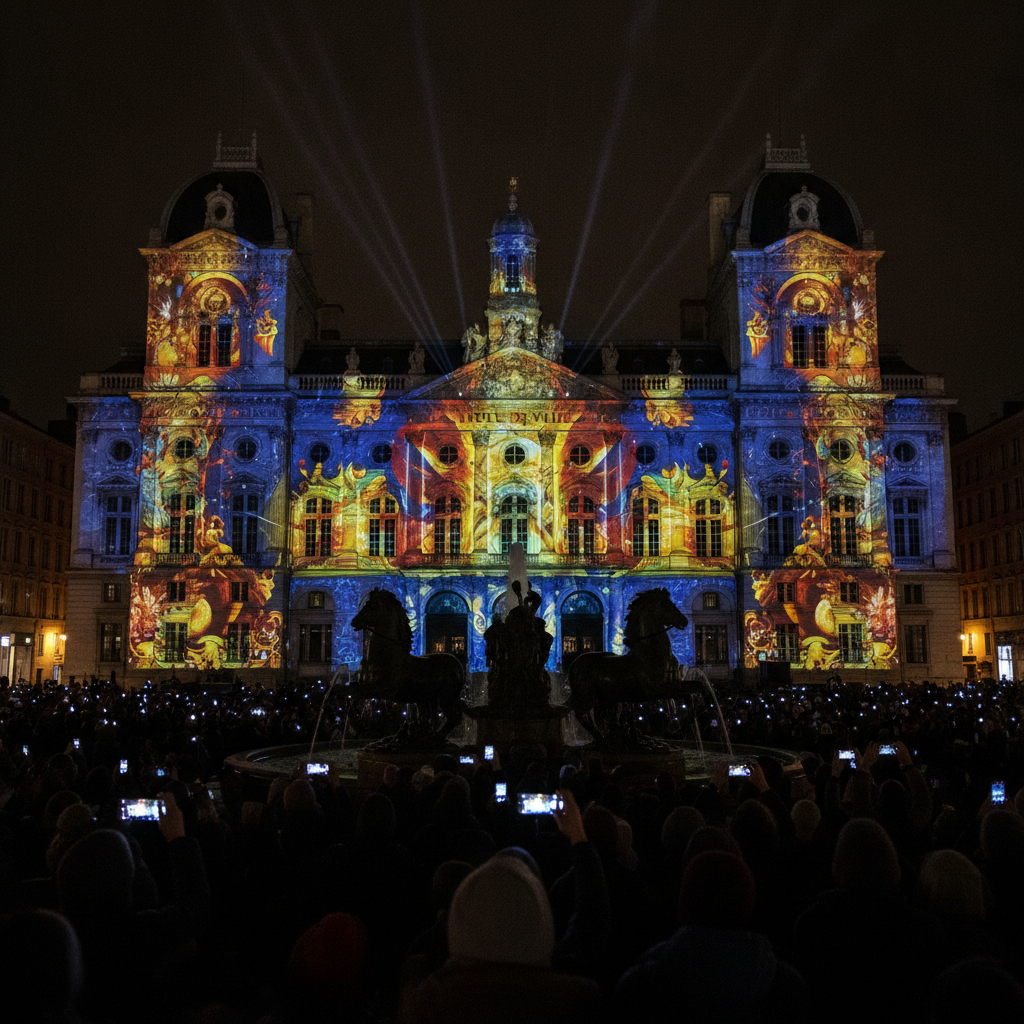
Lyon practical guide (the complete visitor logistics for Lyon — the most efficiently navigable single French city outside Paris, the most festivals-per-year single French city after Avignon): the transport (the Lyon transport: the Paris Gare de Lyon to Lyon Part-Dieu by TGV in 2 hours the most efficient single Paris-to-major-French-city rail connection, the Lyon Saint-Exupéry Airport by the Rhônexpress tram in 30 minutes at €16 the most direct single airport-to-city-centre tram connection in any French Rhône-Alpes airport; the Lyon métro lines A, B, C, D the most compact and the most efficiently networked single Lyon public transport, the ticket €2 single or the 24-hour Liberté pass at €7 the most cost-efficient single Lyon transport purchase, the funiculars to Fourvière and Saint-Just included in the standard Lyon métro ticket), the Lyon City Card (the Lyon City Card at €30 for 24 hours, €40 for 48 hours, €50 for 72 hours — the most comprehensively attraction-including single French regional city visitor card: the Musée des Beaux-Arts, the Lugdunum, the Musée des Confluences, the Musée de l'Imprimerie, the funiculars, and unlimited métro and bus transport, the most cost-efficient single pass for the visitor intending to visit 3+ attractions), the Fête des Lumières (the Fête des Lumières (Festival of Lights) in Lyon on December 8 and the surrounding 3-4 days — the most visited single non-religious French annual event with 3 million visitors, the most internationally spectacular single French illumination festival, the light projections on the Lyon buildings the most comprehensive single city building-mapped projection event in the world (300+ light installations across the city), the most atmospherically illumination-festival-transformed single French urban landscape, free to attend all events), the Nuits de Fourvière (the Les Nuits de Fourvière (Nights of Fourvière) music and theatre festival from June to August — the most atmospherically positioned single French summer festival (performances in the Roman theatre and the Odéon at the Fourvière hilltop), the most historically Roman-amphitheatre-performing-arts-utilising single French festival, the most internationally artist-booked single Lyon summer festival), the Lyon Jazz Festival (the Jazz à Vienne (Jazz in Vienne) festival 30km south — the most internationally jazz-artist-booked single French regional jazz festival, accessible from Lyon by train in 20 minutes, the Roman theatre at Vienne the most historically atmospherically positioned single jazz festival stage in Europe) and the accommodation (the Lyon accommodation: the Villa Florentine at 25-27 Montée Saint-Barthélemy the most panoramically Fourvière-positioned single Lyon luxury hotel at €250-350 per night; the Hôtel Carlton Lyon at 4 rue Jussieu the most palatially historic single 5-star hotel in the Presqu'île; the Cour des Loges at 6 rue du Bœuf in Vieux-Lyon the most atmospherically traboule-courtyard-positioned single Lyon boutique hotel at €180-250 per night).
Walk this route with audio
Stories play automatically as you reach each stop — no tapping needed.
More in lyon
Lyon — the Halles Paul Bocuse, Confluence Architecture, Silk Museum, Part-Dieu, Jazz à Vienne & Beaujolais Wine
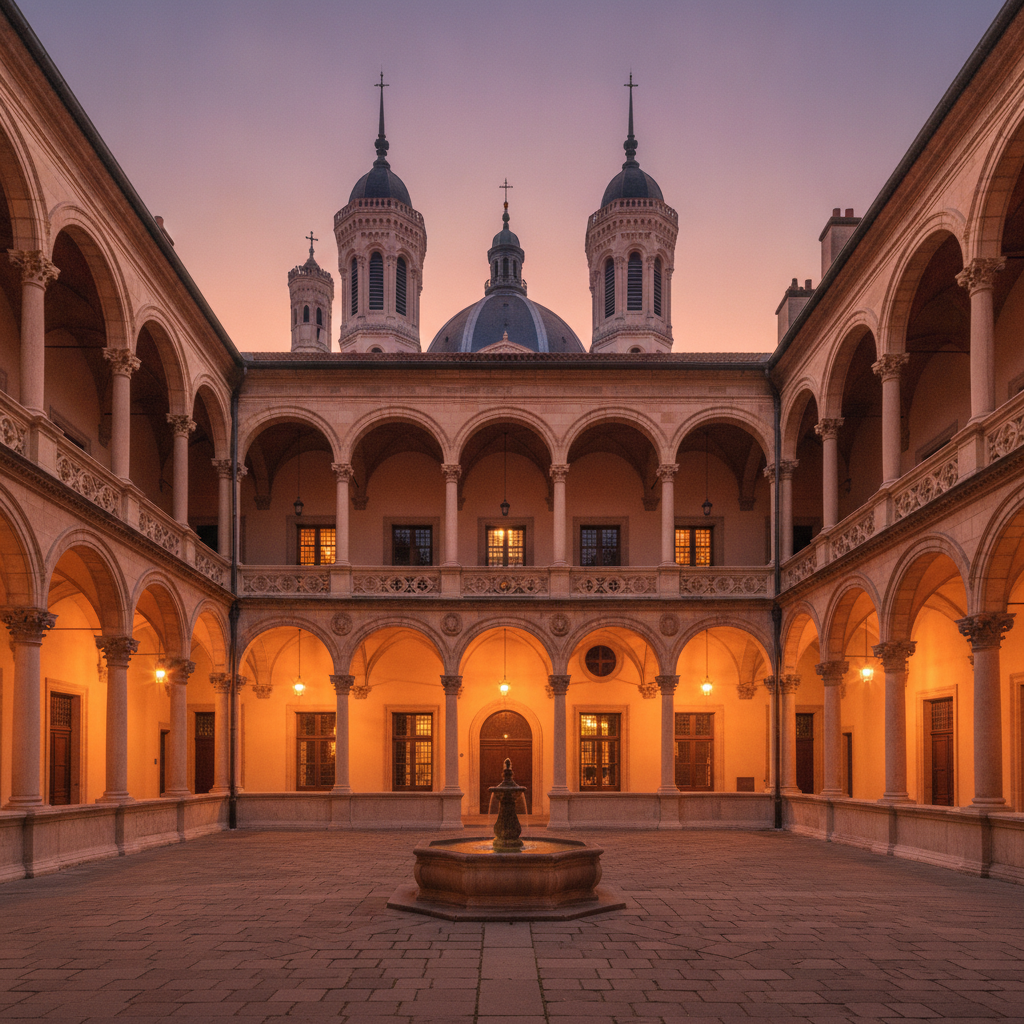
Lyon — Christmas Season, the Renaissance Silk Merchants' Mansions, Family Visits, the Saône Quarter, Culinary Schools & the Roman Lugdunum
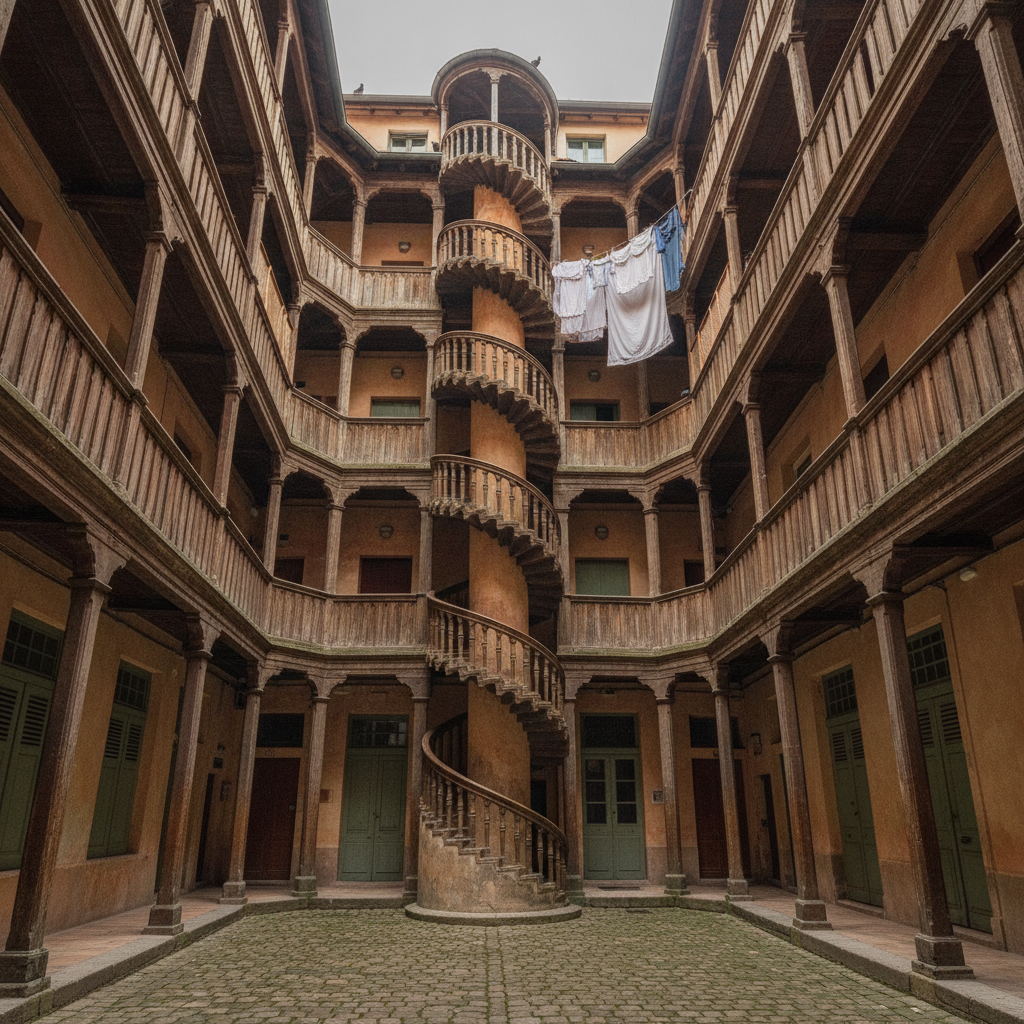
Lyon — the Parc de la Tête d'Or, Traboules in Depth, Guignol Puppets, Starred Restaurants, Printing Heritage & Neighbourhoods
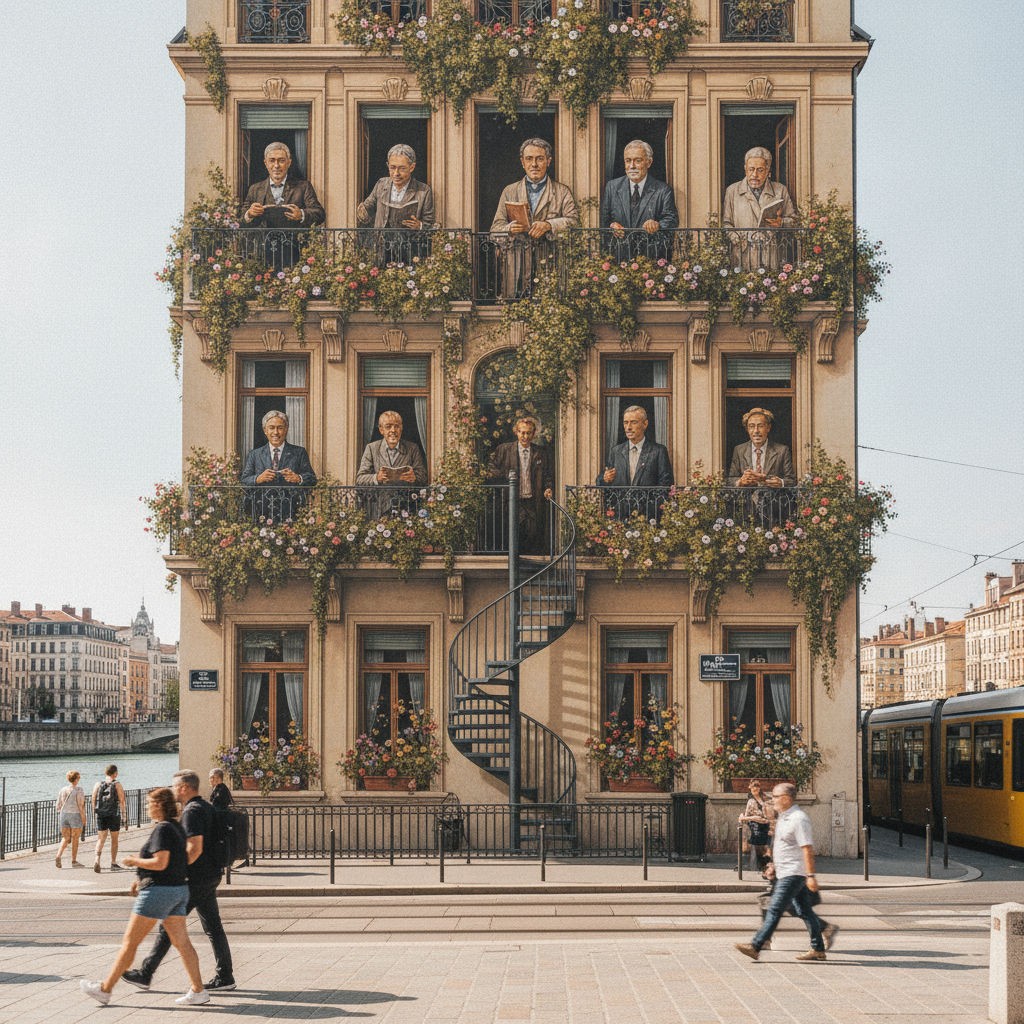
Lyon — the Lumière Brothers' Cinema, the Musée des Beaux-Arts, the Resistance Heritage, Street Art Murals & Day Trips