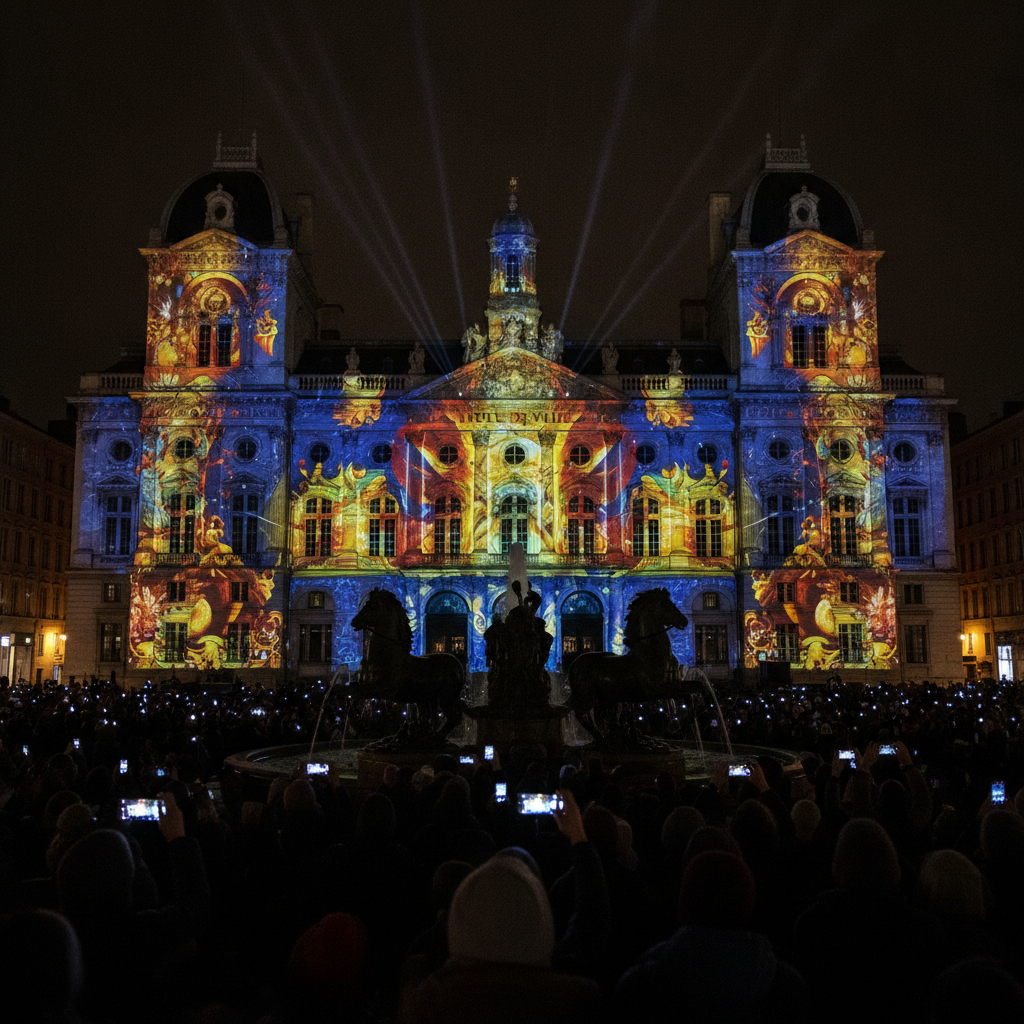
Lyon — the Parc de la Tête d'Or, Traboules in Depth, Guignol Puppets, Starred Restaurants, Printing Heritage & Neighbourhoods
Lyon's Parc de la Tête d'Or has France's largest municipal rose garden; the traboule passageways form a secret city within the city; Guignol the silk-worker puppet is France's most famous regional theatrical creation; and the Paul Bocuse legacy defines the world's most celebrated gastronomic city.
- 1
The Parc de la Tête d'Or and the 6th Arrondissement
Parc de la Tête d'Or (the Parc de la Tête d'Or at the northern end of the Presqu'île and the 6th arrondissement — the most comprehensively English-landscape-park-designed single French city park outside Paris at 117 hectares, the most visited single public park in Lyon): the park (the Parc de la Tête d'Or — the 117-hectare English landscape park created 1857, the most extensively planted single municipal park in Lyon, the lake (the Grand Lac at the park centre — the most romantic single rowing lake in any French city park, the pedalo and rowing boat rental at €4-7 per 30 minutes the most traditional single French city park water leisure), the rose gardens (the Roseraie — the most extensively planted single municipal rose collection in France at 30,000 rose bushes, the Fête des Roses in May-June the most specifically rose-celebrating single Lyon park event), the zoo (the zoo at the Parc de la Tête d'Or — the most visited single free zoo in any French city, the lion enclosure the most specifically Tête d'Or-name-referenced single zoo habitat (the park named for a legendary golden head of Christ supposedly buried there), the giraffe house the most photographically tall single zoo structure in Lyon), the Tonkin lake (the Lac du Tonkin in the north park section — the most tranquilly positioned single Lyon parkside neighbourhood, the flats around the Lac du Tonkin the most prestigious single residential address in the 6th arrondissement), the Palais des Arts (the Palais des Arts at 20 Place des Terreaux at the south end of the 6th arrondissement — the most architecturally historically associated single building with the Lyon fine arts tradition, the 19th-century Palais the original location of the Musée des Beaux-Arts before the museum moved to its current position) and the Cité Internationale (the Cité Internationale de Lyon at 70 quai Charles de Gaulle — the most comprehensively conference-and-culture-complex-designing single Renzo Piano French building project in Lyon, the convention centre, the casino, the Interpol headquarters, and the Musée d'Art Contemporain (MAC) the most institutionally eclectic single French riverside complex, the MAC Lyon (Musée d'Art Contemporain) the most comprehensively temporary-contemporary-art-exhibition-programme single Lyon museum, €8 adults).
- 2
The Lyon Traboules in Detail — the Hidden Passage System
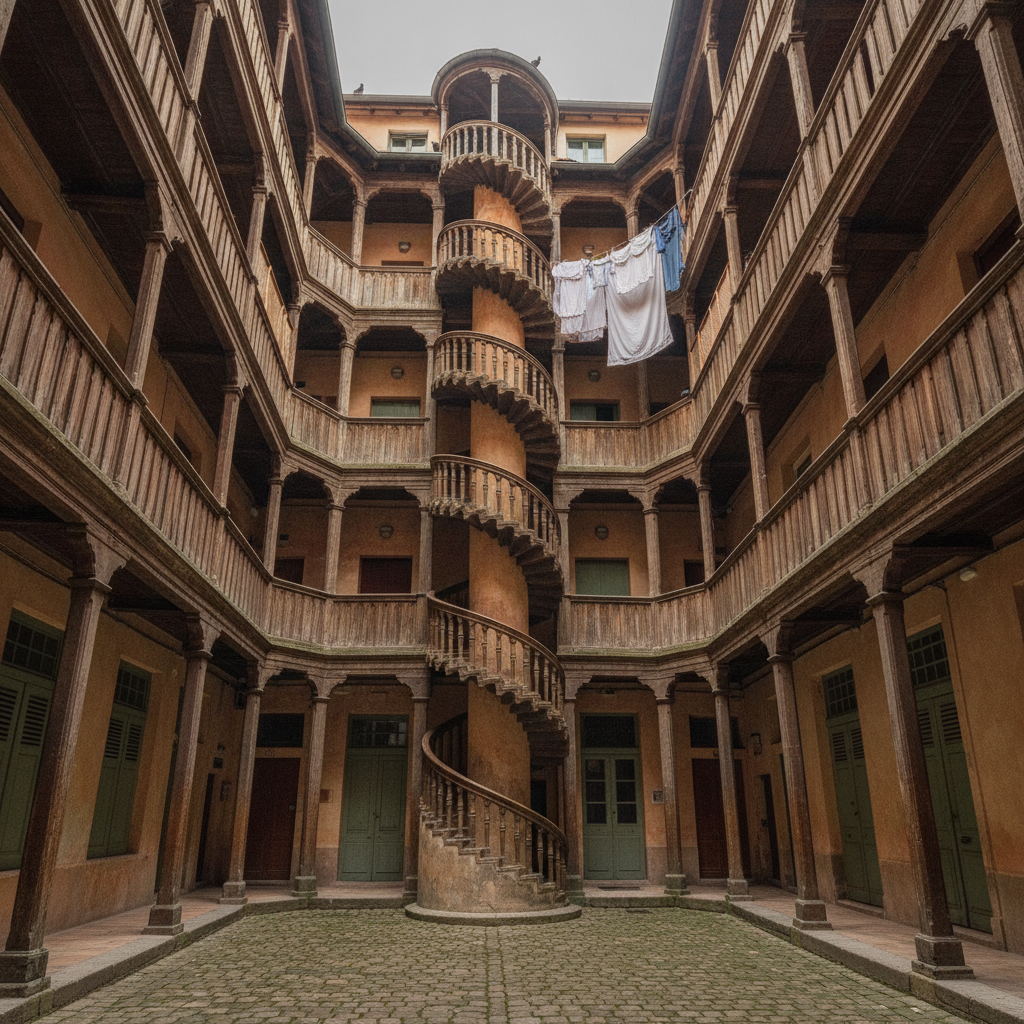
Lyon traboules in depth (the traboule system of Lyon — the most architecturally distinctive single feature of the Lyon urban landscape, unique to Lyon in the extent and the density of the covered passageway network): the traboule definition (the traboule — from the Latin 'transambulare' (to walk across), the covered passageway that cuts through a Lyon apartment block from the street entrance through the courtyard to the courtyard and through to the next street or courtyard, the most specifically Lyonnais single architectural vocabulary term in any French city, the traboule allowing the Renaissance silk workers to carry the silk fabrics without exposure to the rain the most functionally-originally-motivated single architectural form in the Lyon historic building stock), the Vieux-Lyon traboules (the Vieux-Lyon traboules — the 40 public traboules in Vieux-Lyon the most completely tourist-accessible single traboule network in Lyon, the Maison du Crible at 16 rue du Bœuf (a Renaissance mansion with a traboule leading to the Place du Gouvernement) the most architecturally spectacular single Vieux-Lyon traboule courtyard, the traboule at 27 rue Saint-Jean (connecting to 6 rue des Trois-Maries) the most frequently visited single Vieux-Lyon traboule passageway), the Croix-Rousse traboules (the Croix-Rousse traboules — the most functionally-originally-motivated single traboule network, the silk carrier traboules the most extensive single traboule system in Lyon with 315 passageways on the Croix-Rousse slopes, the Cour des Voraces at 9 place Colbert the most spectacularly multi-storey single traboule courtyard (the 6-storey staircase tower the most vertically imposing single traboule interior in Lyon), the Résistance traboule use the most dramatically historically consequential single traboule function in WWII history), the traboule map (the Office du Tourisme Lyon traboule map — the most comprehensively passageway-identifying single tourist document in any French city, available at the Lyon Tourist Office at Place Bellecour, the 40 public Vieux-Lyon traboules marked on the map the most completely traboule-circuit-planned single French urban walking tour, free download from the Lyon Tourism website), the private traboules (the private traboules in the Presqu'île and the 3rd arrondissement — the most numerous single traboule district in Lyon (some buildings with up to 4 consecutive traboule passageways, the most extensively interconnected single private traboule network) requiring the access codes from the Lyon Tourist Office for entry) and the traboule architecture (the traboule architectural details — the Renaissance spiral staircase in the traboule courtyard the most specifically Florentine-influenced single architectural element of the Lyon Renaissance building, the galerie (the open loggia overlooking the courtyard) the most atmospherically Italianate single interior courtyard space in any French Renaissance building, the carved keystones over the traboule entrance the most specifically Renaissance-decoration-concentrated single architectural ornament in the Lyon traboule street frontage).
- 3
The Guignol Puppet Tradition
Guignol (the Guignol puppet tradition — the most specifically Lyonnais single theatrical tradition in any French city, Guignol the most famous single French puppet character, the most internationally recognised single Lyon cultural export): the Guignol character (Guignol — the Lyon silk worker (Canut) puppet character created by Laurent Mourguet in 1808, the most specifically working-class-origin single French theatrical character, the character representing the outspoken, cunning, and politically irreverent Lyon silk worker, the most directly French-social-satire single puppet tradition, Guignol's companion Gnafron (the cobbler who drinks too much Beaujolais) the most specifically Lyonnais single drinking-culture-satirising puppet character), the puppet theatre (the Théâtre Le Guignol de Lyon at 2 rue Louis Carrand in Vieux-Lyon — the most atmospherically Vieux-Lyon-positioned single Guignol puppet theatre in Lyon, the original marionnette shows performed since 1808 the most historically continuous single Lyon theatrical tradition, the shows in French at 3pm and 4pm Wednesday, Saturday, and Sunday the most specifically child-and-adult-cross-appealing single Lyon theatrical experience, €9.50 adults €6 children), the Mourguet legacy (Laurent Mourguet (1769-1844) — the most specifically culturally creative single Lyon silk worker, the Guignol character the most internationally famous single cultural creation from any French textile worker, the most specifically class-conscious single French puppet creation with the strongest political satire tradition), the political Guignol (the Guignol political tradition — the Guignol puppet the most consistently French-political-satire single puppet character, the use of Guignol's likeness in the French political caricature tradition the most directly Lyonnais single contribution to the French political satire vocabulary, the most frequently cited single French puppet in any French political commentary tradition), the Musée Gadagne (the Musée Gadagne at 1 place du Petit Collège in Vieux-Lyon — the Musée des Marionnettes du Monde (World Puppet Museum) the most comprehensively puppet-theatre-world-collection-displaying single French museum, the Guignol collection the most specifically Lyon-puppet-tradition-documenting single museum display in any French museum, €8 adults) and the Guignol souvenirs (the Guignol souvenirs in Vieux-Lyon — the Guignol marionnette dolls the most specifically Lyonnais single souvenir purchase in any Lyon tourist gift shop, the Guignol at the Galerie Burdese at 21 rue de la Platière the most artisanally handmade single Guignol puppet purchase in Lyon, the most specifically locally-crafted single Lyon cultural souvenir).
- 4
Lyon Gastronomy — Beyond the Bouchons
Lyon gastronomy beyond the bouchons (the Lyon gastronomic landscape beyond the traditional bouchon — the most comprehensively 3-Michelin-starred-restaurant-concentrating single French city outside Paris, the most internationally chef-critically-acknowledged single French culinary city): the starred restaurants (the Lyon starred restaurants: the Paul Bocuse L'Auberge du Pont de Collonges at 40 route de la Plage (the most historically 3-Michelin-starred single French restaurant, 3 stars 1965-2020), the Mère Brazier at 12 rue Royale (the most specifically Lyon-mères-tradition-continuing single starred restaurant, 2 Michelin stars, the most historically significant single female chef legacy in the Lyon starred restaurant scene), the Takao Takano at 33 rue Malesherbes (the most Japanese-technique-applied-to-French-ingredients single Lyon starred restaurant, 1 Michelin star), the Christian Têtedoie at 54 quai Pierre Scize (the most panoramically Fourvière-view single starred restaurant terrace in Lyon, 1 Michelin star)), the pâté en croûte (the pâté en croûte lyonnais — the most specifically Lyonnais single charcuterie art form, the World Pâté-Croûte Championship held at the Halles de Lyon Paul Bocuse the most specifically Lyonnais single food competition, the pâté encroûté the most elaborately pastry-encased single French charcuterie form, the Halles de Lyon the most comprehensively pâté en croûte producing single French covered market), the quenelle (the quenelle de brochet — the most specifically Lyonnais single elegant dish: the fluffy pike fish dumpling with the Nantua crayfish sauce, the Giraudet quenelle at the Halles de Lyon the most internationally quality-recognised single Lyonnais quenelle product, the homemade quenelle versus the industrial quenelle the most specifically food-quality-differentiated single Lyon culinary category), the Époisses (the Rhône-Alpes cheeses in the Lyon cheese tradition: the Saint-Marcellin (the most specifically Isère-terroir single soft-rind cheese, the ripest the best according to Mère Richard), the Bleu de Gex (the most specifically Jura-mountain-origin single blue cheese), and the Reblochon (the most specifically Haute-Savoie single washed-rind cheese) the 3 most specifically Rhône-Alpes-terroir single cheeses in any Lyon cheese board) and the cooking school (the Institut Paul Bocuse cooking school at Château du Vivier, Écully — the most specifically Bocuse-culinary-legacy-institutionalising single French cooking school, the Bocuse d'Or competition the most internationally prestigious single chef competition in the world, held every 2 years in Lyon, the most specifically Lyon-culinary-pride-event-focused single international cooking contest).
- 5
The Lyon Printmaking Heritage — the Musée de l'Imprimerie
Lyon printing heritage (the Lyon printing heritage — the most historically significant single French city for the early history of printing after Paris, Lyon the most prolific single French incunabula printing centre in the 15th century): the Musée de l'Imprimerie (the Musée de l'Imprimerie et de la Communication Graphique at 13 rue de la Poulaillerie — the most comprehensively printing-history-documenting single French museum, the Lyon collection of 15th-century printed books (incunabula) the most important single collection of early printed books in any French regional museum, the museum tracing the history of printing from the Gutenberg press to the digital age, the most specifically type-and-print-heritage-focused single French regional museum, €8 adults), the Lyon printing history (the Lyon printing tradition — Lyon the first French city after Paris to establish a printing press (1473), the most prolific single incunabula printing centre in France after Paris in the 15th-16th century, the Lyon printers producing the most internationally distributed single French Renaissance printed books, Sebastian Gryphius and Guillaume Rouillé the most specifically Lyon-origin single Renaissance printer-publishers, the most comprehensively literary-Renaissance-book-producing single French city outside Paris), the Rabelais in Lyon (François Rabelais in Lyon — the most internationally renowned single author associated with Lyon, the Gargantua (1534) and the Pantagruel (1532) the most specifically Lyon-printed single masterpieces of the French Renaissance, Rabelais practising medicine at the Hôtel-Dieu de Lyon while writing his satirical masterpieces, the most directly Lyon-medical-and-literary-heritage-combining single author), the Guimet Museum (the Musée Guimet at 28 boulevard des Belges — the Émile Guimet (1836-1918) collection, the Lyon industrialist who founded the Musée Guimet in Paris (the most important Asian art museum in France), the Lyon Musée Guimet the most comprehensively Asian-decorative-art-collecting single Lyon heritage museum, the most specifically Lyon-industrial-philanthropist-legacy single museum foundation in any French city, €4 adults) and the Hôtel-Dieu (the Hôtel-Dieu de Lyon at the Place de l'Hôpital — the most architecturally historically significant single hospital building in France, the 17th-century hospice by Soufflot the most elegantly Baroque-domed single hospital building in the French provinces, the dôme and the cours of the Hôtel-Dieu the most dramatically conversion-architecture-transformed single historic Lyon building (converted to a luxury hotel, conference centre, and shopping arcade in 2019), the most comprehensively post-hospital-conversion single French heritage building renovation).
- 6
Lyon's Arrondissements and Neighbourhoods
Lyon neighbourhoods (the Lyon neighbourhoods and the arrondissements — the most characterfully diverse single French city for the neighbourhood-by-neighbourhood contrast between the arrondissements, the 9 arrondissements of Lyon the most administratively distinct single French city neighbourhood system outside Paris): the 1st arrondissement (the 1er arrondissement (Terreaux) — the most culturally animated single Lyon arrondissement, the Place des Terreaux, the Musée des Beaux-Arts, the Opéra de Lyon, and the Presqu'île bar scene the 4 most culturally significant single attractions in the most centrally positioned single Lyon arrondissement, the most nightlife-animated single Lyon arrondissement after midnight), the 2nd arrondissement (the 2ème arrondissement (Perrache-Bellecour) — the most commercially busy single Lyon arrondissement, the Place Bellecour the most centrally located single Lyon address, the rue de la République the most pedestrianised single Lyon shopping street, the most efficiently visitor-navigating single Lyon arrondissement, the Hôtel-Dieu and the Brotteaux the most architecturally significant single building in the 2nd), the 4th arrondissement (the 4ème arrondissement (Croix-Rousse) — the most historically silk-industry-heritage-associated single Lyon arrondissement, the most characterfully independent-resident-spirited single Lyon neighbourhood, the most specifically anti-gentrification-attitude single Lyon arrondissement by the resident self-identity, the Boulevard de la Croix-Rousse market the most atmospheric single local market in any Lyon arrondissement), the 5th arrondissement (the 5ème arrondissement (Vieux-Lyon and Fourvière) — the most architecturally historically preserved single Lyon arrondissement, the most touristically visited single Lyon arrondissement, the UNESCO World Heritage zone the most specifically Renaissance-architecture-protecting single French city arrondissement, the most traboule-dense single Lyon arrondissement in the Vieux-Lyon quarter), the 6th arrondissement (the 6ème arrondissement (Brotteaux-Cité Internationale) — the most affluent single Lyon arrondissement, the most extensively Parc de la Tête d'Or-bordered single Lyon residential district, the most Belle-Époque single luxury apartment building concentration in any Lyon arrondissement) and the Villeurbanne (the Villeurbanne commune directly east of Lyon — the most politically historically left-wing-governed single Lyon metropolitan community, the home of the Rize (socialist municipality museum) and the TNP (Théâtre National Populaire) the 2 most specifically Villeurbanne-cultural-identity-defining single institutions, the most comprehensively working-class-heritage-celebrating single Lyon metropolitan community).
Walk this route with audio
Stories play automatically as you reach each stop — no tapping needed.
More in lyon
Lyon — the Halles Paul Bocuse, Confluence Architecture, Silk Museum, Part-Dieu, Jazz à Vienne & Beaujolais Wine
Lyon — Christmas Season, the Renaissance Silk Merchants' Mansions, Family Visits, the Saône Quarter, Culinary Schools & the Roman Lugdunum
Lyon — the Lumière Brothers' Cinema, the Musée des Beaux-Arts, the Resistance Heritage, Street Art Murals & Day Trips
Lyon — Vieux-Lyon, the Fourvière Hill & Roman Ruins, the Presqu'île, Bouchons, the Silk Workers' Croix-Rousse