Kampot Riverside & Colonial Town Walk
Walk Kampot's riverside — the sleepy river town on the Kampot River retains the most complete French colonial streetscape in Cambodia, with its crumbling shophouses, the famous Durian Roundabout, and the evening promenade culture along the river that has made it the most beloved small town destination in the country.
- 1
Durian Roundabout
The Durian Roundabout at the centre of Kampot's colonial town is the most photographed single landmark in the city — the large concrete durian fruit sculpture at the centre of the traffic roundabout (installed during the 1960s Sihanoukville-era modernisation programme when the roundabout was built to celebrate the province's famous durian production) has become the informal symbol of Kampot despite (or because of) its complete incongruity with the colonial architectural character of the surrounding streets. The roundabout's position at the intersection of the old colonial commercial streets makes it the natural orientation landmark for the Kampot colonial town walk, and the French colonial shophouses visible in all directions from the roundabout provide the immediate architectural context for understanding Kampot's character as the best-preserved colonial town in Cambodia.
- 2
French Colonial Shophouses
The French colonial shophouse terraces of central Kampot are the most extensive and most atmospherically preserved example of French Indochina colonial commercial architecture surviving in Cambodia — the two and three-storey shophouses (the ground-floor commercial space, the residential floors above, and the characteristic arcade walkway running along the front of the building shading the pedestrian path) line the streets of the old commercial district in a continuous colonial streetscape that has survived the Khmer Rouge period (which evacuated and largely stripped Kampot but left the physical buildings relatively intact compared to the more systematically destroyed Phnom Penh) and the post-war reconstruction. The shophouses' current occupants (the mixture of family-run businesses, the popular cafes and restaurants opened for the growing tourist market, and the traditional traders unchanged since before the war) create a living commercial environment within the colonial architecture.
- 3
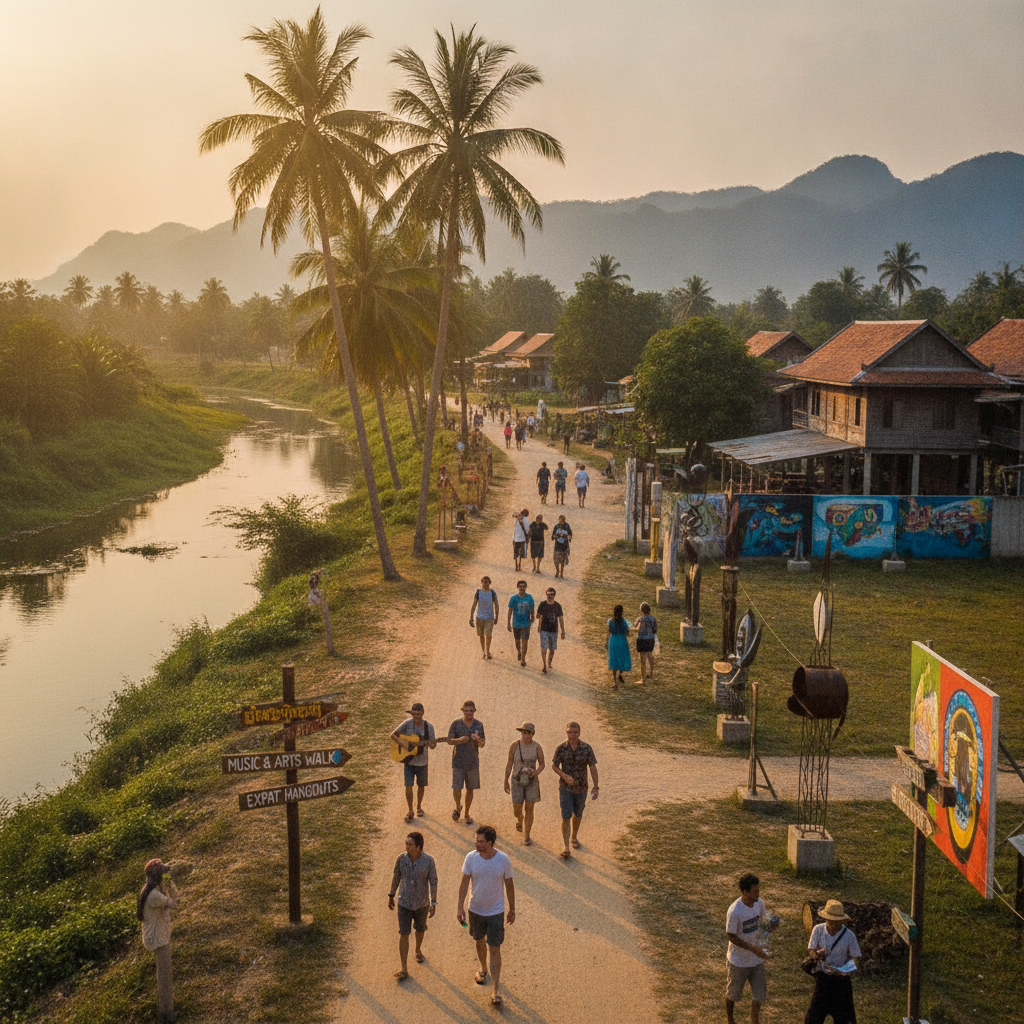
Kampot River Promenade
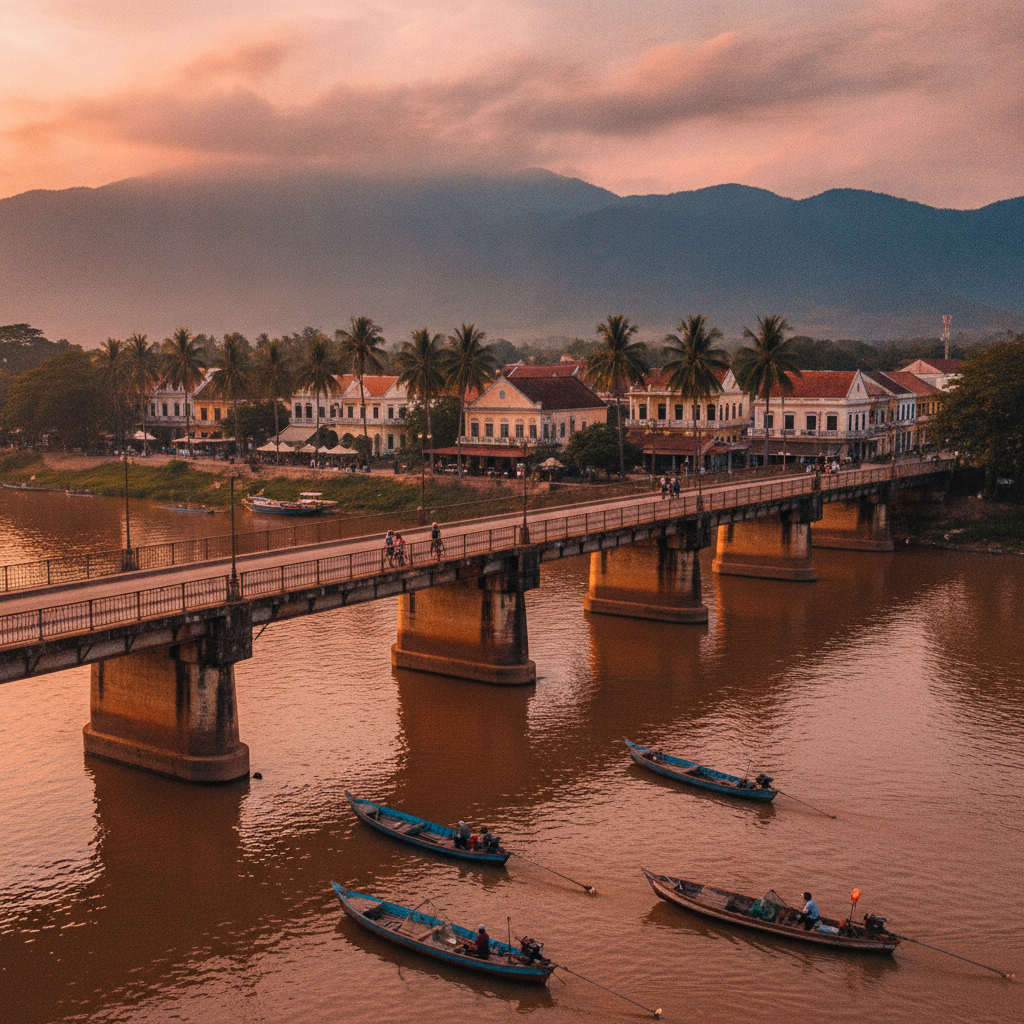
The riverside promenade along the Kampot River (the Stung Kampot, the river that flows from the Cardamom Mountain watershed to the Gulf of Thailand and gives the town its riverside character) provides the most pleasant pedestrian experience in Kampot — the evening walk along the river (the riverside road from the old bridge to the new bridge, past the riverside restaurants and the boat mooring points for the tourist excursion boats) is the most consistent social gathering activity for the Kampot resident and tourist community. The river at Kampot is wide and tidal (the river's connection to the Gulf of Thailand creating the tidal influence that reverses the current twice daily), with the mangrove vegetation visible on the opposite bank and the fishing boats moored at the town's riverside creating the characteristic river landscape that is the visual identity of Kampot.
- 4
Old Bridge Kampot
The old French colonial bridge across the Kampot River (now closed to motor traffic and used only by pedestrians and cyclists) is the most atmospheric single piece of infrastructure in Kampot — the iron-decked bridge (built during the French protectorate period using the same engineering vocabulary as the French railway bridges of the era) provides the best viewpoint for looking both up and downstream along the river, with the colonial town visible to the east and the mangrove-lined river mouth visible downstream toward the Gulf. The bridge's closure to motor traffic (necessitated by structural limitations that made it unsuitable for modern vehicle loads) has converted it into the most pleasant pedestrian viewpoint accessible over the river.
- 5
Kampot Night Market
The Kampot night market (operating along the riverside road in the evening) provides the most complete survey of the local food and craft culture accessible in the town's tourist economy — the food vendors (the grilled river fish, the Kampot pepper crab, the fresh spring rolls, and the Khmer sweets), the handicraft stalls (the woven palm leaf products, the kampot pepper in various presentations, and the locally produced chocolate from the artisan producers who have established themselves in the Kampot area) and the local families who use the market as the primary evening social gathering point create the most atmospheric evening environment accessible in the town. The Kampot night market is more relaxed and more genuinely local in character than the tourist-oriented night markets of Siem Reap.
- 6
Kampot Salt Fields Sunset
The salt fields south of Kampot (the traditional salt evaporation ponds visible from the road south of the town toward the coast) are worked by salt farmers who use the traditional Cambodian method of raking the salt crystals from the evaporation pans by hand — the salt fields at sunrise and sunset (when the water in the pans reflects the coloured sky and the salt crystals visible in the raked piles catch the angled light) are among the most photogenic landscapes accessible within easy cycling distance of the Kampot town centre. The Kampot salt (considered among the finest sea salt in Southeast Asia for its flavour characteristics attributed to the particular mineral composition of the Gulf of Thailand coastal waters) is the most distinctively local agricultural product of the coastal Kampot area.
Walk this route with audio
Stories play automatically as you reach each stop — no tapping needed.