Kampot Pepper Farm & Gastronomy Walk
Follow the Kampot pepper trail — Kampot pepper (Piper nigrum) is considered the finest pepper in the world, with a Protected Geographical Indication status, and the pepper farms on the volcanic basalt soils of the Kampot and Kep provinces produce the most sought-after culinary ingredient in Cambodian cuisine.
- 1
La Plantation Pepper Farm
La Plantation pepper farm south of Kampot is the most visited and most comprehensively documented pepper farm accessible in the Kampot province — the farm's guided tour (explaining the cultivation, harvest, processing, and grading of the Kampot pepper through all stages from vine to finished product) is the most educational single agricultural experience available in Cambodia. The pepper vine cultivation (the Piper nigrum vines trained on the wooden supports in the rows of the volcanic basalt soil farm, with the pepper berries visible in their various stages of maturation from the green unripe to the dark purple pre-ripe to the red fully-ripe) is the most visually distinctive crop landscape accessible near Kampot. The farm's tasting of the different pepper grades (the green pepper preserved in brine, the white pepper from the fully-ripe berries with the outer skin removed, the red pepper from the fully ripe berries, and the black pepper from the dried unripe berries) is the most comprehensive single-site introduction to the Kampot pepper product range.
- 2
Pepper Harvest Season
The Kampot pepper harvest season (January through May, the dry season period when the pepper berries ripen and are hand-picked from the vines) is the best time to visit the pepper farms — the active harvest (the farm workers moving through the rows of vines, picking the pepper clusters by hand and collecting them in the traditional woven baskets) creates the most complete visual documentation of the pepper production process. The harvest's colour progression (the green berries dominant in January, the red and purple ripening berries most numerous in March, and the final fully-ripe red berries of the premium red Kampot pepper most abundant in April) provides the most visually varied farm landscape across the season. The processing activities during harvest (the washing of the berries, the sun-drying on bamboo platforms, and the hand-sorting of the finished dried pepper) visible at the farm create the most complete survey of the production process from vine to finished product.
- 3
Kep Crab Market
The Kep crab market (at the beach town of Kep 25km east of Kampot, accessible by tuktuk or bicycle) is the most famous single food market in Cambodia — the morning market at the edge of the Kep beach (the crab sellers with their live blue swimmer crabs in the wire cages, the fish vendors with the fresh catch from the Gulf of Thailand, and the vendors selling the Kampot pepper that will be used in the famous Kep crab-with-kampot-pepper dish that has made Kep internationally known) is the most direct connection between the two most famous products of the Kampot-Kep area. The preparation of kdam chaa mrech Kampot (Kep crab stir-fried with Kampot green pepper) at the market restaurants creates the most celebrated single dish of Cambodian coastal cuisine.
- 4
Traditional Khmer Pepper Recipe
The Kampot pepper cooking classes available at the Kampot restaurants and cooking schools (incorporating the distinctive flavour characteristics of the different Kampot pepper grades into the traditional Khmer recipes) provide the most practical food education accessible from the Kampot town base — the cooking class format (the market visit to select the fresh ingredients, the instruction in the paste preparation for the Khmer curry base, and the preparation of the pepper-centred dishes using the farm-fresh Kampot pepper) creates the most direct connection between the agricultural product and the culinary tradition. The Kampot pepper's distinctive floral and eucalyptus aromatic character (different from the generic black pepper of the international spice trade) is most clearly apparent when the fresh green pepper is used directly in the cooking without drying — an experience accessible only in the Kampot area during the harvest season.
- 5
Kampot Chocolate Farm
The artisan chocolate producers in the Kampot area (using cacao grown in the Cambodian highlands and processed at the farm-to-bar chocolate workshops established in and around the Kampot town) represent the most recent addition to the Kampot gastronomic landscape — the farm-to-bar chocolate production (the cacao pod opening, the fermentation, the drying, and the chocolate production visible at the workshop tours) is the most recently established artisan food tourism experience in the province. The Kampot chocolate (using the distinctive flavour characteristics of the Cambodian-grown cacao combined with local inclusions such as the Kampot pepper, the locally produced sea salt, and the palm sugar from the surrounding communities) is the most internationally distinctive artisan food product produced in Cambodia.
- 6
River Boat Pepper Tour
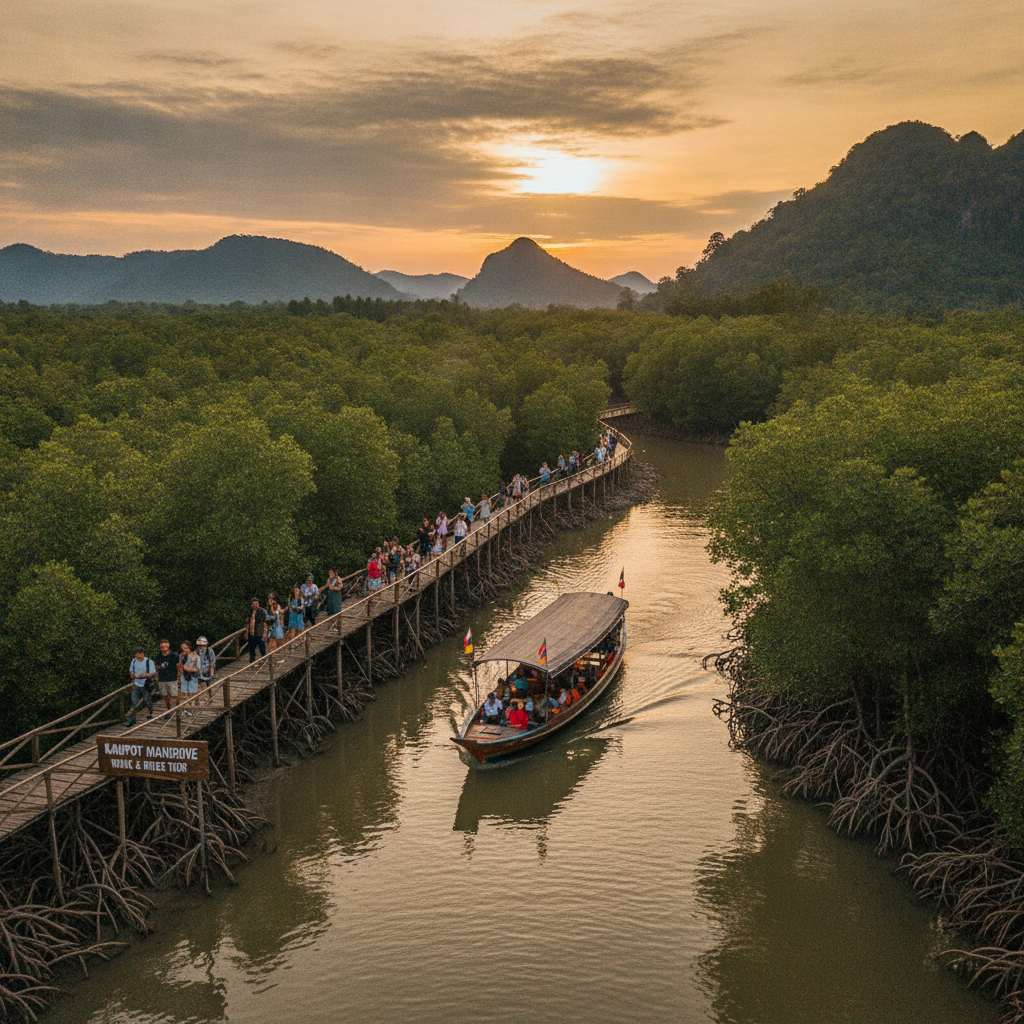
The boat tour from the Kampot river front (the long-tail boats departing from the riverside pier for the tour through the mangrove forest and the pepper farm communities accessible only by river) provides the most atmospheric context for the Kampot agricultural landscape — the boat journey through the mangrove channels (the tidal mangrove forest on the river banks, the wildlife visible in the mangrove root systems, and the traditional fishing operations visible from the water) followed by the visit to a riverside pepper farm (approaching by boat through the river-edge agricultural community rather than by road) creates the most complete environmental context for understanding the Kampot pepper's origins.
Walk this route with audio
Stories play automatically as you reach each stop — no tapping needed.