Amazon Indigenous Communities: Living Culture of the Forest
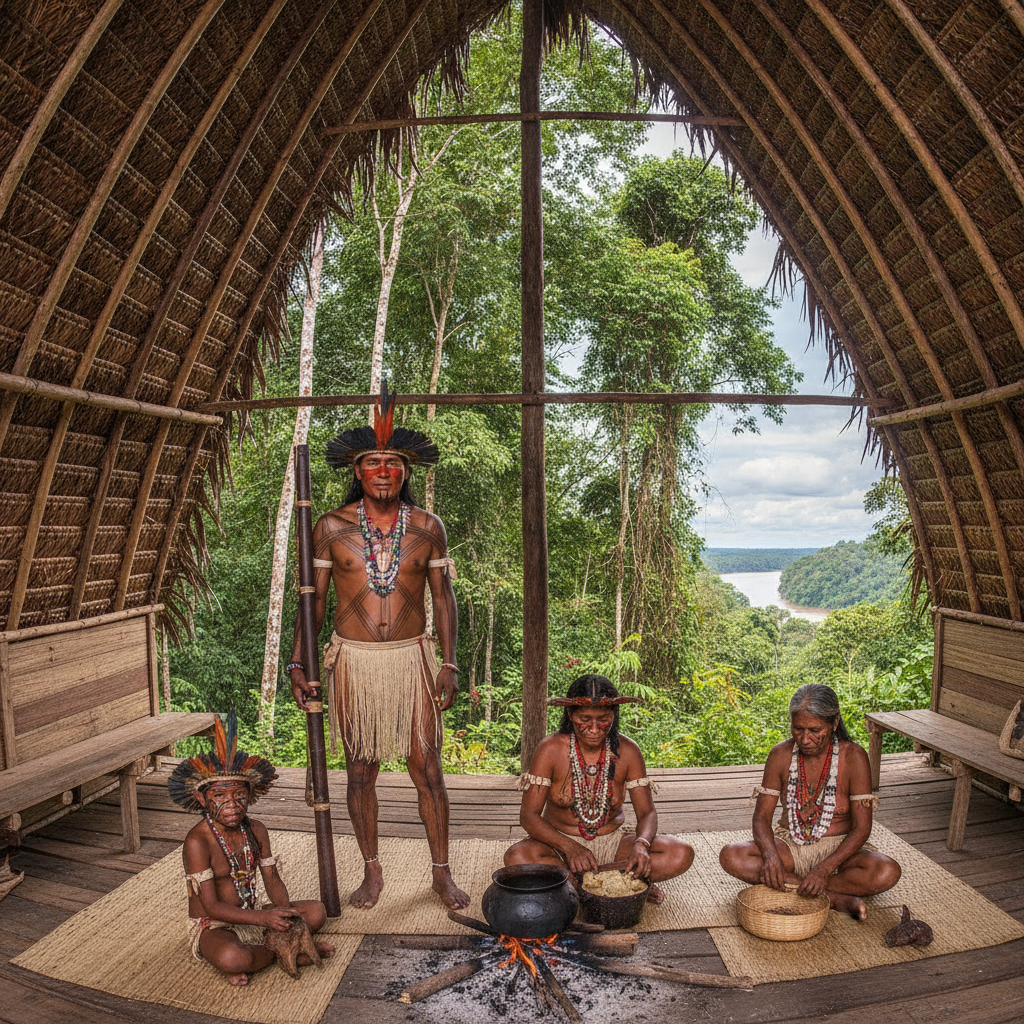
The rivers around Iquitos are home to dozens of indigenous communities — the Bora, Yagua, Huitoto, Shipibo, and dozens of other nations — maintaining languages, spiritual practices, and forest knowledge that is irreplaceable; community visits offer genuine cultural exchange
- 1
Bora and Yagua communities
The Bora and Yagua communities—some living in communities accessible by boat from Iquitos—maintain traditional plant knowledge, weaving techniques, and ceremonial practices; communities' relationship with tourism is carefully managed to ensure benefit flows to the community rather than tour operators
- 2
Forest Pharmacopeia
The plant knowledge of Amazonian indigenous peoples is an incomparable pharmacological resource — hundreds of plants with verified medicinal properties are known and used by traditional healers; the extraction of this knowledge by pharmaceutical companies without benefit to communities is a major ethical and legal issue in Peru
- 3
Shipibo Art
The Shipibo-Conibo people (from the Ucayali River region) produce one of the most distinctive visual art traditions in the world - the geometric patterns of Kené (drawn from ayahuasca visions) appear on ceramics, textiles and body painting; the patterns are said to encode messages and are used in healing ceremonies
- 4
Uncontacted People
The Loreto region contains some of the world's last uncontacted indigenous peoples — communities that have chosen to avoid contact with the outside world; the Peruvian government has established protected reserves for these communities; the ethical requirement to respect their choice of isolation is absolutely
- 5
Linguistic Diversity
The Loreto region has more indigenous languages than any comparable area on earth - more than 40 distinct languages from several unrelated language families; the loss of these languages (as younger generations switch to Spanish) represents an irreplaceable cultural and cognitive loss; language revitalization efforts underway
- 6
Social tourism ethics
Community tourism near Iquitos requires careful ethical navigation — the line between genuine cultural exchange (beneficial to both visitors and community) and cultural enrichment (harmful to communities) is real; responsible operators work directly with communities on terms, allocation distribution and what aspects of culture are shared
Walk this route with audio
Stories play automatically as you reach each stop — no tapping needed.