Inle Lake Silver & Traditional Craft Walk
Experience Inle Lake's artisan crafts — the lake community has developed an extraordinary concentration of traditional crafts (silversmithing, silk and lotus-fibre weaving, lacquerware, blacksmithing, and boat building) that are accessible in the workshops of the floating and lakeside villages during the standard boat circuit.
- 1
Silver Workshop Ywama
The silver workshops at Ywama and the adjacent floating village communities (the silversmithing tradition of the Inle Lake craftsmen, producing the intricate repousse silver bowls, the filigree jewellery, and the traditional Shan ceremonial objects that are the most prestigious single craft product of the lake area) are the most technically complex single craft encounters accessible during the standard Inle Lake boat tour — the repousse process (the hammering of the silver sheet from behind to create the raised relief pattern on the surface, using the pitch-filled bowl as the support for the delicate hammering work) and the filigree construction (the twisting and soldering of the fine silver wire into the complex geometric patterns of the traditional Shan jewellery forms) are the two most labour-intensive and most technically demanding craft processes accessible in the Inle Lake workshop visits. The silver products' quality variation (from the mass-produced tourist jewellery to the commissioned traditional ceremonial vessels) and the workshop visit's ability to observe the full production process make the Ywama silver workshops the most instructive single craft destination accessible on the lake circuit.
- 2
Lotus Fibre Weaving
The lotus fibre textile production (the most extraordinary single craft process accessible anywhere in Myanmar — the breaking of the lotus stem to extract the fine silk-like filaments from the stem's vascular bundles, the rolling of the extracted filaments into the continuous thread that is then woven into the world's rarest natural textile on the traditional backstrap loom) is the most visually remarkable single craft process accessible during the Inle Lake boat circuit — the thread extraction (the stem breaking with the fingers, the drawing out of the thread bundle, and the rolling of the filament onto the existing thread end in a continuous motion that produces only a few centimetres of thread per stem) demonstrates the extraordinary labour input that makes the lotus textile among the most expensive natural fabrics in the world. The lotus weaving workshop's accessibility to visitors (the cooperative operations at the Inpawkhon area where the production at all stages is visible simultaneously) is the most completely educational single craft visit available in Myanmar.
- 3
Blacksmith Village
The traditional blacksmith workshops at the lake-adjacent villages (the smiths producing the agricultural tools, the fishing equipment, and the domestic implements for the Inle Lake and Shan Plateau communities using the traditional forge and the hand-hammer technique) are the most physically immediate craft encounter accessible in the Inle Lake area — the smithy's working environment (the charcoal forge bellowed by the traditional foot-operated bellows, the anvil receiving the glowing metal struck by the apprentice's heavy hammer while the master controls the rotation and the angle, and the hissing of the water quench that tempers the finished blade) provides the most multi-sensory single craft observation accessible in the lake area. The range of products (the agricultural tools for the floating garden farming, the knives and the cooking implements for the domestic market, and the traditional Shan swords for the ceremonial and collector market) makes the blacksmith workshop the most functionally diverse single craft production site accessible during the Inle Lake circuit.
- 4
Boat Building Workshop
The traditional Intha boat building workshops (accessible at the lakeside villages where the craftsmen construct the long flat-bottomed wooden boats that are the primary transport vehicle for every Inle Lake activity) are the most practically significant craft encounter accessible at the lake — the boat's design (the shallow-draft flat bottom adapted for the weed-choked shallows of Inle Lake, the narrow beam that allows the leg-rowing propulsion technique, and the low gunwales that provide stability while the fisherman stands at the stern) is the most directly functional product of the Intha people's centuries-long adaptation to the lake environment. The construction process (the careful bending of the planks over the boat's ribs using the steam box for the curved sections, the waterproofing of the hull with the Thitsi lacquer, and the final fitting of the outboard motor bracket that connects the traditional hull to the modern engine) is the most technically detailed single craft process accessible in the Inle Lake area.
- 5
Cheroot & Traditional Products
The traditional product workshops accessible in the Nyaungshwe and lakeside village area (the cheroot rolling cooperatives, the dried-food preparation facilities producing the dried lake fish and the preserved vegetables for the regional market, and the traditional medicine producers combining the Shan herbal knowledge with the market demand for traditional health preparations) provide the most diverse survey of the Inle Lake's non-textile artisan economy accessible in a single circuit — the cheroot factory (the most immediately visitable and most demonstrably skilled single non-textile workshop accessible in the area) and the dried fish production (the fish laid on the bamboo racks to dry in the sun, the most pervasive aroma of the lakeside market areas) together give the most complete picture of the Inle Lake's preserved-food economy that has supplied the highland communities of the Shan Plateau with protein and tobacco for generations.
- 6
Market Craft Shopping
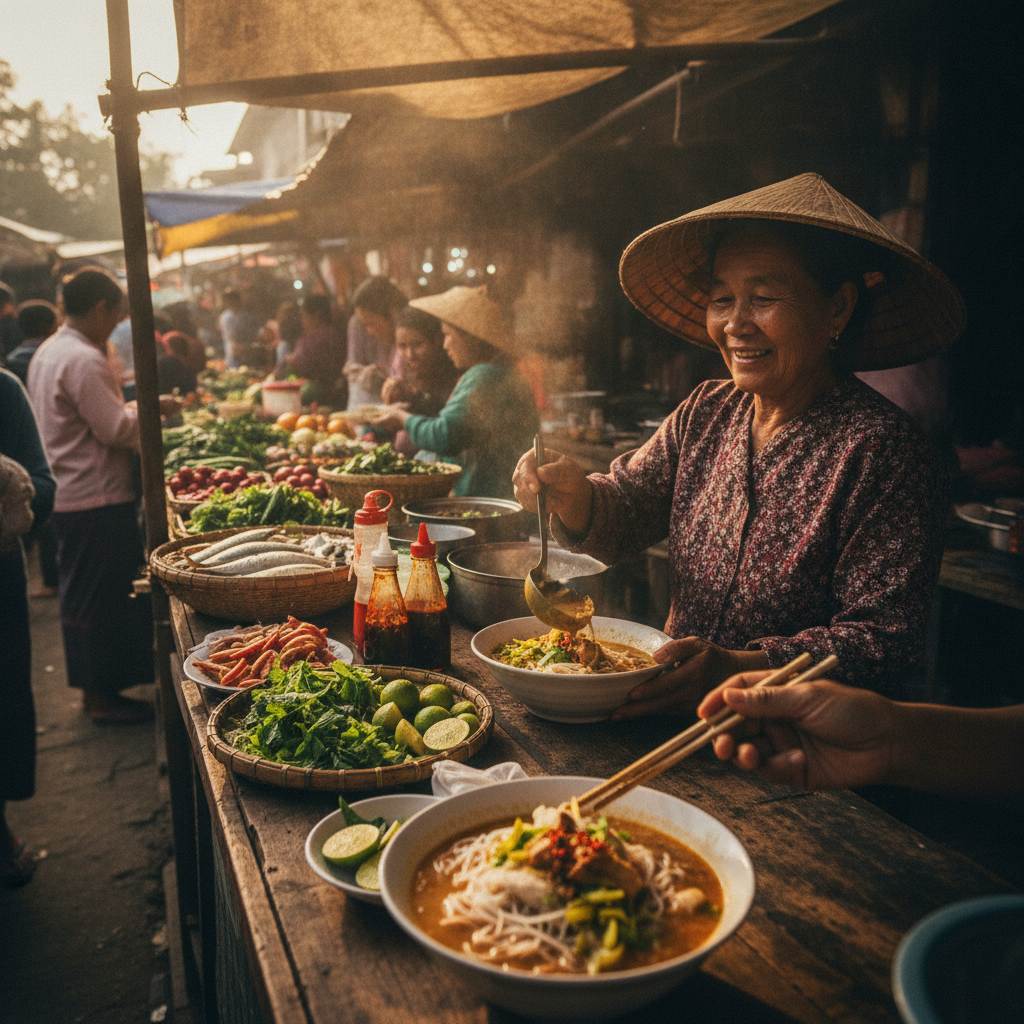
The craft shopping at the Nyaungshwe market and the lake village markets (the direct purchase from the producers of the silver, the textiles, the lacquerware, and the traditional food products that are the most distinctive material culture of the Inle Lake community) provides the most commercially direct encounter with the Inle Lake craft economy accessible to the visitor — the market-based shopping (the ability to compare quality and price across multiple producers, to observe the production context of the goods being sold, and to interact directly with the craft families whose workshop products are being offered) is the most financially fair version of the Inle Lake craft purchase experience, avoiding the tourist-inflated prices of the dedicated tourist shops at the lakeside visitor sites. The market's variety (the fresh agricultural produce, the processed foods, the textiles, and the hardware of the traditional market alongside the tourist-oriented craft products) provides the most complete economic survey of the Inle Lake community's production and consumption accessible at a single location.
Walk this route with audio
Stories play automatically as you reach each stop — no tapping needed.