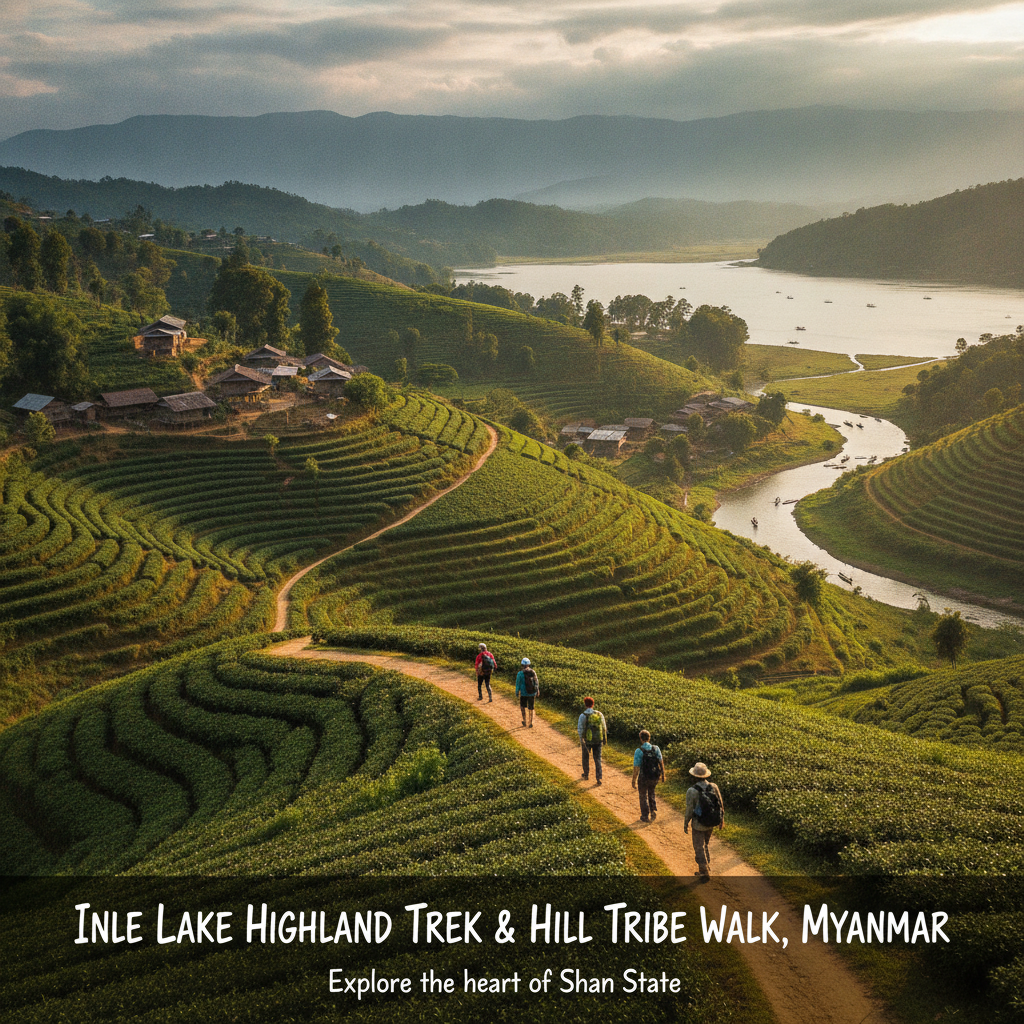
Inle Lake Floating Village & Intha Culture Walk
Visit the floating villages of Inle Lake — the Intha people (literally 'sons of the lake') have lived on and over the water of Inle Lake for centuries, building their homes on stilts above the lake and developing the unique leg-rowing, floating garden, and water-trading culture that makes Inle Lake the most distinctive human landscape in Myanmar.
- 1
Maing Thauk Village
Maing Thauk village (the lakeside village on the eastern shore accessible both by a short boat journey from the main lake circuit and by the bamboo footbridge extending from the shore into the lake, the longest bamboo footbridge in the Inle Lake area) is the most accessibly traditional of the Intha lakeside communities accessible during the standard Inle Lake day tour — the village's bamboo footbridge (the long walkway extending 200 metres from the shore into the shallows of the lake, providing the raised pedestrian approach to the stilted houses and the small market at the bridge's far end) is the most immediately atmospheric walking experience accessible during the Inle Lake circuit. The village's fishing community (the Intha fishermen whose stilted houses cluster along the footbridge's length, the fish traps visible beneath the bridge in the shallow water, and the boats moored at the house jetties) creates the most directly inhabited version of the traditional Intha water village accessible to the visitor.
- 2
Intha Boat Building
The traditional Intha boat builders visible in the waterside workshops at several lakeside villages (the craftsmen constructing the traditional flat-bottomed wooden longboats using the hand tools and the timber-joining techniques passed down through the Intha community) are the most directly productive traditional craft encounter accessible at Inle Lake — the boat building (the process of shaping the thin wooden planks over the boat's ribs, the traditional wooden pegs and the bamboo strip caulking that seals the hull planking, and the final coating of the boat's hull with the black Thitsi tree lacquer that is the traditional waterproofing material) documents the full production cycle of the Intha's most essential technology. The boat builder's working environment (the waterside location, the wood shavings and tools visible around the workshop, and the partially completed boats in various stages of construction) is the most practically informative single craft workshop accessible during the Inle Lake boat circuit.
- 3
Silk Weaving Workshops
The silk weaving workshops in the Inpawkhon area (the village on the western shore of the lake that is the centre of the Inle Lake lotus fibre and silk weaving tradition) are the most technologically extraordinary craft encounter accessible at Inle Lake — the lotus fibre weaving (the extraction of the fine fibres from the lotus stems growing in the lake, the spinning of the fibres into thread, and the weaving of the finest and most expensive natural textile in Myanmar from the extracted lotus filaments) is the most labour-intensive single textile production process accessible at any Southeast Asian craft destination. The traditional backstrap loom weaving of the longyis (the Burmese wraparound garment) and the ceremonial textiles (the silk-cotton blended fabrics with the traditional Shan geometric patterns) in the village workshops is the most completely accessible demonstration of the Inle Lake weaving tradition for the standard boat tour visitor.
- 4
Inle Lake Morning Life
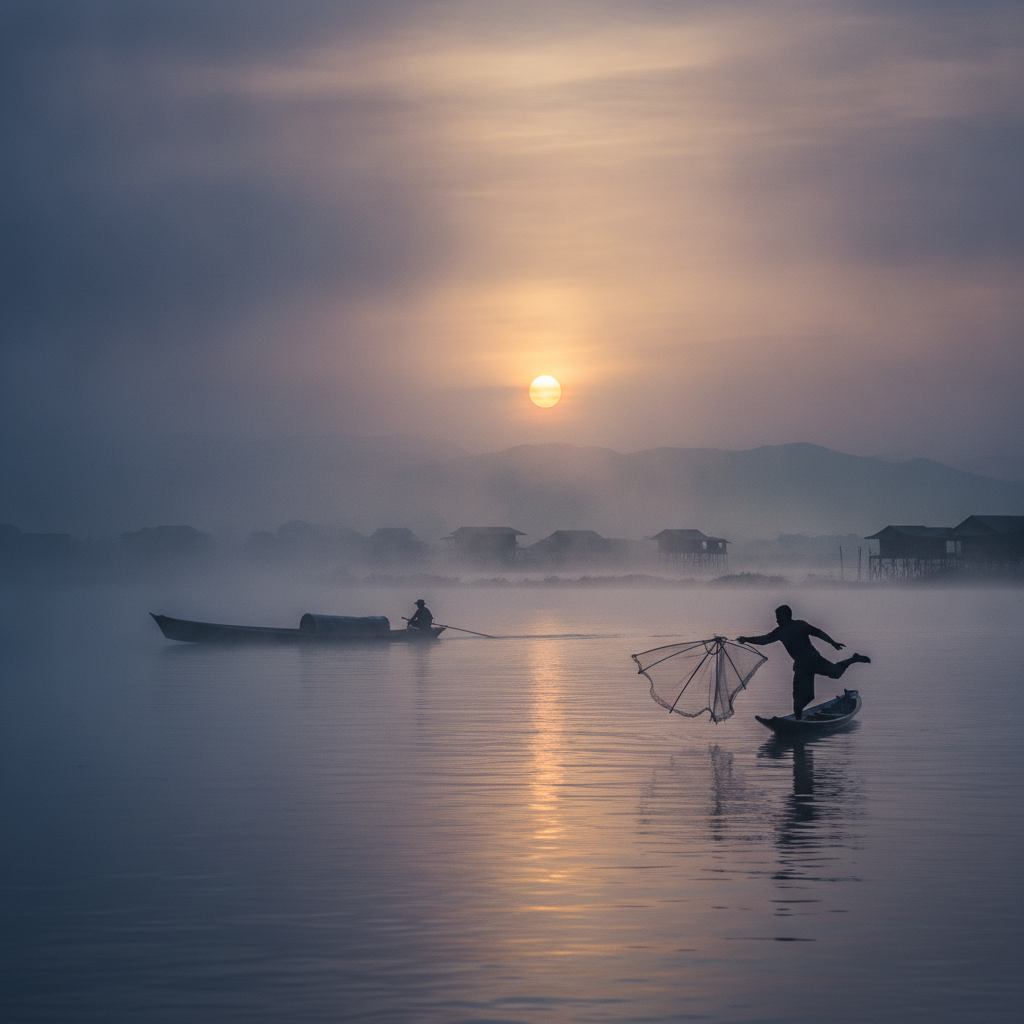
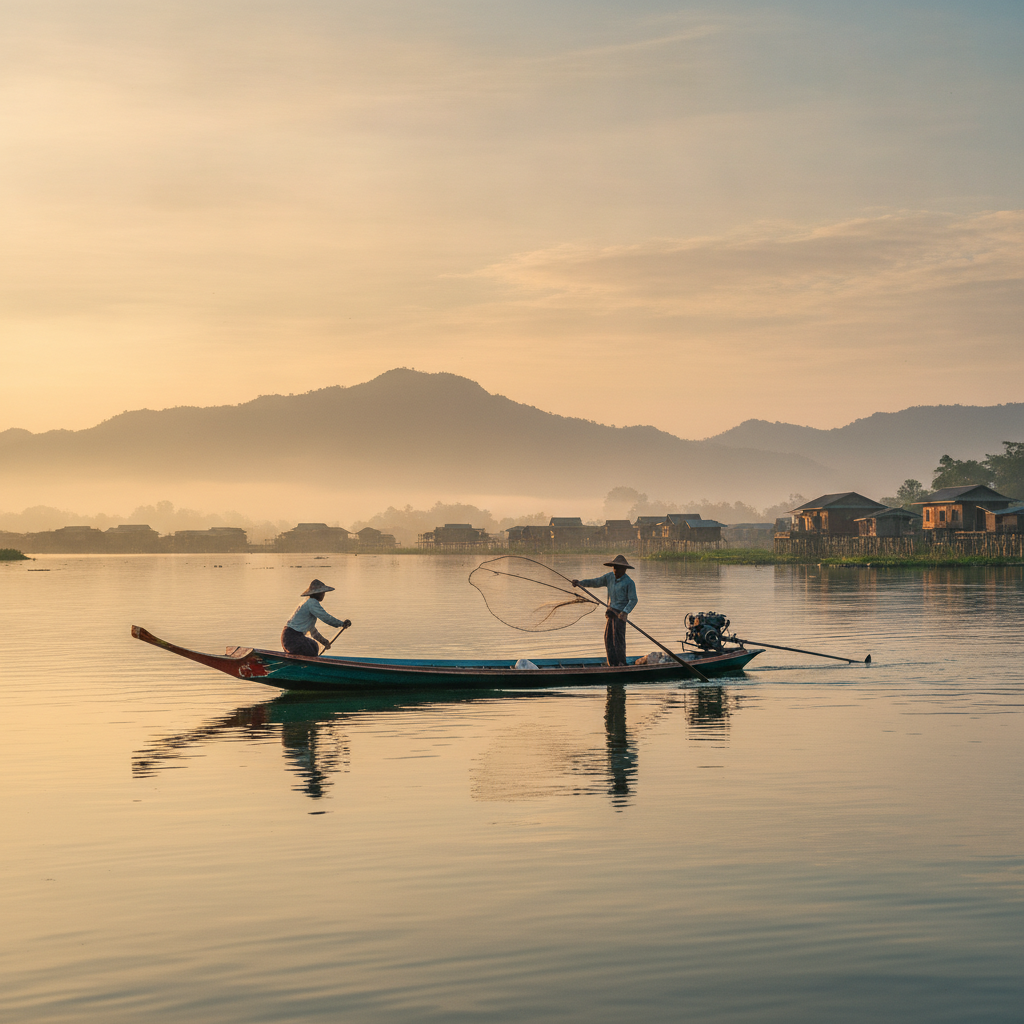
The Inle Lake morning activity (the pre-dawn and early morning hours when the lake's daily routine is most visibly animated — the fishermen setting their nets in the first light, the floating garden farmers paddling toward their tomato beds for the morning harvest, the school boats carrying children across the lake's surface, and the market boats arriving from the highland villages at the five-day market locations) is the most complete single survey of the Intha daily water-based economy accessible during the early boat departure — the boat tours departing from Nyaungshwe before 7am (the recommended departure time for the full-day lake circuit) encounter the greatest concentration of working lake activity before the tourist traffic increases and the working community retreats from the most visited channels. The early departure's light (the soft morning illumination of the lake mist and the mountains emerging from the pre-dawn haze) creates the most photographically appealing conditions accessible throughout the Inle Lake day.
- 5
Stilted House Community
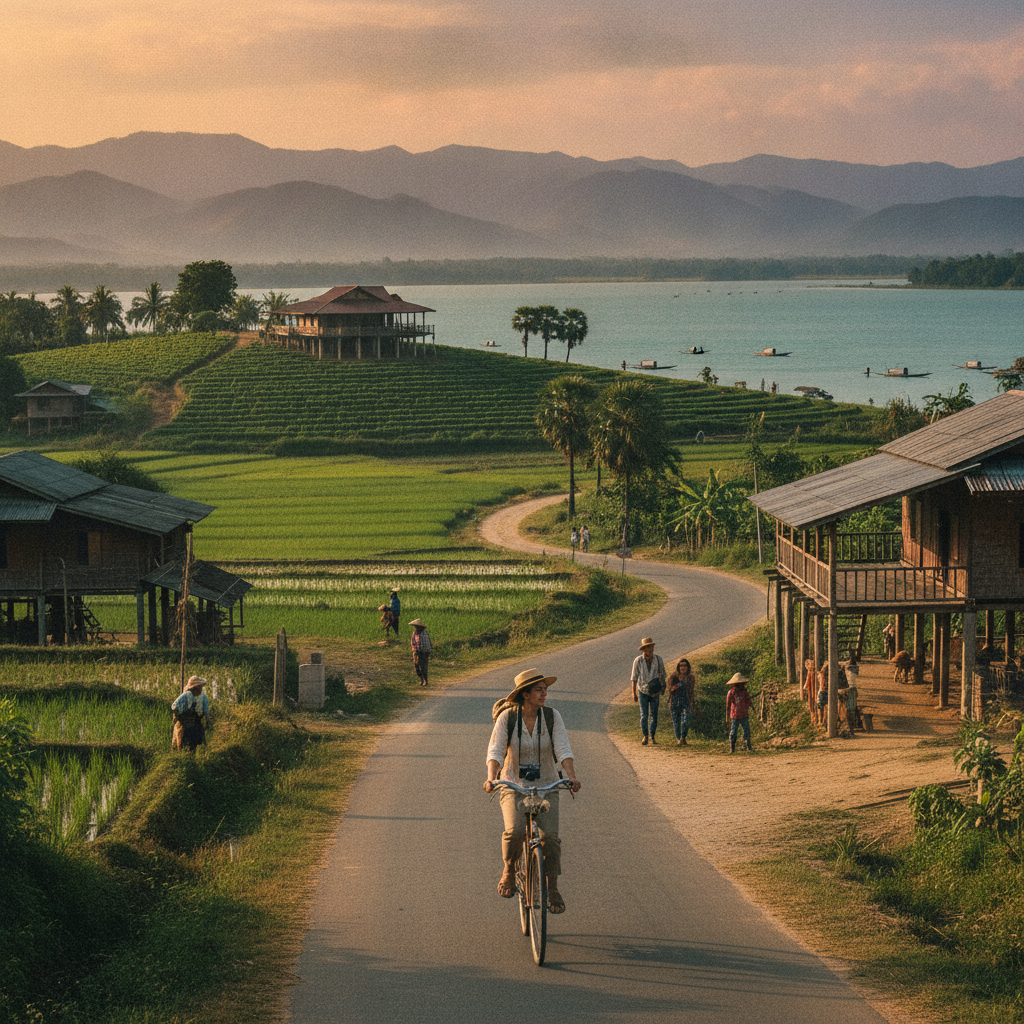
The stilted house communities on the open lake (the villages whose houses are built directly on wooden piles driven into the lake bed, with the water surface beneath the house floor visible through the gaps in the planking and the family's boat moored at the house entrance) are the most immediately striking physical expression of the Intha adaptation to the lake environment accessible during the boat tour — the stilted house architecture (the wooden house raised 1-2 metres above the lake surface on the teak or bamboo piles, the house orientation facing the channel that provides the main street of the floating village, and the cooking smoke visible from the house fires burning on the raised platforms above the water) creates the most completely lakeside domestic environment accessible at any freshwater lake destination in Southeast Asia. The stilted village's boat traffic (the family boats used for every journey — to the market, to the gardens, to school, and to the monastery — passing through the channels between the houses that function as the village streets) is the most directly functional water-transport environment accessible in Myanmar.
- 6
Phaung Daw Oo Pagoda
Phaung Daw Oo Pagoda (the most sacred Buddhist shrine on Inle Lake, housing five ancient Buddha images so heavily overlaid with centuries of devotional gold leaf that their original form is now barely recognisable beneath the accumulation) is the most important religious site accessible during the Inle Lake boat circuit — the pagoda's sacred images (the five seated Buddhas that have been the object of Inle Lake pilgrimage for centuries, their gold-encrusted forms now resembling rounded lumps of gold rather than figural sculptures, the application of the gold leaf by male devotees only — women are not permitted to touch the images) are the most venerated objects accessible at any single point on the Inle Lake visit. The Phaung Daw Oo Festival (held in September-October when the images are taken around the lake on a replica royal barge for a two-week procession) is the most important annual event in the Inle Lake religious calendar and draws pilgrims from throughout Shan State.
Walk this route with audio
Stories play automatically as you reach each stop — no tapping needed.