Cox's Bazar Rohingya Crisis Context and Humanitarian Response
Understand the scale of the world's largest refugee crisis in Cox's Bazar district — where over a million Rohingya Muslims from Myanmar have taken shelter since 2017, creating the Kutupalong megacamp and transforming the district, with insights into the humanitarian response through appropriate visitor engagement.
- 1
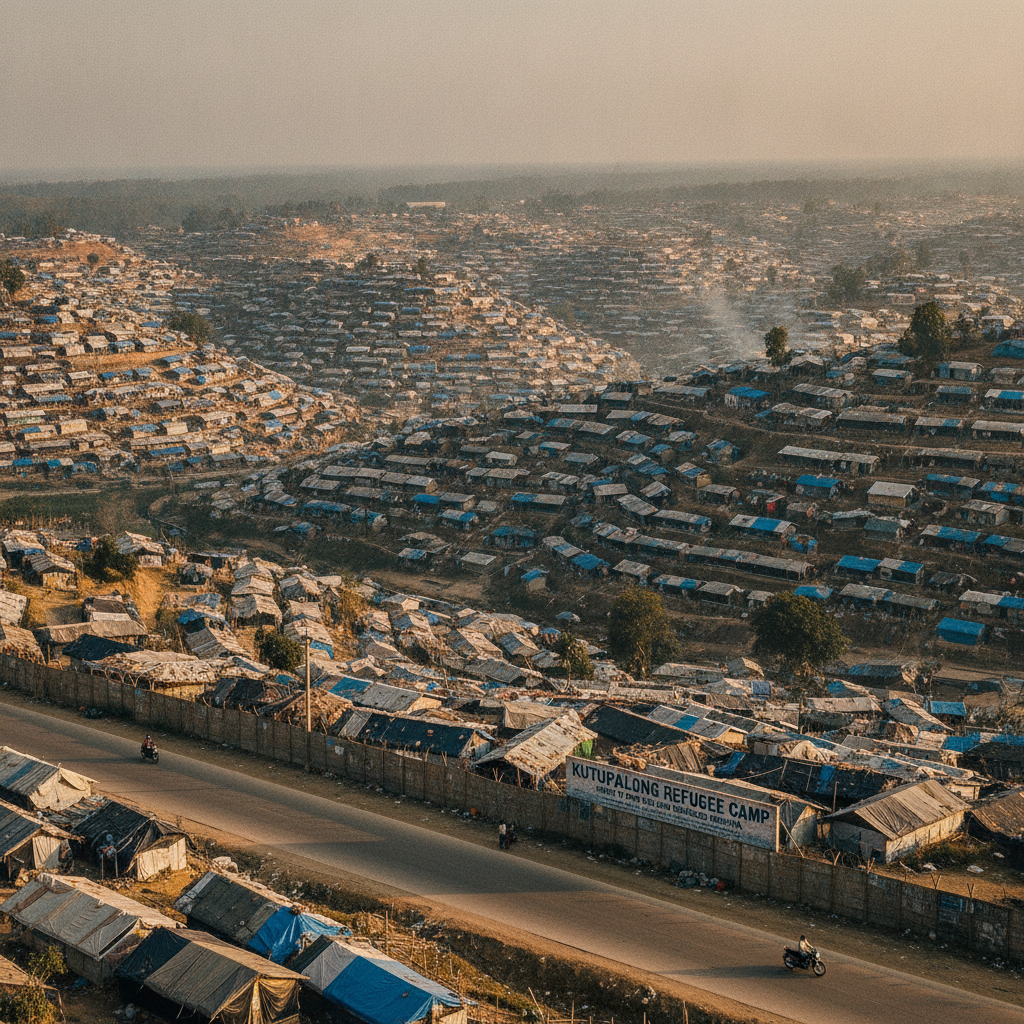
Kutupalong Camp Perimeter
The edge of Kutupalong — the world's largest refugee camp housing over 600,000 people in bamboo and plastic sheet shelters across forested hills, visible from the road as a dense settlement that has transformed the landscape of southern Cox's Bazar district.
- 2
UNHCR Information Center
The UNHCR visitor information facility where the scale and context of the Rohingya displacement is explained — the flight from Myanmar, the conditions in the camp, and the international humanitarian response involving hundreds of organizations.
- 3
NGO Coordination Hub
The hub where dozens of international and local NGOs coordinate their responses — food distribution, healthcare, education, protection services, and livelihood programs serving over a million displaced people in the most densely populated refugee settlement on earth.
- 4
Bazaar Beel Wetland
The wetland area adjacent to the camps that provides ecological buffer and supports migratory birds — a reminder of the natural landscape that existed before the mass displacement transformed the land use of Cox's Bazar district's hills.
- 5
Host Community Village
A local Bangladeshi village in the host community — the Bangladeshi families who have lived in this district for generations and whose own livelihoods, environment, and social fabric have been deeply affected by hosting the world's largest refugee population.
- 6
Cox's Bazar Town Civil Society
The civil society organizations and local journalists in Cox's Bazar town documenting the ongoing crisis — the Bangladeshi perspective on hosting a refugee population larger than the population of many countries, with the attendant economic and social pressures.
Walk this route with audio
Stories play automatically as you reach each stop — no tapping needed.