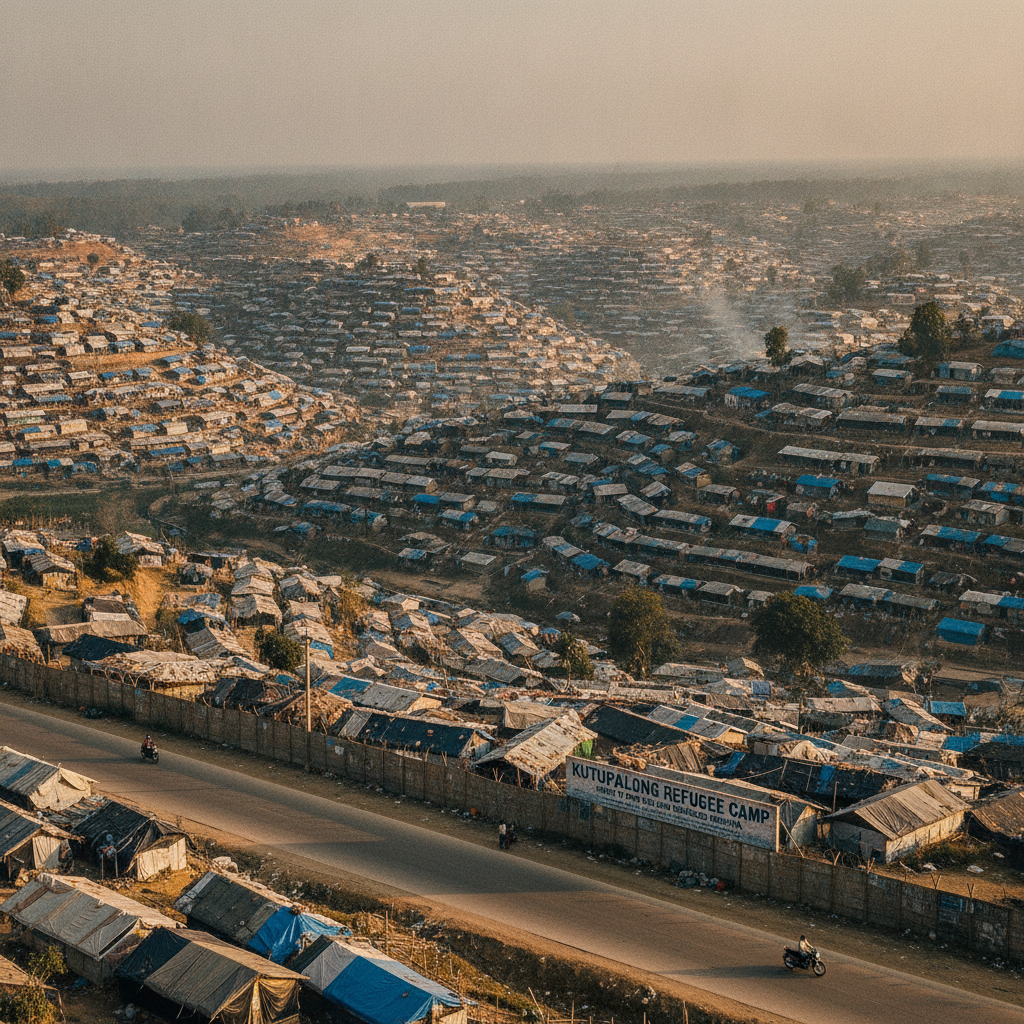
Cox's Bazar Hill Villages and Myanmar Border Experience
Explore the forested hills behind Cox's Bazar town where indigenous Rakhine and Marma communities live in traditional villages, practice Theravada Buddhism, and maintain cultural connections with Myanmar across the border — a landscape of ethnic diversity invisible to beach-focused visitors.
- 1
Rakhine Village Community
Visit a Rakhine (Arakanese) village in the hills behind Cox's Bazar — the Rakhine are the indigenous people of coastal Bangladesh and western Myanmar, Buddhist in religion, with their own language and weaving traditions distinct from Bengali culture.
- 2
Marma Buddhist Monastery
A Marma Buddhist monastery in the hills, where the architectural style, ritual objects, and monastery life reflect the Theravada Buddhist traditions shared with Myanmar's Rakhine State immediately across the border.
- 3
Traditional Weaving Workshop
Watch Rakhine women weave on traditional looms, producing the distinctive Rakhine textiles with their characteristic geometric patterns — a craft tradition that has traveled with the Rakhine people through centuries of migration and settlement along this coast.
- 4
Naf River Border View
Reach the viewpoint above the Naf river that forms the Bangladesh-Myanmar border — the forested hills of Myanmar's Rakhine State visible on the far bank, the river itself the boundary between two countries with deeply intertwined histories.
- 5
Teknaf Wildlife Sanctuary
Enter the edge of the Teknaf Wildlife Sanctuary — the last surviving significant forest in Cox's Bazar district, home to Asian elephants, leopards, and the endangered Irrawaddy dolphin in the adjacent Naf river estuary.
- 6
Border Market
The informal cross-border market near Teknaf where goods flow between Bangladesh and Myanmar — dried fish, textiles, and consumer goods traded across the border in a commerce that reflects the shared culture of this divided coastal region.
Walk this route with audio
Stories play automatically as you reach each stop — no tapping needed.
More in cox-bazar
Cox's Bazar Sunrise, Sunset and Beach Photography
Cox's Bazar to Saint Martin's Coral Island
Cox's Bazar Beach Seafood and Local Food Culture
Cox's Bazar to Teknaf Coastal Drive
Cox's Bazar Maheshkhali Island Day Trip