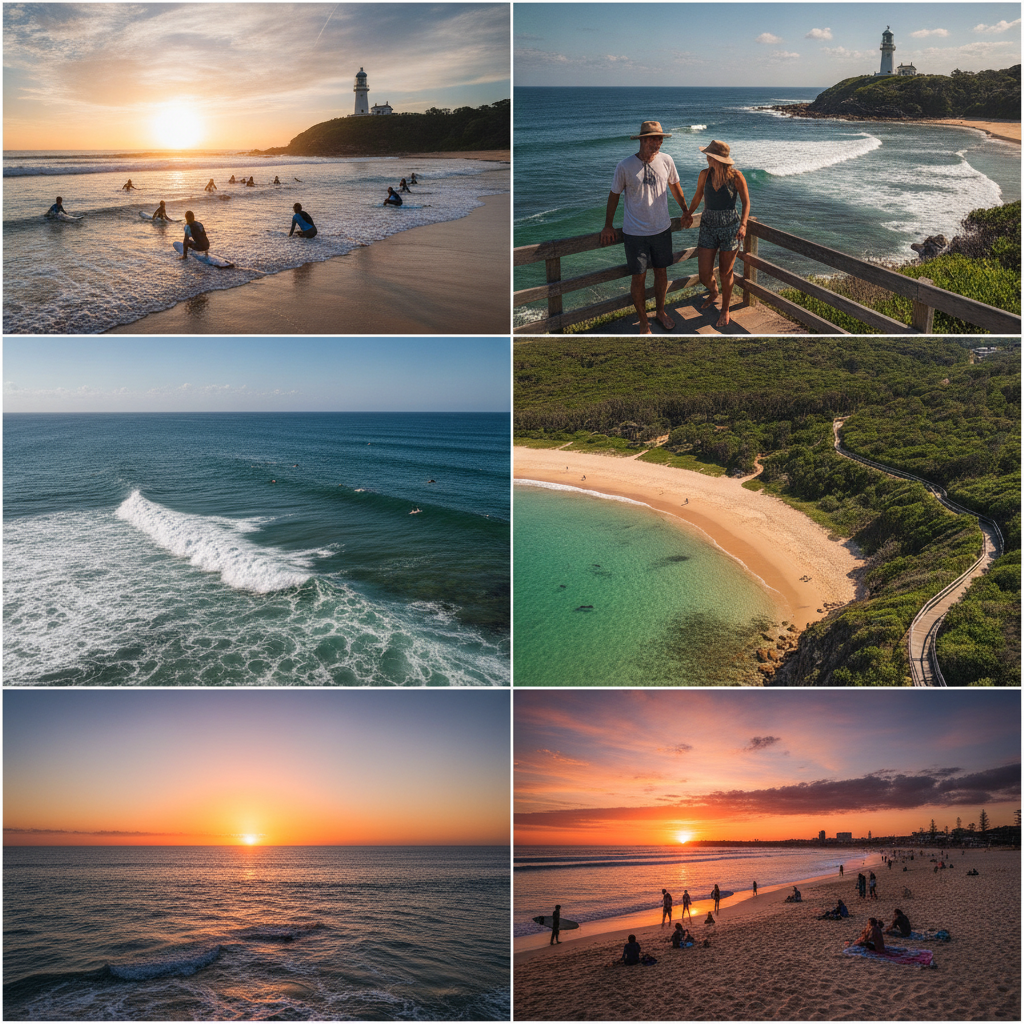
Byron Bay Whale Watching Season Walk
Walk the Cape Byron clifftops during whale watching season — from June to November, humpback whales pass within 500 metres of the headland on their annual migration, creating one of Australia's greatest wildlife spectacles.
- 1
Cape Byron Whale Watch Platform
The Cape Byron Lighthouse platform is Australia's finest land-based whale watching spot — the cape projects into the migration route and humpbacks pass almost continuously through July and August.
- 2
Humpback Migration Route
Humpbacks travel north in winter to breed in tropical waters and return south in spring with calves — the Byron cape is positioned at a pinch point in the route where whales pass at close range.
- 3
Byron Whale Watch Boat Tour
Boat tours from the main beach take passengers to within 300 metres of whales — the regulations protecting humpbacks have seen populations recover dramatically, and close encounters are now common.
- 4
Talows Beach Southern View
Talows Beach below the southern cape face provides a beach-level whale watching position — when whales are travelling close inshore, they can be observed from the beach without binoculars.
- 5
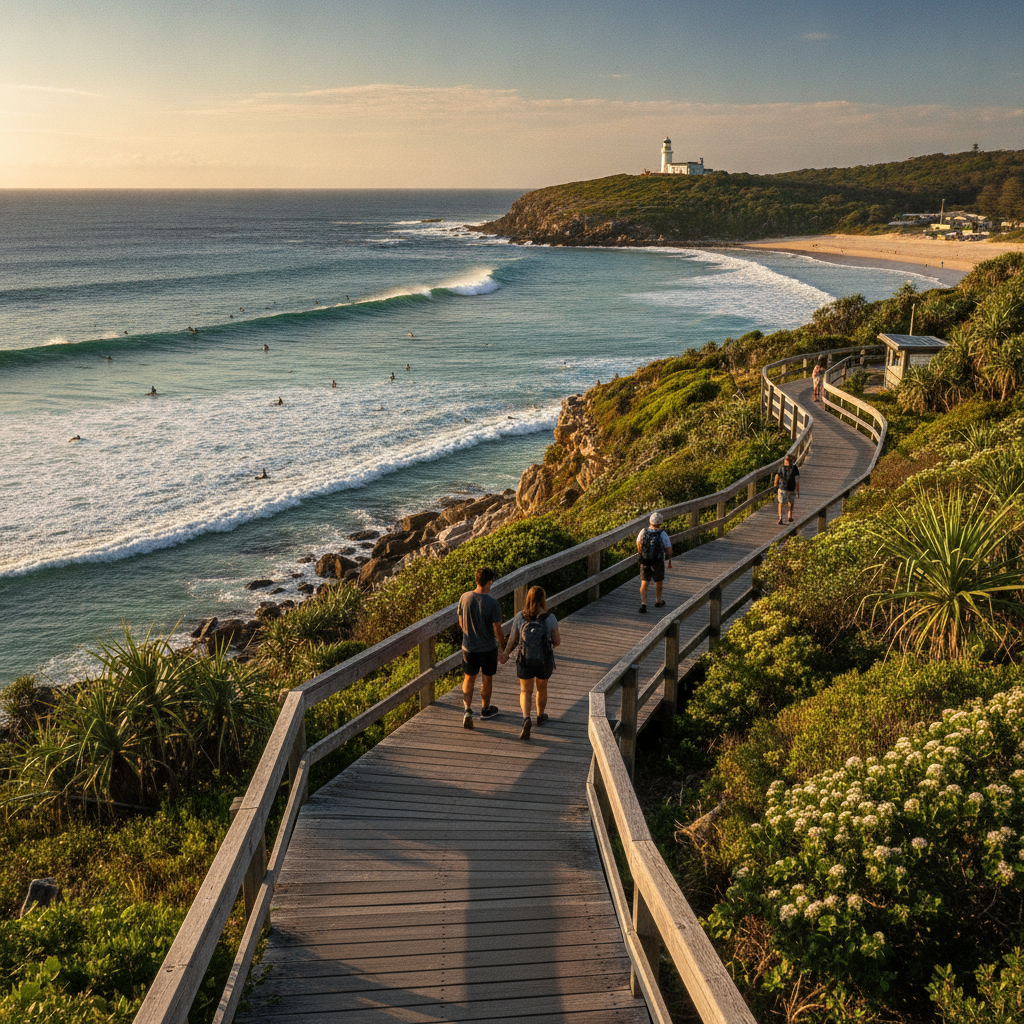
Byron Bay Lighthouse Walk North View
The northern clifftop track below the lighthouse provides views of the bay where mother and calf pairs often rest close inshore — calves are born in the tropics and the return journey with a newborn is slow.
- 6
Peak Season August Viewpoint
The peak of the southward migration in September and October sees breaching whales visible from the cape — full-body leaps from 40-tonne animals just offshore are among the most dramatic wildlife sights in Australia.
Walk this route with audio
Stories play automatically as you reach each stop — no tapping needed.