Bruges — the Markt, Holy Blood, Canals, Flemish Primitive Masterworks, Belgian Beer & Chocolate
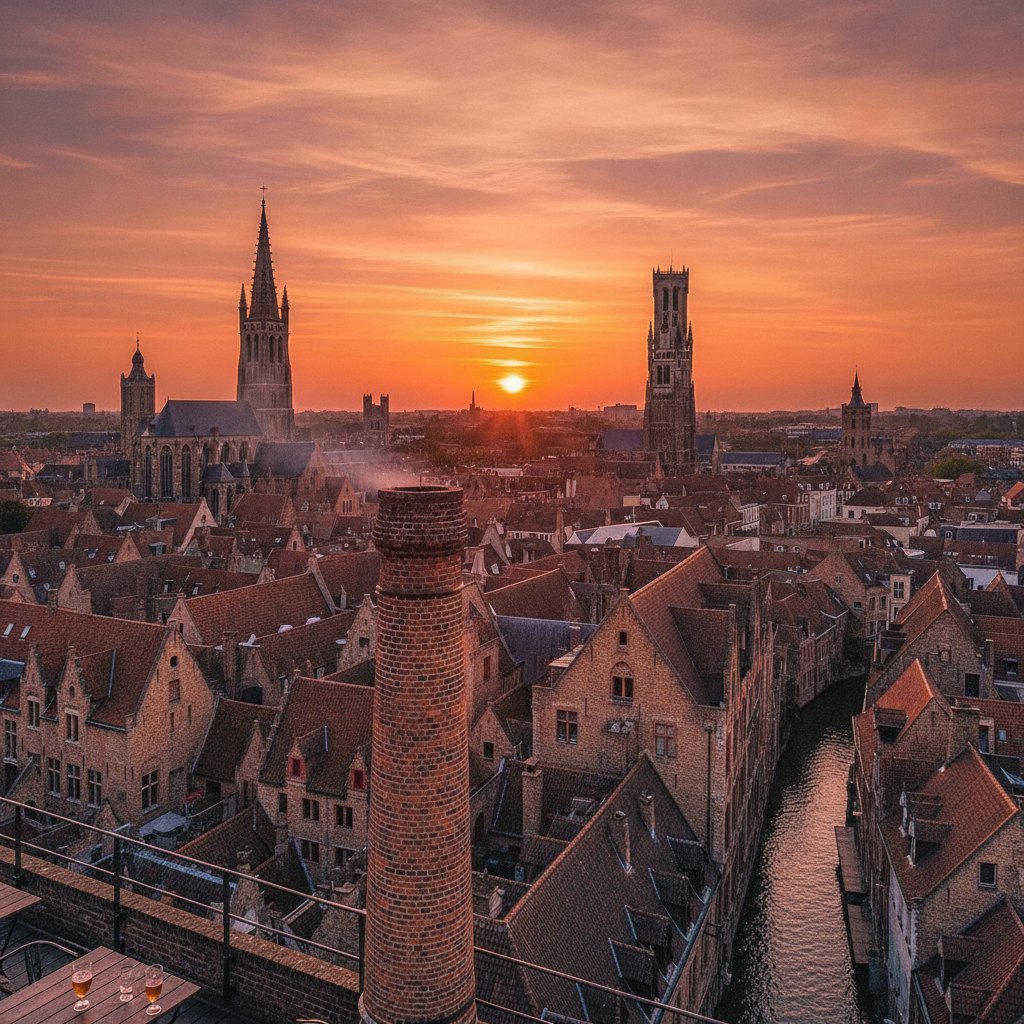
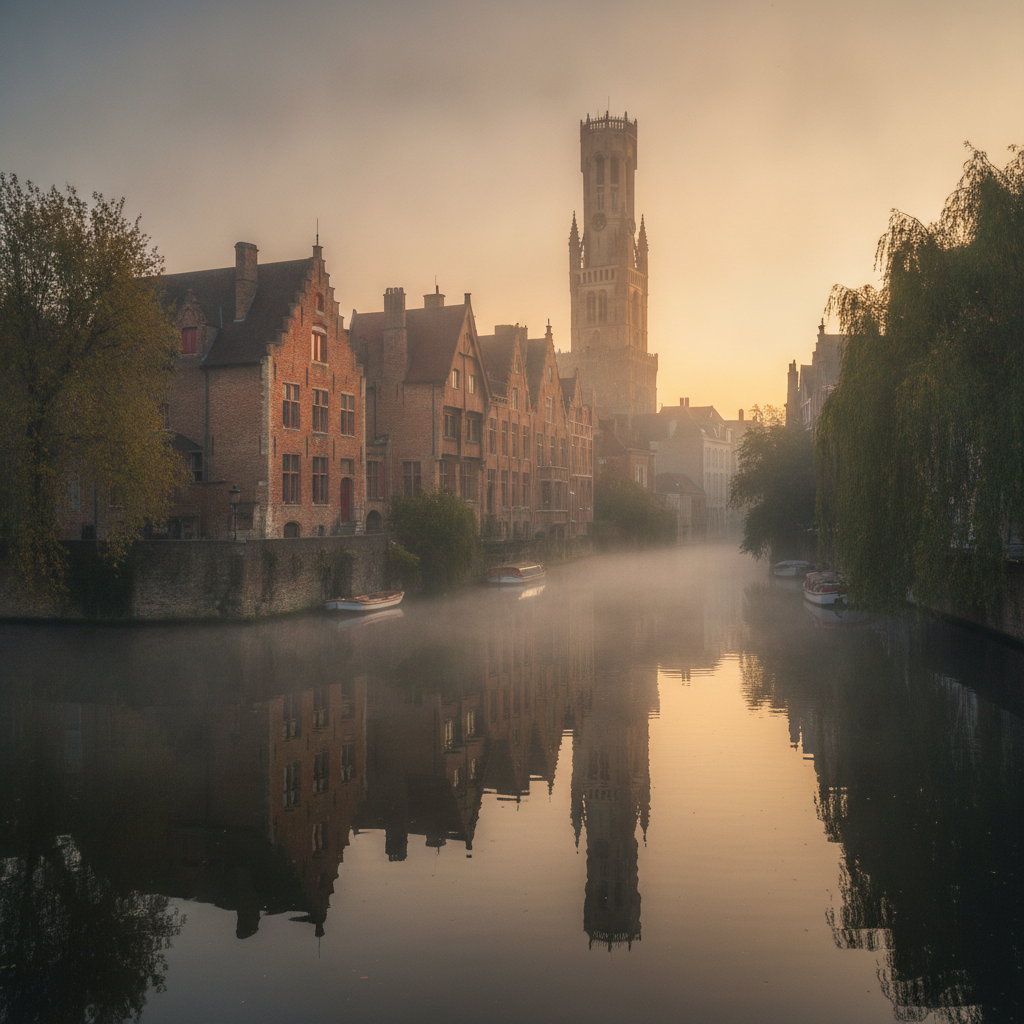
Bruges is the most completely preserved medieval city in northern Europe — the Belfry, the Holy Blood relic, the canal network, Jan van Eyck's Madonna, the De Halve Maan brewery, and the world's finest chocolate shops all within 1km of the Markt.
1. The Markt — Bruges's Medieval Heart
- 1
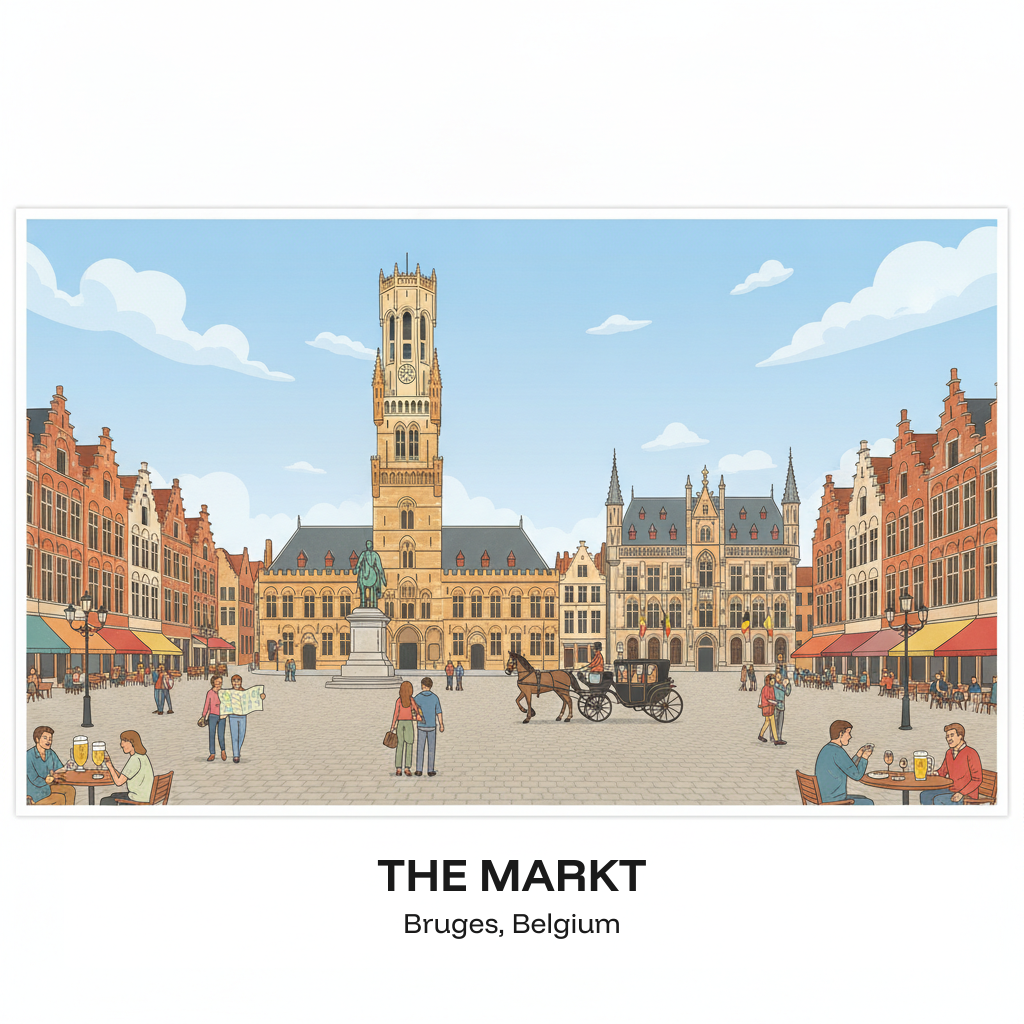
The Markt — Bruges's Medieval Heart
De Markt (the Market Square of Bruges — the most completely medieval-square-architecturally-preserved market square in northern Europe, the Markt the primary civic space of Bruges from the 11th century): the Belfort (the Belfry of Bruges — the 83m medieval bell tower at the south side of the Markt, the most recognisable single structure in all of Belgium, the UNESCO World Heritage belfry (with the 55 other Flemish belfries) since 1999, the 366 steps to the summit the most climbed single medieval stair in Belgium, the 47-bell carillon the most musically elaborate working medieval carillon in Flanders, the hourly performance the most visited mechanical bell music in Belgium, €14 adults, open daily 9:30am-5pm, the panoramic view from the summit the most completely medieval-roofscape panorama in Belgium), the Provincial Court (the Provinciaal Hof — the 19th-century neo-Gothic building on the east side of the Markt, the most imposing single neo-Gothic government building in the Markt composition, the most photogenically symmetrically positioned building in the Bruges market square ensemble), the Historium (the Historium Bruges at Simon Stevinplein 8 — the multimedia immersive experience recreating medieval Bruges in the 15th century, the most technology-forward single historical attraction in Bruges, the most comprehensively medieval-daily-life-immersive single visitor experience in any Belgian city, the rooftop bar the most panoramically positioned licensed premises in the Bruges Markt), the Cloth Hall (the Halle (Cloth Hall) at the base of the Belfort — the medieval commercial hall from 1240, the primary trading space of the medieval Bruges cloth trade, the most architecturally instructive single medieval commercial hall in Belgium, the inner courtyard the most completely medieval-market-covered interior in Bruges, the exhibitions in the hall the most directly cloth-trade-heritage focused in Bruges) and the Markt restaurants (the restaurant terraces on the Markt — the most touristically priced but the most historically positioned outdoor dining in Bruges, the Flemish cuisine available on the Markt terraces including the moules-frites (mussels and fries), the stoofvlees (Flemish beef stew with Belgian beer), and the Brugse waffle the 3 most ordered Flemish dishes on the Markt, the most scenic single al fresco dining position in Belgium for the castle and guild-house backdrop).
- 2
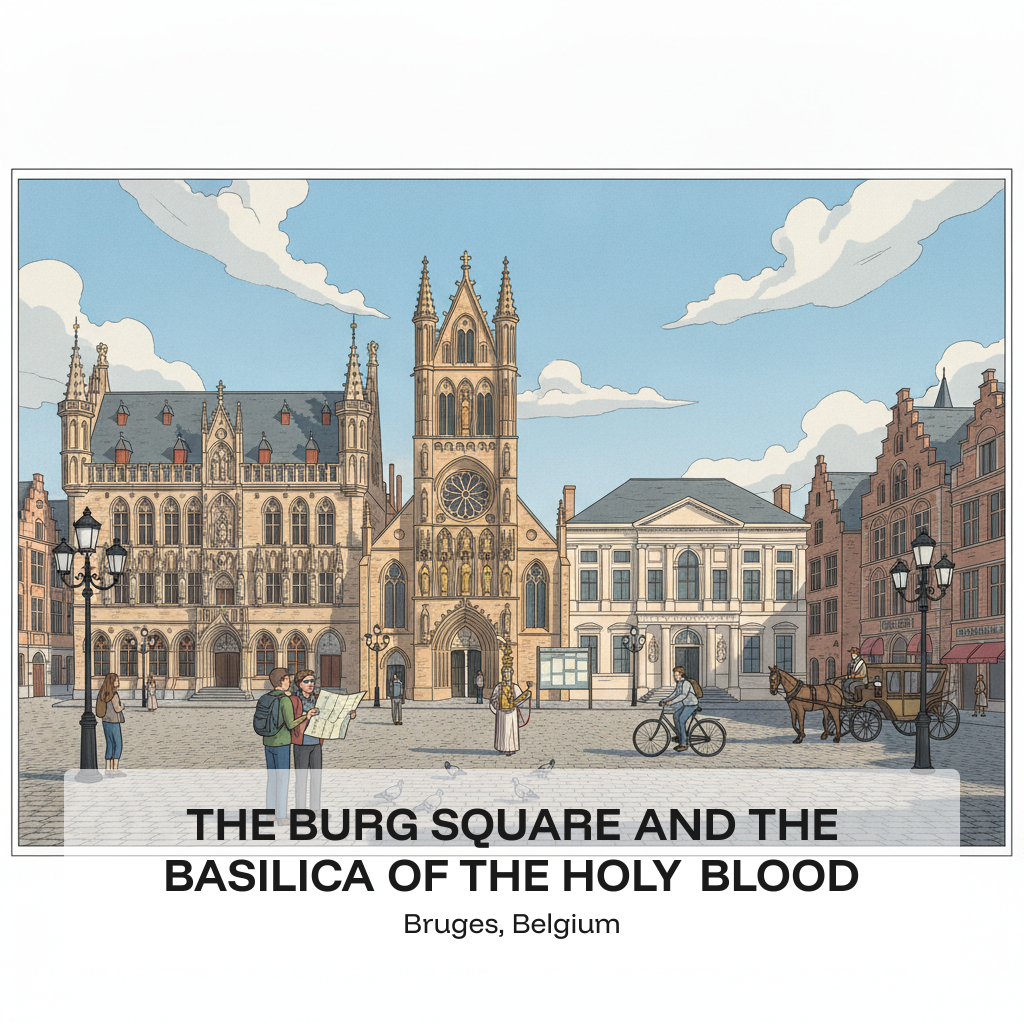
The Burg Square and the Basilica of the Holy Blood
Burg (the Burg square of Bruges — the most architecturally layered single civic square in Belgium, the Burg occupying the site of the original 9th-century Bruges castle (Burg = fortress), the square displaying architecture from the Romanesque to the Baroque in a single composed public space): the Basilica of the Holy Blood (the Heilig-Bloedbasiliek (Basilica of the Holy Blood) at the Burg — the 12th-century lower chapel (Romanesque, the most completely preserved single Romanesque chapel in Flanders) and the 15th-century upper chapel (Gothic, the most richly decorated single Gothic chapel in any Belgian city civic square), the relic of the blood of Christ (a cloth reportedly containing blood of Christ, brought from Jerusalem by Count Thierry of Alsace in 1149 — the most venerated single relic in Belgium, the most visited religious relic in the entire Benelux), the Holy Blood Procession (the Heilig-Bloedprocessie — the annual procession on Ascension Thursday, the most spectacular single religious street procession in Belgium with 2,000 costumed participants, UNESCO Intangible Cultural Heritage since 2009, the most colourfully costumed and the most historically authentically dressed single procession in northern Europe), the Stadhuis (the Bruges City Hall (Stadhuis) at the Burg — the Gothic city hall of 1376-1420, the most completely Gothic civic administrative building in Belgium, the oldest functioning civic Gothic building in Flanders, the Gotische Zaal (Gothic Hall) interior with the 1895 painted ceiling depicting the history of Bruges the most elaborately decorated single historic civic interior in Belgium, €6 adults), the Proosdij (the Proosdij (Provostry) at the Burg — the 1622 Baroque provostry building the most completely intact Baroque secular building on the Burg, the most compositionally complete single Baroque facade in the Bruges civic centre) and the former Cathedral site (the site of the former Cathedral of St. Donatian on the Burg — the Romanesque cathedral demolished by French Revolutionary forces in 1799, the most archaeologically significant demolished single medieval building in Bruges, the excavations beneath the Burg 1955-1991 the most comprehensively archaeological single urban excavation in Belgium, the display of the archaeological finds in the Bruges Museum Archeologie at Mariastraat 38 the most directly Burg-history focused museum in the city).
- 3
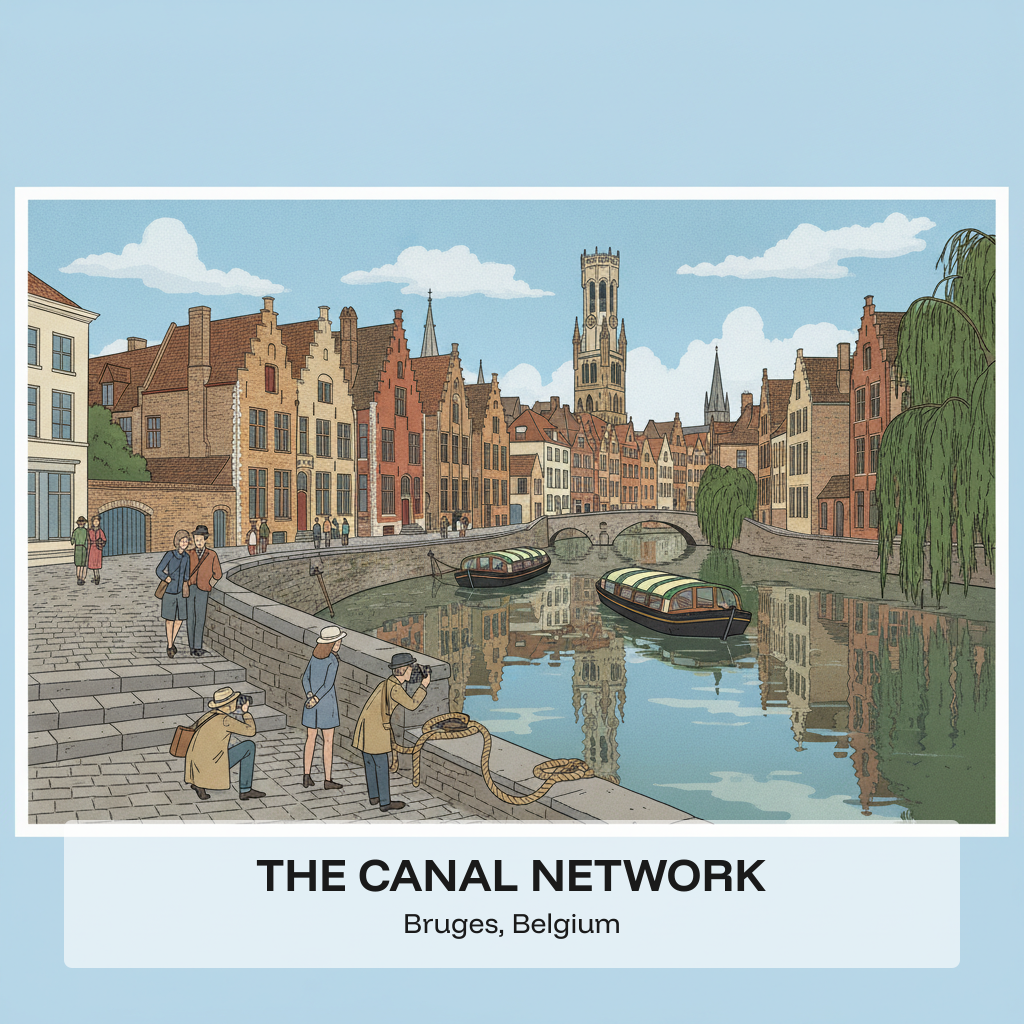
The Canal Network — the Venice of the North
Bruges canals (the Bruges canal network — the most completely intact medieval urban canal system in northern Europe, the 'Venice of the North' comparison the most applied single geographical metaphor to any Belgian city, the network of interlocking canal waterways the primary aesthetic and the primary tourism driver of the Bruges visit): the canal boat tour (the Bruges canal tour (Bootje van Brugge) — the 30-minute canal boat circuit from one of 5 embarkation points (the Rozenhoedkaai (Quay of the Rosary) the most photographed single embarkation point, the Dijver the most centrally positioned), the most visited single tourist activity in Bruges with 800,000 passengers per year, the canal view from the water the most completely different and the most architecturally instructive perspective on Bruges, the most compact and the most illuminating single Bruges experience in the shortest time, €12 adults, open March-November), the Rozenhoedkaai (the Rozenhoedkaai — the most photographed single canal bend in Belgium, the view from the Rozenhoedkaai looking south toward the Belfort above the canal the most reproduced single Bruges image in photography, the brick canal houses reflected in the still water the most compositionally complete single Belgian canal view, the most visited single photography position in Bruges at any hour), the Groenerei (the Groenerei canal — the most picturesque single canal street in Bruges, the narrow canal lined with the medieval almshouse walls and overhanging willows the most willow-shaded single canal walk in Bruges, the most consistently atmospheric single waterway in the Bruges canal network at any season), the Minnewater (the Minnewater ('Lake of Love') in the south of Bruges — the most romantically named single body of water in Belgium, the 13th-century artificial lake the most atmospherically willow-banked lake in any Belgian city, the Minnewater Bridge the most frequently photographed single stone bridge in Bruges at the most tree-reflected single canal position in the Bruges canal system) and the Langerei (the Langerei canal in north Bruges — the most traffic-free and the most locally lived single canal street in Bruges, the canal the primary route for the canal tour boats and the most resident-frequented single canal side walk in Bruges, the least touristically crowded canal neighbourhood in the Bruges centre).
- 4
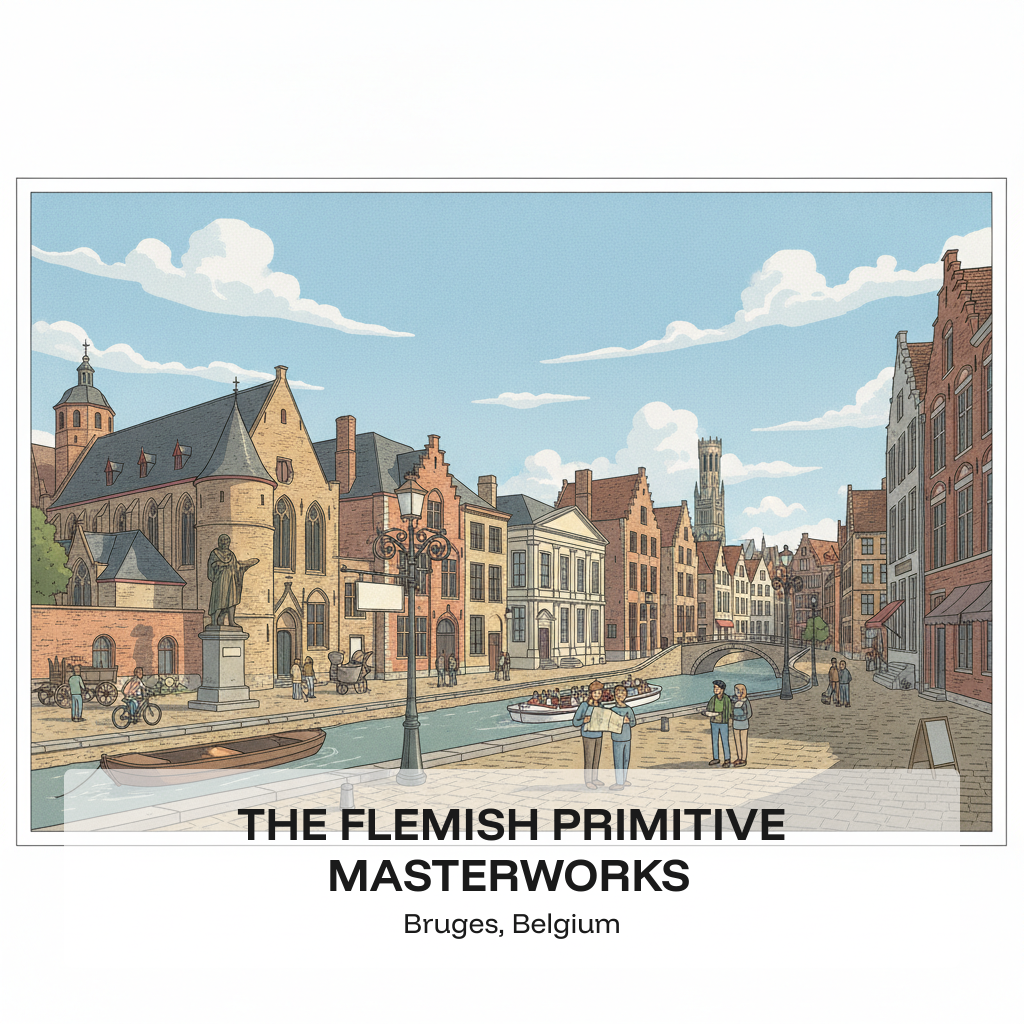
The Flemish Primitive Masterworks — Memling and Van Eyck
Flemish Primitive art (the Bruges Flemish Primitive painting heritage — the most important single collection of Northern Renaissance (Flemish Primitive) panel paintings in any single European city outside Ghent, Bruges the primary centre of the Flemish Primitive school from 1430-1490): the Groeningemuseum (the Groeningemuseum at Dijver 12 — the most comprehensive single Flemish Primitive panel painting collection in Belgium after the Ghent altarpiece location, the permanent collection the most instructively complete Northern Renaissance painting survey accessible in a single compact museum, the primary masterworks: the Madonna with Canon Joris van der Paele by Jan van Eyck (1436) the most technically accomplished single panel painting in any Belgian museum and the most observed single painting in the Groeningemuseum, the Portrait of Margareta van Eyck (1439) by Jan van Eyck the most intimately humanistic single female portrait in 15th-century Flemish painting, the Last Judgement Triptych by Hieronymus Bosch (attributed) the most theologically disturbing single panel in the Groeningemuseum collection, €14 adults), the Sint-Janshospitaal (the Sint-Janshospitaal (Hospital of St. John) at Mariastraat 38 — the medieval hospital complex now housing the Hans Memling Museum, the most atmospherically positioned single painter's museum in Europe (the paintings displayed in the original medieval hospital wards), the Memling collection: the Shrine of St. Ursula the most elaborately carved and painted single portable reliquary in Belgium, the Mystical Marriage of St. Catherine triptych the most technically refined single multi-panel composition by Memling, the hospital chapel the most completely medieval-medical-space-preservation example in Belgium, €12 adults), the Jan van Eyck statue (the Jan van Eyck statue at the Jan van Eyckplein — the 19th-century bronze statue of the most important single Bruges painter, the Jan van Eyckplein the most historically significant single commercial square in medieval Bruges (the site of the Florentine and Genoese trading houses), the statue the most specifically painter-commemorating single public monument in Belgium), the Adornes Domain (the Adornes Domain at Peperstraat 3 — the Jerusalem Chapel (Jeruzalemkapel, 1428) the most completely Jerusalem-pilgrimage-chapel-modelled single building in Belgium, the octagonal tower modelled on the Church of the Holy Sepulchre in Jerusalem the most unique single architectural pilgrimage monument in Flanders) and the Arentshuis (the Arentshuis at Dijver 16 — the 18th-century mansion housing the Brangwyn collection — the most comprehensive single collection of the work of Frank Brangwyn (1867-1956) the most globally collected Belgian-born painter of the early 20th century, the mural cartoons the most monumental single works by Brangwyn in any Belgian museum).
- 5
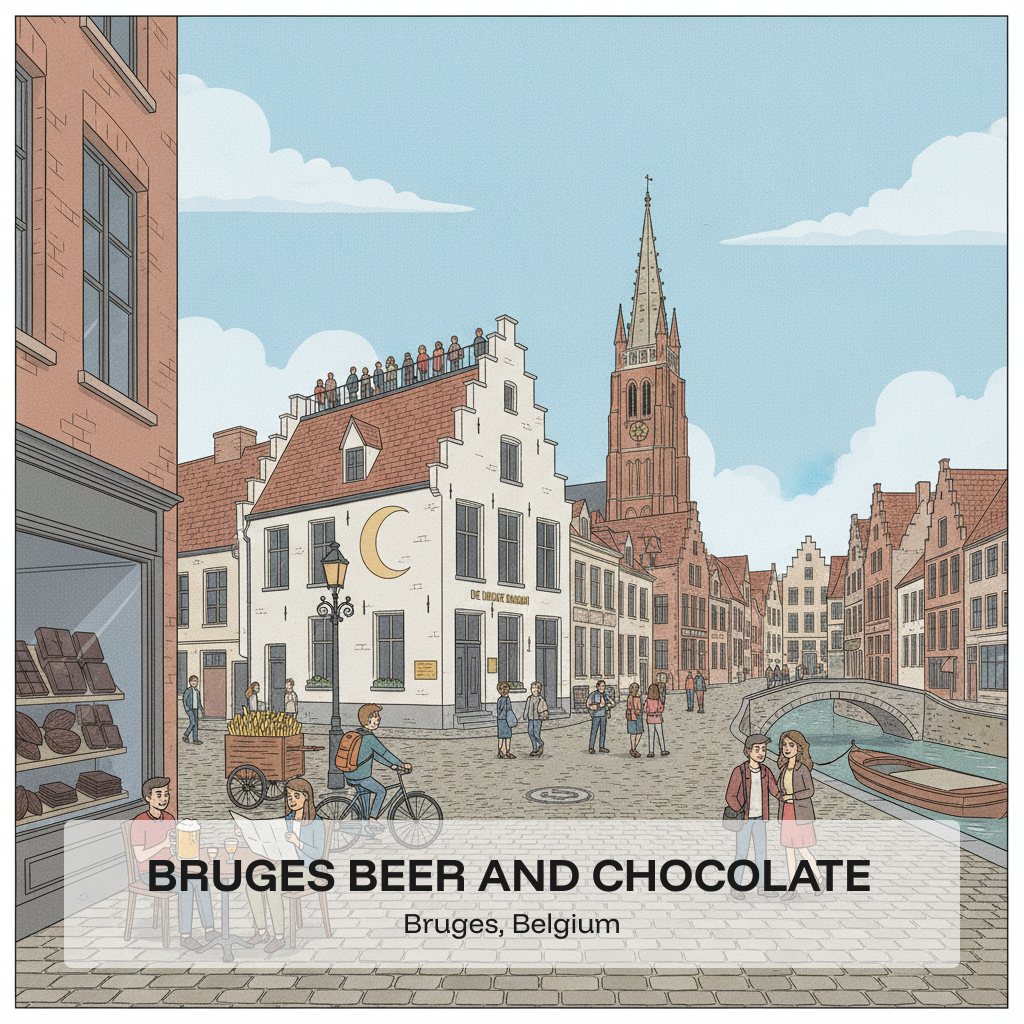
Bruges Beer and Chocolate — the Tastes of Flanders
Bruges food and drink (the Bruges culinary experience — the most complete single accessible introduction to Flemish food culture: the Belgian beer tradition (330+ beer styles the most diverse single national beer tradition in the world), the Belgian chocolate (the praline invented in Brussels 1912 but the Bruges chocolate the most touristically concentrated single chocolate destination in Belgium), and the Flemish cuisine): the Belgian beer in Bruges (the De Halve Maan (Half Moon) Brewery at Walplein 26 — the only remaining active brewery within the Bruges city walls, established 1856, the most historically continuous single brewing operation within the Bruges ramparts, the brewery tour the most instructive single Belgian brewery visit with the cellar and the tasting room, the Brugse Zot and the Straffe Hendrik the 2 house beers, the rooftop terrace the most panoramically positioned licensed premises above the Bruges roofline, €12 adults for the 45-minute tour including 1 beer; the beer pipeline: the 3.2km underground beer pipeline from the De Halve Maan brewery under the Bruges Altstadt to the bottling plant outside the walls — the most uniquely urban single beer distribution infrastructure in the world, installed 2016 as the most practical single solution to the problem of truck access through the medieval city streets), the chocolate (the Bruges chocolate: the Dumon chocolate at Eiermarkt 6 the most artisanally handmade single chocolate shop in Bruges, the Spegelaere at Katelijnestraat 46 the oldest chocolate shop in Bruges, the Zucchero at Steenstraat 17 the most innovative flavour range, the Choco-Story (Chocolate Museum) at Sint-Janstraat 4 the most comprehensively cacao-to-praline educational single chocolate museum in Belgium, €11 adults), the Flemish cuisine (the 3 most essential Flemish dishes in Bruges: the waterzooi (the Flemish chicken or fish stew with vegetables and cream — the most historically medieval-Flemish-origin single stew still in regular restaurant service in Bruges), the stoofvlees met frieten (Flemish beef stew cooked in Belgian beer with fries — the most consumed single main course in Bruges restaurants), the moules-frites (mussels from the Zeeland coast with the Belgian fries, the most eaten single Belgian restaurant meal in any season), the Belgian fries (the frituur (fry stall) at the Markt — the most historically Belgian single street food, the double-fried in beef tallow the most technically specific single Belgian cooking instruction, the fries the most universally consumed single Belgian street food in Bruges) and the jenever (the jenever (Flemish gin) at the Dreupelkot jenever bar at Wijngaardplein 9 — the smallest single licensed bar in Bruges at 6 square metres, the most concentrated single jenever selection in Bruges with 200+ varieties, the most specifically Flemish drinking experience in the Bruges hospitality landscape).
- 6
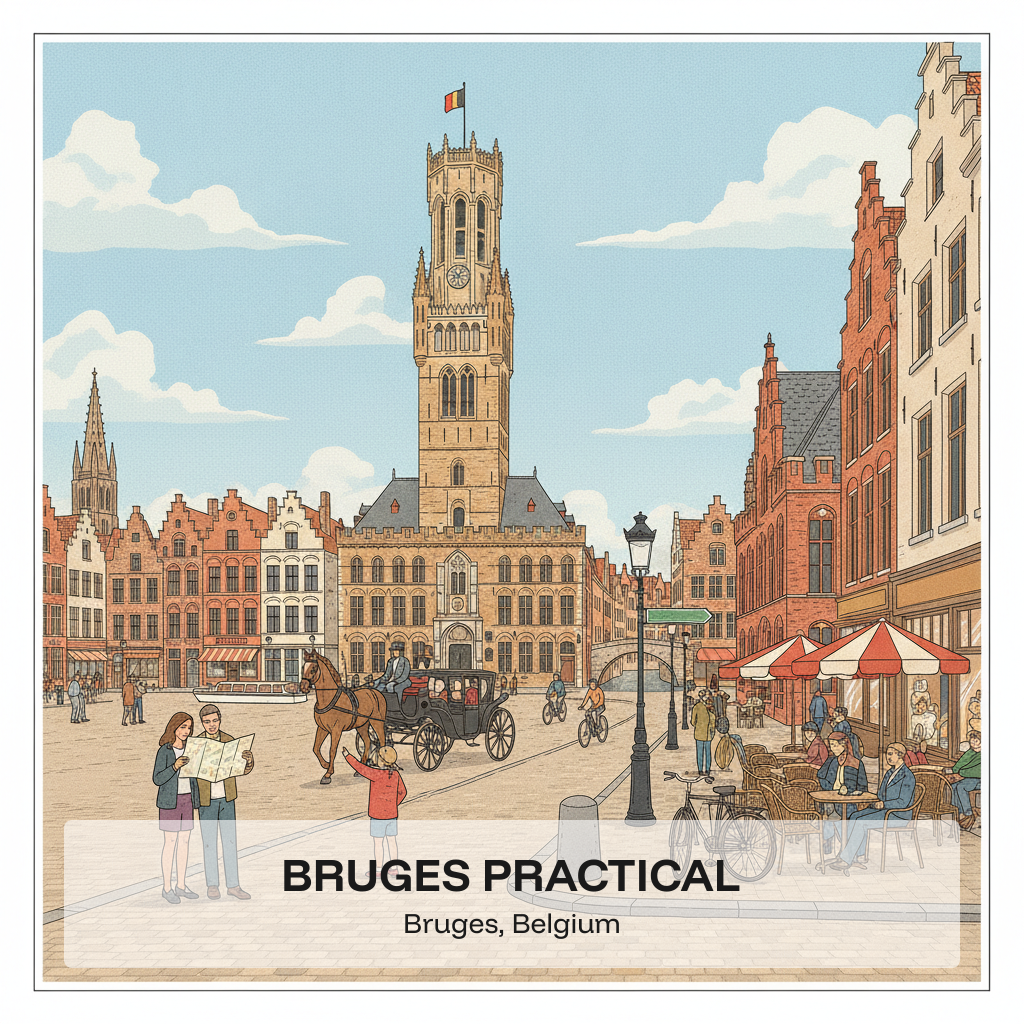
Bruges Practical — Getting There, Seasons and Day Trips
Bruges practical guide (the essential visitor logistics for Bruges — the most effectively navigated completely medieval city in northern Europe): the transport (the Bruges Centraal train station 1.5km south of the Markt — the direct Thalys and Eurostar connection from London St Pancras in 2 hours, the most direct international rail connection to any Belgian city from London; the Brussels Midi to Bruges in 55 minutes by IC train at €17; the Brussels Airport to Brussels Midi in 20 minutes by train then IC to Bruges, the most efficient airport-to-Bruges connection in 1h15m total; the Bruges city centre entirely car-free in the historic core, the most completely pedestrianised historic centre of any Belgian city), the cycling (the Bruges cycling — the most comprehensively cycle-infrastructure-equipped of any Belgian city, 100% of the population owns a bicycle the most bicycle-owning single city community in Belgium, the rental cycles available at the Bruges train station from €10 per day, the most cycle-friendly single route: the Bruges-to-Damme canal cycle path (6km, flat, alongside the Damse Vaart canal, the most enjoyable single day cycling excursion from Bruges)), the seasons (the best time to visit Bruges: March-May for the least crowded historic centre and the spring canal reflections; June-August the busiest months with 4 million annual visitors making Bruges the most visited single Belgian city per area, the summer the most canal-animated and the most outdoor-terrace-active season; December for the Bruges Christmas Market on the Markt and the Simon Stevinplein — the most atmospherically illuminated single Belgian Christmas Market setting, the ice rink on the Markt the most centrally positioned outdoor winter activity in Belgium), the Damme day trip (the Damme village 6km northeast of Bruges on the Damse Vaart canal — the most completely preserved medieval fortified village accessible by bicycle from Bruges, the Damme Stadhuis (Town Hall) the most perfectly preserved single late-Gothic civic building in the Bruges hinterland, the cycle path from Bruges the most popular single day cycling excursion from Bruges), the Ostend day trip (the Ostend (Oostende) 30km west — the most seaside-resort-historic single Belgian coastal city, the longest sandy beach in Belgium at 7km, the Royal Villa of Leopold II the most historically extravagant single seaside building in Belgium, the direct train from Bruges in 15 minutes the most efficient coastal excursion from any Belgian city) and the Lace (the Bruges lace tradition (Brugs kant) — the most internationally recognised single artisan craft of Bruges, the bobbin lace the most technically complex single textile craft still practised in Flanders, the Kantcentrum (Lace Centre) at Peperstraat 3a the most comprehensively lace-history-and-demonstration focused single museum in Belgium, the live lace-making demonstration by the Kantcentrum volunteers the most directly artisan-craft-instructive single visitor experience in Bruges).
Walk this route with audio
Stories play automatically as you reach each stop — no tapping needed.
More in bruges
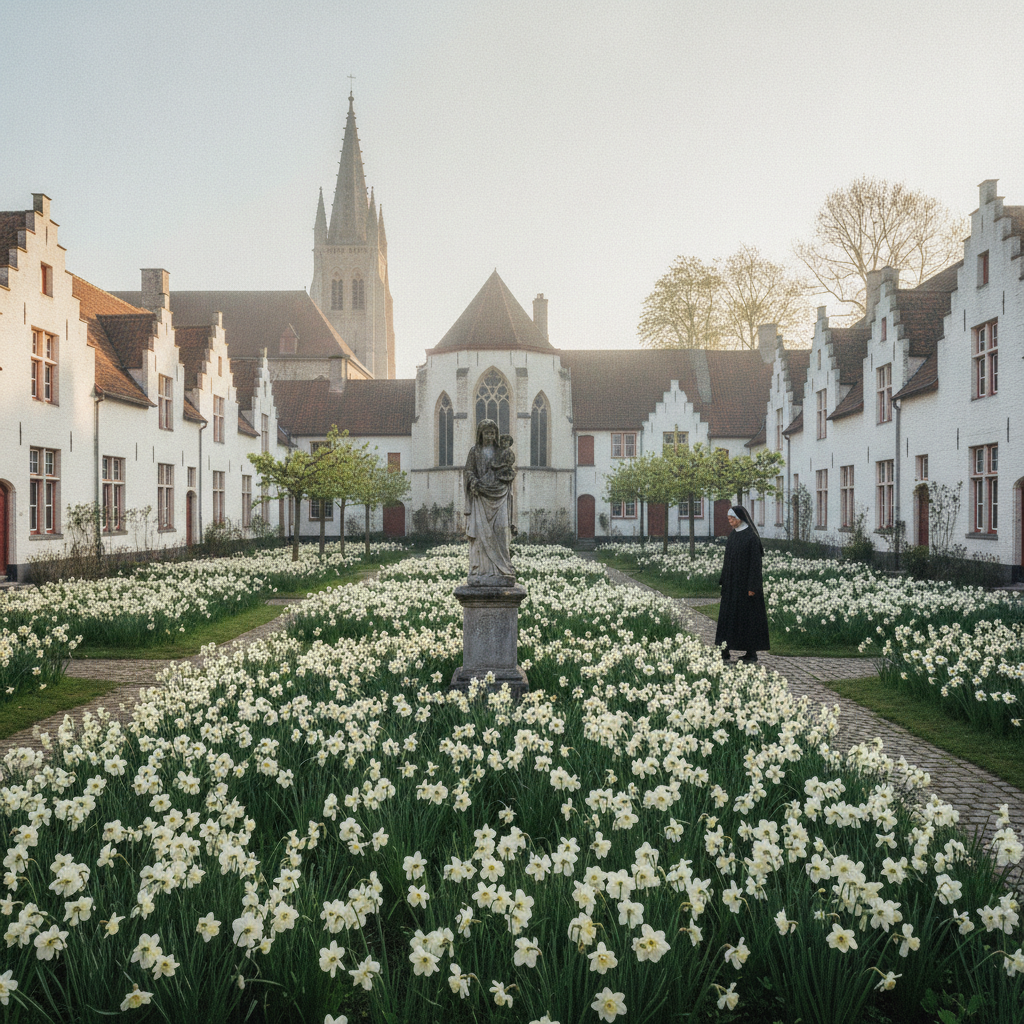
Bruges — Begijnhof, Michelangelo's Madonna, Almshouses, Flemish Lace, Chocolate & the Windmill Ramparts
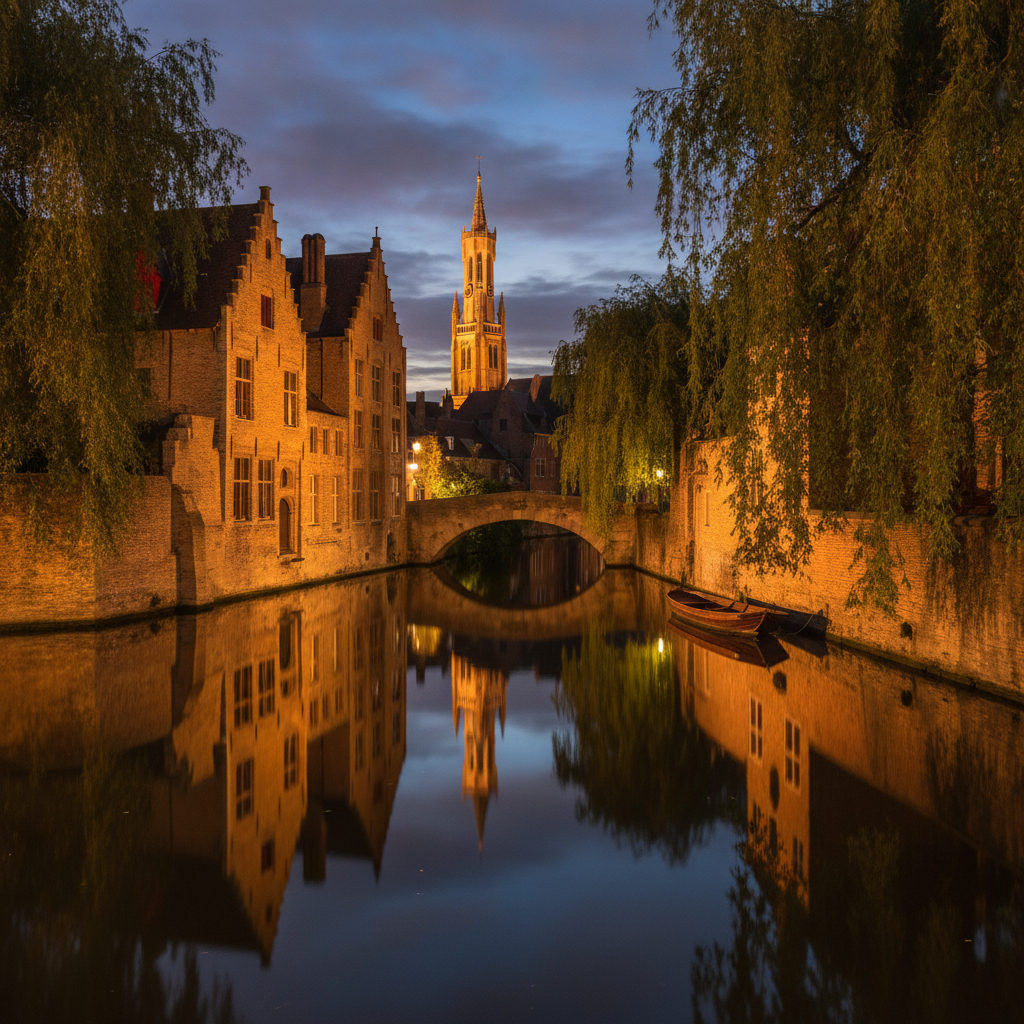
Bruges — Memling Museum, the Burgundian Court, Textile Heritage, Music at the Concertgebouw & Bruges by Night
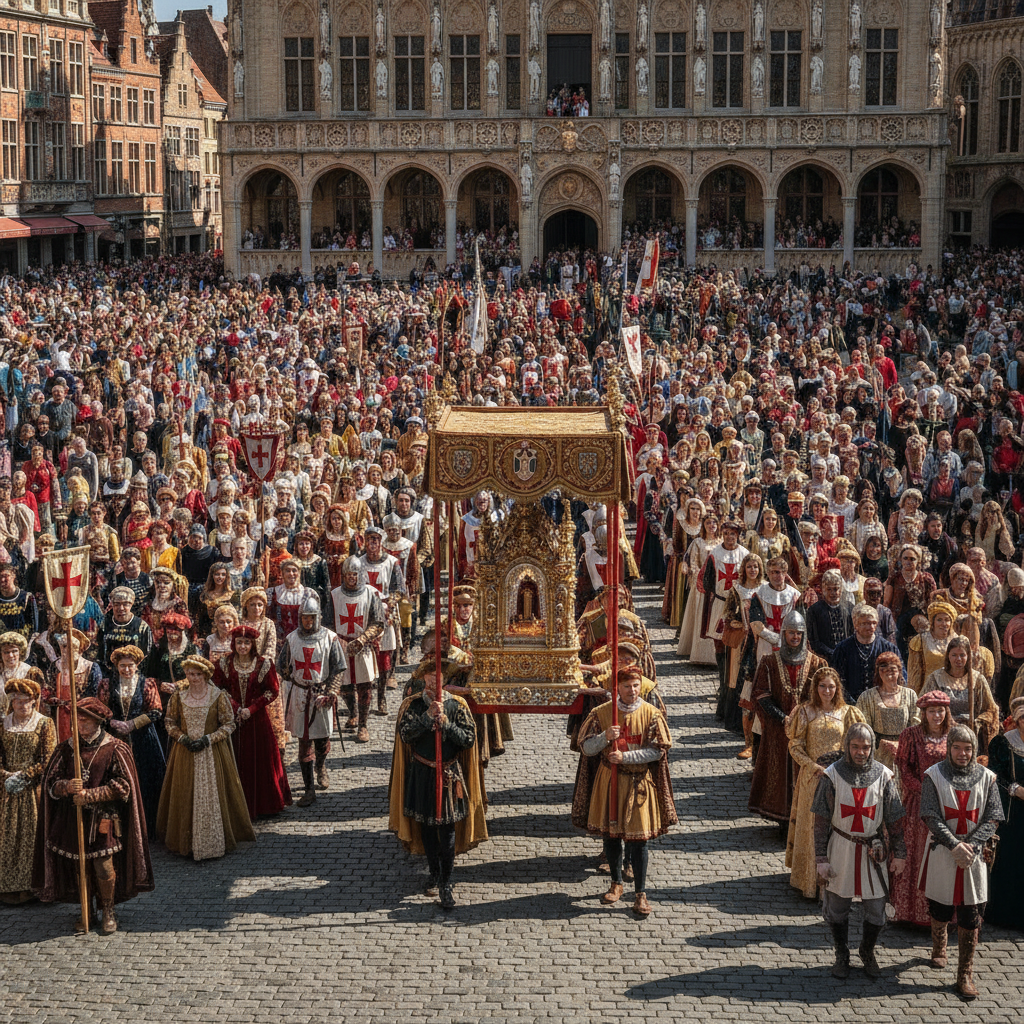
Bruges — Canal Circuit, Damme Cycling, the Holy Blood Procession, Contemporary Art Triënnale & Family Activities
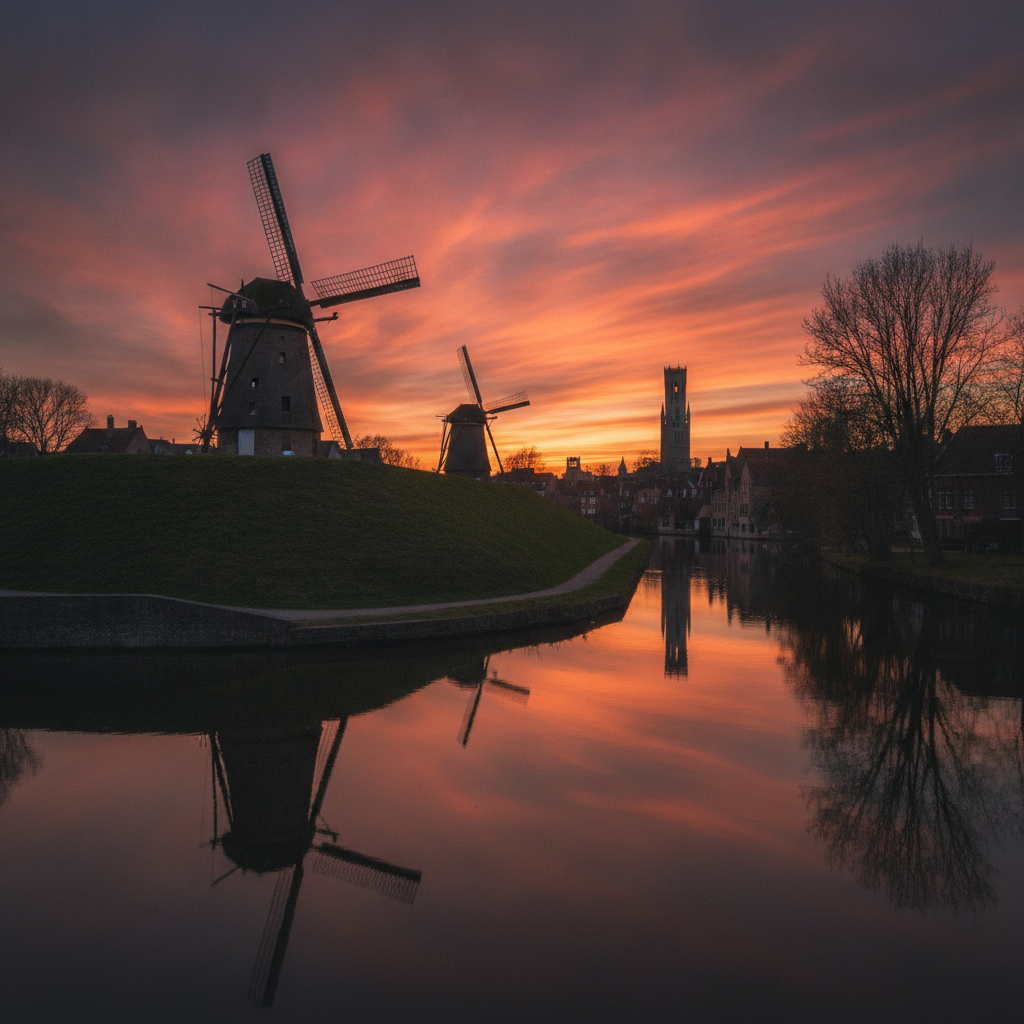
Bruges — Ramparts & Windmills, Jan van Eyckplein, Gastronomy, Ghent Day Trip, Christmas Market & Practical Guide