Bruges — Groeningemuseum, the Dijver, Belgian Beer Culture, Gothic Architecture, Cycling to Damme & 'In Bruges'
The Groeningemuseum holds van Eyck's most technically astonishing painting; the De Halve Maan brewery has a beer pipeline under the cobblestones; the flat polder cycling to Damme is the most atmospheric single Flemish cycling excursion; and 'In Bruges' put the medieval city on every film-lover's bucket list.
- 1
The Groeningemuseum — Masters of Flemish Painting
Groeningemuseum (the Groeningemuseum at Dijver 12 — the most comprehensively Flemish Primitive painting surveying single museum in Belgium, the permanent collection spanning the Flemish Primitive, the Flemish Baroque, the 19th and the 20th-century Belgian art in a single compact museum): the Jan van Eyck collection (the Jan van Eyck paintings at the Groeningemuseum — the Madonna with Canon Joris van der Paele (1436) the most technically astonishing single oil painting in any Belgian museum: the hyper-realistic detail of the Canon's stubble, the reflections in the armour, and the Persian carpet fringe the most demonstrably unprecedented single painting technique in Northern European Renaissance art, the painting the single most important reason to visit the Groeningemuseum; the Portrait of Margareta van Eyck (1439) the most intimately observed single female portrait in 15th-century Flemish painting and the first dated portrait of a painter's wife in Northern European art, the 2 van Eyck paintings the most significant single pair of Flemish Primitive works in any one collection outside the National Gallery London), the Gerard David collection (the Gerard David paintings — the Baptism of Christ triptych (c.1502-1508) the most compositionally ambitious single triptych by the last great Bruges Primitive, the triptych the most comprehensively landscape-detailed single Flemish Primitive multi-panel painting in the Groeningemuseum, the Judgement of Cambyses diptych (1498) the most graphically violent single panel painting in the Groeningemuseum depicting the flaying of a corrupt judge — the most often gasped-at single painting in the museum), the Hugo van der Goes (the Portinari Triptych panels — the most emotionally intense single Flemish Primitive faces in the Groeningemuseum, the donors Tommaso Portinari and his family the most specifically identified mercantile commissioners of any Flemish Primitive triptych in the Bruges collection), the Hieronymus Bosch (the Bosch-attributed Last Judgement panel in the Groeningemuseum — the most theologically densely illustrated single panel painting in the museum, the hellscape details the most popularly commented-upon single painting subject at any Bruges museum visitor), the 20th-century Belgian art (the Belgian Expressionism and Surrealism collection at the Groeningemuseum — the James Ensor, René Magritte, and Paul Delvaux works the most comprehensively Belgian Surrealist collection in a single Flemish museum, the Magritte and Delvaux paintings the most internationally recognised single 20th-century Belgian artworks in the Groeningemuseum collection, €14 adults, Tuesday-Sunday 9:30am-5pm) and the museum building (the Groeningemuseum building — the 1930 museum building on the former Augustinian friary garden at the Dijver, the most atmospherically garden-positioned single fine art museum in Bruges, the sculpture garden between the museum and the Dijver canal the most relaxed single museum garden in any Belgian museum).
- 2
The Dijver and the Bruges Antique Market
Bruges Dijver (the Dijver canal promenade — the most museum-concentrated single canal street in Bruges, the Dijver hosting 4 significant museums, the Saturday-Sunday antique and flea market, and the most classic canal-boat embarkation point): the Dijver canal (the Dijver — the most museum-aligned single canal street in Bruges, the sequence of the Groeningemuseum, the Arentshuis, the Gruuthusemuseum, and the Church of Our Lady all within 300m of the Dijver promenade the most compressed single museum concentration in any Belgian city, the tree-lined canal the most classically 'Bruges' canal walk in the entire network), the Saturday-Sunday antique market (the Bruges antique and flea market on the Dijver — the most visited single outdoor market event in Bruges on Saturdays and Sundays from March to November, the stalls the most eclectic mix of Belgian antiquities, Flemish lace, prints, and vintage collectibles in any Belgian outdoor market, the most tourist-engaged single weekend market in any Flemish city, free to browse), the Gruuthusemuseum (the Gruuthusemuseum at Dijver 17 — the 15th-century palace of the Lords of Gruuthuse, the most architecturally spectacular single medieval merchant's palace open to the public in Bruges, the museum the most comprehensively Flemish decorative arts and daily life collection in Bruges: the tapestries, the weapons, the musical instruments, the guild silver, and the domestic objects the most instructively complete single Flemish medieval-to-19th-century material culture collection, the private oratory connecting the palace directly to the Church of Our Lady the most specifically Burgundian court privilege single architectural feature in any Belgian merchant palace, €12 adults, closed Mondays), the Arentshuis (the Arentshuis at Dijver 16 — the 18th-century mansion housing the Frank Brangwyn collection, the Flemish-born British artist's mural cartoons, prints, and applied arts the most comprehensively Brangwyn-focused single museum in the world, the museum garden the most gardenly-intimate single canal-side outdoor museum space in Bruges, €6 adults, combined with Groeningemuseum €18) and the Bruges Diamond Museum (the Diamond Museum (Diamantmuseum Brugge) at Katelijnestraat 43 — the most comprehensively diamond-history focused single museum in Belgium, the history of diamond polishing in Bruges the most directly surprising single industrial history revelation for visitors, the diamond cutting demonstration the most direct single diamond industry visitor experience in Belgium, €9.50 adults, the Bruges diamond polishing tradition established in the 14th century the most historically earlier single diamond processing industry in any Belgian city, Bruges the first city in the world to develop the modern brilliant cut diamond polish).
- 3
Bruges Beer Culture — De Halve Maan and the Belgian Trappist Tradition
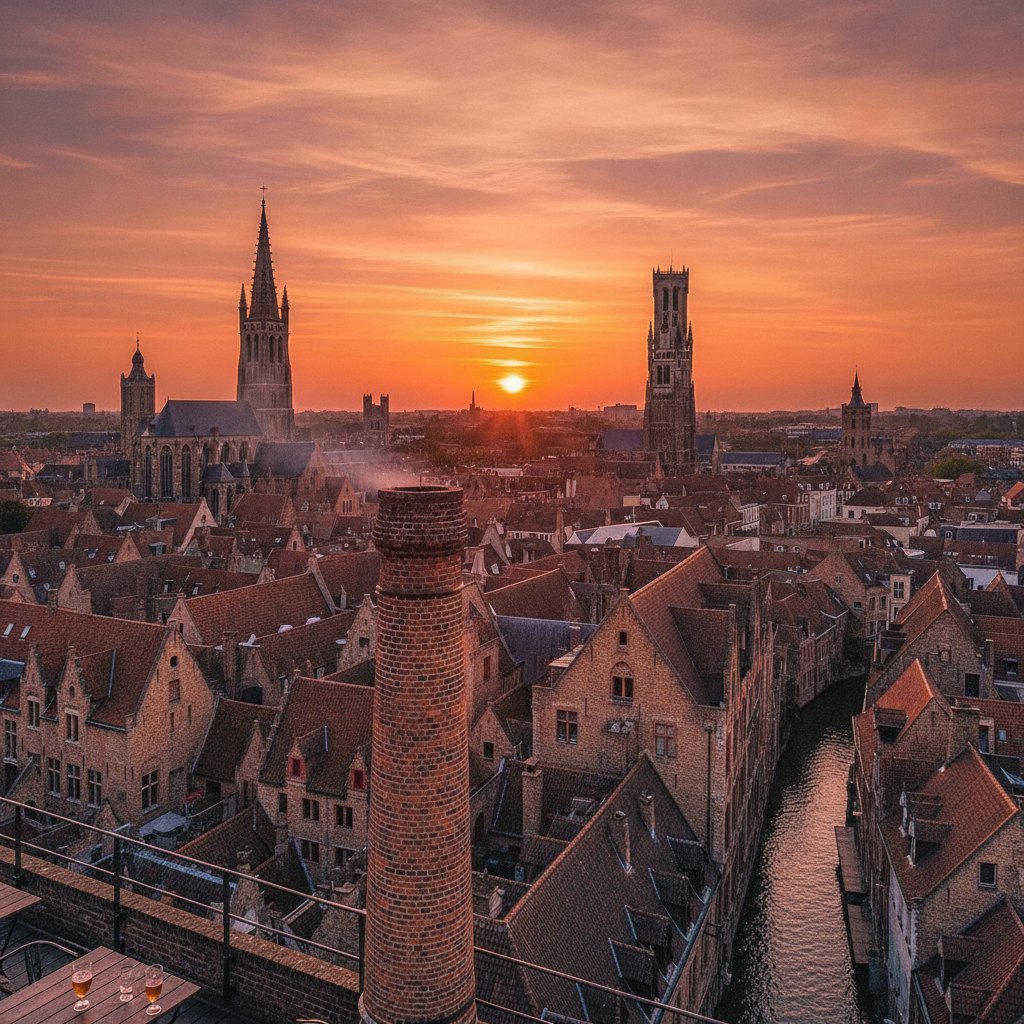
Bruges beer culture (the Bruges Belgian beer landscape — the most comprehensively brewing-heritage informed single Belgian city beer culture, the De Halve Maan the only active brewery within the Bruges walls, the surrounding Flanders region the most Trappist-brewery-dense single region in the world): the De Halve Maan (the De Halve Maan (Half Moon) Brewery at Walplein 26 — the only remaining active urban brewery in the Bruges city walls, the brewery operating continuously since 1856, the Brugse Zot ('Bruges Fool' — the most popularly named single Bruges beer) and the Straffe Hendrik ('Strong Henrik' — the most alcoholic at 9% and the most bottle-aged of the De Halve Maan beers) the 2 house beers, the guided brewery tour including the cellar, the fermentation tanks, and the roof terrace panoramic Bruges view the most informatively complete single Belgian urban brewery visit, €12 adults for the 45-minute tour with 1 beer, the beer pipeline (the 3.2km underground stainless steel beer pipeline from the brewery under the Bruges streets to the bottling plant outside the walls — the most uniquely urban single beer infrastructure solution in the world, constructed 2016 to replace the traffic-disrupting beer truck deliveries, the most technologically novel single brewery logistics decision in Belgian brewing history)), the Bruges beer bars (the key Bruges beer bars: the 't Brugs Beertje at Kemelstraat 5 — the most celebrated single specialist Belgian beer bar in Bruges with 300+ Belgian beers on the menu, the most knowledgeable staff for beer style explanation in any Bruges bar, the most consistently used single bar by the serious Belgian beer visitor; the De Garre at Garre 1 (the alley off Breidelstraat) — the most secretively located single bar in Bruges in a hidden alley, the De Garre house tripel at 11.5% the most alcoholic single house-beer in any hidden Bruges alley bar; the 2Be Beer Wall at Wollestraat 53 — the 400-bottle Belgian beer wall selection the most comprehensively displayed single Belgian beer retail selection in Bruges), the Belgian beer families (the Belgian beer style families essential for the Bruges visitor: the Abbey ales (dubbel, tripel, quadrupel — brewed to monastic recipes), the Flemish Red-Brown ales (Rodenbach the most internationally exported), the Witbier (Belgian wheat beer — Hoegaarden the most internationally distributed), the Lambic and Gueuze (the most complex single fermentation family in world beer, Brussels origin), and the Belgian Golden Strong (Duvel the most internationally distributed), the most instructively diverse single national beer style catalogue in the world, the Bruges bars the most accessible single tasting location for the Belgian beer style education)), the Westvleteren (the Westvleteren 12 — brewed by the Sint-Sixtus Trappist monastery in Westvleteren 60km southwest of Bruges, the most frequently rated as the world's best single beer in international beer competitions, available only at the brewery gate or the In de Vrede café opposite, the most specifically pilgrimage-required single beer purchase in Belgian brewing), the Bruges jenever (the jenever (Flemish gin) at the Dreupelkot at Wijngaardplein 9 — the smallest single licensed bar in Bruges at 6 square metres standing room only, the 200+ jenever selection the most comprehensively jenever-only bar in any Flemish city, the locally distilled jenever the most specifically Bruges spirits experience) and the Café Vlissinghe (the Café Vlissinghe at Blekersstraat 2 — the oldest continuously operating café in Bruges, established 1515, the most historically continuous single drinking establishment in Belgium, the wooden panelling and the sand on the floor the most completely unchanged single café interior in any Belgian city, the bocce court in the back garden the most specifically Flemish outdoor leisure activity still played in any Bruges café).
- 4
The Burg Architecture — Gothic, Renaissance and Baroque in One Square
Bruges architectural styles (the Bruges architectural heritage — the most completely Gothic-preserved single Belgian city centre with significant Renaissance and Baroque inclusions, the architecture the primary reason for the UNESCO World Heritage inscription of the Bruges Historic Centre in 2000): the Gothic (the Gothic architecture of Bruges — the Stadhuis (City Hall, 1376-1420) the most completely Gothic civic building in Belgium, the Heilig-Bloedbasiliek lower chapel (12th century) the most completely Romanesque single ecclesiastical space in Bruges, the Church of Our Lady tower (115.5m) the most monumentally Gothic single brick tower in the Low Countries, the St. Salvator's Cathedral nave the most spatially immersive Gothic ecclesiastical interior in Bruges), the Bruges Gothic civic style (the Bruges Gothic civic style — the stepped gable (trapgevel) the most specifically Flemish Gothic single roof termination detail, the corbelled brick oriel window (erker) the most architecturally distinctive single residential element of the medieval Bruges house, the red brick the most materially consistent single building material in the Bruges historic streetscape), the Renaissance (the Bruges Renaissance — the Raadhuis (Town House) of the Bruges Franc at the Burg the most completely Renaissance-porticoed single civic facade in Bruges, the Raadhuis Zaal (Hall of the Liberty of Bruges) at the Burg with the oak mantelpiece carved by Lanceloot Blondeel (1529) the most technically accomplished single Renaissance woodcarved mantelpiece in Belgium, the Renaissance chimneypiece the most specifically visited single decorative arts object in the Bruges Burg), the Baroque (the Baroque in Bruges — the Proosdij (Provostry) facade at the Burg the most completely Baroque secular facade on the Burg square, the Sint-Annakerk interior the most lavishly Baroque-decorated single parish church interior in the Bruges residential districts, the Jesuitenkerk at Burg the most centrally positioned Baroque ecclesiastical facade on the Bruges civic square) and the 19th-century neo-Gothic (the Bruges neo-Gothic — the Provinciaal Hof (Provincial Court, 1887) on the Markt the most imposing single neo-Gothic government building in Bruges, the neo-Gothic buildings on the Markt square the most compositionally coherent single Victorian Gothic ensemble in any Flemish city market square, the neo-Gothic style the most architecturally consistent single new building style in Bruges from 1850-1914 — the most comprehensively neo-Gothic-building-programme single Belgian city of the late 19th century).
- 5
Bruges by Bicycle — the Canal Paths and the Damme Excursion
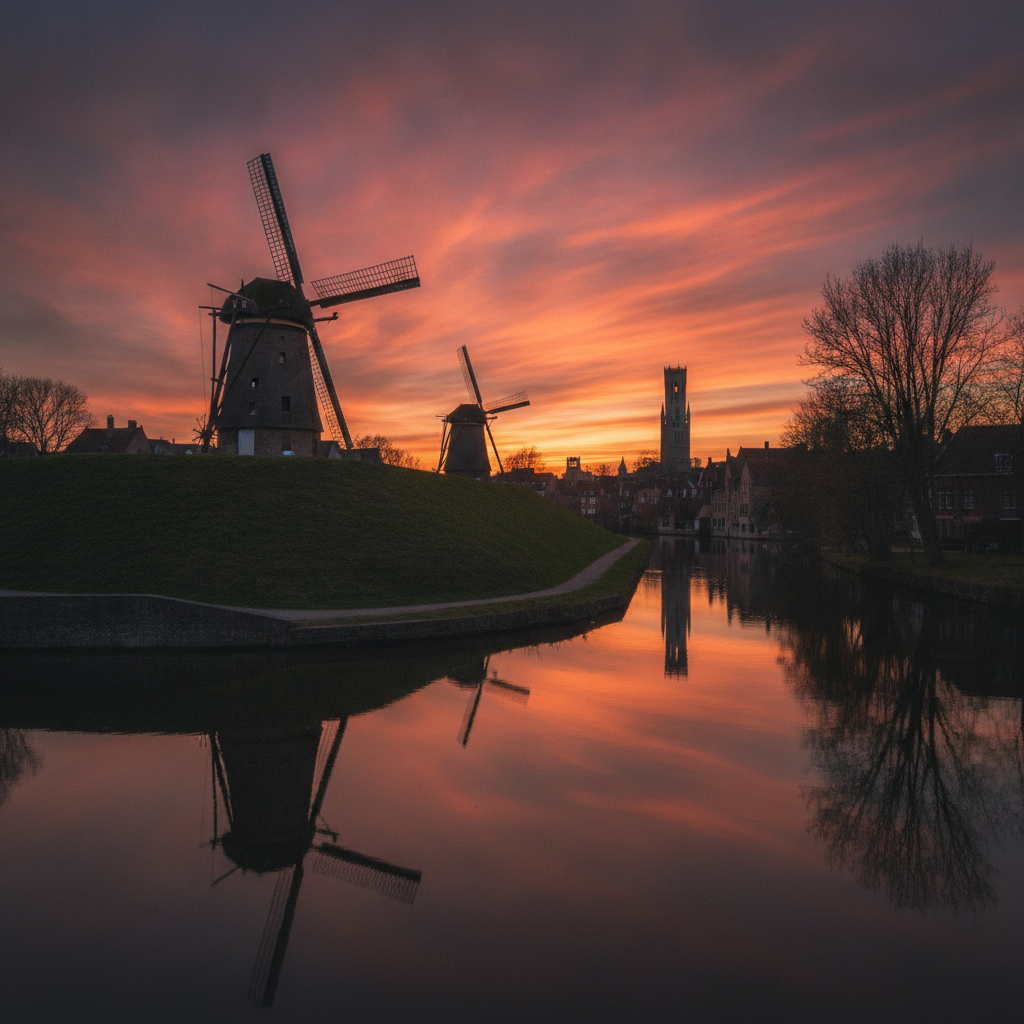
Bruges cycling (the Bruges cycling culture — the most bicycle-equipped single city population in Belgium with 100% bicycle ownership, the most comprehensively cycling-infrastructure-equipped historic city in the Low Countries, the most enjoyable and the most effective transport mode for exploring the Bruges canal network and the surrounding polder landscape): the city cycling (cycling in Bruges — the entirely flat terrain the most cycling-friendly single topographical condition of any Belgian city, the dedicated cycle lanes in the historic centre the most cyclist-safe single urban cycling infrastructure in Flanders, the one-way system in the historic centre navigable exclusively by bicycle the most efficiently adapted single traffic system for the cyclist, the cycling map from the Tourist Office the most practically useful single document for the Bruges cyclist), the Bruges to Damme (the Bruges to Damme canal cycle path along the Damse Vaart — the most popular single day cycling excursion from Bruges: the 6km flat cycle path along the poplar-lined canal the most atmosperically Flemish polder landscape cycling in Belgium, the Damme village the most completely medieval fortified town accessible by bicycle from any Belgian city, the Damme Stadhuis (Town Hall) the most completely preserved single late-Gothic civic building in the Bruges hinterland, the Damme windmill the most completely restored single windmill in the Bruges cycling range, the 30-minute return cycle the most efficiently short-and-rewarding single day cycling excursion in Flanders), the coastal cycling (the Bruges to Ostend (Oostende) cycling route via the Bruges-Ostend canal — the 30km flat coastal cycling route through the polder landscape the most comprehensively level single coastal approach cycling in Belgium, the North Sea dunes at Ostend the most dramatic single topographical change on the route, the Ostend seafront the most historically atmospheric single Belgian coastal destination with the Oostende-Duinkerke cycling on the sea dike the most panoramically North Sea positioned single cycle path in Belgium), the Bruges canal circuit (the Bruges inner canal cycling circuit — the 8km cycle circuit using the canal-bank paths around the inner Bruges canal ring, the most completely canal-view cycling in any Belgian city, the circuit passing the Begijnhof, the Minnewater, the Coupure canal, and the Langerei the most comprehensively Bruges-canal-viewing single cycling route, the most used single daily cycling route by Bruges residents), the bicycle rental (the Bruges bicycle rental: the Fietspunt at the train station the most conveniently positioned single rental outlet in Bruges at €10 per day, the Quasimundo bike tours the most informatively guided single cycling tour in Bruges at €28 including guide and bike) and the polder landscape (the West Flemish polder landscape north and east of Bruges — the most completely flat and the most geometrically field-and-ditch patterned agricultural landscape in Belgium, the polders reclaimed from the sea from the 12th century onwards the most hydraulic-engineering-history-instructive single agricultural landscape in Belgium, the Damme-Sluis route the most completely Flemish polder-cycling-with-medieval-heritage single combined excursion from Bruges).
- 6
Bruges in Film and Literature — 'In Bruges' and the Romantic Legacy
Bruges in culture (the Bruges cultural legacy in international cinema and literature — the most cinematically romantically filmed single Belgian city, the 2008 film 'In Bruges' the most internationally distributed single Bruges-set narrative): the film 'In Bruges' (the film 'In Bruges' (2008, directed by Martin McDonagh, starring Colin Farrell and Brendan Gleeson) — the most internationally commercially and critically successful single Belgian-city-set English-language film, the film the most visited single reason for choosing Bruges by the under-40 international tourist, the film locations: the Markt, the Belfry, the Groeningemuseum (the 'Last Judgement' scene the most referenced single Bosch connection in the film), the Rozenhoedkaai (the most atmospherically filmed canal bend), and the Astrid Park the most comprehensively Bruges-centre-covering single film location circuit in any Belgian city), the Symbolist literature (Bruges as the 'dead city' — the novel 'Bruges-la-Morte' (1892) by Georges Rodenbach the most internationally influential single literary evocation of Bruges, the novel creating the 'dead city' (ville morte) literary archetype for Bruges that defined the international perception of the city from 1892 to the 1960s, the most specifically Symbolist-literary-reputation-creating single novel about a Belgian city, the novel the direct inspiration for Korngold's opera 'Die Tote Stadt' (1920)), the Flemish literature (the Guido Gezelle tradition — the West Flemish poet Guido Gezelle (1830-1899) the most significant single poet in the Flemish literary tradition, the most comprehensively nature-and-faith lyric-poem-composing single Belgian poet, the Guido Gezelle Museum at Rolweg 64 the most directly poet's-birthplace-preserving single Flemish literary museum), the Bruges Christmas atmosphere (the Bruges Christmas film tradition — Bruges the most frequently chosen single European city for Christmas-atmospheric film location shoots, the illuminated canal reflections and the Belfry in snow the most cinematographically Flemish Christmas single image used in European advertising), the UNESCO inscription (the UNESCO World Heritage inscription of the Historic Centre of Bruges in 2000 — the most comprehensively medieval-preservation-justified single Belgian UNESCO inscription, the inscription the most commercially consequential single heritage recognition in Bruges tourism history, the 4 million annual visitors post-inscription the most visitor-number-increasing direct effect of any Belgian UNESCO inscription) and the Flemish Masters (the Bruges reputation as the 'Athens of the North' in the 15th century — the court of the Dukes of Burgundy at Bruges 1380-1477 the most culturally productive single court in northern Europe, the patronage of van Eyck, Memling, and van der Goes the most internationally artistically influential single court patronage programme in 15th-century Europe, the most art-historically significant single 50-year period in the history of any Belgian city).
Walk this route with audio
Stories play automatically as you reach each stop — no tapping needed.
More in bruges
Bruges — Begijnhof, Michelangelo's Madonna, Almshouses, Flemish Lace, Chocolate & the Windmill Ramparts
Bruges — the Markt, Holy Blood, Canals, Flemish Primitive Masterworks, Belgian Beer & Chocolate
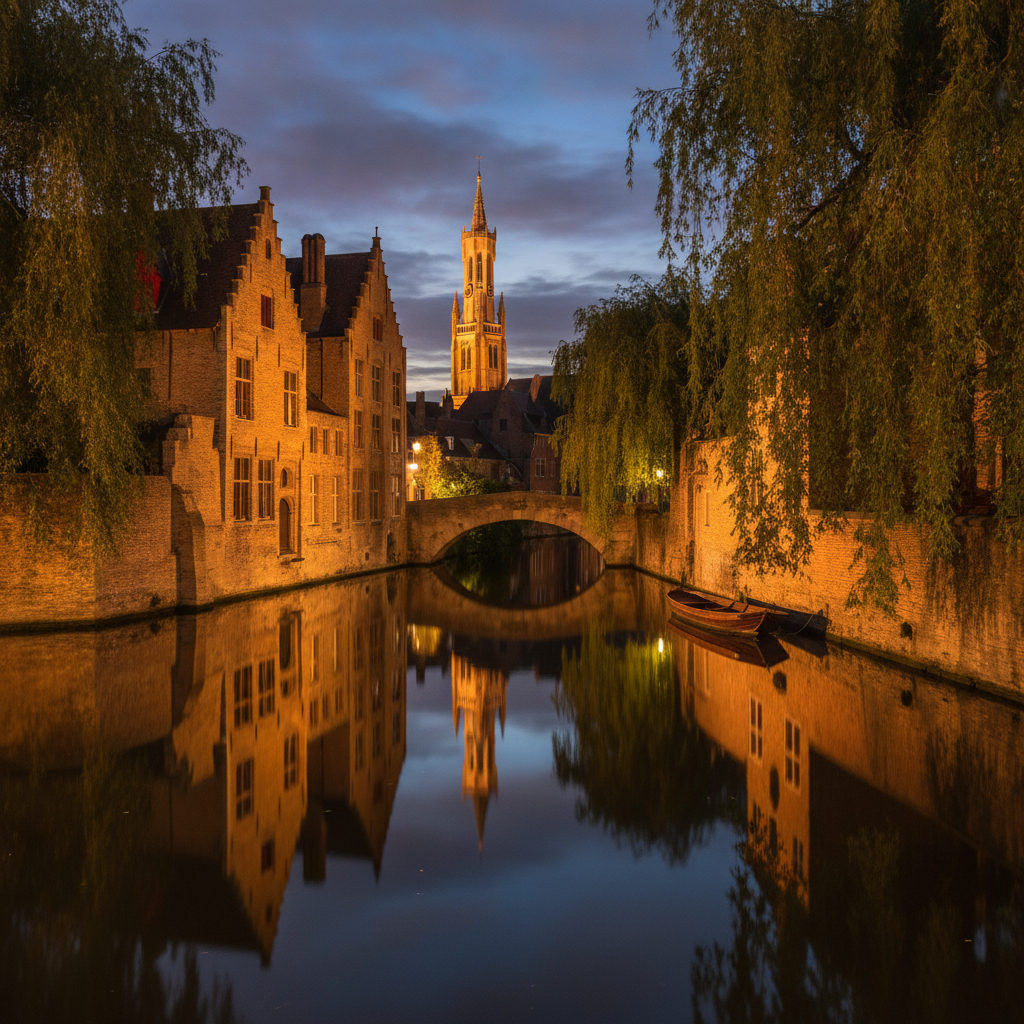
Bruges — Memling Museum, the Burgundian Court, Textile Heritage, Music at the Concertgebouw & Bruges by Night
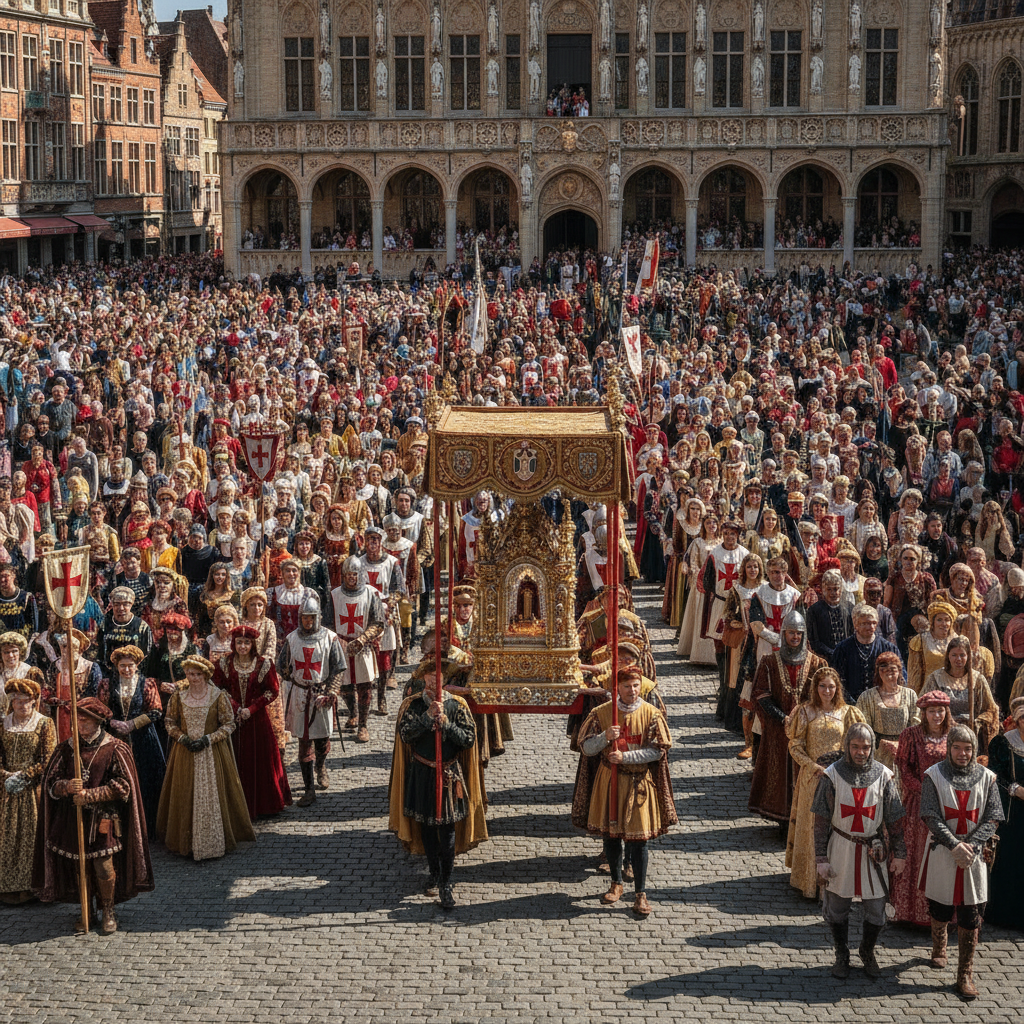
Bruges — Canal Circuit, Damme Cycling, the Holy Blood Procession, Contemporary Art Triënnale & Family Activities