Battambang Bamboo Train (Norry) Walk
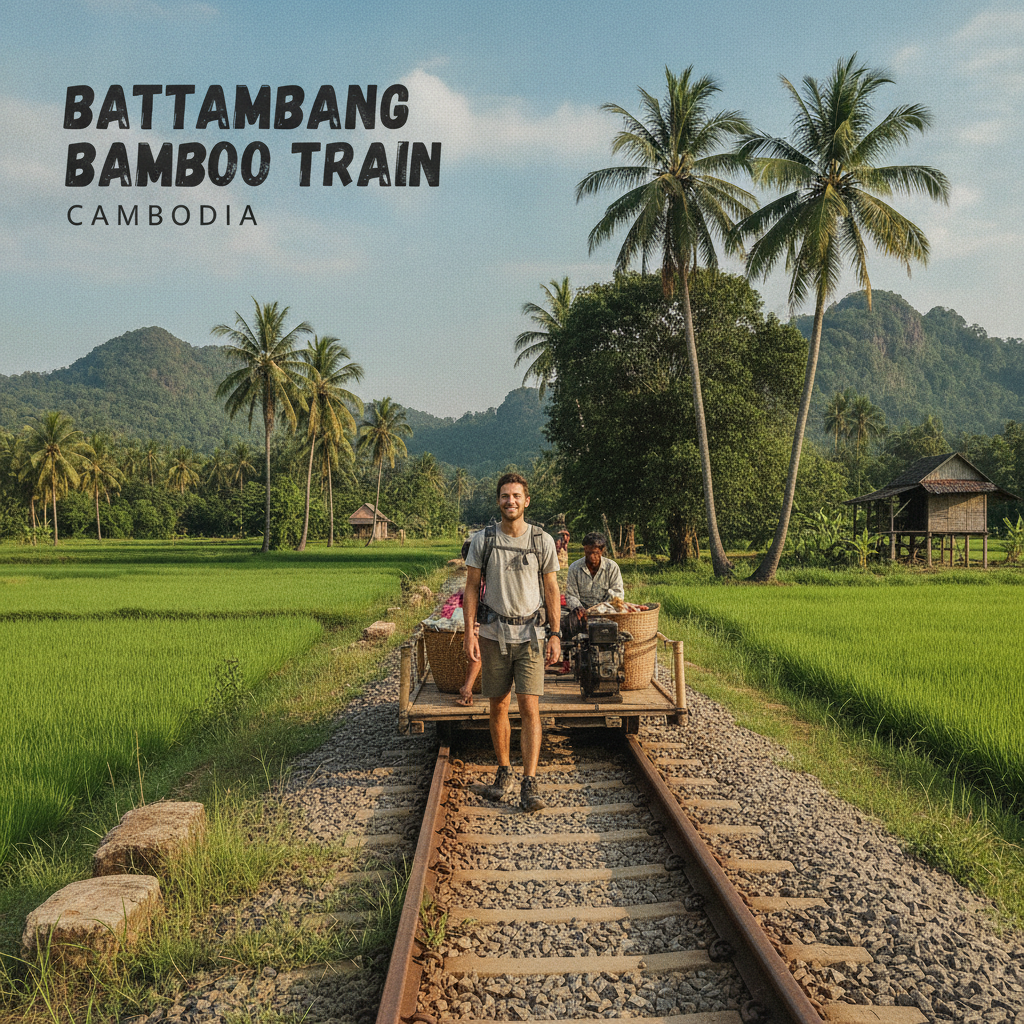
Ride the Battambang bamboo train — the norry, a simple bamboo platform on steel wheels powered by a small engine, is Cambodia's most beloved improvised transport, running on the old French colonial railway tracks through the rice fields west of Battambang.
- 1
O Dambong Station Start
The O Dambong bamboo train station west of Battambang is the southern starting point of the most famous norry ride in Cambodia — the bamboo train (the locally improvised railway vehicle consisting of a bamboo platform placed on two steel axles with iron wheels running on the standard-gauge French colonial railway tracks, powered by a small petrol engine driving the rear axle through a rubber fan belt) has operated on the unused sections of the Battambang railway as improvised local transport since the tracks fell out of regular rail service. The norry's engineering simplicity (the entire vehicle can be disassembled and removed from the track in under two minutes, allowing two trains approaching from opposite directions to pass each other — one norry removed from the track, the other passed, then the first reassembled and continuing) is the most practically ingenious solution to single-track transport encountered anywhere in Southeast Asia.
- 2
Rice Field Rail Journey
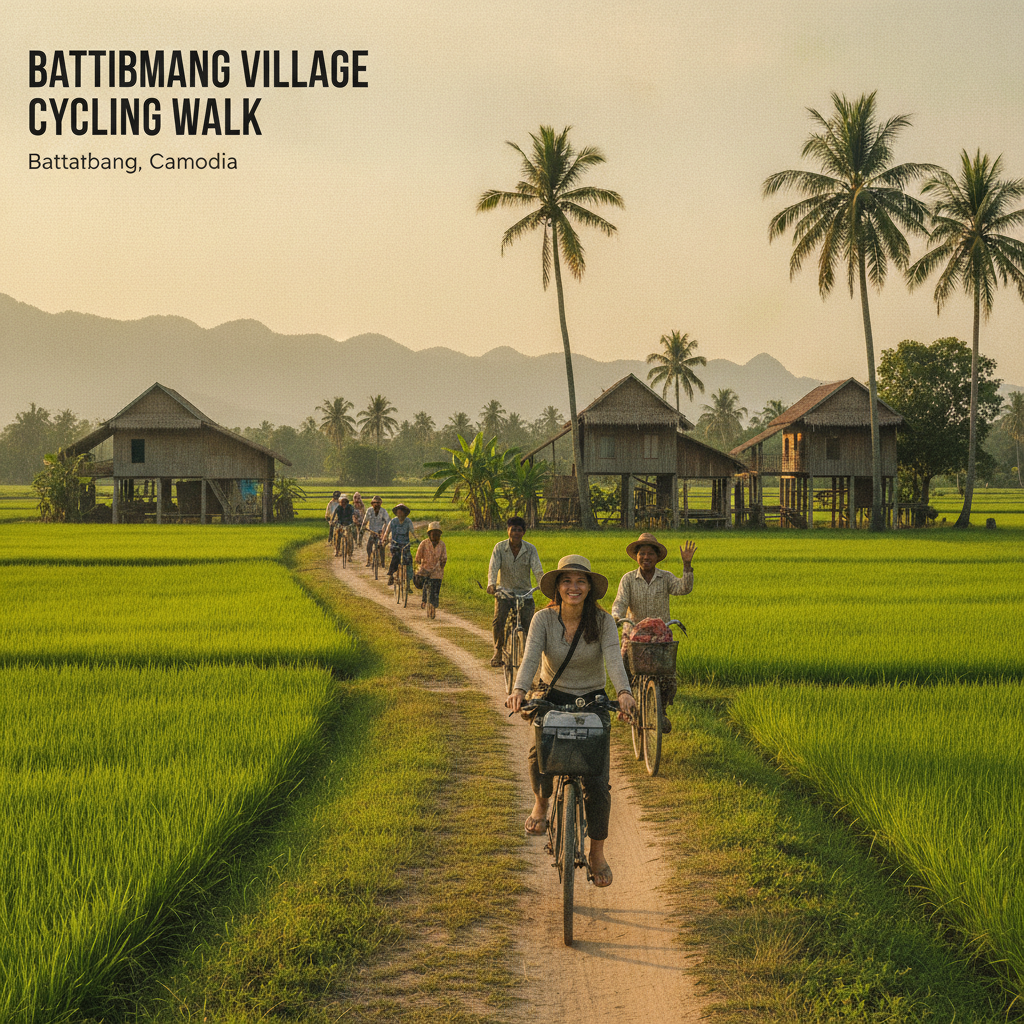
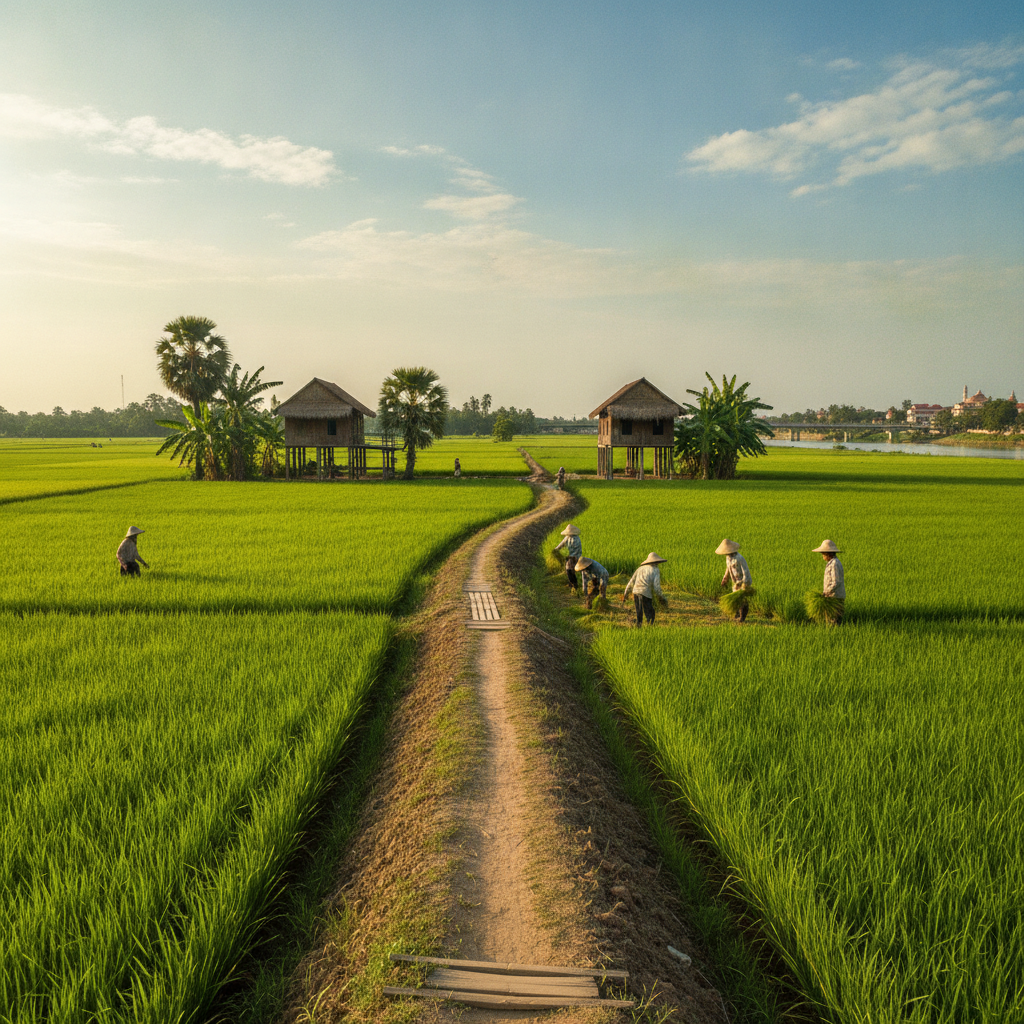
The 7km norry journey through the rice paddies between O Dambong and Phnom Sampeu village follows the original French colonial railway alignment through the flat agricultural plain that constitutes the most productive rice-growing landscape in the Battambang province — the open bamboo platform of the norry (no walls, no seats other than the bamboo surface, no protection from the wind generated by the 40km/h ride) creates the most physically immersive encounter with the Cambodian countryside accessible to visitors. The rice field landscape visible from the moving train (the flooded paddies reflecting the sky in the wet season, the dry golden stubble in the harvest season, and the farmers visible at work throughout the agricultural cycle) provides the most panoramic view of the Cambodian agricultural landscape available without climbing a hill.
- 3
Village Track Community
The villages along the bamboo train route (the communities whose daily life the railway track passes directly through — the norry running between the houses and past the community water points and market stalls that have grown up alongside the track) represent the most direct encounter with rural Cambodian village life accessible on any tourist transport in the country. The norry's low speed through the village sections (the engine reduced to walking pace as the track passes through the inhabited area) and the track's passage at ground level (the train literally at the height of the village paths) creates a physical proximity to the village environment that is impossible from a road vehicle. The meeting-and-passing negotiations that occur when two norries meet (the etiquette governing which train removes its platform for the other — typically the emptier train, or the cargo train deferring to the passenger train) is the most entertaining social encounter on the bamboo train journey.
- 4
Phnom Sampeu Terminus
The Phnom Sampeu end of the bamboo train route is the most atmospherically complete terminus on the norry circuit — the village market at the base of the Phnom Sampeu hill (selling the fresh produce, the norry snacks, and the handicrafts produced by the communities along the route) provides the refreshment and souvenir stop before the return journey. The Phnom Sampeu hill visible above the terminus (the limestone hill with its Buddhist temple complex and its disturbing history as a Khmer Rouge execution site) is the most significant single site visible from the bamboo train route and provides the context for understanding why this particular landscape carries so much weight in the Cambodian historical consciousness.
- 5
Killing Caves Memorial
The Killing Caves at Phnom Sampeu (the natural cave openings in the limestone cliff face from which the Khmer Rouge threw victims in the years 1975-1979) are the most directly confronting memorial accessible from the Battambang tourist base — the cave chamber beneath the cliff now contains a glass-enclosed memorial display of the bones and skulls of the victims discovered when the caves were excavated after the Vietnamese liberation in 1979. The Buddhist temple complex above the killing caves (the monks resident in the temple above the site of the genocide) creates the most complex layering of horror and spiritual practice accessible at any Cambodian memorial site outside Phnom Penh's Tuol Sleng museum and the Choeung Ek killing fields.
- 6
Sunset from Phnom Sampeu
The sunset viewpoint at the top of Phnom Sampeu hill, reached by the steep stone staircase from the bamboo train terminus, provides the most spectacular sunset view accessible from the Battambang area — the panoramic view from the hilltop (the flat rice plain extending to the horizon in all directions, the Tonle Sap lake visible as a silver gleam at the edge of visibility, and the Cardamom Mountains visible to the southwest) at sunset is the most photogenic single view in the Battambang province. The thousands of bats (an estimated 1.5 million bats of several species) that emerge from the cave systems in the Phnom Sampeu limestone at dusk (the cloud of bats flowing from the cave openings and spiralling into the evening sky before dispersing to feed) is the most spectacular natural phenomenon accessible near Battambang.
Walk this route with audio
Stories play automatically as you reach each stop — no tapping needed.