Astana Kazakh Nomadic Culture Steppe Heritage
Discover Kazakh nomadic culture in Astana — the museums and cultural centers preserving the heritage of the Kazakh people whose nomadic pastoral lifestyle on the vast Eurasian steppe shaped their language, art, music, and social structure over two millennia, the culture now celebrated in the purpose-built capital that stands as evidence of Kazakhstan's transformation from Soviet republic to independent nation.
- 1
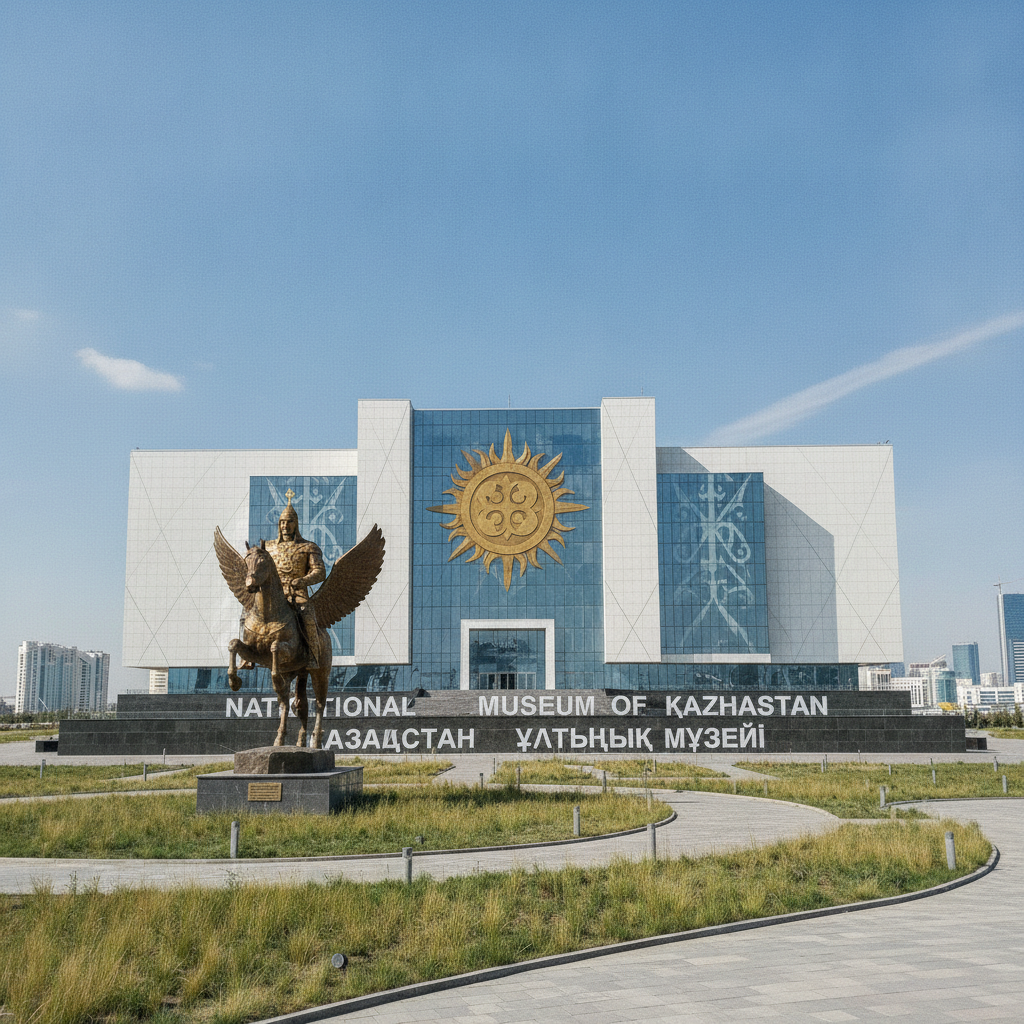
National Museum Kazakhstan
The National Museum of Kazakhstan in Astana — the 74,000 square meter museum opened in 2014 housing the largest collection of Kazakh historical and cultural artifacts, the Golden Man exhibition displaying the 2,500-year-old Saka warrior's golden costume found at Issyk in 1969, the museum tracing Kazakh history from the Bronze Age steppe cultures through independence.
- 2
Golden Man Exhibition
The Golden Man exhibition — the centerpiece of the National Museum, the Saka warrior burial from the 4th-5th century BCE containing over 4,000 gold ornaments including a tall pointed headdress, armor, and weapons, the find interpreted as a royal burial and adopted as the national symbol of Kazakhstan, the golden warrior image appearing on the national coat of arms.
- 3
Traditional Yurt Display
The traditional yurt display in the National Museum — the full-scale reconstructed yurt showing the interior organization of the nomadic dwelling, the carved and painted wooden framework, the felt layers, and the elaborate textile decoration of the interior including the tus kiiz wall panels and the shyrdak felt carpets, the yurt as the central technological achievement of steppe nomadic culture.
- 4
Kazakh Musical Instruments
The Kazakh musical instrument collection — the dombra two-stringed lute that is the iconic instrument of Kazakh musical culture, the kobyz spike fiddle associated with shamanic ritual, the sybyzgy flute, and the percussion instruments, the collection documenting the musical tradition that produced the epic song tradition (zhyrau) and the instrumental music (kui) that are central to Kazakh cultural identity.
- 5
Nomadic Jewelry Crafts
The nomadic jewelry and craft collection — the Kazakh silver jewelry with its characteristic granulation and filigree work, the decorated horse harness with its silver plaques and colored stones, the embroidered felt and leather goods of the nomadic household, the crafts produced by specialized artisans serving the pastoral communities of the steppe.
- 6
Kazakh Epic Literature
The Kazakh epic literature heritage — the great oral epics including Alpamys, Kozy-Korpesh and Bayan-Sulu, and the Forty Brave Men (Qyrq Batyry), the tradition of the zhyrau bard who performed these epics from memory for the assembled community, the literature that preserved Kazakh historical memory and cultural values through the centuries of nomadic life without a writing tradition.
Walk this route with audio
Stories play automatically as you reach each stop — no tapping needed.
More in astana

Astana Modern Business Financial Hub Central Asia
Astana Steppe Silk Road Ancient Trade History
Astana Extreme Winter Climate Life Cold Capital
Astana Religious Architecture Diversity Mosques Cathedral
Astana EXPO 2017 Future Energy Innovation Hub