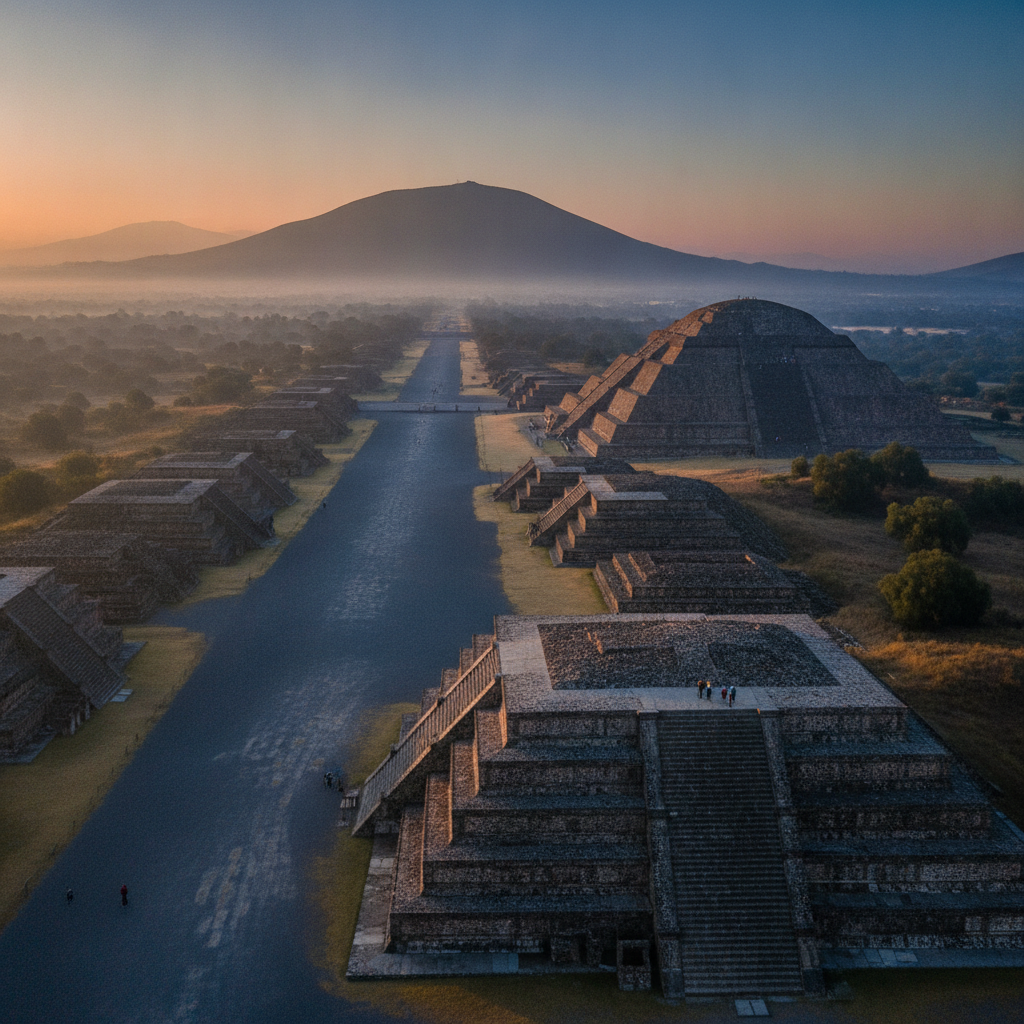

Teotihuacan — The Pyramids of the Sun and Moon
Teotihuacan ('the place where the gods were created', 50 kilometres northeast of Mexico City, UNESCO World Heritage Site) was the largest city in the pre-Columbian Americas and one of the largest cities in the world in the 5th century CE, with an estimated population of 100,000-200,000 people; its two great pyramids (the Pyramid of the Sun and the Pyramid of the Moon) and the 2-kilometre Avenue of the Dead constitute one of the most extraordinary archaeological sites in the world.
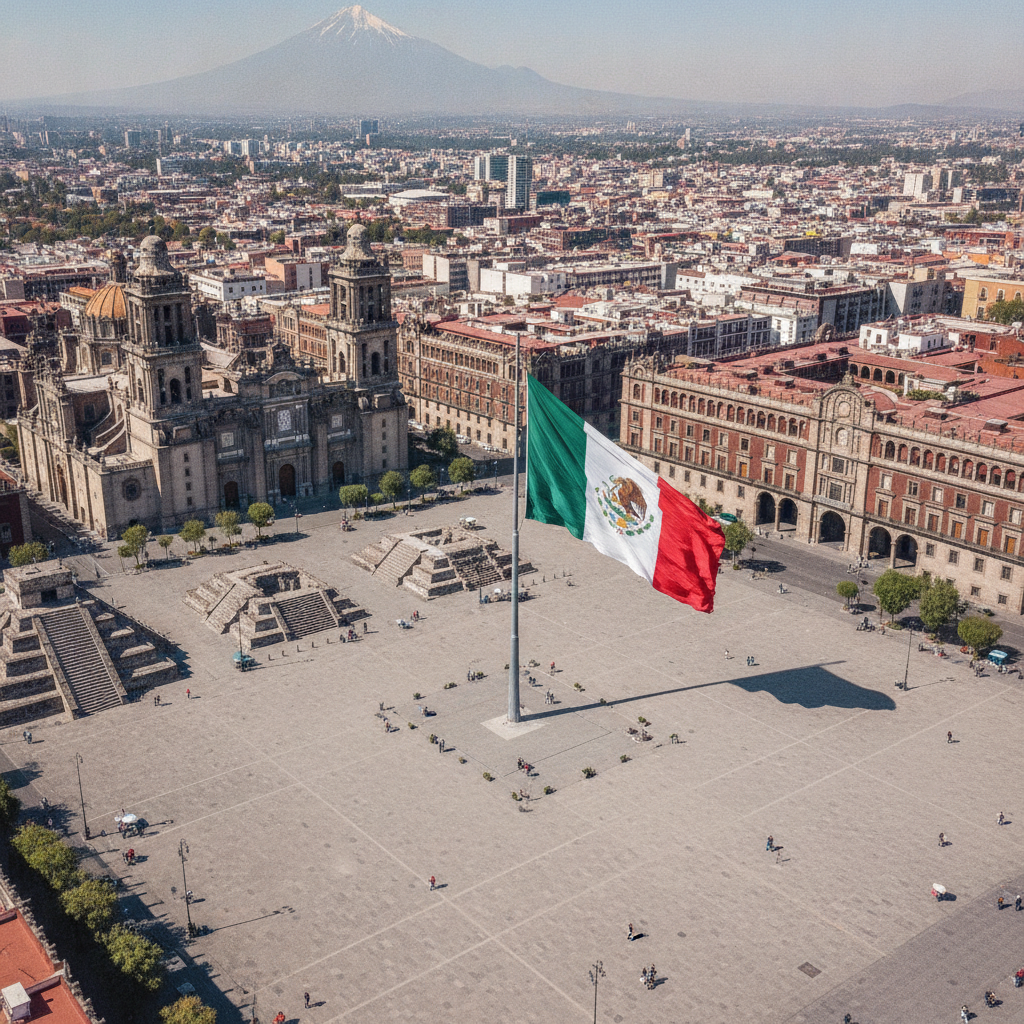
Zócalo, Templo Mayor & the Historic Centre — Aztec and Colonial Mexico City
The historic centre of Mexico City occupies the site of Tenochtitlan, the Aztec capital founded in 1325 on an island in Lake Texcoco — the most layered urban history in the Americas, where the ruins of the Aztec empire lie beneath the grandest colonial baroque architecture in the New World, all organized around the Zócalo, one of the world's largest public plazas.