Zanzibar Complete: Jozani Forest, Livingstone, Marine Conservation, Tanzanian Politics, and the Full Visitor Guide
Zanzibar from every angle: the Jozani Forest and the endemic red colobus monkey; the photography guide for Stone Town and fishing villages; David Livingstone and Zanzibar as his explorer base; sea turtles, whale sharks, and coral reef conservation; Zanzibar in Tanzanian politics and the union question; and the complete practical reference with the best time to visit.
- 1
Jozani Forest - The Red Colobus Monkey and Zanzibar Unique Wildlife
The Jozani-Chwaka Bay National Park: the only national park on Unguja Island and the primary habitat of the Zanzibar red colobus monkey, one of Africa most endangered primates and a species found nowhere else on Earth. The park (Jozani-Chwaka Bay National Park: established as a national park in 2004: area approximately 50 square km: located in the central-southeast of Unguja Island: the park contains the largest remaining area of indigenous forest on Unguja (the groundwater forest (the Jozani forest): a coastal tropical forest growing in a freshwater depression with a high water table: the vegetation includes large fig trees, mahogany, and rare orchids)). The Zanzibar red colobus monkey (Procolobus kirkii (Kirk red colobus): the monkey is named after John Kirk (the British consul in Zanzibar in the 1870s who was David Livingstone companion and who described the species to Western science): the Zanzibar red colobus is endemic to Unguja (found nowhere else in the world): classified as Endangered by the IUCN: population approximately 3,000-4,000 individuals (up from approximately 1,500-2,000 in the 1990s due to conservation efforts): the colobus is distinctive (the contrasting coloring (black and white body with a reddish-brown cap on the head): the colobus has no thumb (the name colobus comes from the Greek kolobus meaning maimed or mutilated): the colobus is a leaf-eating specialist (a folivore): the complex multi-chambered stomach allows fermentation of leaves, making it possible to digest cellulose that most mammals cannot process): the colobus troops at Jozani are habituated to humans and allow close approach: the colobus is frequently seen in the trees along the forest paths and occasionally descends to the ground). The mangrove boardwalk (the Jozani park mangrove boardwalk: a raised wooden walkway through the mangrove swamp at the edge of the forest: the mangrove ecosystem (the mangrove forest protects the coastline from erosion and provides nursery habitat for fish and invertebrates): the mangroves at Jozani are one of the best places to observe the diverse mangrove fauna (mudskippers (Periophthalmus: the amphibious fish that move across the mud using their pectoral fins), fiddler crabs (the male fiddler crab with one enlarged claw), kingfishers)).
- 2
Zanzibar Photography Guide - Stone Town Alleys, Fishermen, and the Forodhani Evening
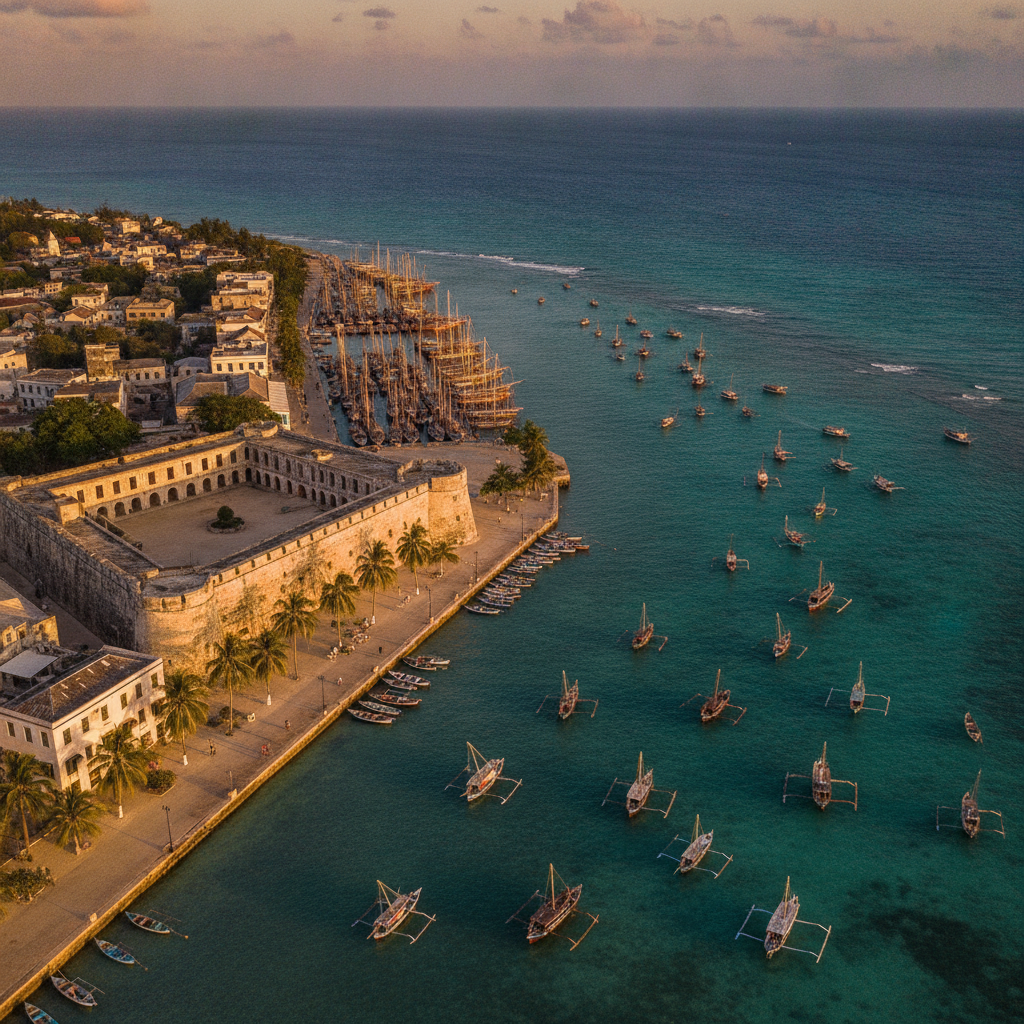
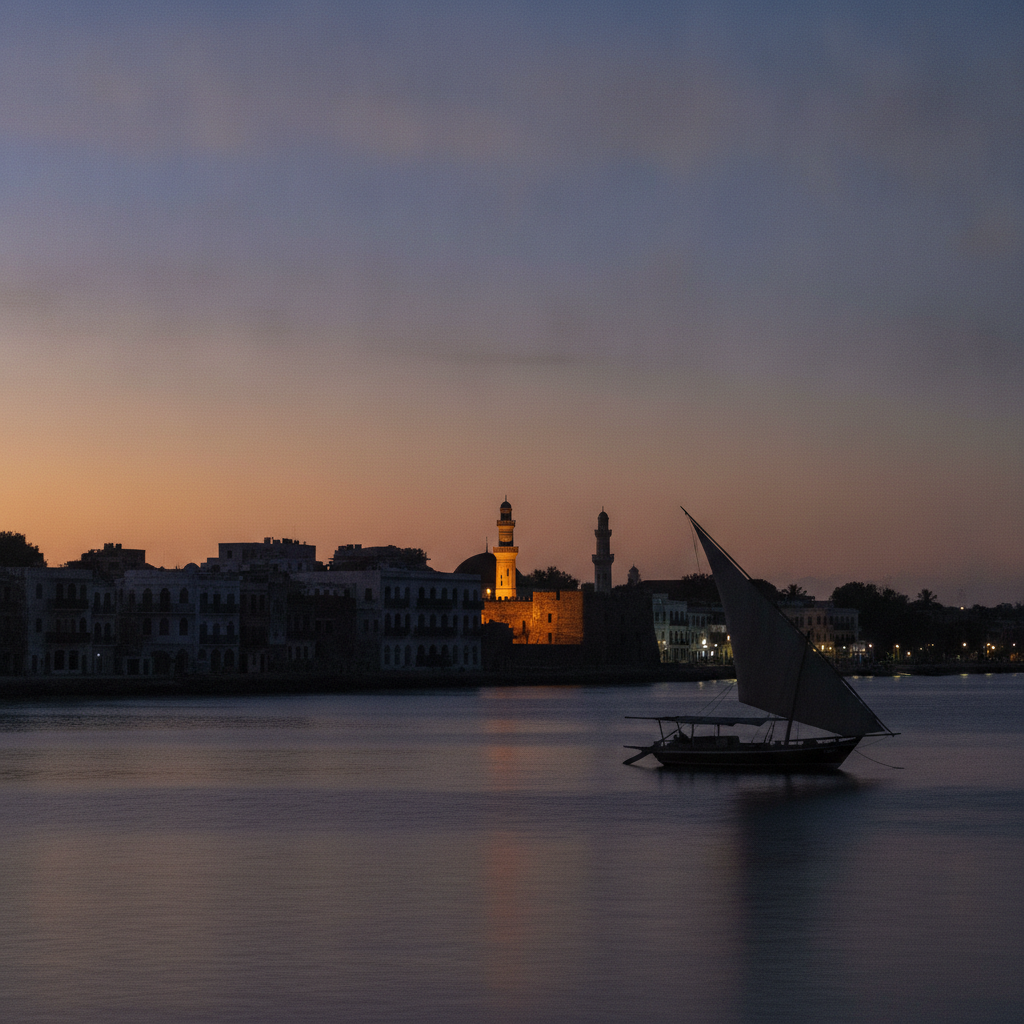
The Zanzibar photography guide: where and how to photograph the carved doors of Stone Town, the fishermen of the west coast, the sunset from the waterfront, the spice farms, and the people of Zanzibar. Stone Town photography (the carved doors (the primary architectural photography subject of Stone Town: the best doors are on Gizenga Street, Cathedral Street, Hurumzi Street, and the lanes off the main market (Darajani Market): the best light for door photography is in the morning (9-11am) when the direct sun illuminates the carved surfaces and brings out the depth of the carving): the alleys (the Stone Town alley system: the narrow lanes between the coral-rag buildings: the alleys are in deep shade during most of the day which creates a challenging but rewarding photography environment (the contrast between shadow and the bright strip of sky above): the fish market at Darajani (the Darajani market: the primary market of Stone Town: the fresh fish section (the early morning (6-9am) is the best time for market photography: the fishermen arrive with their catch from the overnight fishing): the dried fish stalls): the Forodhani night market (the night market at Forodhani Gardens: challenging low-light photography (the market stalls are illuminated by incandescent bulbs and gas flames): the combination of fire, smoke, and food creates atmospheric images: a fast prime lens (50mm or 85mm f/1.8) is ideal for the Forodhani market)). The fishing villages (the west coast fishing villages (Bububu, Mkokotoni, Tumbatu island): the traditional ngalawa (the outrigger fishing canoe of the Zanzibar coast: a narrow dugout with bamboo outriggers: the primary fishing vessel of the small-scale Zanzibar fishermen): the outrigger canoe on the turquoise water at low tide with the mangrove shore behind: one of the most characteristic Zanzibar coastal images). Equipment (the Zanzibar light (the Indian Ocean light at Zanzibar latitude (6 degrees south of the equator) is bright and flat at midday: the golden hour light on Stone Town (the buff-colored coral-rag walls glow warm gold in the first and last hour of the day): UV and polarizing filters useful for the beach and ocean photography: waterproof protection for equipment at the beach and on dhow trips).
- 3
David Livingstone and Zanzibar - The Explorer Who Used Zanzibar as His Base
David Livingstone (1813-1873) and Zanzibar: the Scottish missionary and explorer who used Zanzibar as his base for three great expeditions into the East African interior, who documented the devastation of the Arab slave trade, and whose disappearance led to Henry Morton Stanley famous expedition. The man (David Livingstone: born March 19, 1813 in Blantyre, Lanarkshire, Scotland: a factory worker from age 10: educated himself at night school while working 14-hour days in the cotton mill: attended medical school in Glasgow: qualified as a physician (1840): went to Africa as a missionary for the London Missionary Society: first arrived in southern Africa (Cape Colony) in 1841: spent 10 years in southern Africa before his first great trans-African journey). The expeditions from Zanzibar (Livingstone used Zanzibar as his base and supply point for his East African expeditions: the first Zambezi Expedition (1858-1864): the second journey to East Africa (1865-1873: the journey that ended in his death at Chitambo near Lake Bangweulu in present-day Zambia)). The slave trade documentation (Livingstone witnessed and documented the Arab-Swahili slave trade at first hand during his East African travels: his descriptions of the devastation caused by slave raids on African villages (villages burned, populations killed or enslaved, the interior depopulated along the primary slave trade routes) were published in his journals and books and created enormous public pressure in Britain for the abolition of the East African slave trade: the 1873 Treaty forcing Sultan Barghash to abolish the slave trade was directly influenced by Livingstone advocacy). The Stanley meeting (the Ujiji meeting (November 10, 1871): Livingstone had been missing in the interior of Africa for several years when the American newspaper proprietor James Gordon Bennett Jr of the New York Herald sent the journalist Henry Morton Stanley to find him: Stanley found Livingstone at Ujiji on the eastern shore of Lake Tanganyika: the famous greeting (Dr Livingstone, I presume? (the phrase is historically attested in Stanley journal but Livingstone account does not record it: the most famous greeting in exploration history)): the Livingstone Memorial in Zanzibar (the Livingstone House in Stone Town: the house from which Livingstone departed on his final expedition in 1866).
- 4
Zanzibar Conservation - Sea Turtles, Whale Sharks, and Marine Protection
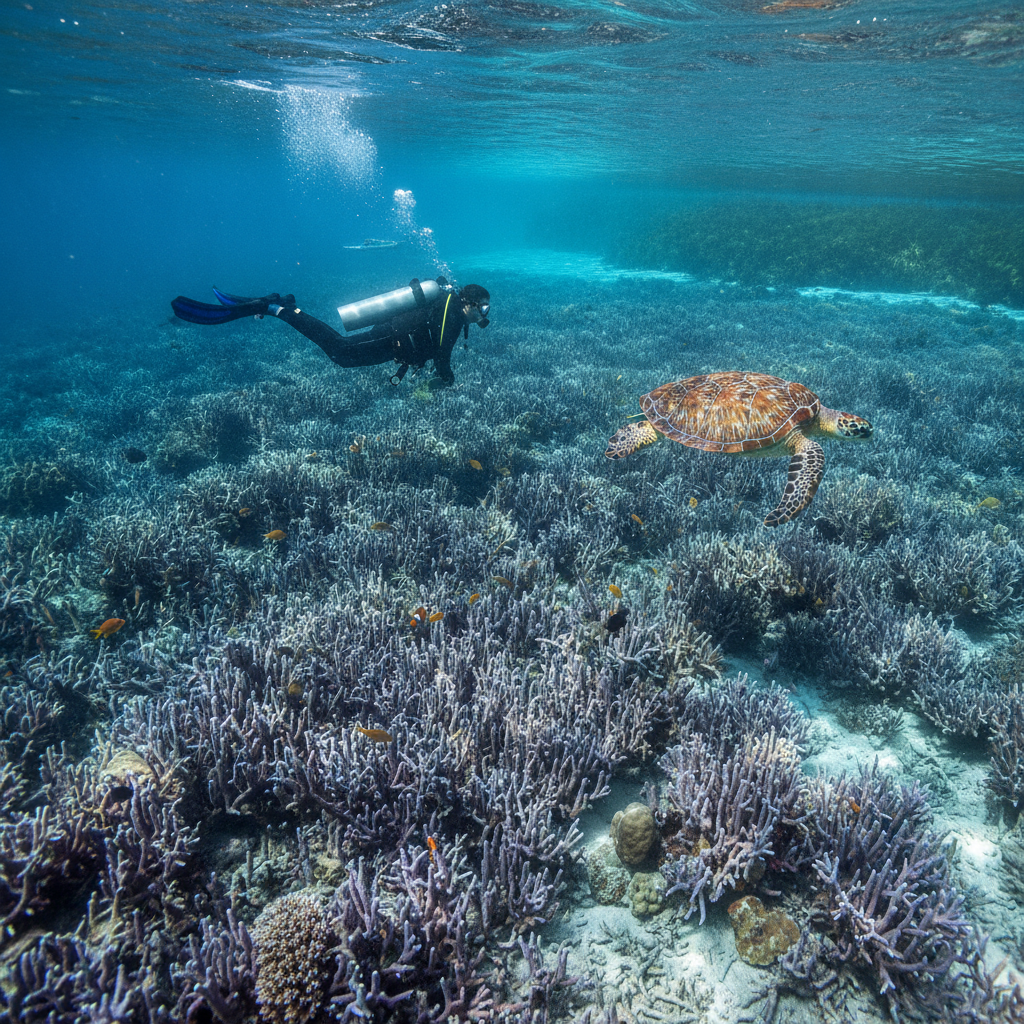
Zanzibar marine conservation: the sea turtle protection programs, the whale shark encounters, the coral reef conservation, and the broader marine biodiversity of the Zanzibar Archipelago waters. Sea turtles (the Zanzibar Archipelago is an important nesting and foraging site for two sea turtle species: the green turtle (Chelonia mydas) and the hawksbill turtle (Eretmochelys imbricata): both species are listed as Endangered (green) and Critically Endangered (hawksbill) by the IUCN: the primary sea turtle nesting beaches (Nungwi: the northern tip of Unguja (the beach at Nungwi is an important green turtle nesting site): Ras Nungwi and the surrounding coast: the Mnarani Natural Aquarium at Nungwi (a tidal pool natural aquarium where juvenile and injured green turtles are held for rehabilitation before release: visitor fees contribute to the conservation program): the Chumbe Island Coral Park (the privately managed marine protected area 12 km south of Stone Town: one of the finest marine conservation success stories in East Africa: the island and surrounding reef were declared a protected area in 1994: the reef has recovered to exceptional health under protection: the island has eco-bungalows and a strict low-impact tourism model)). Whale sharks (Rhincodon typus: the largest fish in the ocean (up to 12 meters): whale sharks are filter feeders on plankton, small fish, and fish eggs: they are completely harmless to humans: the Pemba Channel and the waters around the northern Zanzibar Archipelago are a whale shark feeding ground: whale shark encounters are possible in the waters around Mafia Island (south of Zanzibar: the Mafia Island Marine Park: October-February is the primary season for whale shark aggregations at Mafia Island (the whale sharks aggregate to feed on the coral spawning events))). The coral reef (the Zanzibar coral reef system: the reefs of Zanzibar are part of the larger Western Indian Ocean reef ecosystem: the reefs have been damaged by bleaching events (the 1998 ENSO-driven mass coral bleaching event (El Nino Southern Oscillation 1997-1998) bleached and killed approximately 50-90% of coral on Indian Ocean reefs within a 2-meter depth range): recovery has been partial and ongoing: the Mnemba Atoll conservation area (the Mnemba Atoll Marine Conservation Area: the private conservation area around Mnemba Island 3 km off the northeast coast: managed by &Beyond lodge: the reef at Mnemba is one of the healthiest in Zanzibar due to protection).
- 5
Zanzibar Independence, the Union, and Modern Tanzanian Politics
Zanzibar in Tanzanian politics: the complex and sometimes tense relationship between the Zanzibar islands and the mainland, the semi-autonomous Zanzibar government, and the ongoing political debates about the nature of the union. The union (the United Republic of Tanzania: formed April 26, 1964 by the union of Tanganyika (independent since December 9, 1961 under Julius Nyerere) and Zanzibar (independent since December 10, 1963, then revolutionary state from January 12, 1964): the union was arranged rapidly between Julius Nyerere (President of Tanganyika) and Abeid Amani Karume (President of the Peoples Republic of Zanzibar): the terms of the union (Zanzibar retains significant internal autonomy: the Revolutionary Government of Zanzibar (RGZ): the Zanzibar House of Representatives: the Zanzibar President (a separate presidential post from the Tanzanian President): the union applies to external affairs, defense, currency, and some other specified areas: all other matters are handled by the Zanzibar government)). The political tensions (the political history of Zanzibar within Tanzania has been marked by periodic tension between the islands and the mainland: the dominant political issue is the degree of Zanzibar autonomy (a significant faction of Zanzibar politics advocates for more autonomy or full independence from Tanzania): the Civic United Front (CUF): the primary opposition party in Zanzibar (the CUF has historically been stronger in Pemba than in Unguja): the CUF elections disputes (the 1995, 2000, and 2005 Zanzibar elections were all marred by violence and fraud allegations: the 2000 Zanzibar elections (a particularly violent election in which security forces killed approximately 35 opposition supporters at Pemba in the days following the election): the 2010 Government of National Unity (the power-sharing agreement between the CCM (the ruling party) and CUF that brought relative political stability to Zanzibar after 2010): the 2015 election annulment (the Zanzibar Electoral Commission annulled the October 2015 Zanzibar election results due to alleged irregularities: a controversial decision that caused significant controversy)). The economic model (Zanzibar economy: tourism is by far the largest sector (approximately 25% of GDP and the primary source of foreign exchange): clove production (historically the backbone of the Zanzibar economy: now much diminished in relative importance): fishing (the traditional small-scale fishing industry employs a large proportion of the coastal population): the seaweed farming industry (the east coast of Unguja (Paje, Jambiani, Bwejuu): the seaweed farming industry established in the 1980s employs primarily women in the coastal villages)).
- 6
Zanzibar Complete Reference - Best Time, Getting There, and the Full Planning Guide
The complete Zanzibar practical reference: the best time to visit, how to get there, where to stay by budget and style, the complete Stone Town day itinerary, and the full trip-planning guide for the Spice Island. Best time to visit (the climate (Zanzibar is approximately 6 degrees south of the equator: tropical climate year-round): the dry seasons (the long dry season (June-October): the best weather for beach and diving (clear water, calm seas, good visibility): the sea temperature approximately 24-26 degrees C: the short dry season (December-February): also good weather: the monsoon seasons (the long rains (masika): April-May (some years extending into June): the short rains (vuli): November: the Indian Ocean diving visibility is best in the dry season (June-October)): the busiest months (December-January and July-August): the quietest months (April-May): the best whale shark season at nearby Mafia Island (October-February)). Getting there (the Abeid Amani Karume International Airport (ZNZ): 6 km from Stone Town: direct international flights from Nairobi (approximately 1 hour), Addis Ababa (3 hours), Dar es Salaam (20 minutes), Dubai (5 hours), Doha (5 hours), and Istanbul (9 hours): the ferry from Dar es Salaam (high-speed catamaran: approximately 2 hours: multiple departures daily: the budget option for travellers arriving in Dar es Salaam from the mainland: the overnight slow ferry also available)). Accommodation (Stone Town (historic hotels in converted merchant houses: the Emerson Spice Hotel (a converted 19th century merchant house with rooftop restaurant: one of the finest views in Stone Town): the Park Hyatt Zanzibar (the most luxurious Stone Town hotel: on the waterfront): budget guesthouses throughout Stone Town): the beach areas (Nungwi and Kendwa (the widest choice of accommodation: from budget backpacker places to luxury resort hotels): the east coast (Paje and Jambiani (a mix of boutique guesthouses and small-scale hotels))). The Stone Town day itinerary (Morning (the Old Fort: the slave market and Christ Church Cathedral: the House of Wonders): Midday (the Darajani Market: lunch at a Stone Town rooftop restaurant): Afternoon (the carved door walk: the Palace Museum): Evening (sunset from the waterfront: the Forodhani night market)). The full legacy (Zanzibar is the Indian Ocean in a single island: the slave trade and the spice trade and the dhows and the carved doors and the white sand and the turquoise water and Freddie Mercury: nowhere else in the world compresses so much history and beauty into so small a space).
Walk this route with audio
Stories play automatically as you reach each stop — no tapping needed.
More in zanzibar
Zanzibar Final: Spice Trade History, Julius Nyerere, Kilimanjaro, Serengeti vs Mara, Dhow Tradition, and Complete Legacy
Zanzibar Deep Dive: Freddie Mercury, Pemba Island, Swahili Language, Cuisine, Omani Heritage, and Island Comparisons
Zanzibar Extended: Madagascar Comparison, Diaspora Legacy, Slow Travel, Architecture, Islam, and Ultimate Practical Guide
Zanzibar: Stone Town, the Slave Trade, Spice Island, Revolution, and the Indian Ocean