Zanzibar Deep Dive: Freddie Mercury, Pemba Island, Swahili Language, Cuisine, Omani Heritage, and Island Comparisons
Zanzibar beyond Stone Town: Freddie Mercury born in the Spice Island; Pemba Island and the world best clove diving; the Swahili language and how Zanzibar created the lingua franca of Africa; Zanzibar cuisine and the Forodhani night market; the Arab Omani sultans and their palace legacy; and Zanzibar compared with the Seychelles and the Maldives.
- 1
Freddie Mercury - The Queen Frontman Born in Stone Town
Freddie Mercury (born Farrokh Bulsara: September 5, 1946, Stone Town, Zanzibar): the lead singer of Queen and one of the most celebrated rock musicians of the 20th century, born in the heart of Stone Town to a Parsi Indian family. The birth and childhood (Farrokh Bulsara was born at the Government Hospital in Stone Town (the hospital is near the seafront): his father Bomi Bulsara was a cashier for the British colonial government: his mother Jer Bulsara was a Parsi from Gujarat, India: the Bulsara family were Zoroastrian Parsi (the Parsi community of Zanzibar: a small community of Zoroastrian merchants from Gujarat who had settled on the East African coast in the 19th century as part of the broader Indian merchant diaspora): Freddie grew up in Stone Town attending the Mission School: at age 8 he was sent to St Peter Primary School in Panchgani near Pune (Poona) in India (the British colonial tradition of sending children to boarding school in India for their education): Freddie was sent away from Zanzibar and never returned to live there: he later attended St Mary Secondary School in Panchgani where he formed his first band The Hectics at age 12). The Zanzibar connection (Freddie Mercury always maintained ambiguity about his birthplace and ethnic identity (he rarely discussed his Parsi Indian heritage or his Zanzibar birth publicly in interviews: the combination of his Parsi background, his Zanzibar birth, his Indian boarding school education, and his British adult life made his identity genuinely complex): after the 1964 Zanzibar Revolution the Bulsara family fled Zanzibar (as did most of the Asian minority) and settled in Feltham, Middlesex, England: Freddie enrolled at Ealing College of Art: his first band Smile (with guitarist Brian May and drummer Roger Taylor) became Queen in 1970). The Mercury Museum (the Mercury Restaurant and bar in Stone Town: not a formal museum but a restaurant celebrating the Freddie Mercury connection: photographs and memorabilia: the house on Kenyatta Road that may be Freddie Mercury childhood home (disputed): the Zanzibar International Film Festival (ZIFF) annually screens a tribute to Freddie Mercury).
- 2
Pemba Island - The Clove Island Beyond Zanzibar
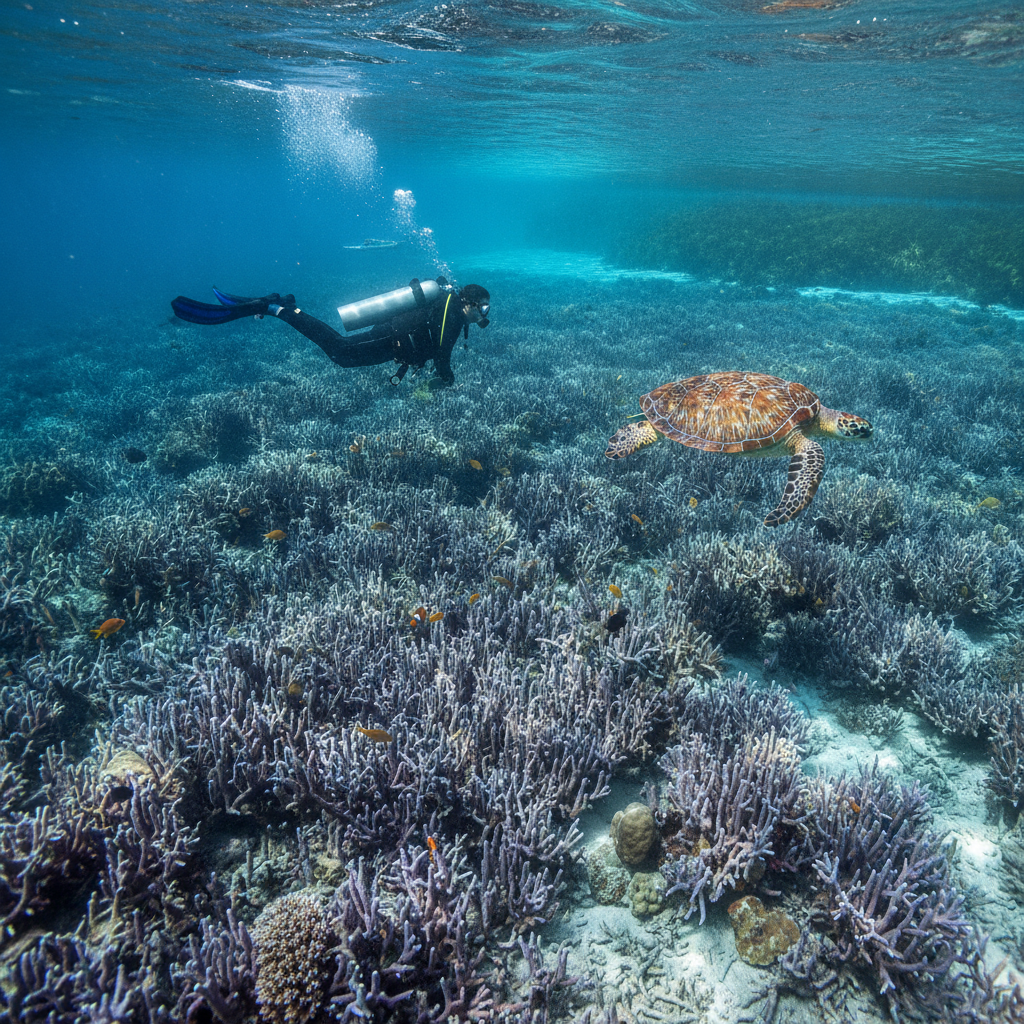
Pemba Island (Jazira ya Pemba): the second island of the Zanzibar Archipelago, 80 km north of Unguja, less visited than its famous neighbor but arguably more beautiful, still producing more cloves than anywhere else in the world. The island (Pemba Island: area approximately 980 square km (slightly smaller than Unguja): population approximately 400,000: the primary economic activity is clove production (Pemba produces approximately 80% of Tanzania clove output and approximately 4-5% of world clove production): the island landscape (Pemba is more dramatically hilly than Unguja: the island rises to approximately 95 meters: the interior is covered with dense clove plantations and tropical forest: the coastline is deeply indented with mangrove-lined creeks and bays (the bays are used for traditional fishing and small-scale fish farming)). The diving (Pemba Island has some of the most spectacular diving in the Indian Ocean: the Pemba Channel (the deep-water channel between Pemba and the mainland Tanzania coast: depths exceeding 700 meters: the channel upwellings create nutrient-rich water and exceptional fish diversity): the primary dive sites at Pemba (Manta Point (the primary site for encountering manta rays (Mobula alfredi: the reef manta ray): Pemba has one of the most reliable manta ray encounters in the Indian Ocean): the coral walls (the steep coral walls dropping from the shallows into deep water: the walls are covered in soft corals and sea fans (gorgonian sea fans) and populated with large schools of fish): the scalloped hammerhead sharks (Sphyrna lewini: a regular sight at Pemba dive sites)). The culture (Pemba has a distinct local identity separate from Zanzibar (Unguja): the Pembans speak a dialect of Swahili distinct from the Unguja dialect: Pemba has a reputation for traditional Islamic scholarship and for traditional medicine (the Pemba traditional medicine practitioners (the waganga): Pemba has historically been considered the center of traditional medicine on the Swahili coast): the ferry connections (Pemba is accessible by speedboat from Stone Town (approximately 3-4 hours) or by small aircraft from Zanzibar Airport (approximately 30 minutes): Pemba is significantly less visited than Unguja and remains one of the more off-the-beaten-track island destinations in East Africa).
- 3
The Swahili Language - How Zanzibar Created the Lingua Franca of Africa
The Swahili language (Kiswahili): the language that originated on the Zanzibar and East African coast and became the most widely spoken African language on the continent, the story of how a coastal trade language became the lingua franca of East Africa. The language (Swahili (Kiswahili): a Bantu language (classified within the Niger-Congo language family, Bantu branch): the name (sawahili: Arabic plural of sahil (coast): the language of the coast people): Swahili originated as the native language of the Waswahili (the coastal Bantu peoples of the East African coast) and was transformed into a regional trading language through contact with Arab, Persian, and Indian traders over many centuries: the vocabulary (Swahili has borrowed extensively from Arabic (approximately 20-30% of vocabulary is Arabic-derived): the Islamic vocabulary of prayer, religion, and scholarship is primarily Arabic: the trade vocabulary (market, money, commerce) has significant Arabic and Persian elements): the Zanzibar standard (the Zanzibar dialect of Swahili (Kiunguja) became the prestige standard form of the language: the reason is historical (Zanzibar was the commercial and political capital of the East African coast in the 19th century (the Omani Sultans spread the Zanzibar dialect across their trade network): when missionaries and European colonial administrators standardized the written Swahili language in the late 19th century they chose the Zanzibar dialect as the basis)). The spread (the spread of Swahili into the East African interior followed the Arab-Swahili trade routes that radiated from Zanzibar: the primary trade routes (Zanzibar to Tabora: Tabora to Ujiji on Lake Tanganyika: Zanzibar to Kilimanjaro and the Mount Kenya area): the European missionaries and colonial administrators used Swahili as the language of administration and mission education: today Swahili is an official language of Tanzania, Kenya, Uganda, Rwanda, Burundi, and the DRC: it is spoken as a first or second language by approximately 200-250 million people (making it the most widely spoken African language)). The taarab music (the Swahili musical and poetry tradition of Zanzibar: the sung Swahili poetry accompanied by an Arabic-influenced orchestra: the primary vehicle for the Swahili poetic tradition).
- 4
Zanzibar Cuisine - Pilau, Urojo, and the Forodhani Night Market
Zanzibar cuisine: the unique culinary tradition that blends Swahili African cooking with Arab spice culture, Indian Ocean trade ingredients, and Indian cooking techniques to create one of the most distinctive food traditions in sub-Saharan Africa. The spice influence (the cloves, cinnamon, cardamom, black pepper, and chili of the Zanzibar spice trade are the defining flavors of Zanzibar cuisine: the Arab influence (the pilau (the spiced rice dish: the most important Zanzibar festive food: cooked with whole spices (cloves, cinnamon, cardamom, black pepper, cumin) and meat (chicken, beef, or goat) in a sealed pot: the aromatic steam cooks the rice to tenderness): the biryani (similar to pilau but of Indian origin: layers of rice and meat cooked in a sealed vessel)). The Zanzibari specialty dishes (urojo (the Zanzibar mix: the most distinctive Zanzibar street food: a thin curry broth (turmeric and tamarind based) served in a bowl with bhajia (spiced potato fritters), fried cassava, boiled cassava, hard-boiled egg, coconut chutney, and chili sauce: the combination is unique to Zanzibar: sold primarily at the Forodhani Gardens night market): the Zanzibar pizza (a thin fried flatbread (similar to a crepe) filled with minced meat, egg, onion, and green pepper, folded and fried in butter on a griddle: a street food unique to Zanzibar: sold primarily at the Forodhani market): mishkaki (the Swahili coast grilled meat skewer: marinated beef or goat grilled over charcoal: the standard Zanzibar street meat): the coconut (coconut milk is the defining ingredient of Zanzibar savory cooking: the coconut palm is ubiquitous on Unguja: the coconut is used in curries, in rice cooking (wali wa nazi: rice cooked in coconut milk), in samaki wa kupaka (fish grilled in coconut and tamarind sauce))). The Forodhani Gardens night market (the outdoor food market on the Stone Town waterfront at Forodhani Gardens: open every evening from sunset: the primary cheap food experience for Stone Town visitors: dozens of stalls offering urojo, Zanzibar pizza, mishkaki, sugarcane juice, fresh seafood, and grilled corn: the market is also the primary social gathering point for Stone Town residents in the evenings: one of the most atmospheric street food experiences in East Africa).
- 5
The Arab Omani Heritage of Zanzibar - Sultans, Palaces, and the Indian Ocean Empire
The Arab Omani heritage of Zanzibar: the story of how the Sultans of Oman built a commercial empire from Zanzibar and left an architectural and cultural legacy that defines the island to this day. The Omani connection (the Sultanate of Oman (the primary maritime power of the western Indian Ocean in the 17th-19th centuries): the Omanis first captured Zanzibar from the Portuguese in 1698 (the siege of Fort Jesus in Mombasa: the Omani fleet besieged the Portuguese-held Fort Jesus for 33 months (1696-1698) before the Portuguese garrison surrendered): after capturing Fort Jesus and Mombasa the Omanis extended their control over the Swahili coast: the Zanzibar-Oman relationship (Zanzibar became an Omani dependency under Imam Saif bin Sultan): the move of the capital (Sultan Seyyid Said bin Sultan al-Busaidi of Oman: moved the Omani imperial capital from Muscat to Zanzibar in 1832: the decision was driven by commercial logic (Zanzibar was more central to the Indian Ocean trade than Muscat and the clove plantation economy was generating enormous wealth): Said transformed Zanzibar from a minor trading port into the commercial capital of the western Indian Ocean). The palaces (the Palace Museum (Beit el-Sahel: the former sultans palace on the Stone Town waterfront: built in 1828 as the palace of the first Omani Sultan Seyyid Said: subsequently expanded by successive sultans: now a museum of Zanzibar royal history (furniture, portraits, robes, weapons of the Omani sultans)): the House of Wonders (Beit el-Ajaib: the Palace of Wonders: the largest and most impressive building in Stone Town: built in 1883 by Sultan Barghash as a ceremonial palace: the first building in East Africa with electric light and an electric lift: now the Museum of History and Culture of Zanzibar and the Swahili Coast): the Maruhubi Palace ruins (3 km north of Stone Town: the ruins of the harem palace of Sultan Barghash (built 1882): the palace housed the sultan concubines and their attendants: destroyed by fire in 1899: the ruins include the bath complex (a Persian-style hammam))). The split of the Omani Empire (at Sultan Said death in 1856 the Omani empire was divided between his sons: Majid bin Said received Zanzibar and the East African territories: Thuwaini bin Said received Oman: the two empires went their separate ways: Zanzibar remained the wealthiest and most commercially significant territory until the 1964 Revolution).
- 6
Zanzibar vs Seychelles vs Maldives - Comparing the Indian Ocean Island Destinations
Zanzibar compared with the Seychelles and the Maldives: the three primary Indian Ocean island destinations for long-haul travelers, their differences in character, cost, wildlife, history, and what each offers that the others cannot. Zanzibar versus the Maldives (the Maldives (the Republic of Maldives): an archipelago of 1,200 coral islands in the central Indian Ocean approximately 700 km southwest of Sri Lanka: the Maldives is the flattest country in the world (average elevation 1.5 meters above sea level: the entire country is under severe threat from sea level rise due to climate change): the Maldives tourism model (the Maldives pioneered the one-island-one-resort model (each resort occupies its own coral island): complete isolation from local Maldivian culture and community: the experience is all-inclusive luxury water villas over turquoise lagoons: the sea and snorkeling are exceptional (the Maldives has some of the finest coral reef diving in the world): the Maldives has no history, no culture, no local food scene, and no significant wildlife outside the marine environment: the cost (significantly more expensive than Zanzibar: the Maldives is one of the most expensive island destinations in the world): Zanzibar (history, culture, spice tours, local food, Stone Town UNESCO World Heritage Site: significantly more affordable than the Maldives: less pristine beaches but far richer human experience)). Zanzibar versus the Seychelles (the Seychelles (the Republic of Seychelles): an archipelago of 115 islands in the western Indian Ocean approximately 1,500 km east of the East African coast: the Seychelles are famous for the granitic inner islands (Mahe, Praslin, La Digue) with their spectacular granite boulder scenery and the Coco de Mer palm (Lodoicea maldivica: the Coco de Mer palm produces the largest seed of any plant in the world: found only on Praslin and Curieuse islands in the Seychelles): the Seychelles beaches (Anse Source dArgent on La Digue: widely considered one of the most beautiful beaches in the world: the pink granite boulders, white sand, and shallow lagoon): the Seychelles cost (the Seychelles is the most expensive island destination in the Indian Ocean after the Maldives: significantly more expensive than Zanzibar): the Seychelles wildlife (the Seychelles has unique terrestrial wildlife (Aldabra giant tortoises, Seychelles magpie-robin, Seychelles black parrot): no significant terrestrial mammals (the Seychelles islands were uninhabited when the French arrived in the 18th century)). The verdict (Zanzibar wins on history and culture and value for money: the Maldives wins on marine luxury and coral reef quality: the Seychelles wins on beach beauty and granite scenery).
Walk this route with audio
Stories play automatically as you reach each stop — no tapping needed.
More in zanzibar
Zanzibar Final: Spice Trade History, Julius Nyerere, Kilimanjaro, Serengeti vs Mara, Dhow Tradition, and Complete Legacy
Zanzibar Complete: Jozani Forest, Livingstone, Marine Conservation, Tanzanian Politics, and the Full Visitor Guide
Zanzibar Extended: Madagascar Comparison, Diaspora Legacy, Slow Travel, Architecture, Islam, and Ultimate Practical Guide
Zanzibar: Stone Town, the Slave Trade, Spice Island, Revolution, and the Indian Ocean