The Areni-1 Cave 6,000 BCE Wine Press Predating Even the Georgian Gadachrili Find by 200 Years Making Armenia the Oldest Winemaking Site, Lake Sevan Lowered 19m by Soviet Hydroelectric Projects & 10 Days in Three Caucasus Capitals for USD 400-600 Total
The Areni-1 cave wine press dating to 6,000 BCE discovered in 2010, predating the Georgian Gadachrili Gora find by 200 years as the world's oldest known winemaking site; the Soviet Sevanavank monastery becoming a peninsula after the lake level was lowered 19m for hydroelectric power between 1933 and 1962; the complete 10-day South Caucasus triangle circuit for USD 400-600 total; the Armenian duduk carved from apricot wood producing the most melancholic timbre in Caucasian music, UNESCO ICH inscribed 2008; the Sherep restaurant baking lavash in an on-site tonir from village recipes; and the Yerevan Northern Avenue evening promenade connecting Republic Square to the Opera House in 530m of pink tuff colonnades.
- 1
Yerevan's Pink City Architecture – Tamanyan's Vision
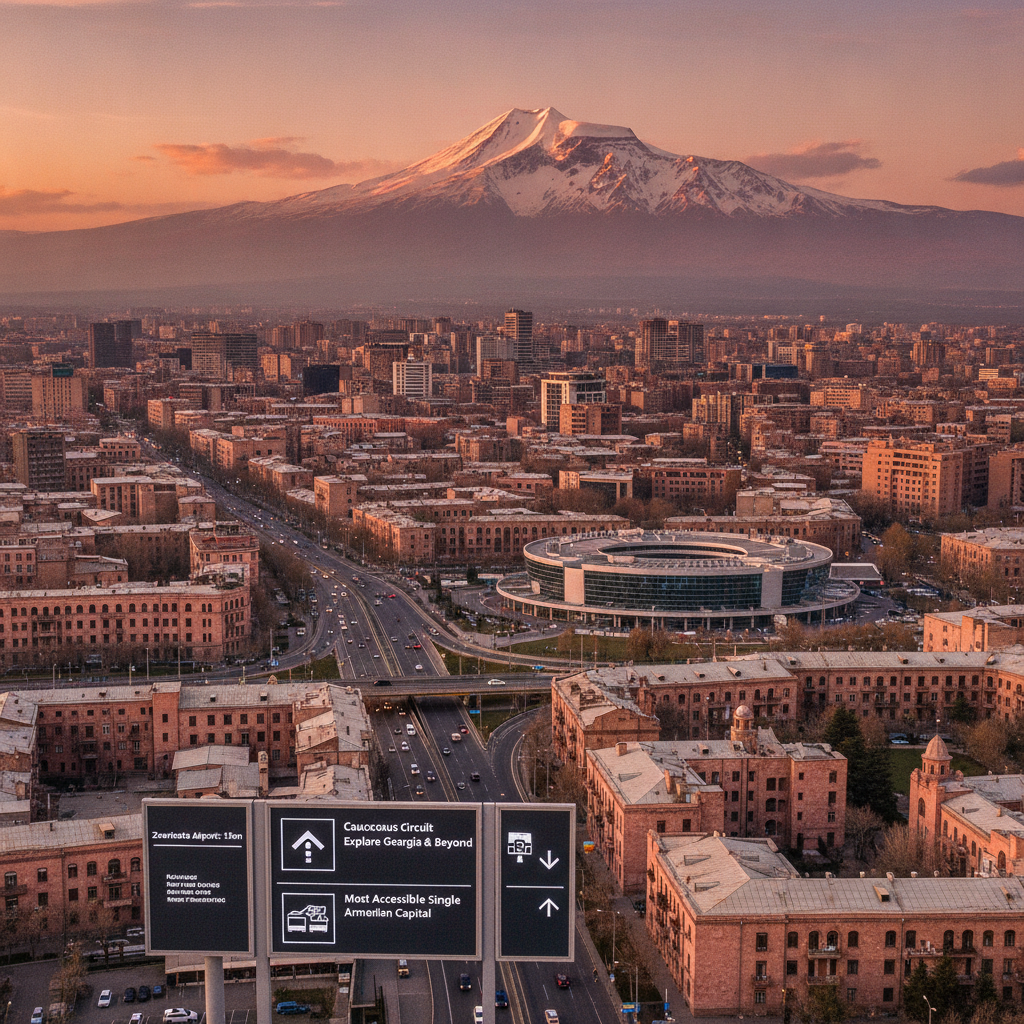
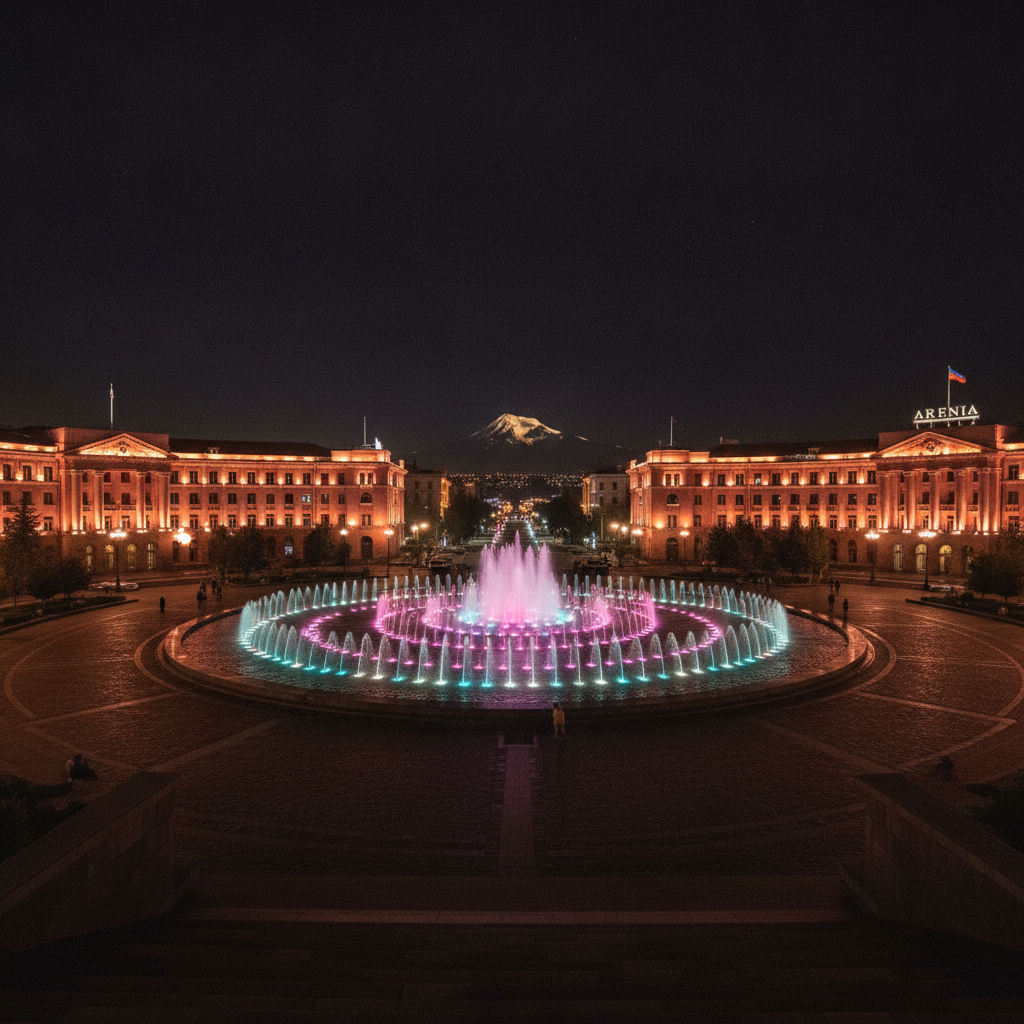
The architectural heritage of Yerevan (the Soviet urban master plan of 1924 that created the most coherent Soviet-Armenian urban landscape in the Caucasus): the architecture guide. Alexander Tamanyan (Ալեքսանդր Թամանյան—1878–1936—the Armenian architect who designed the master plan for modern Yerevan (1924) and the major public buildings that define the city's character: Tamanyan was born in Yekaterindar (Krasnodar) in Russia and trained at the St. Petersburg Academy of Arts before returning to Soviet Armenia in 1923 to design the new capital): the master plan (the 1924 Yerevan master plan: a radial-concentric street layout centered on Republic Square, with the major boulevards radiating outward to the north (Mashtots Avenue and Abovyan Street), with the major public buildings arranged along the central axis from the train station in the south to the Cascade in the north): the tuff palette (the Yerevan tuff architecture uses 7 distinct varieties of volcanic tuff quarried from different Armenian deposits: the Artik tuff (pale pink—the primary Republic Square color); the Ani tuff (deeper red-orange); the Eghegnadzor tuff (yellow-cream); the Garni tuff (dark grey—the most durable variety); the Avan tuff (pale grey): the combination of these 7 colors in different buildings creates the distinctive polychrome effect of the Yerevan streetscape): the Opera House (the Yerevan Opera House (Alexander Spendiaryan Academic Opera and Ballet Theater—the 1933 building designed by Tamanyan himself, combining the Armenian vernacular arch tradition with a modernist building plan—the primary cultural landmark on Tamanyan Street adjacent to the beginning of the Cascade).
- 2
The Armenian Diaspora – A Nation Spread Across the Globe
The Armenian diaspora (the Armenian global community formed primarily by survivors of the 1915 genocide and their descendants—the largest diaspora relative to homeland population of any nation): the diaspora heritage guide. The diaspora scale (the current Armenian diaspora is estimated at 7–10 million people worldwide—compared to the 3.0 million population of the Republic of Armenia—making the diaspora more than twice the size of the homeland population: the primary diaspora communities: the Russian diaspora (1.2–2.5 million Armenians in Russia, the largest Armenian community outside Armenia, concentrated in Krasnodar, Moscow, and the North Caucasus); the French diaspora (600,000–700,000 Armenians in France, concentrated in Marseille (the city with the highest proportion of Armenians in Western Europe) and Paris): the US diaspora (500,000–1 million Armenian-Americans, concentrated in Los Angeles (particularly Glendale—the city in the Los Angeles metropolitan area with the highest Armenian proportion), the San Francisco Bay Area, and the Boston area): the Lebanese diaspora (100,000–150,000 Armenians in Lebanon—the community established by genocide survivors in Beirut and Jounieh—the Lebanese Armenian community has produced some of the most internationally successful Armenian cultural products in the diaspora): the Kardashian connection (the Kardashian family—the most globally famous Armenian-American family—whose patriarch Robert Kardashian was of Armenian descent (his family emigrated from Kars in northeastern Turkey (historically Armenian territory))): the diaspora contribution to independent Armenia (the diaspora funded critical infrastructure after 1991—the Lincy Foundation (Kirk Kerkorian), the Hayastan All Armenian Fund (diaspora fundraising), and the Armenian Assembly of America (lobbying for genocide recognition)).
- 3
Yerevan's Food & Wine Scene – The New Armenia
The Yerevan food and wine scene (the remarkable transformation of Yerevan's restaurant culture since 2010—the city that has become one of the most exciting food capitals in the former Soviet space): the food scene guide. The restaurant transformation (the Yerevan restaurant scene has grown from approximately 50 establishments in 2000 to 3,000+ in 2024—driven by the tourism growth, the returning diaspora, and the Russian emigration wave of 2022: the Yerevan restaurant culture is unique in the former Soviet space in combining: the Armenian traditional cuisine (dolma, khorovats, lavash, dolma, fish from Lake Sevan (ishkhan—the Armenian trout)); the Mediterranean influence (the Lebanese Armenian diaspora contribution—the Lebanese-Armenian food influences of mezze culture); the French influence (the French-educated upper class of Yerevan who returned after independence)): the top restaurants (the Sherep (the most celebrated traditional Armenian restaurant in Yerevan—the menu based on regional Armenian village recipes, the lavash baked in the on-site tonir, the khorovats prepared over mulberry wood); the Caucasus Tavern (the most popular tourist-facing Armenian restaurant, on Abovyan Street); the Wine Republic (the primary natural wine and small-plates restaurant, with the most comprehensive Armenian wine list): the Armenian wine revival (the Armenian wine industry: the first commercial Armenian wine region since antiquity—the Areni-1 cave site near Areni village (120 km south of Yerevan) produced the oldest known winemaking installation in the world (6,000 BCE wine press discovered 2010)—predating even the Georgian Gadachrili Gora find by 200 years: the Areni red variety (the primary Armenian indigenous grape) produces the country's most internationally celebrated wine).
- 4
Lake Sevan – Armenia's Mountain Sea
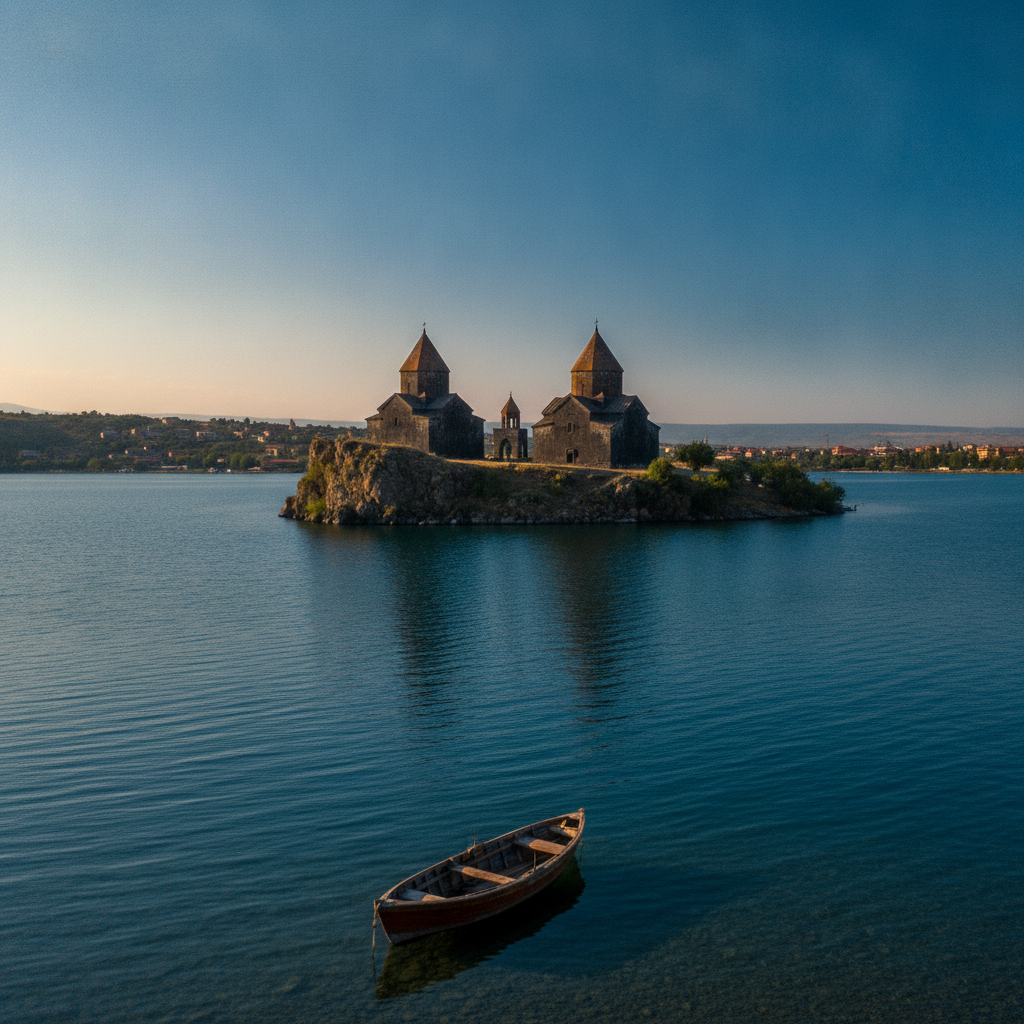
The Lake Sevan day trip (the high-altitude freshwater lake 60 km northeast of Yerevan—the primary natural landmark of Armenia and the country's largest water resource): the Lake Sevan guide. The lake (Lake Sevan (Sevano litch—Armenian: Սևանա լիճ—the name means 'Black Lake' in the Urartian language): the lake at 1,900m altitude covers 1,242 km²—the largest lake in the Caucasus and one of the largest high-altitude freshwater lakes in the world: the lake is fed by 28 rivers and drains through the Hrazdan River to the Ararat valley: the water is exceptionally clear (visibility to 18m depth) due to the high altitude and the absence of major industrial pollution): the ecology (the lake supports a unique ecosystem: the Sevan trout (ishkhan—Armenian: իշխան, 'prince')—the endemic trout species of Lake Sevan: four sub-species (of which two are now extinct due to overfishing and the Soviet-era lowering of the water level by 19m (1933–1962) for hydroelectric power generation)): the Sevanavank Monastery (the 9th-century monastery on the Sevan Peninsula (originally an island until the Soviet water level lowering exposed the causeway)—two of the original three churches survive (Arakelots and Astvatsatsin, both constructed 874 CE)—the most photographed heritage site on Lake Sevan): the ecology crisis and recovery (the Soviet lowering of the lake level by 19m exposed the lake bed and concentrated pollution—the 1978 law prohibiting further withdrawal reversed the trend: the lake level has recovered approximately 8m since 1978): the accommodation (the Sevan resort area on the north shore of the lake: the beach hotels and guesthouses (USD 40–80/night) offer the best base for a 2-day Sevan visit).
- 5
Yerevan After Dark – Wine, Duduk & Nightlife
The Yerevan after-dark guide (the evening and nightlife culture of the fastest-growing tourist capital in the Caucasus): the night guide. The Northern Avenue (the primary evening promenade: the Yerevan Northern Avenue (Hյusisayin Praspekt)—the pedestrian boulevard connecting Republic Square to the Opera Square: built 2007–2010 as part of the central Yerevan reconstruction—a 530m stone-paved promenade lined with pink tuff colonnaded buildings containing restaurants, cafes, and boutiques: the evening promenade culture (the korchutyun—the Armenian evening promenade tradition, comparable to the Spanish paseo, is conducted on the Northern Avenue from 19:00–22:00, when multiple generations of Yerevan families walk and meet): the Cascade area (the bars and restaurants at the base of the Cascade: the outdoor terraces open May–October until 24:00; the MOM Cultural Center adjacent to the Cascade): the duduk music (the Armenian duduk (Armenian: դուդուկ)—the double-reed woodwind instrument carved from Prunus armeniaca (apricot) wood—the primary instrument of Armenian folk and sacred music: the tone (the Armenian duduk produces a warm, breathy sound in the middle register (the instrument's range is approximately one octave)—the most melancholic and distinctive timbre of any instrument in the Caucasus: the UNESCO status (the art of the Armenian duduk and its music was inscribed on the UNESCO Representative List of Intangible Cultural Heritage in 2008): the live duduk (the duduk is performed live at the Avan Villa hotel traditional music evenings (Fridays) and at several Old Yerevan restaurants)): the cognac bar (the YBC Cognac House at 2 Admiral Isakov Avenue—the most comprehensive Ararat cognac tasting bar).
- 6
Budget Yerevan & the Caucasus Triangle Circuit
The Yerevan budget guide and the Caucasus Triangle circuit (the practical handbook for visiting Yerevan affordably and the onward connections to Tbilisi and Baku that form the complete South Caucasus travel experience): the budget and circuit guide. The budget accommodation (the cheapest legitimate accommodation in Yerevan: the Envoy Hostel (USD 8–12/dorm—the most internationally recognized hostel in Armenia, with organized community activities and the best information desk in the South Caucasus for regional travel planning); the Stay Hostel (USD 10–14/dorm, adjacent to the Cascade); the Airbnb apartments in the Mashtots district (USD 25–40/night for private studio apartments)): the budget food (the cheapest traditional Armenian meals: the stolovaya (Soviet cafeteria)—the Ararat stolovaya on Tigranyan Street (AMD 800–1,200 = USD 2–3 for a full 3-course lunch); the khorovats street restaurants in the Nor Nork and Davtashen districts (AMD 1,500–2,000 = USD 3.80–5 for a full portion of barbecue with lavash and salads)): the transport budget (the Yerevan metro AMD 100 = USD 0.25; taxi within center AMD 500–800 = USD 1.30–2.00 via the GG app; the marshrutka minibus to Garni and Geghard AMD 300 = USD 0.75): the Caucasus Triangle (the 3-country Caucasus circuit: Yerevan → Tbilisi → Baku → Yerevan (or reverse): the Yerevan to Tbilisi connection: the daily sleeper train (10h30m overnight, AMD 8,000–12,000 = USD 20–31) or the shared taxi/marshrutka (6h, USD 15–20): the Armenia-Azerbaijan border (the Yerevan–Baku direct travel is not possible due to the closed Armenia-Azerbaijan border—the routing requires a flight via a third country or the Tbilisi connection): the total Caucasus Triangle budget (10 days in all three South Caucasus capitals: approximately USD 400–600 total including accommodation, food, transport, and attractions).
Walk this route with audio
Stories play automatically as you reach each stop — no tapping needed.
More in Yerevan
The First Sentence Written in Armenian Being the Book of Proverbs Verse 1:2, the Armenian Cognac Winning the 1900 Paris Exhibition Gold Medal Before the Judges Realized It Was Not French & the 2,000 Khachkars Destroyed in Azerbaijan in 2005 Documented by Satellite Imagery

Armenian Heritage: Garni Temple, Geghard Monastery, the Genocide History, the Ancient Christian Church, and the Most Historically Layered Single Armenian Day Trip
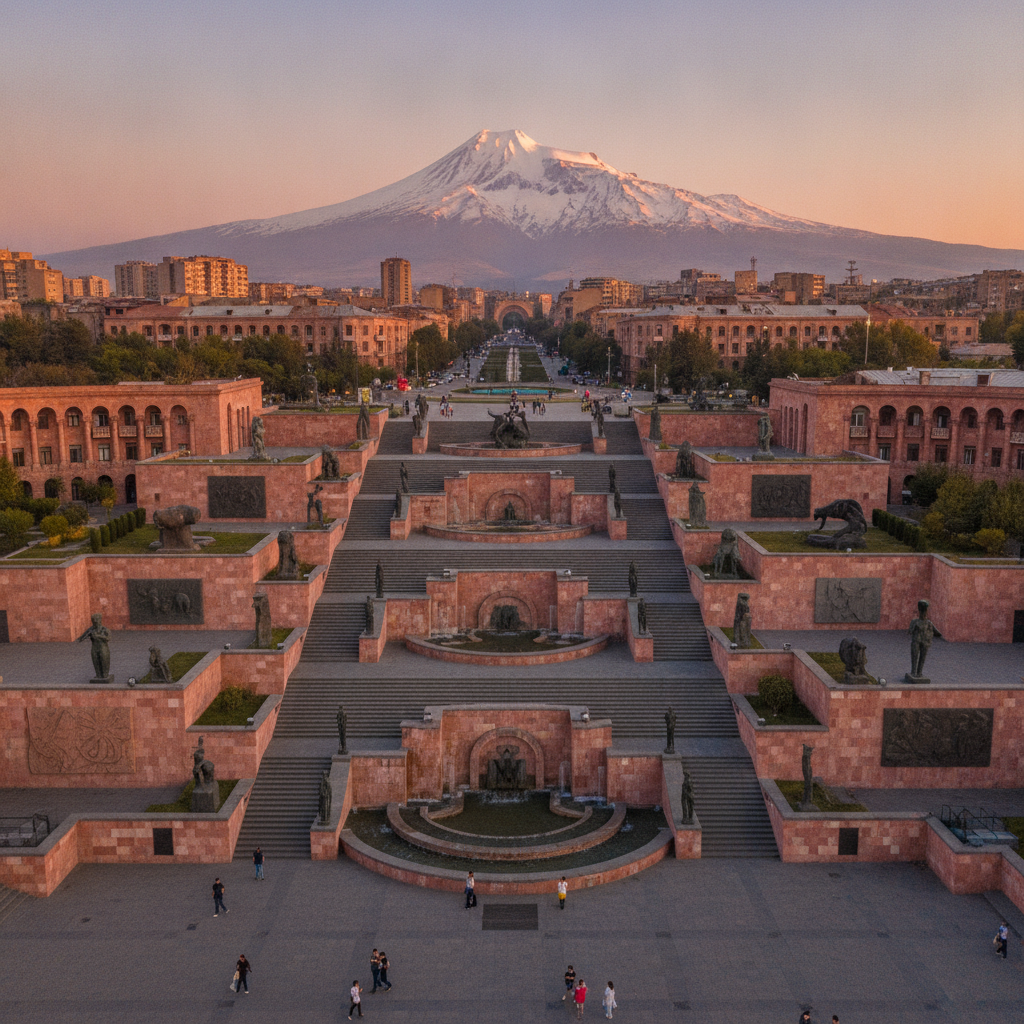
Yerevan Essential: The Cascade, Republic Square, Mount Ararat, the Genocide Memorial, the Vernissage, and the Most Emotionally Resonant Single Caucasus Capital
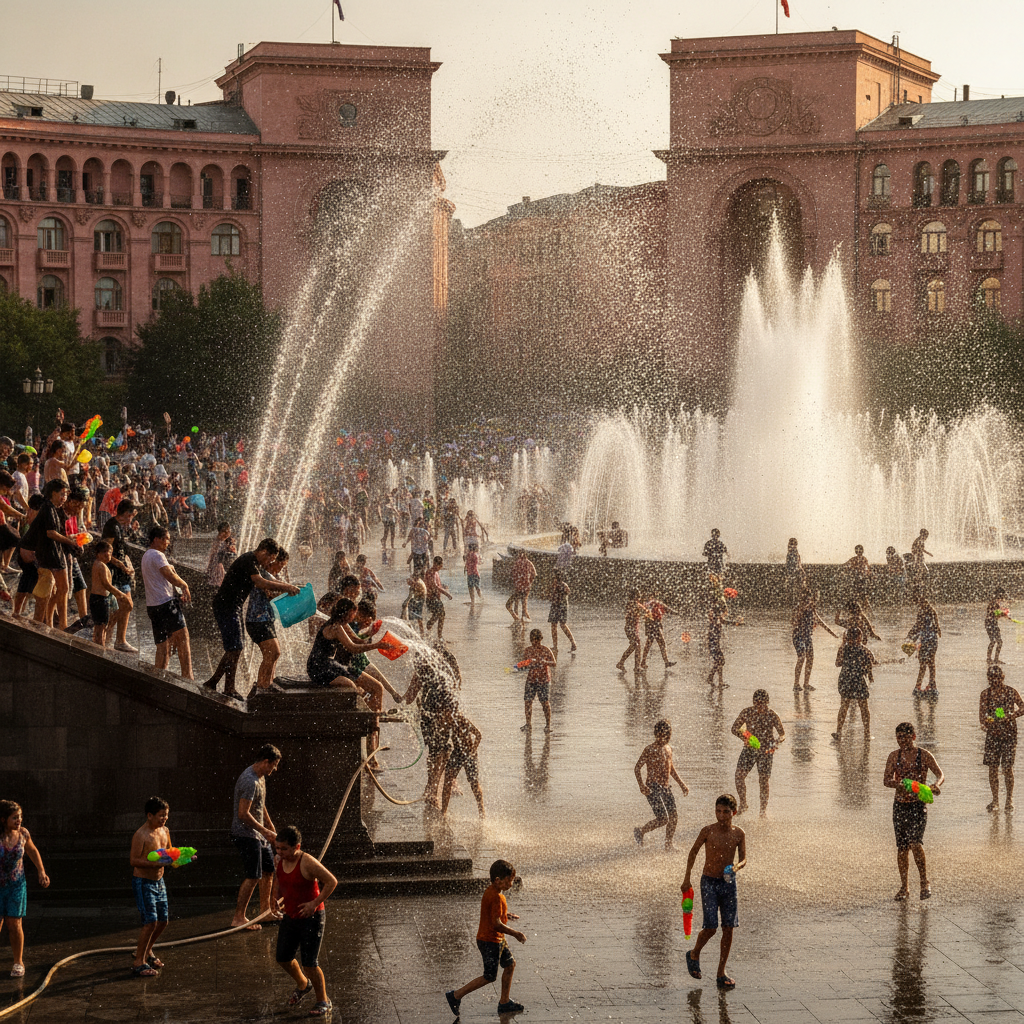
Prunus Armeniaca the Latin Name Embedding Armenia Into the Scientific Name of the Apricot Since Pliny the Elder's 1st Century CE Natural History, Picsart the First Armenian Tech Unicorn With 150 Million Monthly Users & 120,000 Karabakh Armenians Fleeing to Armenia in Days After September 2023
Stalin's Reply That Turkey's Crescent Moon Coat of Arms Does Not Mean Turkey Owns the Moon, the 1971 Cascade Still Not Fully Complete After 50 Years & the 23,000 Manuscripts Including the 862 CE Oldest Dated Armenian Manuscript